

A marketing lead downloads a polished set of architectural photographs and opens the content management system. The images are ready, the page is built, and the caption field is blank. “Modern building” doesn't explain what matters in the frame, while a string of search terms would make the page sound less credible than the work deserves.
That gap isn't just a writing problem. A useful commercial photography description helps people understand what they're seeing, gives a communications team language it can publish, and clarifies what the photographer delivered. The image and its description work together across a portfolio, website, proposal, social post, or printed piece.
Why the Description Matters as Much as the Image
The marketing lead may know the project's story, but that knowledge doesn't automatically make it into a caption. A photograph of a glazed lobby might be intended to show daylight, material choices, and the connection between reception and shared workspace. If the published description says only “office interior,” the image still looks good, but much of its meaning stays with the people who commissioned it.
Generic copy can also weaken credibility. A caption that calls every space “stunning” or every team remarkably creative does not help a buyer distinguish one assignment from another. It can make precise photography feel like interchangeable stock, even when the photographer made careful decisions about timing, composition, lighting, and access.
The writing is part of the handoff
A commercial shoot produces more than image files. The client may also need captions, titles, accessibility text, usage information, and guidance about how to describe the work accurately. Treating those items as production deliverables makes publication easier and reduces the risk that a strong image will be paired with vague or misleading copy.
For photographers, that means asking about intended use before the shoot, not after the files are delivered. A portfolio page, a project announcement, and an image used in a proposal may need different writing. The visual facts should remain consistent, but the emphasis and length can change with the audience and channel.
Practical rule: If the client needs to explain an image to publish it, agree on who will write that explanation before delivery.
A useful description doesn't promise that a photograph will solve every marketing problem. It does help the image do its job: show what's present, clarify why it matters, and give the client language that can travel with the file. That's why writing belongs alongside planning, shooting, editing, and delivery rather than being left as an afterthought.
Defining Commercial Photography and Its Scope
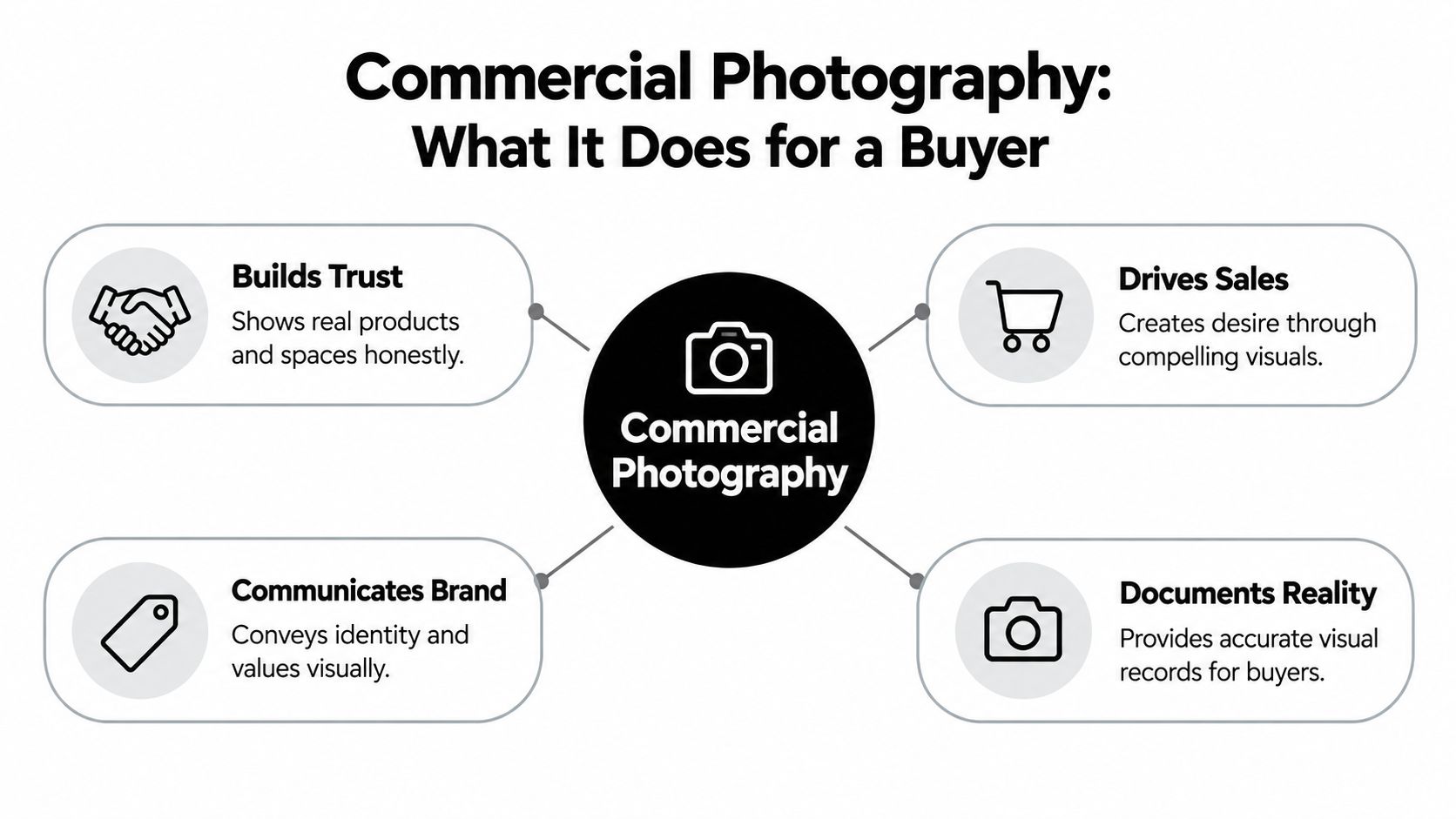
Commercial photography serves a buyer's communication or business purpose. A client commissions images of products, buildings, workplaces, people, or other subjects because those images need to represent an offering, support a campaign, document a project, or help an audience understand a place or organization. The photographer's job is to make the images and deliver them in a form the client can use.
That purpose distinguishes commercial assignments from personal projects and much fine-art work, where the photographer's own interests may lead the work. Editorial photography can overlap with commercial production, but its assignment is shaped by a publication's story and editorial judgment. Those differences matter in the description: buyers need to understand not only the visual style, but also the assignment's scope and intended use.
Describe the work as a production partnership
A strong service description tells a prospective client how the photographer approaches production. It can name location scouting, lighting design, direction on set, image editing, and finished-image delivery where those services are part of the offering. That detail helps a buyer decide whether the photographer can coordinate with a marketing team, work around an occupied building, or produce a consistent library of imagery.
The occupation's structure makes that clarity especially useful. The Bureau of Labor Statistics estimated approximately 145,000 photographer jobs in the United States in 2025, with 67% self-employed and a median hourly wage of $21.47 (Bureau of Labor Statistics occupational data). Those figures include photographers across several specialties, not commercial photographers alone. They show why a commercial photographer may work independently and bring together project-specific support rather than operate as part of a large studio.
Descriptions should therefore make the production relationship easy to assess. An architecture client may need a photographer who can plan around daylight and access; a school may need image-making that respects active spaces and privacy; a corporate team may need photographs that fit an established visual identity. The relevant service details depend on the assignment.
A buyer comparing portfolios can use a photographer website resource to consider how services, work samples, and contact details fit together online. For a closer look at the range of assignments this discipline can include, see types of commercial photography.
Anatomy of a Strong Commercial Photography Description
A commercial description should answer a practical question: can this photographer make the images we need, deliver them for our channels, and work within the realities of the assignment? A paragraph that lists camera equipment but never explains the work may not answer that. Neither does a string of adjectives such as “bold,” “timeless,” and “refined.”
Build the description from the buyer's decisions. State the kind of work, clarify the production services, identify what the client receives, and name the intended audience or use. Then choose a tone that fits the project without burying the facts.
Five parts that carry their weight
| Element | What It Signals | Example Phrase |
|---|---|---|
| Scope | The subjects or assignment types the photographer handles | “Architectural exteriors and commercial interiors” |
| Services | How production is planned and managed | “Location scouting, lighting design, and on-set direction” |
| Deliverable | What the client can expect to receive | “Edited high-resolution files prepared for agreed uses” |
| Audience and use | Where the images need to work | “Imagery for project pages, proposals, and editorial layouts” |
| Tone | The visual and editorial approach | “Clear, considered photographs that preserve material detail” |
Specific wording is more useful than a claim of versatility on its own. “Commercial photography for spaces and the people who use them” establishes a broad scope, while a service phrase can show what happens before and during the shoot. Naming delivery formats and intended uses is even more concrete, but only include details that match the actual agreement.
“Production-ready” means little if the client can't tell what's being produced.
A mature description might say: “Commercial photography for workplace and hospitality projects, with location scouting, lighting design, on-set direction, and professional editing. Final images are prepared for the agreed web, presentation, and print uses.” That wording gives a buyer a starting point for discussing scope without implying that every format or licensing need is automatically included.
Editing deserves similarly careful language. “Professional retouching” is broad; it doesn't tell the client whether the work includes exposure blending, color balancing, perspective correction, or more substantial changes. Define those boundaries in the project materials so the published description doesn't overpromise.
A consistent narrative voice can connect the photographer's process to the subject rather than just naming services. Photography storytelling offers a useful starting point for thinking about how image and context work together. Before publishing any description, ask whether it clarifies the scope, process, output, audience, and tone. If one of those answers is missing, tighten the copy.
Sample Descriptions for Architectural, Corporate, and Editorial Work
A description's structure can stay consistent while its vocabulary changes with the buyer. Developers and contractors often need language about scale, materials, and visible conditions. Hospitality and residential clients may be more interested in atmosphere and how people move through a space. Editorial commissions call for concise context that supports the story without turning the caption into an advertisement.
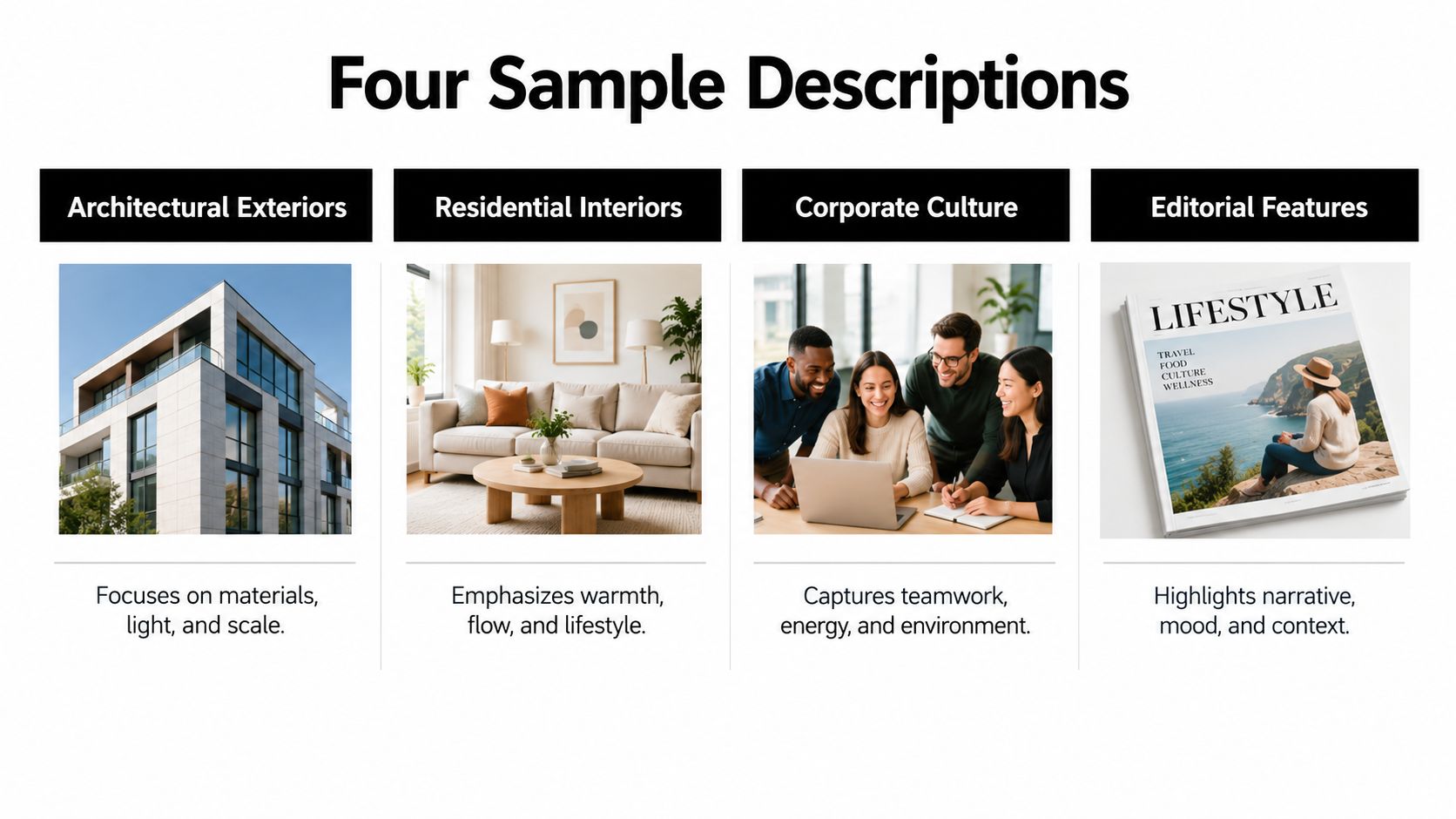
Four descriptions, four audiences
| Assignment | Sample Description | What It Emphasizes |
|---|---|---|
| Architectural exteriors | “Architectural photography of commercial buildings, with an emphasis on façade materials, daylight, and the relationship between the structure and its setting. Images are planned to support project documentation, proposals, and public-facing communications.” | Precision, materials, and scale. It leaves out inflated claims about prestige or impact. |
| Residential interiors | “Interior photography for residential and hospitality spaces, showing how natural light, furnishings, and circulation shape the guest experience. The shoot is planned around room access and the details the client wants viewers to notice.” | Warmth and use. It avoids generic promises of “dream living.” |
| Corporate culture | “Corporate brand photography of teams at work in their professional environment. Direction and lighting are tailored to the setting, with edited images prepared for company communications and recruitment materials.” | People, setting, and intended channels. It doesn't claim to capture an entire workplace culture in a single session. |
| Editorial features | “Editorial photography for stories about places, people, and the work behind them. Images are made to serve the publication's narrative, with captions shaped around the assignment's verified context.” | Editorial purpose and factual discipline. It avoids promotional language that could blur the assignment's role. |
The architectural sample gives a buyer a clear sense of what the photographs prioritize. A construction or development team may want a more specific description of access, building stages, or required views, but those details belong in the project scope when they apply. Adding them to every portfolio paragraph would make the copy harder to scan.
The residential version uses softer language without sliding into lifestyle clichés. “Guest experience” can be appropriate for a hospitality assignment, but it should describe the brief, not imply that photography guarantees a particular response. The corporate example is similarly restrained: it names the subject and use instead of making a sweeping claim about organizational identity.
For editorial work, the photographer should avoid presenting a publication's assignment as a brand campaign. The description can explain the subject and narrative role, while captions identify what the image shows. More adaptable examples are available in commercial photography examples.
Writing for SEO, Accessibility, and Trust
Search visibility, accessibility, and authenticity are practical parts of description writing. They affect how images are discovered, how their meaning is made available to different users, and whether clients can explain how the final photograph relates to the original scene. Good copy doesn't need to sound like a list of keywords or a legal disclaimer.
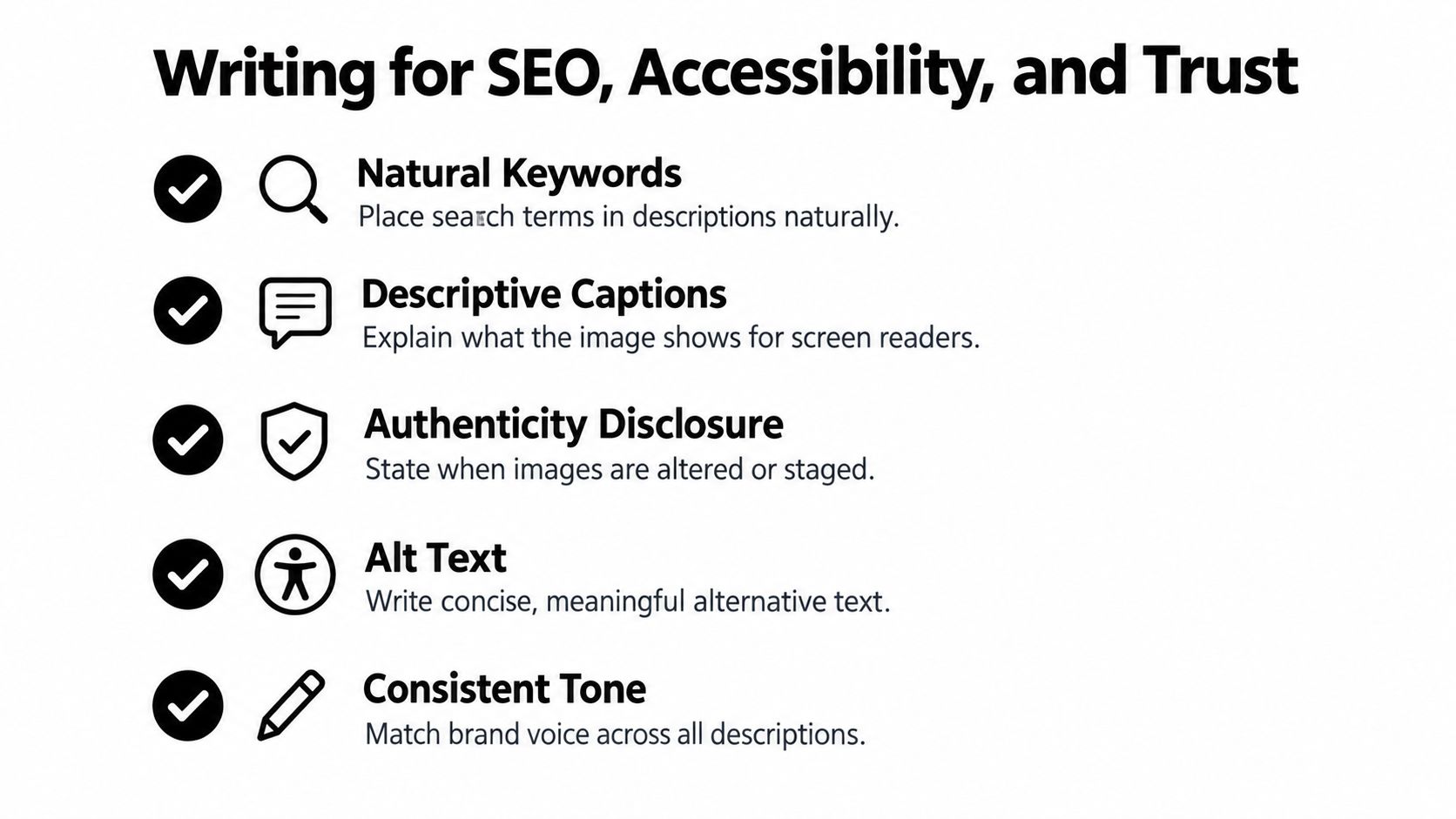
Separate the image fields by their job
A page title or caption can give context to human readers and include relevant terms naturally. Alt text serves a different purpose: it provides a concise text alternative for people who can't see the image, including users of screen readers. It should describe what matters in that particular image, not repeat a keyword phrase or copy the caption word for word.
A 2025 review reported missing alt text on 18.5% of homepage images, while a broader scan of two million pages found missing alt text on roughly 60% of images (accessibility review on image descriptions). For a commercial image library, agree who writes alt text and captions, and provide useful context about the subject and the client's priorities. A photographer can supply image-specific notes; the publishing team should check that the final text fits the page and its users.
For practical guidance on writing image text for search and accessibility, consult these image alt tag SEO best practices. Keep the writing plain. For example, alt text might describe a “sunlit reception area with a stone desk and glazed wall,” while the caption can add the project's purpose or location if that information is confirmed and relevant.
Make the editing boundary visible
A description that promises polished images should clarify what that means. “Edited for color and exposure” is more informative than “perfected,” while a production note can distinguish routine adjustments from material scene changes. Clients may want perspective correction, exposure blending, dust removal, or minor cleanup, but expectations should be set before the work begins.
When generative tools are used, say so in language the client can understand. A process note might read: “Exposure and color were balanced; perspective was corrected. No people, materials, or building features were generated.” Use that statement only when it accurately reflects the workflow. If synthetic elements were added, identify what changed and agree with the client on how that information will accompany the image.
Color promises also need a delivery plan. A web export should be converted to sRGB with its ICC profile embedded; print requirements should be confirmed with the printer because profiles vary by process and region (color-management workflow guidance). Retaining the RAW file, editing in a high-bit-depth working space, and preparing separate web and print exports helps avoid treating one JPEG as a universal master. That is a production choice worth stating when brand color consistency matters.
How Production Techniques Belong in the Description
Technical details belong in a commercial photography description when they explain an outcome the client can see. A buyer doesn't need a lecture on every camera setting. They may need to know why a building's vertical edges look straight, why bright windows retain detail, or how the delivered files will preserve color across a website and printed brochure.
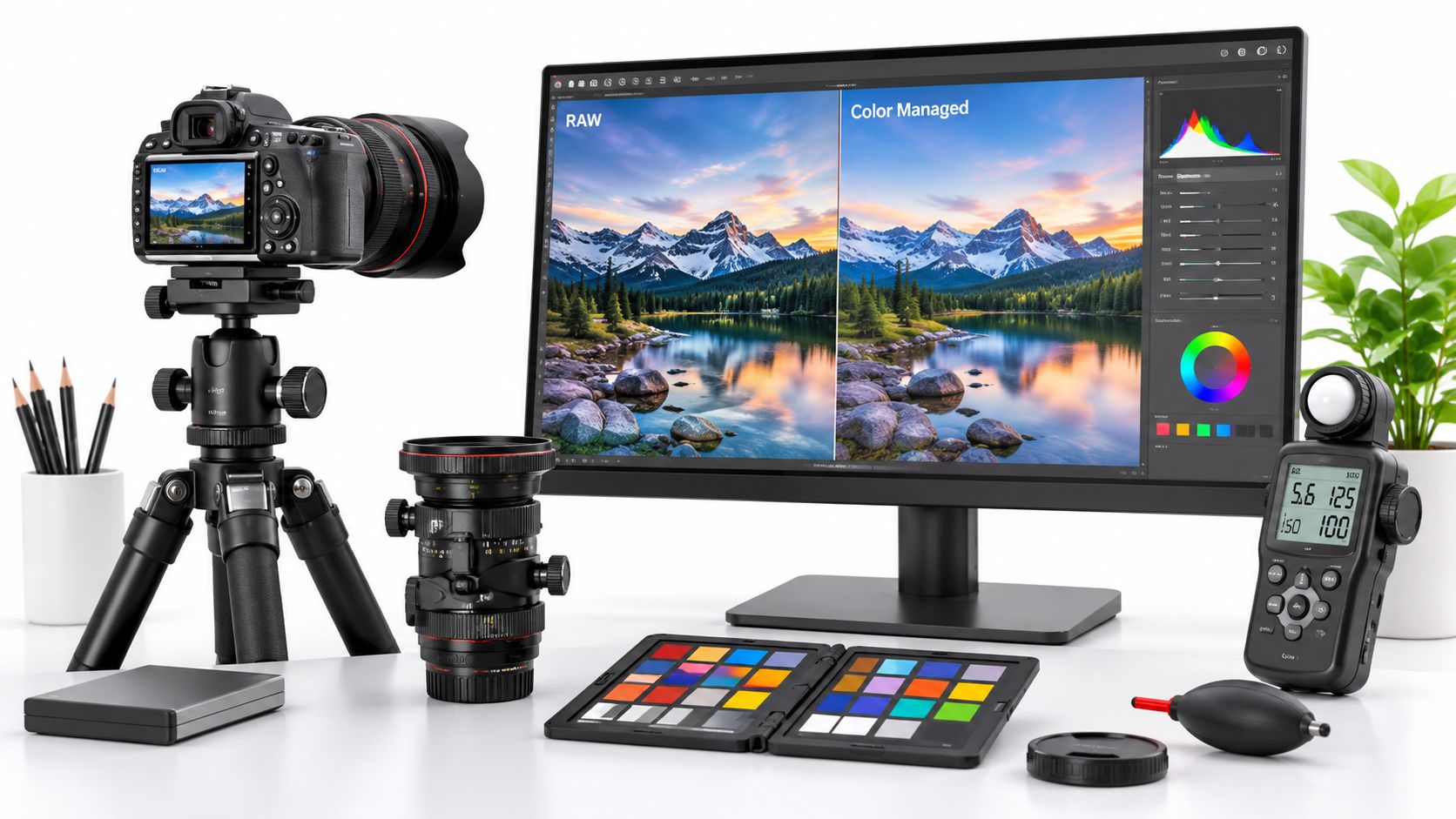
Explain the result, not just the gear
Interior scenes often contain more contrast than a single exposure can record. A bracketed HDR sequence combines exposures to retain information in both bright glazing and darker areas; a practical baseline for stable scenes is a tripod-mounted camera with fixed focus, aperture, and white balance, while shutter speed changes across a six-to-eight-frame sequence (built-environment HDR capture research). Moving people, foliage, or vehicles can create ghosting during compositing, so a photographer may need to wait for a clear frame or choose a different approach.
For architecture, a tilt-shift lens can keep the camera parallel to a building while shifting the lens to frame a taller façade. This helps control converging verticals. Software can correct moderate perspective distortion, but heavy correction crops the image and can reduce edge sharpness. Optical correction is useful when geometry and framing are critical; software is a practical option when distortion is limited or specialized lenses aren't available.
The order of post-production work matters as well. Apply lens-profile correction for optical distortion and vignetting before adjusting perspective; if automatic geometry controls don't preserve the structure, manual adjustments may be needed. A description can translate that process into client language: “Perspective and lens corrections are applied to keep architectural lines accurate, with framing planned to preserve important edges.”
Explain the trade-off before the client approves the shoot. Software can help, but it can't restore every crop or detail lost to aggressive correction.
Finally, color-managed delivery protects the work after editing. A calibrated monitor, controlled viewing conditions, embedded profiles, and separate exports for web and print make the handoff more predictable. Describe the outcome and the workflow plainly: “Web images are converted to sRGB with embedded profiles; print files are prepared to the printer's specifications.” That's enough for most buyers to understand what they're receiving without turning a service page into a technical manual.
A Repeatable Workflow for Writing Every Description
Start with intake questions: what is being photographed, who needs the images, where will they appear, and what must the audience understand? Confirm the shoot's scope, editing boundaries, accessibility responsibilities, licensing, and delivery formats before drafting.
Use a four-part draft: subject and scope, production approach, intended use, and delivery. Write for the buyer's decision, not to describe every creative choice. Then review the language for natural search terms, accurate alt text and captions, and a clear statement about material edits or generative tools when relevant.
Before handoff, pair each image with the right title, caption, alt text, and export variant. Confirm web color settings and ask the printer for specifications when print is involved. Keep the agreed description with the final files so the marketing lead doesn't face a blank caption field after the shoot.
A clear commercial photography description is often the first evidence a client sees of the photographer's judgment. Refine the wording with every assignment, then use it to make the next handoff easier.
Jimmy Clemmons Photographer provides architectural imagery and commercial brand content, including location scouting, lighting design, on-set direction, and professional editing. If your next project needs photographs and publication-ready context, visit Jimmy Clemmons Photographer to discuss the assignment.