
You've finished a renovation, launched a product, refreshed your office, or invested in a new space. Now the marketing question lands on your desk. What kind of photography do you need?
That sounds simple until you start comparing portfolios. One photographer shows polished building exteriors. Another specializes in styled products. Another is strong with executive portraits but weak on interiors. If you hire the wrong specialty, the images may still look professional, but they won't solve the business problem you need to address.
That's why understanding the types of commercial photography matters. It's not just industry vocabulary. It's how you decide whether you need a photographer who can keep vertical lines true in a lobby shot, direct a leadership team without making them look stiff, or style a product so it sells online.
Commercial photography is a large market, valued at about $10 billion in 2024, with projections reaching $15 billion by 2034 at a 4.8% CAGR according to Exactitude Consultancy's commercial photography market report. That growth reflects a simple reality. Businesses need better visual assets across websites, leasing packages, campaigns, social content, investor materials, and print.
What follows is a practical consultation-style guide. Each specialty is framed around a common client need, what to look for in a portfolio, and how to brief the assignment well so the images work effectively.
1. Architectural Photography
A firm finishes a headquarters, a hotel opens a flagship property, or a developer wants press-worthy images of a new build. The brief sounds simple until the first review round reveals the actual standard. Vertical lines have to stay true. Materials have to read accurately. The space has to feel designed, not merely photographed.
Architectural photography helps a business show design intent with precision. Architects use it for awards, project pages, and publication submissions. Developers use it to position a property at a higher level than listing imagery. Hospitality brands use it to show how space, light, and guest experience work together. The goal is not coverage alone. The goal is to make the design legible.
That is the line between architectural photography and faster property marketing work. A strong architectural portfolio shows control, restraint, and an understanding of how people read built space. I look for images that respect geometry, hold detail in highlights and shadows, and give each project a clear visual sequence rather than a pile of disconnected wide shots.
What to look for in a portfolio
A useful portfolio should answer a client question. Can this photographer represent the building as designed, under real-world light, without distorting scale or finish?
Check for:
- Perspective control: Columns, window frames, and wall edges stay straight without the frame feeling over-corrected.
- Material accuracy: Glass looks like glass. Wood keeps texture. Concrete does not turn muddy or orange.
- Light judgment: Interior lighting, daylight, and window views are balanced well enough to preserve mood and information.
- Coverage depth: The set includes establishing views, transition spaces, key design moments, and details that support the architect's intent.
- Consistency: Exterior, interior, and dusk work should feel like the same project, not three different shooting styles.
A weak set often looks polished at thumbnail size and falls apart on inspection. Lobby lines bend. Window views are blown out. Every room is shot ultra-wide, which makes the project feel generic and larger than life in a way architects and design teams spot immediately.
How to brief this specialty well
The brief should start with purpose. "We need photos of our new building" is not enough. "We need a project set for awards submission, firm marketing, and press outreach" gives the photographer a usable target.
Include:
- Primary audience: Prospective clients, editors, juries, investors, or hospitality guests
- Priority story: Façade design, public realm, circulation, sustainability features, lighting, or signature interiors
- Usage: Website case study, print portfolio, PR, social crops, presentation decks
- Access and timing: Best elevations by time of day, occupied vs empty spaces, weather tolerance, twilight needs
- Approval process: Who signs off on the shot list, styling, and final selects
If the assignment has a stronger leasing or property marketing goal, review examples of real estate photography and video for commercial properties before booking. The overlap is real, but the image strategy changes. Architectural work serves the design narrative first.
For exterior-led commissions, a specialist in commercial building exteriors will usually scout sun path, street approach, and dusk angles before the main shoot. That prep saves time on shoot day and prevents a common mistake. Great buildings photographed in the wrong light rarely look expensive, no matter how strong the architecture is.
2. Commercial Real Estate Photography
Commercial real estate photography sells usability, not just beauty. The buyer, tenant, broker, or investor wants to understand access, scale, frontage, circulation, amenities, and condition. A pretty image that hides the floor plate or the loading area won't help close a lease.
Many businesses often pick the wrong type of commercial photography. They hire an architectural shooter for a marketing problem that needs leasing logic, or they hire a fast listing photographer for a flagship development that needs stronger brand positioning. The overlap is real, but the priorities change.
What to ask for before the shoot
A useful brief for this specialty should include intended tenants, building class, priority amenities, and where the images will appear. A brochure for institutional investors needs a different image mix than a listing package for a suburban office park.
Use a short request structure:
- Access priorities: Lobby, suites, conference rooms, loading zones, parking, signage, and street presence.
- Context needs: Nearby roads, retail adjacency, neighborhood cues, and arrival sequence.
- Format requirements: Horizontal format for brochures, portrait crops for social, and banner-safe compositions for websites.
For example, a warehouse developer may need overhead context, truck court access, and circulation clarity. A retail leasing team may care more about storefront rhythm, parking visibility, pedestrian approach, and signage opportunities.
A photographer with experience in commercial real estate photography and video can also advise whether aerials, walkthrough footage, or twilight coverage will strengthen the package. What doesn't work is relying only on dramatic wide shots. Prospective tenants still need evidence. They want to see how the property functions on an ordinary day.
3. Interior Design Photography
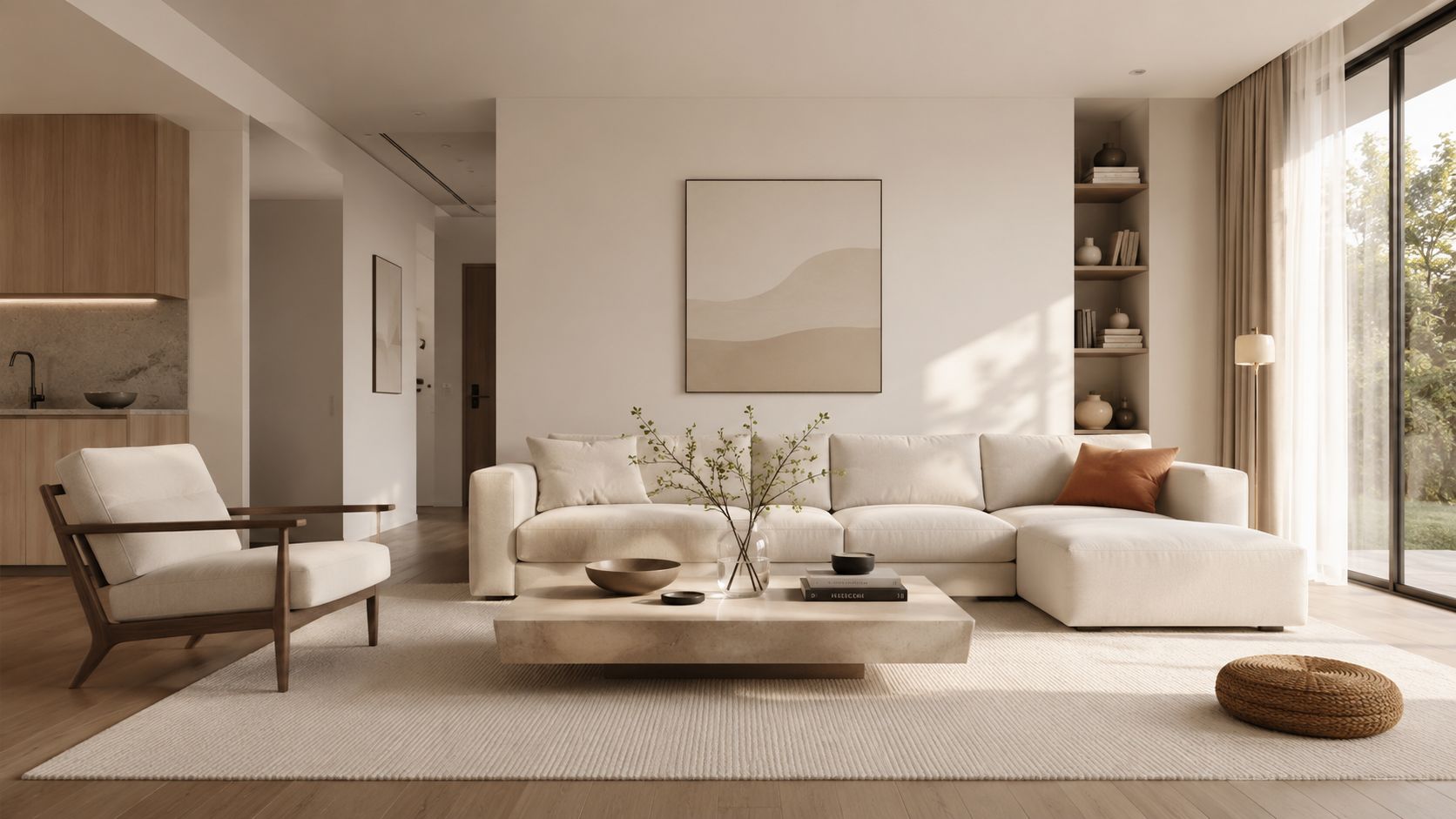
Interior design photography is about atmosphere under control. Designers, hospitality groups, furniture brands, and high-end residential teams use it to show how a space feels, not just how it measures.
That means the photographer has to translate layers that clients care about but cameras flatten easily. Texture, finish transitions, lamp glow, daylight direction, styling restraint, and sightlines all need deliberate handling. Good interior work feels lived-in without looking messy, polished without feeling staged.
What to look for in the portfolio
The strongest portfolios show that the photographer understands both design hierarchy and restraint. You should see room views that establish flow, then tighter frames that isolate the decisions that make the space distinct.
A few signs of weak interior work:
- Over-lit rooms: The image is bright, but the mood is gone.
- Bad color balance: Warm fixtures turn orange or daylight turns blue.
- No detail coverage: You get the room, but not the craftsmanship.
- Distracting styling: Decorative objects compete with the design.
For a hospitality lounge, the brief may prioritize ambience and guest experience. For a design firm, the brief may prioritize custom millwork, furniture placement, and composition for publication submissions. In both cases, interior photography lighting strategy matters more than most clients realize, because mixed light is usually the difference between a credible image and one that looks amateur.
Interior photography fails when the photographer tries to make every room equally bright. Good spaces often have contrast, and the image should respect that.
4. Corporate Culture and Team Photography
A hiring manager needs a careers page by Friday. The company has polished headshots from three years ago, a few phone photos from an offsite, and no usable images of how the team works. That gap is where corporate culture and team photography earns its keep.
This category solves a trust problem. Prospective hires want to see who they will work with. Clients want evidence that the company is organized, credible, and staffed by real people, not stock-photo stand-ins. PR teams need leadership portraits that match the brand. Sales teams need images that make decks and proposals feel current. In practice, one assignment often needs to cover all of it.
The work usually combines three image types, each with a different job:
- Headshots: Consistent portraits for directories, LinkedIn, press kits, and speaker bios.
- Environmental portraits: Individual portraits made in a real workspace, with enough context to say something about role or seniority.
- Culture coverage: Small teams collaborating, serving customers, meeting on site, or moving through the day in a way that feels believable.
Shutterstock's 2024 commercial imaging study reported that lifestyle-context imagery generated higher engagement and stronger conversion performance than isolated visuals on brand and commerce channels, according to Shutterstock's commercial photography analysis. The exact use case differs in corporate work, but the lesson carries over. Context helps people judge credibility faster.
That does not mean every frame should be loose or documentary-style. Some companies need formal leadership portraits because investors, boards, or enterprise buyers expect polish. Others need warmer, more approachable imagery because recruiting is the immediate priority. Good direction comes from the business goal, not from a vague request for "natural candids."
This is also where weak briefs create expensive photo libraries. If wardrobe is unclear, one team arrives in jackets and another in branded polos. If location scouting is skipped, the photographer ends up fighting bad conference-room lighting and cluttered backgrounds all day. If no one defines usage, the team gets thirty nice photos and none of the vertical, horizontal, tight, and wide variations marketing needs.
What to look for in the portfolio is consistency under real working conditions. Skin tones should match from one department to another. Group photos should feel organized without looking rigid. Offices should look active but not chaotic. The strongest portfolios also show that the photographer can direct non-models, because employees rarely know what to do with their hands, posture, or eyeline until someone on set solves it quickly.
A strong brief for this specialty should answer five questions: who needs to be photographed, where the images will be used, what level of formality the brand wants, which locations are available, and how much time each person can realistically give. That is the difference between a gallery that looks pleasant and a photo library that recruiting, marketing, HR, and leadership will all use for the next year.
5. Product Photography and Styling

A customer lands on a product page and has one immediate question: can I trust what I'm seeing enough to buy? Product photography answers that question. It reduces uncertainty, shows quality, and gives marketing teams assets built for specific selling environments. According to Skywall Photography's overview of commercial photography types, professional images can raise online conversion rates by up to 40%, and the ecommerce product photography market is projected to grow from about $1 billion in 2024 to $2 billion by 2033.
That commercial pressure changes how the work should be planned. Product photography is not one specialty with one output. A white-background ecommerce set solves a different business problem than a styled campaign image, a wholesale line-sheet image, or a paid social asset designed to stop scrolling.
Clients often ask for “clean product shots,” but that phrase is too loose to brief from. The first decision is usage. Amazon needs compliance and clarity. A Shopify product page needs trust-building coverage and detail. Paid ads need a strong first frame. Packaging launches often need styled images that carry brand mood as much as product information.
A useful brief should define:
- Sales channel: Amazon, Shopify, retailer PDP, wholesale line sheet, social ad, print catalog.
- Image purpose: Hero image, gallery support, detail crop, comparison shot, scale reference, or lifestyle scene.
- Material challenges: Matte, gloss, metal, glass, liquid, fabric, transparent packaging, or reflective labels.
- Styling level: Pure packshot, prop-supported setup, or full art-directed scene.
- Usage requirements: Aspect ratios, background standards, file delivery specs, and any retailer compliance rules.
The trade-off is usually accuracy versus atmosphere. Clean packshots help a buyer inspect shape, finish, and features. Styled photography helps the buyer imagine ownership. Strong brands usually need both, but they should not expect one frame to do every job.
Angle planning matters for the same reason. Rewarx's guide to product photography angles explains that best practice often means 5 to 8 images from specific views, including side profiles and three-quarter angles. That only works if the angles are chosen around buyer questions. Footwear buyers care about silhouette and sole profile. Skincare buyers often care more about cap design, dispenser type, ingredient callouts, and how the label reads at thumbnail size.
Lighting and styling choices also need to match the product category. Cosmetics often need controlled specular highlights so packaging looks premium without blowing out foil or gloss. Food packaging may need color accuracy across an entire range. Home goods usually sell better when the texture reads clearly. Jewelry, glass, and polished metal require time, grip work, and retouching discipline because every bad reflection shows up immediately.
AI can extend a good shoot, but it does not fix weak coverage. Acquire Convert's discussion of product photography angles and AI makes the point clearly. The base photography still has to be solid. If the original files miss key angles, material detail, or clean edges, AI just produces faster variations of the wrong source material.
When reviewing a portfolio, look past whether the images are attractive. Check whether white backgrounds are clean, whether color stays consistent from one SKU to the next, whether reflective products are controlled well, and whether styled sets still keep the product as the main subject. A strong product photographer shows repeatable process, not just a few striking hero shots.
A strong brief for this specialty should answer six practical questions: where the images will be used, what the buyer needs to understand before purchasing, how much styling the brand wants, which materials are hardest to photograph, how many SKUs need consistent treatment, and what file specs the sales channels require. That is how businesses get a library that supports conversion, advertising, merchandising, and launch planning instead of a folder of nice-looking images with gaps.
6. Hospitality and Venue Photography
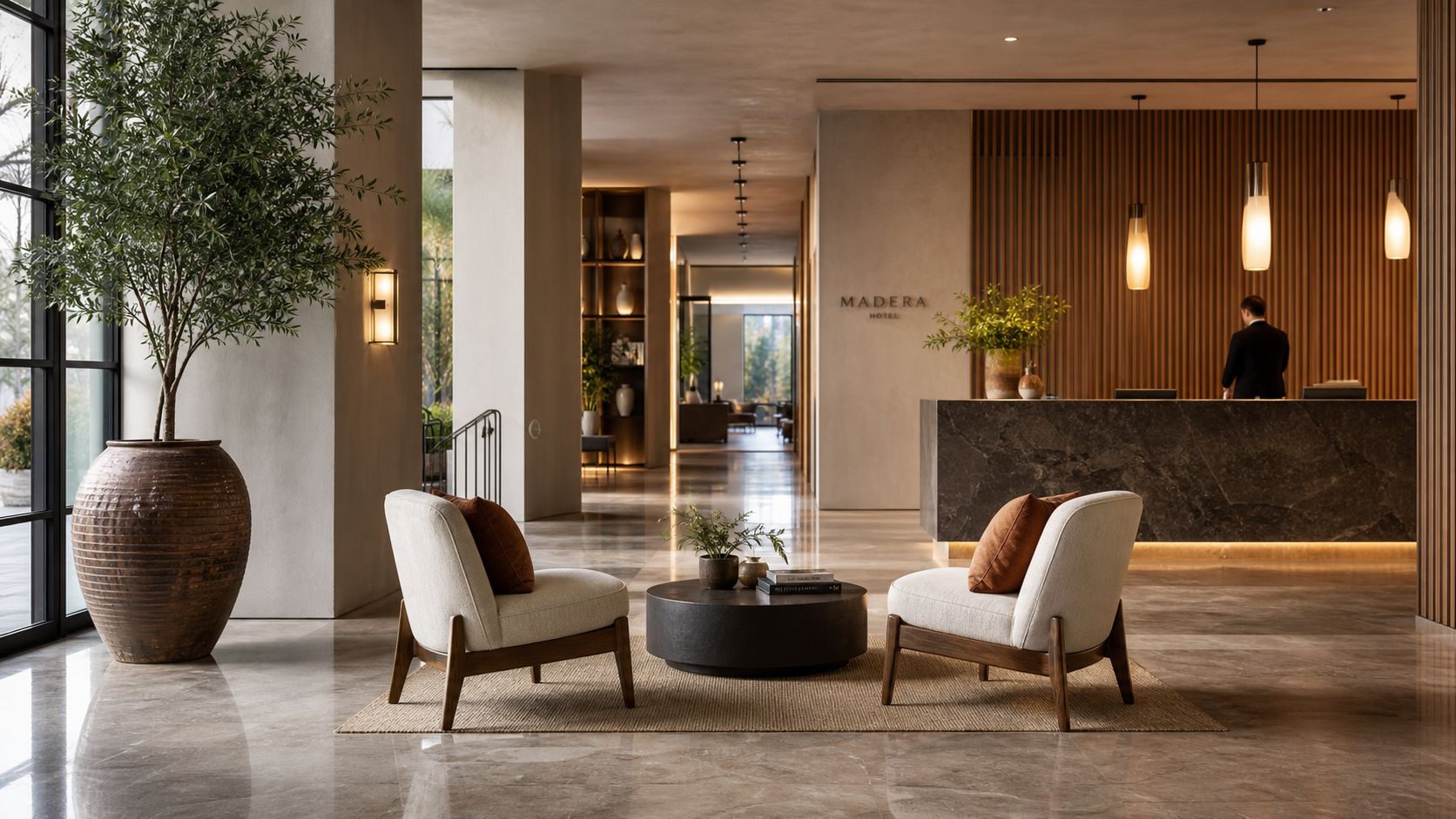
Hospitality photography sits at the intersection of interiors, architecture, branding, and guest psychology. A hotel, restaurant, or event venue isn't just selling a room. It's selling expectation. Guests want to know what arrival feels like, how the lighting reads at dinner, whether the bar has energy, and whether the guest room feels quiet, bright, or luxurious.
That means this specialty needs more than technically correct room photos. It needs sequencing. Exterior arrival, lobby mood, public spaces, signature details, guest accommodations, food and beverage context, and service moments should all support the same promise.
Where clients usually miss the mark
The most common weak brief is “We need photos of the property.” That's too vague. A boutique hotel trying to increase direct bookings needs a different image set than a venue courting weddings or corporate events.
Ask for image groups by decision-maker:
- Travelers: Arrival, room comfort, amenities, neighborhood context.
- Event planners: Capacity cues, setup flexibility, breakout areas, service polish.
- Press and partners: Signature design moments, chef or staff portraits, editorial-style scenes.
A restaurant group, for example, may need daylight interiors for press, moody dining-room images for social, and private-event coverage for sales decks. A resort may need aerial context and amenity storytelling. If the portfolio only shows empty spaces with no hint of use, the work may be elegant but commercially incomplete.
Hospitality images should answer one quiet question in every frame: why would a guest choose this place over another one nearby?
7. Construction Progress and Project Documentation
Construction photography isn't glamorous in the same way as a finished building shoot, but clients underestimate its value all the time. Developers, general contractors, institutional owners, and public agencies need a visual record that tracks milestones, protects decisions, supports marketing, and helps stakeholders understand progress.
The strongest documentation work is systematic. The photographer returns to consistent vantage points, keeps timing disciplined, and shoots enough context to make phase-to-phase comparison useful. Random site visits create random archives. A planned schedule creates a narrative.
Here's an example of how that visual record can come together over time:
What a useful construction brief includes
A contractor and a developer often need different things from the same site. The contractor may want trade coordination, milestone proof, and craftsmanship details. The developer may want transformation storytelling for investors, leasing, or future tenants.
Include these in the assignment notes:
- Fixed vantage points: Repeatable angles from grade, upper floors, and aerial positions.
- Milestone priorities: Groundbreaking, steel, enclosure, interiors, completion, occupancy.
- Safety and access rules: PPE, escort requirements, active work zones, and restricted areas.
This work is especially valuable on campus expansions, public projects, and phased mixed-use developments where multiple audiences need updates. It also helps later, when the finished architectural shoot is commissioned. The teams then have a visual record of how the project came together, which is useful for marketing, awards submissions, and project retrospectives.
8. Educational Institution Photography
Schools, colleges, and universities need more range than most organizations realize. They're marketing to prospective students, reassuring parents, documenting facilities, supporting advancement teams, and feeding year-round communications. A single shoot day won't solve all of that unless the brief is specific.
Educational photography works best when it balances place and people. Campus architecture matters. So do labs, libraries, studios, athletics, residence life, and classroom interactions. But if every frame looks staged, the institution loses credibility fast.
What schools should commission
A useful image library usually includes a mix of evergreen assets and timely coverage. Evergreen images show facilities, campus identity, faculty presence, and brand character. Timely coverage captures seasonal life, signature events, and current student experience.
A strong portfolio in this niche should show:
- Real academic settings: Not just empty buildings, but active learning environments.
- Age-appropriate direction: College students, younger students, faculty, and families all need different treatment.
- Institutional consistency: Images should feel like one system, not a random collection.
Private schools often need warmth, trust, and community in the imagery. Universities may need more program-specific depth, especially for engineering, health sciences, performing arts, or research. If minors are involved, planning and permissions must be tight, and on-set direction needs to stay professional and efficient.
The best educational assignments don't try to fake energy. They document actual use of the campus and guide moments lightly enough that the images still feel honest.
9. Lighting Design and Technical Product Photography
Lighting products are some of the hardest commercial subjects to photograph well. The fixture itself has form, finish, and scale. The light it emits has color, intensity, falloff, and effect on surrounding materials. If you show only the object, you miss performance. If you show only the lit environment, you may miss the product.
This specialty serves manufacturers, showrooms, specifiers, lighting designers, and architects. It requires careful exposure control, color management, and coordination with the design intent of the installation.
What separates strong technical work from pretty pictures
A polished chandelier image can still fail if the finish is inaccurate or the room's light effect is misrepresented. That's why color-managed workflow and calibrated capture matter in this niche.
For manufacturers and spec teams, the image set often needs two tracks:
- Catalog clarity: Straightforward views showing shape, finish, mounting, and detail.
- Application proof: Installed views showing beam quality, atmosphere, and scale in context.
A showroom might need clean packshot-style images for sales sheets plus environmental photographs showing how a pendant or sconce behaves in a hospitality or residential setting. An architectural lighting designer may care less about the fixture body and more about wall wash, accent, or decorative presence within the overall room.
What doesn't work is uncontrolled mixed light and aggressive retouching. Buyers in this category are often trained to notice color temperature problems, glare issues, and misleading exposure decisions immediately.
10. Editorial and Magazine Feature Photography
Editorial photography supports stories. Sometimes the subject is a building, a designer, a product, a team, or a city block. What makes the work editorial is the sequencing and intent. The images must carry a narrative, support layout, and leave room for the publication's voice.
This specialty is valuable even outside magazine work. Brands commission editorial-style coverage because it feels more substantial than plain marketing photography. It gives them assets that can live in features, press kits, founder stories, case studies, and long-form web content.
What editors and brands both need
Editorial assignments usually need a wider visual range than clients expect. A single hero image won't carry the spread. Strong submissions include establishing frames, medium views, details, portraits, and scene-setting transitions.
Good editorial portfolios usually show:
- Narrative control: The series feels intentional, not repetitive.
- Publication awareness: Cropping room, vertical and horizontal options, and quieter images for layout.
- Subject sensitivity: The photographer knows when to document and when to direct.
For a design magazine, that may mean a cover-worthy room, process details, and a portrait of the designer in the space. For a regional publication, it may mean environmental storytelling around a business or cultural feature. For a corporate client adopting an editorial style, it often means replacing generic brand images with a more human, story-led visual language.
Jimmy Clemmons' editorial background is significant. Photographers trained in publication environments tend to think in sequences, not just stand-alone frames.
10-Point Comparison: Types of Commercial Photography
| Service / Type | Implementation Complexity 🔄 | Resources & Time ⚡ | Expected Outcomes 📊 | Ideal Use Cases 💡 | Key Advantages ⭐ |
|---|---|---|---|---|---|
| Architectural Photography | High, perspective correction, scouting, complex lighting | Specialized lenses, tripods, location access, extensive post-processing | High-impact visuals for portfolios, publications, accurate design representation | Architect portfolios, award submissions, high-end property marketing | Establishes design credibility; strong editorial appeal |
| Commercial Real Estate Photography | Moderate, efficient site coverage, context shots | Drone ops, fast schedules, multiple properties per day, quick edits | Improved listings and leasing appeal; measurable rental/lease outcomes | Broker listings, property management marketing, investment sales | Scalable workflows; recurring client potential |
| Interior Design Photography | High, styling, color accuracy, mood control | Staging, supplemental lighting, careful color-managed post-production | Polished imagery for publications and designer portfolios | Designer showcases, hospitality interiors, editorial features | Premium pricing; repeat clientele and editorial opportunities |
| Corporate Culture & Team Photography | Low–Moderate, people management, authentic direction | Fast sessions, portable lighting, organized scheduling, quick turnaround | Strong employer brand assets for web and internal comms | Team pages, LinkedIn campaigns, annual reports | High-volume recurring work; broad organizational demand |
| Product Photography & Styling | Moderate, precise lighting and consistency | Studio setups, lighting gear, standardized workflows, batch retouching | Consistent catalog/e‑commerce assets that improve conversions | E‑commerce listings, catalogs, product launches | Highly repeatable; efficient at scale |
| Hospitality & Venue Photography | High, ambiance, timing, guest coordination | Multiple shoot times, staging, possible video/virtual tours, housekeeping coordination | Enhanced booking appeal and brand perception for venues | Hotels, restaurants, event spaces, resort marketing | High-value clients; multimedia opportunities |
| Construction Progress & Project Documentation | Low–Moderate, safety compliance, repeat scheduling | On-site safety gear, drone, regular interval shoots, long-term engagement | Clear project records, stakeholder updates, marketing of progress | Developers, contractors, infrastructure projects | Recurring contracts across project lifecycle |
| Educational Institution Photography | Moderate, multi-stakeholder coordination | Campus scouting, event scheduling, portrait setups, seasonal shoots | Recruitment and institutional branding assets across channels | University recruitment, program marketing, alumni materials | Annual repeat work; sizable institutional budgets |
| Lighting Design & Technical Product Photography | High, technical color rendering, controlled tests | Calibrated lighting, lab setups, specification documentation, detailed post-processing | Accurate spec imagery for catalogs, designer education, sales | Manufacturers, showrooms, specification sheets | Niche expertise with pricing power; low competition |
| Editorial & Magazine Feature Photography | High, concept development, publication standards | Preproduction, longer timelines, collaboration with editors, specialized retouching | Prestige, portfolio-building, cultural and editorial exposure | Magazine features, long-form stories, branded editorial | High credibility and exposure; creative freedom |
Choosing a Partner, Not Just a Photographer
Selecting among the types of commercial photography isn't a style preference. It's a business decision. The right specialty helps you attract tenants, support a product launch, strengthen recruiting, document a project, or position a space for publication. The wrong one can leave you with attractive images that don't answer the questions your audience is asking.
That's why portfolios should be reviewed with a purpose. Don't just ask whether the work looks polished. Ask whether it solves the same problem you're trying to solve. If you're an architecture firm, you need a photographer who understands design intent, perspective control, and how to build a set of images that can serve awards, press, and your portfolio. If you're a brand team selling products online, you need someone who understands angle coverage, styling, lighting consistency, and how a customer reads an image before they click buy.
The brief matters just as much as the portfolio. Strong commercial assignments start with clarity about audience, usage, and priorities. Where will the images appear first? Who needs to approve them? Which details are mission-critical, and which are secondary? A photographer who asks those questions early is usually protecting your investment, not slowing the job down.
You should also look for signs of discipline that clients often miss in the excitement of creative review. Does the photographer maintain consistency across an image set? Do interiors hold their mood without muddy color? Do portraits feel directed without becoming stiff? Can the photographer move between broad storytelling and precise details? These are the practical differences between someone who can make a few strong frames and someone who can build an asset library your team will keep using.
This is especially important for firms and organizations that don't need just one kind of imagery. A developer may need construction documentation now, leasing photography next, and finished architectural images later. A hospitality group may need interiors, team portraits, and editorial-style brand content across the same quarter. A college may need campus facilities, student life, and leadership portraits that all feel like one brand. In those cases, hiring a partner with strong consultation skills saves time and reduces visual inconsistency.
A true commercial photographer doesn't just arrive with cameras. They help define the assignment. They identify what the audience needs to see, what the brand needs to communicate, and what the final image set has to do once it leaves the shoot day. That's the standard businesses should expect.
If you need a photographer who can translate architecture, interiors, corporate culture, and brand storytelling into purposeful commercial imagery, Jimmy Clemmons Photographer is built for that work. Based in Atlanta, the studio collaborates with architecture firms, developers, hospitality groups, corporate teams, schools, and contractors to produce images that are technically precise, editorially sharp, and aligned with real business goals.