
A client once showed me a glossy portfolio and said, “We want images like this.” Ten minutes later, it was clear they didn't want the style. They wanted more leasing inquiries, better investor decks, and product pages that converted without a sales rep explaining every detail.
That's the gap most galleries miss. A strong commercial image isn't just attractive. It carries weight inside a business. It can make a workplace feel premium, a food product feel craveable, or a building feel worth visiting before anyone steps on site. The global commercial photography market was valued at USD 5.6 billion in 2025 and is projected to reach USD 7.7 billion by 2036, with product photography identified as the largest segment at 45.0% of the market over the study period, according to Fact.MR's commercial photography market analysis.
That scale matters because commercial photography examples aren't just mood-board material. They're working assets used in advertising, e-commerce, hospitality, architecture, and brand communication. I'm going to break down seven photographers and studios the way practitioners evaluate them. Not by “beautiful work” alone, but by the brief behind the image, the lighting logic, the compositional decisions, and the kind of client problem each one is built to solve.
1. Jimmy Clemmons Photographer
I've seen plenty of commercial portfolios that look expensive but fall apart the second you ask what job the image needed to do. Jimmy Clemmons' work holds up under that pressure. The frames show a photographer who decides the hierarchy before the camera goes on the tripod, which is why the images feel calm, clear, and useful to the client.
That matters for architecture, interiors, hospitality, and corporate branding, where one shoot often has to serve several audiences at once. The leasing team wants polish. The design team wants the space represented accurately. The marketing team needs assets that can carry a website, a pitch deck, social crops, and print collateral without feeling like four separate campaigns.
Photographer's-eye breakdown
What stands out first is restraint. He does not force a space into looking dramatic if the brief calls for credibility. Highlights stay under control, verticals are handled with discipline, and the frame lines feel settled. That kind of editing at capture is hard to fake later.
The range is also useful from a business standpoint. A lot of studios can shoot exteriors, interiors, portraits, and products, but the work starts to split into different visual voices. Here, the same judgment runs across categories. For a client, that solves a real problem. Brand consistency gets easier when the office photography, leadership portraits, and branded details all look like they belong to the same company.
I'd point marketers and design teams to his commercial architectural photography work because it shows the strategic middle ground good clients need. Spaces still feel designed, not overproduced. The images have enough polish for promotion, but they do not drift so far into style that the viewer stops trusting the room.
Practical rule: Commercial images earn trust before they ask for attention.
That balance comes from production choices, not luck. Location scouting affects whether a facade has depth or just symmetry. Lighting choices decide whether mixed practicals feel warm and intentional or muddy and uncontrolled. Direction on set changes whether a corporate portrait supports the brand or looks like a placeholder the team plans to replace later.
His editorial background matters here. Experience with publications such as Sports Illustrated, Football Weekly, Condé Nast, and Atlanta magazine usually sharpens two habits clients pay for. Faster visual problem-solving, and tighter selects. You can feel that in work built for art directors, editors, and brand teams who care about sequence, pacing, and how one image supports the next.
Best fit and trade-offs
This is a high-touch studio. Clients are paying for judgment, consistency, and a shoot process that reduces expensive mistakes later in design and marketing production.
- Best for architecture and interiors: Design firms, developers, hospitality groups, and property marketers that need more than record shots.
- Best for brand alignment: Teams that want portraits, spaces, and product imagery to share one visual standard.
- Watch production logistics: Atlanta-based assignments are straightforward. Regional or distant shoots need more planning around travel, access, and schedule.
I also like that the business case is stated plainly. Jimmy Clemmons' perspective on the ROI of professional photography matches how serious buyers usually evaluate image spending. They are buying assets that help lease, pitch, recruit, publish, and sell.
2. Mike Kelley
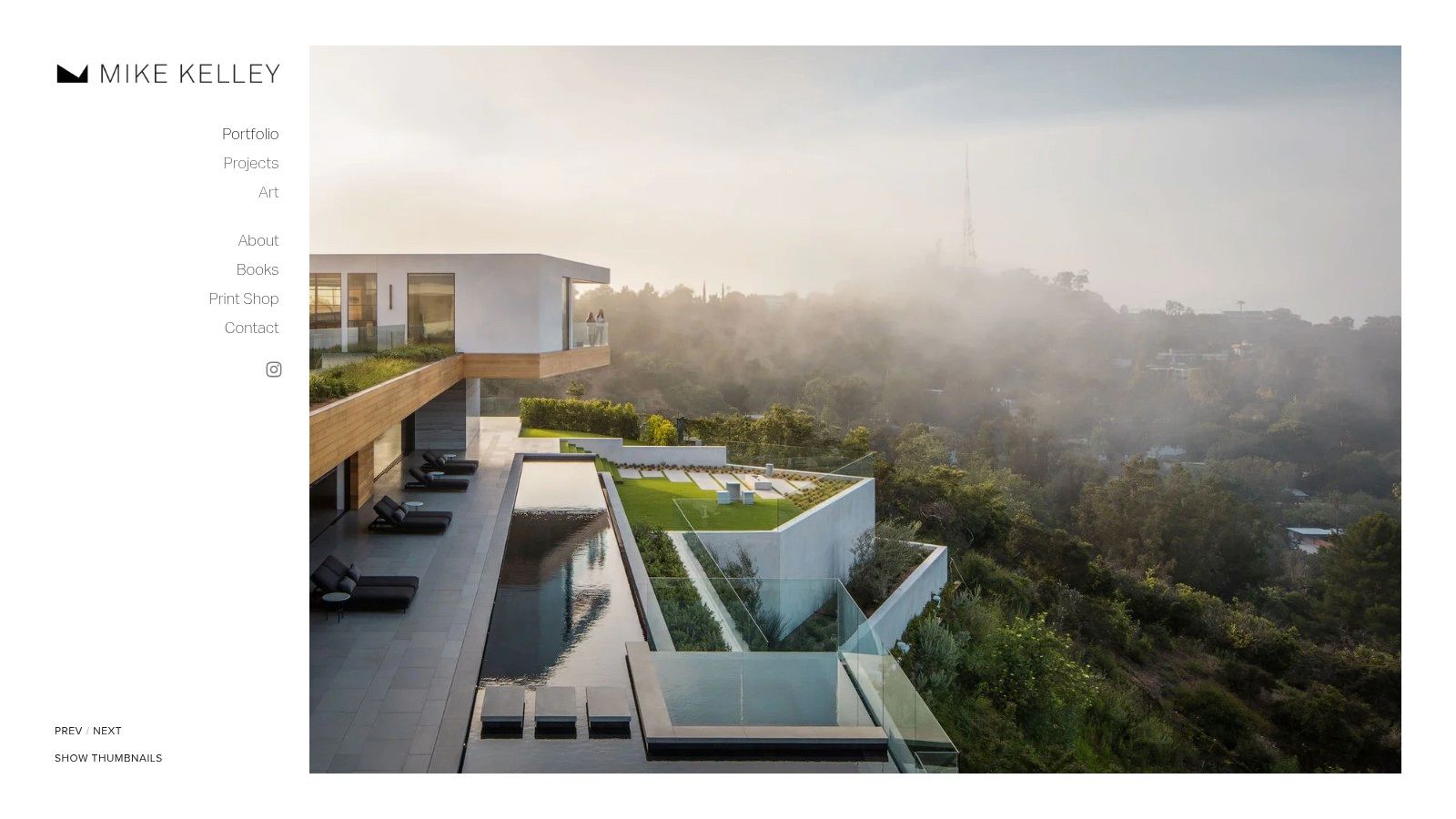
Mike Kelley's work is what I'd point to when a client wants architecture photographed with ambition, not caution. Visit Mike Kelley.
He's firmly in the design-led architectural lane, and that specialization is the point. The images are controlled, often cinematic, and built for clients who need more than record shots of a completed project. Architects, developers, and firms submitting to awards or publications usually need perspective control, disciplined retouching, and a sense that the building has a point of view. His portfolio shows that.
Photographer's-eye breakdown
Architectural shooters make one big choice early. Are we proving what the building is, or are we expressing what it feels like? Kelley leans toward expression without abandoning accuracy. That's hard to do well.
His frames tend to use perspective as a persuasive tool. Lines feel intentional. Negative space isn't wasted. The light often feels timed rather than found. That's the difference between “nice building photo” and a marketing image that architects want associated with their design thinking.
A good architectural frame doesn't just show geometry. It tells the viewer where to look first and why that feature matters.
If your team is evaluating commercial photography examples for the built environment, compare this approach with a more brand-integrated local specialist like this commercial architectural photographer resource from Jimmy Clemmons Photographer. The distinction is useful. Kelley is a strong choice when the architecture itself is the hero and the visual standard needs to be unmistakably premium.
Best fit and limits
- Strongest use case: Architecture firms, developers, hospitality projects, and cultural spaces that need editorial-quality imagery for awards, PR, and marketing.
- What works well: Refined composition, retouching discipline, and a visual style that amplifies design intent.
- What doesn't: If you need high-volume e-commerce, food sets, or fast-turn social content, this is the wrong tool for the job.
Premium positioning also means tighter availability. For the right architectural brief, that's worth it. For smaller practical jobs, it may be overkill.
3. Tim Tadder
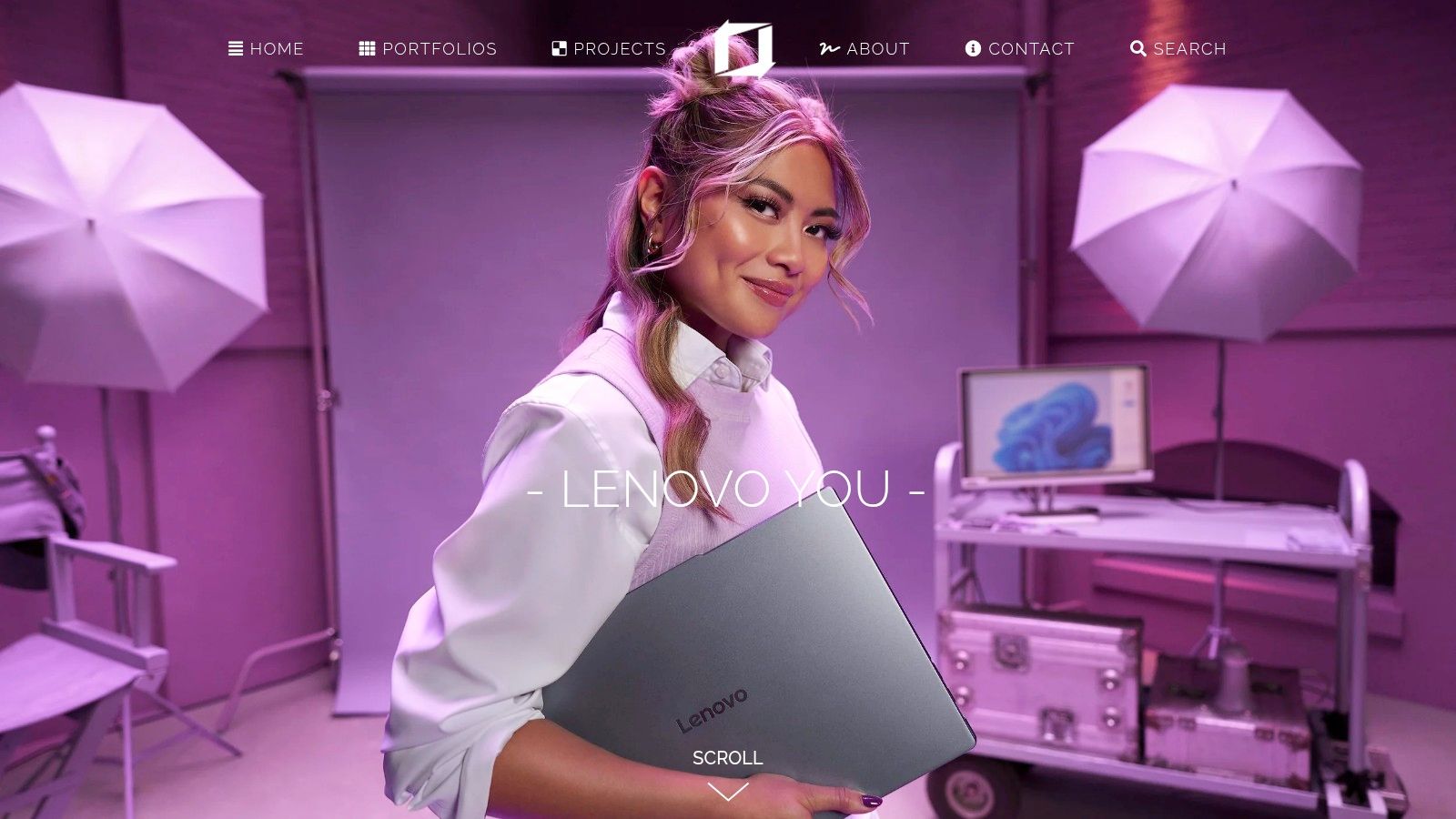
Tim Tadder operates in the part of commercial photography where subtlety usually loses. Visit Tim Tadder.
His campaigns push toward impact, motion, concept, and controlled spectacle. That makes him useful for advertising, sport, fitness, celebrity, and branded portraiture where the image has to stop a scroll or anchor a campaign rollout. If a client says they want something “clean and understated,” I wouldn't send them here. If they need force, drama, and production value, I would.
What the brief probably demanded
Work like this usually starts with a clear brand tension. You need a human subject to feel larger than life, but still attached to a product or campaign message. That means lighting can't just flatter. It has to sculpt. Set design can't just decorate. It has to support the concept.
Tadder's strength is that the images feel directed from the top down. Stills, motion, CGI, and AI-assisted workflows aren't treated as separate departments. They're part of the same visual system. For national campaigns, that matters because marketing teams rarely need one hero image anymore. They need a suite of assets built from a single idea.
Best use, real trade-offs
There's no pretending this is a lightweight production option. Large crews, concept development, and post pipelines take time and budget. That's the cost of making a campaign feel engineered rather than improvised.
- Best for campaign work: Advertising, sport, fitness, and celebrity-driven brand storytelling.
- Big advantage: Integrated motion and stills can keep a campaign visually consistent across placements.
- Not ideal for: Architectural documentation, straightforward corporate portraits, or utilitarian catalog work.
One thing worth noting qualitatively: modern commercial images have to survive multiple crops and placements. Industry guidance has increasingly stressed mobile-first adaptation and more natural-feeling visual storytelling, as discussed in Adorama's overview of photography types and channel-aware image use. Tadder's campaign-minded workflow fits that reality well.
4. Esto
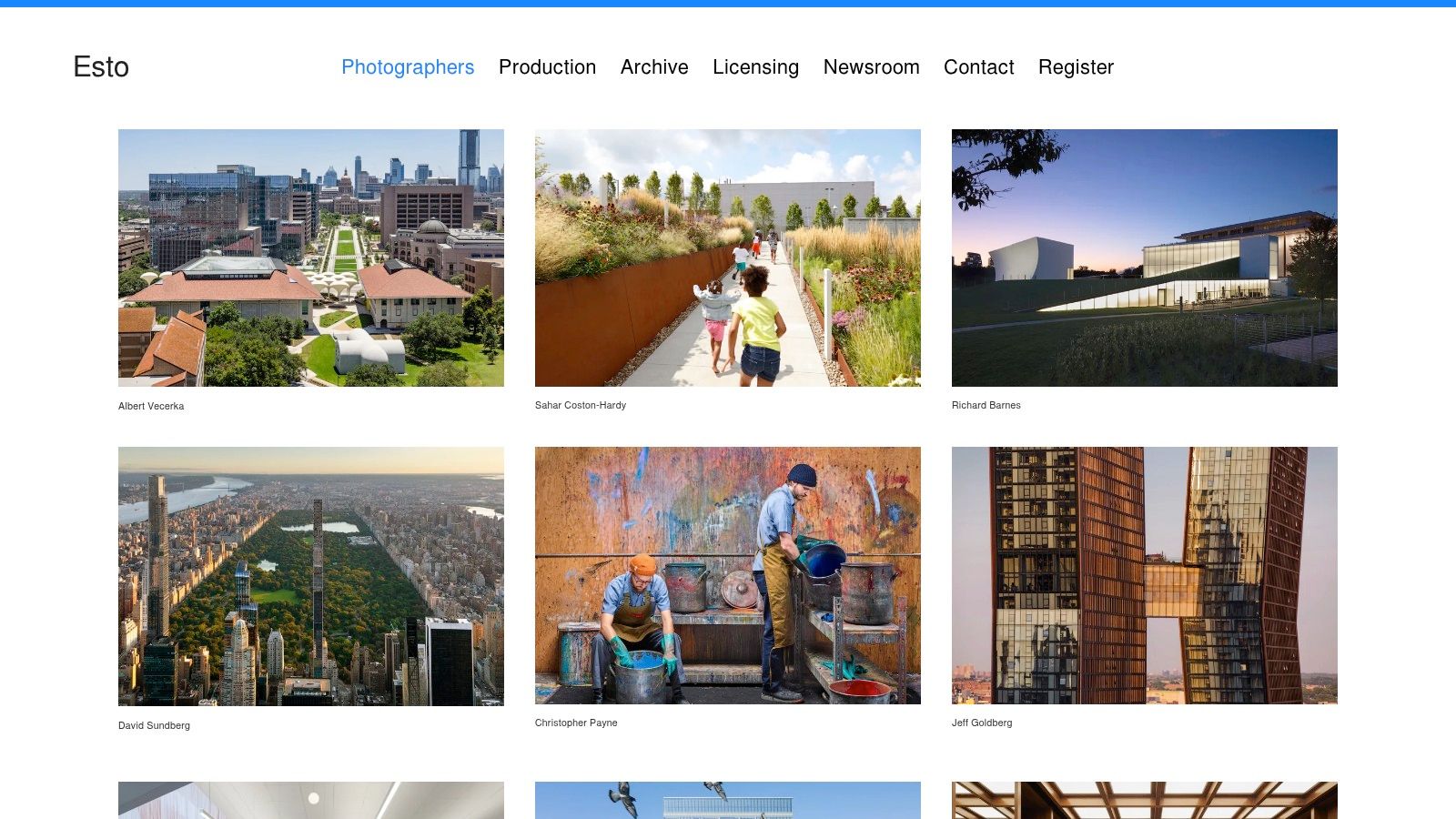
Esto is less a single photographic voice and more a vetted architecture image infrastructure. Visit Esto.
That difference matters. Sometimes you don't need one signature style. You need access to multiple specialists, dependable production handling, and a deep archive that helps your team decide what kind of imagery you want before the shoot is booked. For architecture firms, publishers, and institutions, that can be more valuable than hiring one freelancer in isolation.
How I'd use a collective like this
A collective works best when the brief is layered. Maybe the project spans locations. Maybe the client needs assignment photography plus motion support. Maybe the design team wants to review reference work from different photographers before selecting the right fit. Esto makes that process easier.
There's also a planning advantage here. When a buyer can study a broad archive, they often sharpen their brief. They stop asking for “something modern and editorial” and start asking for specific qualities: more environmental context, less stylization, stronger dusk work, cleaner people integration, or tighter material detail.
Field note: Some of the best commercial photography examples happen before the shoot, when the client finally learns how to describe the image they actually need.
Pros and constraints
- Best for complex architecture assignments: Multi-market commissions, design firms, developers, and editorial teams that need flexibility.
- Useful extra value: Archive access helps with licensing, references, and photographer matching.
- Trade-off: Agency coordination can introduce an extra layer, which smaller jobs may not need.
This isn't the shop I'd call for food, product-on-white, or lifestyle campaigns. It is a strong option for architecture and interiors when the assignment is bigger than a single day rate and a simple shot list.
5. Halkin | Mason Photography
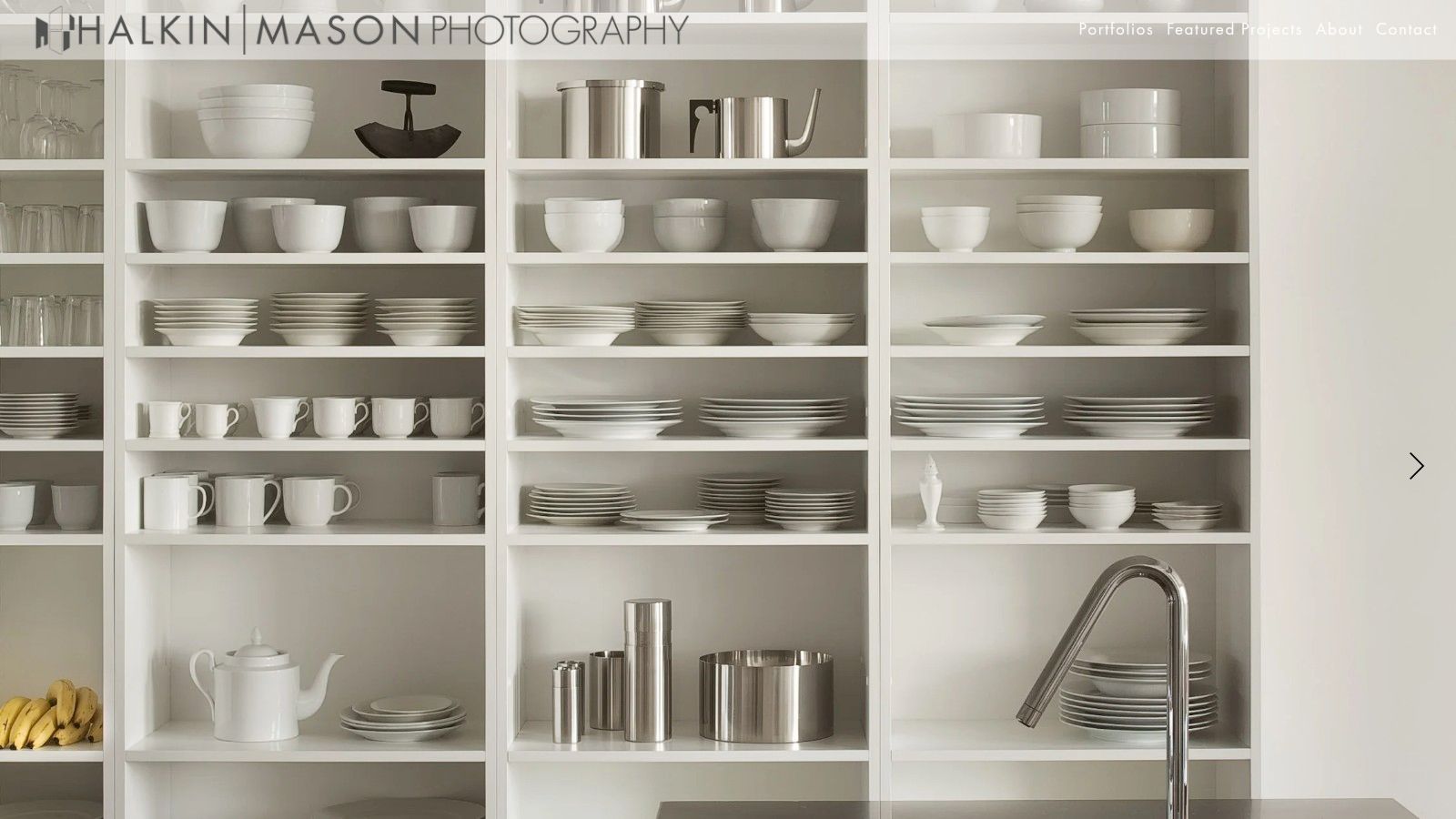
Halkin | Mason Photography is built for difficult commercial environments. Visit Halkin | Mason Photography.
I mean “difficult” in the best way. Healthcare spaces, workplaces, higher education, and civic projects usually involve more stakeholders, more restrictions, and less room for visual chaos. You need clean documentation, but you also need images with enough shape and polish to work in marketing, proposals, and design-industry submissions. Their portfolio suggests they understand that balance.
Why these environments need a different approach
Photographing a hospital or university building isn't the same as photographing a boutique hotel. The audience evaluates different things. A healthcare client may care about circulation, cleanliness, daylight, equipment integration, and occupant experience. An education client may want scale, welcome, flexibility, and institutional credibility.
That changes how the photographer should frame and light the work. You can't stylize away the functional truth of the environment. You have to make complexity legible.
Their category-specific portfolios help because buyers can see whether the photographer understands their world. That's one of the stronger patterns in good case-study thinking: define the original challenge, show the photographic response, and document measurable business results with before-and-after context, supporting material, and testimonials, as outlined in Tom Crowl's guidance on product and commercial photography case studies.
Where they fit best
- Ideal clients: A/E/C firms, universities, healthcare systems, and institutional marketers.
- What works: Stakeholder-heavy shoot coordination, polished environmental documentation, and images that feel credible.
- What doesn't: If you need lifestyle branding, food styling, or fast consumer product work, this isn't the lane.
Their regional base also matters. Travel is feasible, but teams outside the Northeast and Mid-Atlantic should expect added logistics.
6. Evi Abeler
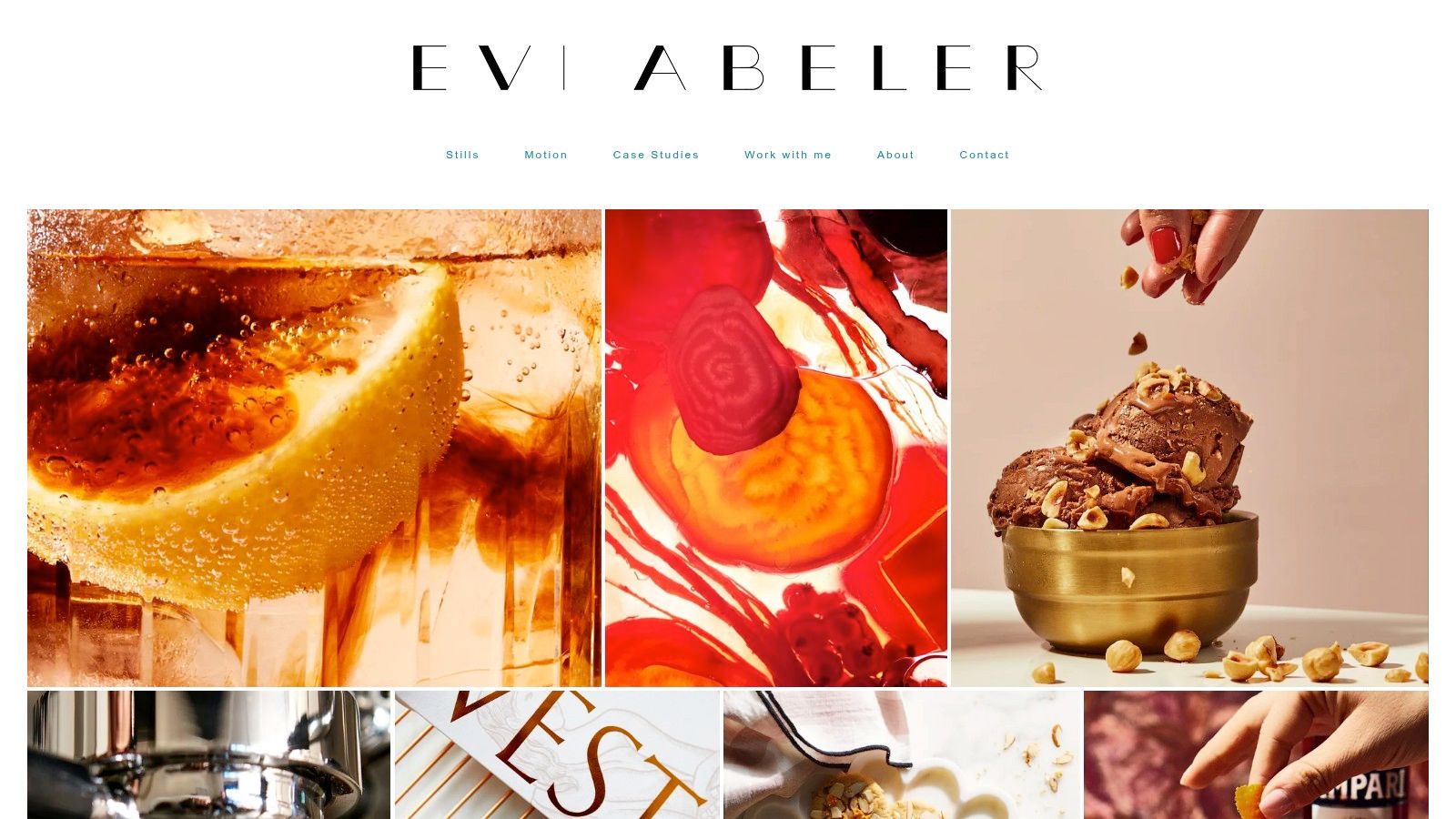
Evi Abeler is the kind of photographer I'd recommend when a brand needs tabletop precision without losing warmth. Visit Evi Abeler.
Food, beverage, product, and lifestyle work often falls apart at the intersection of art direction and commerce. The set looks beautiful, but the packaging doesn't read. Or the shot sells the mood, but not the product. Abeler's work tends to hold both sides together. That's harder than it looks.
The strategic read behind the frame
In food and product photography, every decision competes with legibility. Prop styling can support the story, but it can also bury the SKU. Color can energize the frame, but it can also fight the packaging. Shallow depth of field can feel expensive, but it can also hide the exact detail an online shopper needs.
Angle selection matters more than most gallery pages admit. Standard views like front, overhead, 45-degree, macro, and low angle aren't just aesthetic options. They signal different brand meanings. Straight-on framing often supports clarity and accurate representation, while low angles can make an object feel larger and more powerful, a distinction explored in Arce Creative's discussion of camera angles in product photography.
Don't choose the angle that looks coolest on set. Choose the angle that tells the buyer what to believe about the product.
Abeler's work also suits omnichannel use. That's important because one shoot often feeds packaging comps, web banners, social crops, retailer listings, and editorial placements. Before commissioning work at this level, brand teams should also understand the licensing side of usage. Jimmy Clemmons Photographer's guide to licensing a photo for commercial use is a practical place to get that straight before assets start moving between teams.
Best fit and real limitations
New York access to stylists, props, and studios is a major advantage for polished tabletop production. The flip side is that brands looking for large-scale site documentation or architecture-focused work should look elsewhere.
7. Lucas Saugen
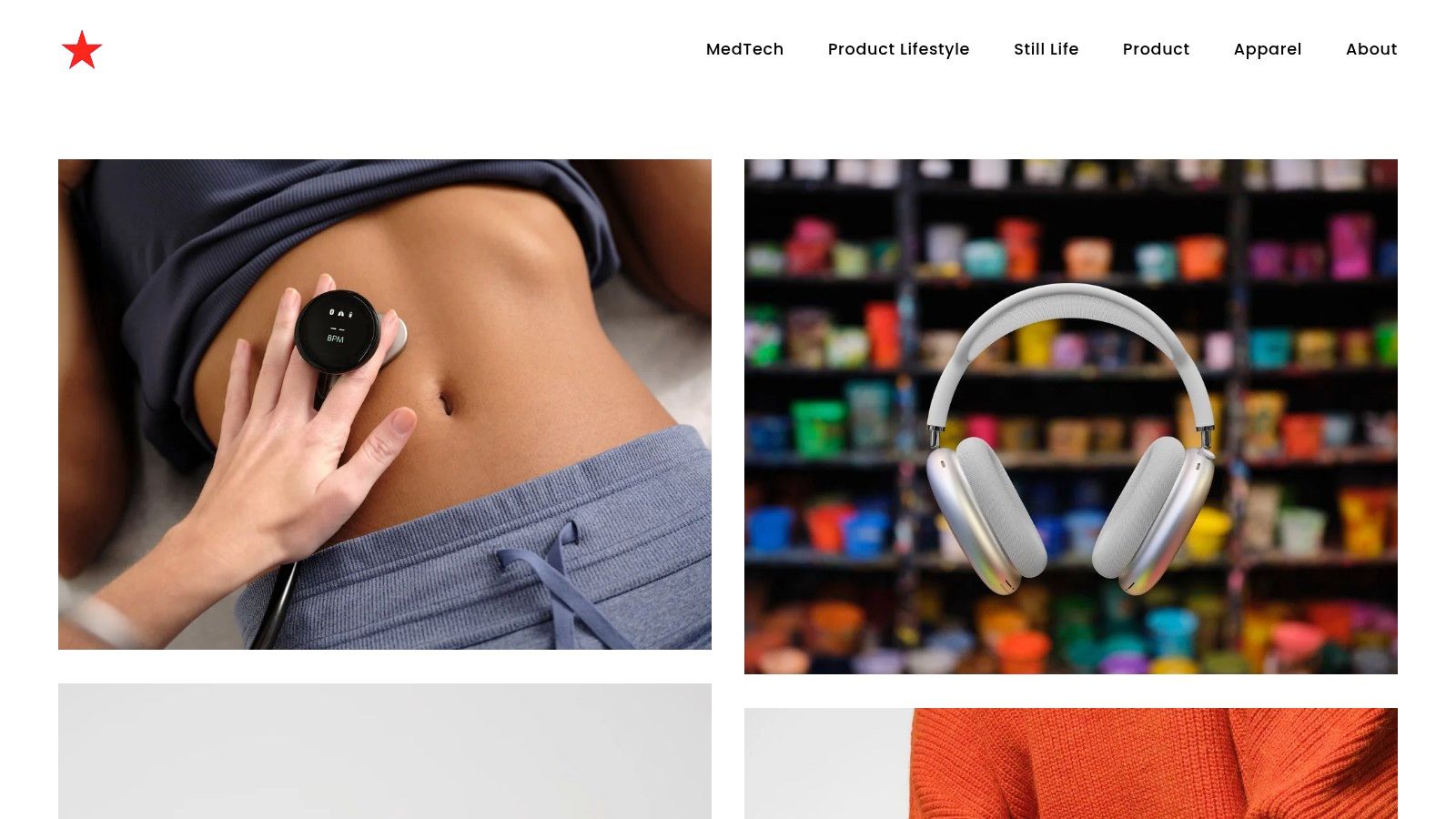
Lucas Saugen is a good example of commercial work that understands digital commerce from the ground up. Visit Lucas Saugen.
The portfolio leans into product and product-lifestyle imagery with clean lighting, controlled reflections, and deliverables that look built for paid media, e-commerce, and social placement. That may sound obvious, but a lot of beautiful product photography still fails in actual marketing use because it wasn't planned for crops, variants, or asset systems.
Why this style is commercially useful
Consumer brands often need two image behaviors from one shoot. First, they need the reliable, information-rich image that helps a buyer understand the product. Second, they need a more atmospheric version that gives the product a world, a use case, or a personality. Saugen's work appears geared toward that split.
That matters because product photography is tightly linked to sales support, not just branding. In one commercial photography case study, a clothing brand improved website traffic and increased sales by 20% after investing in product-focused imagery, according to Gabby Pike's case-study discussion of commercial photography and sales impact. You can't assume every product shoot will produce that kind of lift, but the principle is sound. Better visual merchandising can change buyer behavior.
Where Saugen is strongest
- Best for digital product marketing: E-commerce, paid media, social ads, and web-ready product lifestyle campaigns.
- What works: Consistent color handling, careful surface control, and practical asset sets.
- What doesn't: Enterprise architecture, industrial documentation, or highly complex CGI-heavy builds.
If the brief is “make this product look sharp, useful, and brand-consistent across channels,” this is the sort of portfolio I'd shortlist.
Commercial Photography: 7-Example Comparison
| Service | Implementation Complexity 🔄 | Resource Requirements ⚡ | Expected Outcomes ⭐📊 | Ideal Use Cases 📊 | Key Advantages 💡 |
|---|---|---|---|---|---|
| Jimmy Clemmons Photographer | Medium, boutique, director-led shoots | Moderate, pro kit, location scouting, post | Editorial-quality, cohesive brand imagery | Architecture, interiors, corporate branding, hospitality | Film-era precision; end-to-end production; strong editorial creds |
| Mike Kelley, Architectural & Commercial | Medium–High, perspective control, refined lighting | Moderate–High, specialised gear, retouch pipelines | Award/portfolio-ready architectural visuals | Architects, developers, marketing decks, submissions | Recognizable design-forward style; experienced with major firms |
| Tim Tadder, Advertising & Sport | High, large-scale, concept-heavy productions | High, large crews, CGI/AI, motion + stills workflows | Very high-impact, campaign-level assets | National ads, sports, celebrity, brand campaigns | Integrated motion + stills; advanced CGI/AI pipelines; strong storytelling |
| Esto, Architectural Collective/Agency | Medium, agency coordination across photographers | Variable, access to multiple specialists & archive | Consistent architectural output; licensing options | Commissioning cross-market architecture shoots; research | One-stop access to vetted talent; deep reference archive |
| Halkin | Mason, Institutional Architecture | Medium, multi-stakeholder coordination, case-driven | Polished, accurate imagery for institutional use | Healthcare, education, workplace, civic projects | Category-specific experience; clear case studies for stakeholders |
| Evi Abeler, Food, Product, Lifestyle | Low–Medium, styled tabletop and studio direction | Moderate, stylists, props, studio time | Scalable, retail-ready food & product assets | Food & beverage, product packaging, social/e‑commerce | Polished omnichannel visuals; NYC access to resources |
| Lucas Saugen, Product & Lifestyle | Low–Medium, efficient studio workflows | Moderate, clean lighting, color control for surfaces | Practical, brand-consistent assets optimized for digital | Product lifestyle, e‑commerce, paid media | Consistent color science and practical deliverables for web/ads |
From Inspiration to Execution Your Next Steps
I have seen plenty of portfolios win the first meeting and lose the assignment once detailed requirements show up. The difference usually appears the moment a client asks for a shot list, usage plan, crop strategy, licensing terms, and a schedule that can survive feedback from marketing, design, sales, and leadership.
That is the standard to hire against.
Across the seven examples above, the strongest work did more than look polished. Each photographer made technical choices that served a business outcome. Wide lenses shaped how architecture felt to a prospective tenant or donor. Lighting turned products into either luxury objects, clean utility items, or everyday purchases. Framing protected the image across a homepage hero, a paid social crop, a trade ad, and a presentation slide without losing the core message.
That is how commercial photography should be judged. Not by whether one image looks good in isolation, but by whether the whole set can carry a campaign, support a launch, or help a sales team make a clearer case.
I usually narrow a shortlist with three practical questions. Has the photographer solved this exact kind of assignment before. Can they translate brand goals into a usable shot plan. Can they keep production, retouching, file delivery, and stakeholder feedback under control once the project gets complicated.
The market is large, but that does not make photographers interchangeable. Analysts at IBISWorld's U.S. photography industry data project continued demand across the category, which gives buyers more choice and puts more weight on specialization. The right hire is rarely the person with the broadest portfolio. It is the person whose process matches the brief, whose visual judgment fits the brand, and whose production discipline holds up under pressure.
A strong shoot keeps working after delivery.
Good commercial images help lease space, explain design intent, sell a product, strengthen packaging, sharpen a pitch deck, and give internal teams better visual tools to work with. Poorly planned images create the opposite problem. Teams end up recropping files that were never composed for the layout, patching gaps with stock, and paying for reshoots that could have been avoided in pre-production.
If Jimmy Clemmons Photographer fits the type of assignment you are planning, as noted earlier, the studio's work centers on architectural imagery, commercial brand content, and portraits built with editorial discipline and a clear visual objective.