
A pro's field guide to Colorado Springs photography starts with a simple reality, a client can hand you a beautiful brief and still leave you with bad images if the location fights you. You may need a backdrop that reads instantly, gives you room to work, and still feels specific to the brand, whether that's a hospitality campaign, an executive portrait session, or a built-environment feature. Colorado Springs can do all of that, but only if you choose the right places and understand how light, access, and composition change from one site to the next.
For places to take pictures in Colorado Springs, the difference between a usable location and a postcard stop is usually logistical. Some sites give you layered red rock, clean sight lines, and multiple angles in one visit. Others look strong on a travel list but lose value when the parking is tight, the light is harsh, or the crowd pressure makes commercial work awkward. The best scouting mindset is practical. Ask what the location gives you at sunrise, what it gives you at midday, where your subject can stand, and how much time you'll lose moving equipment around.
This guide is written like a field report, not a tourist roundup. The locations below are the ones I'd consider for architecture, commercial branding, editorial portraits, and polished lifestyle work, along with the trade-offs that matter when you're on assignment.
1. Garden of the Gods
Garden of the Gods is the city's most important visual anchor for a reason. It's a 1,341-acre registered National Natural Landmark with more than 15 miles of trails, and that scale gives you a lot of composition density in one place, from sandstone fins to framed mountain views to sunrise and sunset options that feel different within the same park. For a photographer doing brand work, that matters because the site doesn't just look iconic, it gives you repeatable backgrounds that still feel distinct from frame to frame. The park's size also helps when you're trying to avoid the sense that every other image is using the same exact turnoff or overlook, which is a real risk in high-traffic scenic locations. The foundational reference for this location is this Colorado Springs photography spot guide and the local scouting perspective in Jimmy Clemmons' Colorado Springs photography notes.
Why it works for commercial and portrait work
The strongest images here use the rock formations as a frame, not a background wallpaper. If you're shooting a resort exterior, a leadership portrait, or a real-estate lifestyle scene, place the subject where the red stone layers with the Pikes Peak backdrop instead of fighting for a clean patch of open sky. Telephoto compression can help a building or person feel integrated with the surroundings instead of lost in it.
Practical rule: Garden of the Gods rewards early arrival. High foot traffic and limited parking make late-morning sessions feel rushed, and the best light-control opportunities are at sunrise or late day, not midday.
For commercial shoots, the main challenge is not beauty, it's management. You need a plan for subject placement, trail movement, and any permit or filming requirement before you arrive. The park is best when you treat it like a controlled natural set, not a spontaneous walk-and-shoot location.
2. Pikes Peak and Cheyenne Mountain
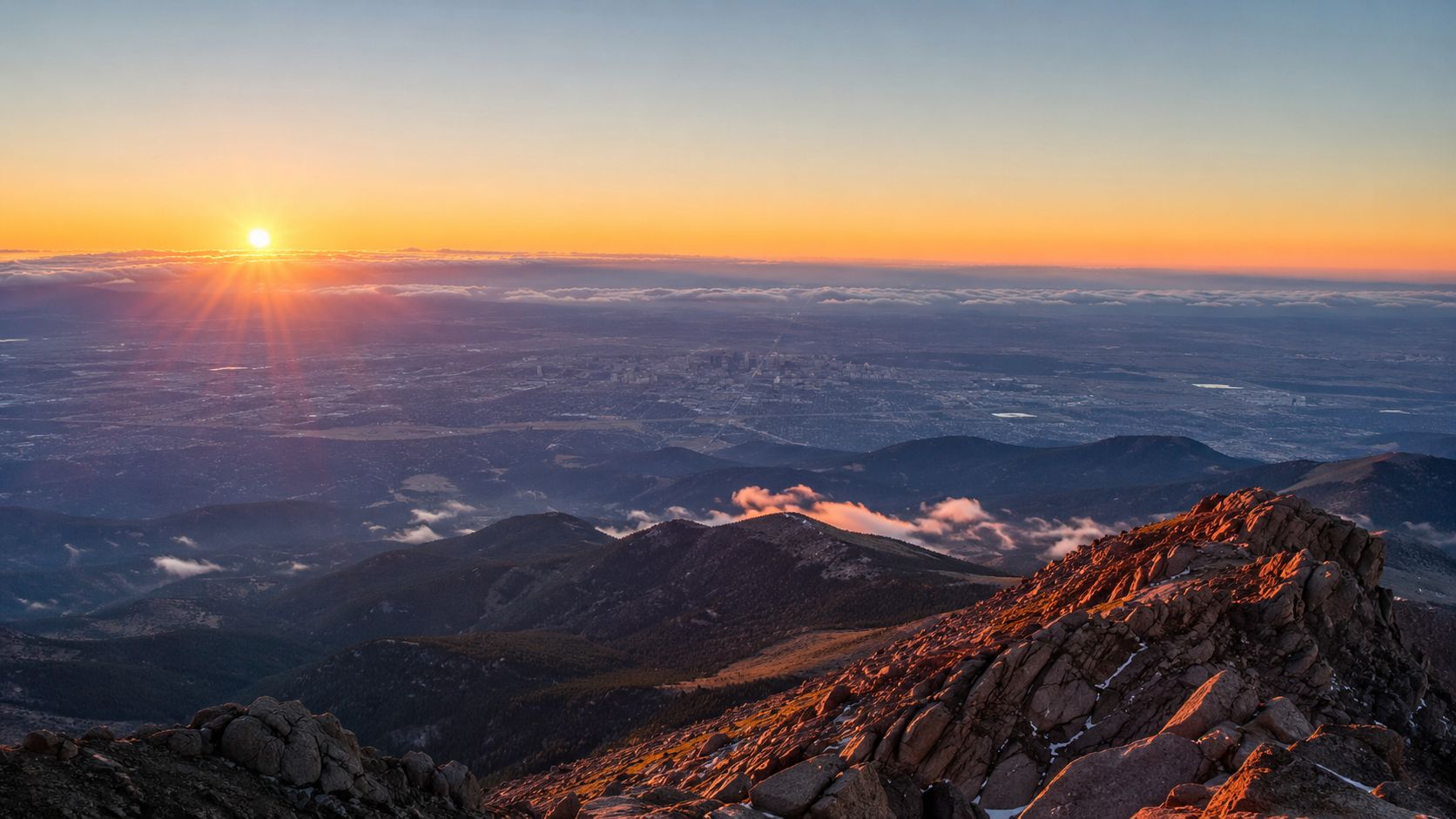
Pikes Peak and Cheyenne Mountain give you the broadest sense of place in Colorado Springs. Their value isn't just the view, it's the way the city, the Front Range, and the atmosphere layer together into a single frame that can support tourism campaigns, development imagery, or executive portraits with geographic context. For a brand that wants to look established in the region, this kind of elevated perspective reads immediately and gives the image a stronger narrative than a generic skyline shot. If the client wants a sense of altitude, scale, and weather drama, the city starts to feel expansive instead of merely scenic.
Planning around altitude and visibility
Shoots here benefit from patience. Clear sight lines matter more than a packed schedule, so scout on a clean day before committing to a client session. Shoulder-season conditions are often more forgiving for long-range visibility, and cold temperatures can be hard on batteries, so redundancy isn't optional.
A useful workflow is simple:
- Check sight lines in advance: Confirm whether the city, mountain ridges, and cloud structure support the frame you want.
- Bring a polarizer: It helps deepen sky contrast and cut glare off distant surfaces.
- Plan for elevation: Crew members need time to adjust, especially if you're carrying heavier kits or moving quickly between setups.
- Arrive early for access: Early timing improves the chance of clean compositions and easier movement around tourist traffic.
For commercial imagery, Pikes Peak and Cheyenne Mountain are strongest when the location itself is part of the story, not just a scenic insert. A hotel that wants to signal place, or a construction project that wants to show regional context, can gain a lot from that elevated, legible backdrop.
3. Manitou Incline and Barr Trail
The Manitou Incline and Barr Trail are not easy locations, and that's exactly why they work for certain brands. These routes give you a visual language built around effort, terrain, and progression, which is useful for outdoor apparel, endurance-focused campaigns, wellness storytelling, and adventure hospitality. The frame changes as the climb changes, so you can move from tight forest textures to open rocky segments without leaving the route. That gives your edit a natural sequence of intensity and release, which is hard to fake in a flatter location.
The best use here is editorial realism. If you're documenting a team shoot for a performance brand, the image needs to show exertion without feeling staged. Lightweight mirrorless bodies, a stripped-down kit, and a small crew make the difference between usable footage and a session that drains everyone before the important frames happen. The location also rewards pre-scouting, because the most efficient compositions are the ones you've already identified instead of discovering them while everyone is breathing hard.
Shoot for movement, not just position. The best frames on a route like this usually happen when the subject is pausing, adjusting, or cresting a turn, because the terrain naturally explains the body language.
If you're planning a higher-end production, this is the kind of place where a virtual scouting pass pays off. Review Jimmy Clemmons' virtual location scouting approach before you haul people uphill for a setup that should've been resolved on the screen first.
4. Downtown Colorado Springs Historic District and Tejon Street
Downtown Colorado Springs gives you the most controlled urban backdrop in the city without feeling sterile. The Historic District and Tejon Street blend older architecture, active storefronts, and contemporary mixed-use energy, which makes the area useful for commercial real estate work, hospitality brands, and corporate imagery that needs a believable city setting. It's one of the few places in town where you can create a built-environment sequence with actual street life behind it, rather than a dead block that looks over-managed.
Where the street works and where it doesn't
This district is strongest in the morning or evening, when foot traffic drops and the architecture has room to breathe. Midday can work for brighter commercial messages, but the sidewalks fill quickly enough that clean lines become harder to protect. Wide-angle lenses in the 24-35mm range are useful here because the district benefits from context, doorways, awnings, and building rhythm, not just isolated facades.
If I'm shooting a retail opening, a restaurant campaign, or an executive lifestyle portrait downtown, I'm looking for three things:
- Vertical framing: Historic facades can add height and structure behind the subject.
- Natural anchors: Doorways, alcoves, and awnings help shape composition without artificial props.
- Access coordination: Property managers often control the difference between a smooth session and a compromised one.
Downtown works best when you keep the session disciplined. The energy of the district can easily pull the frame away from your subject, so the job is to use the architecture as support, not competition.
5. U.S. Air Force Academy and The Cadet Chapel
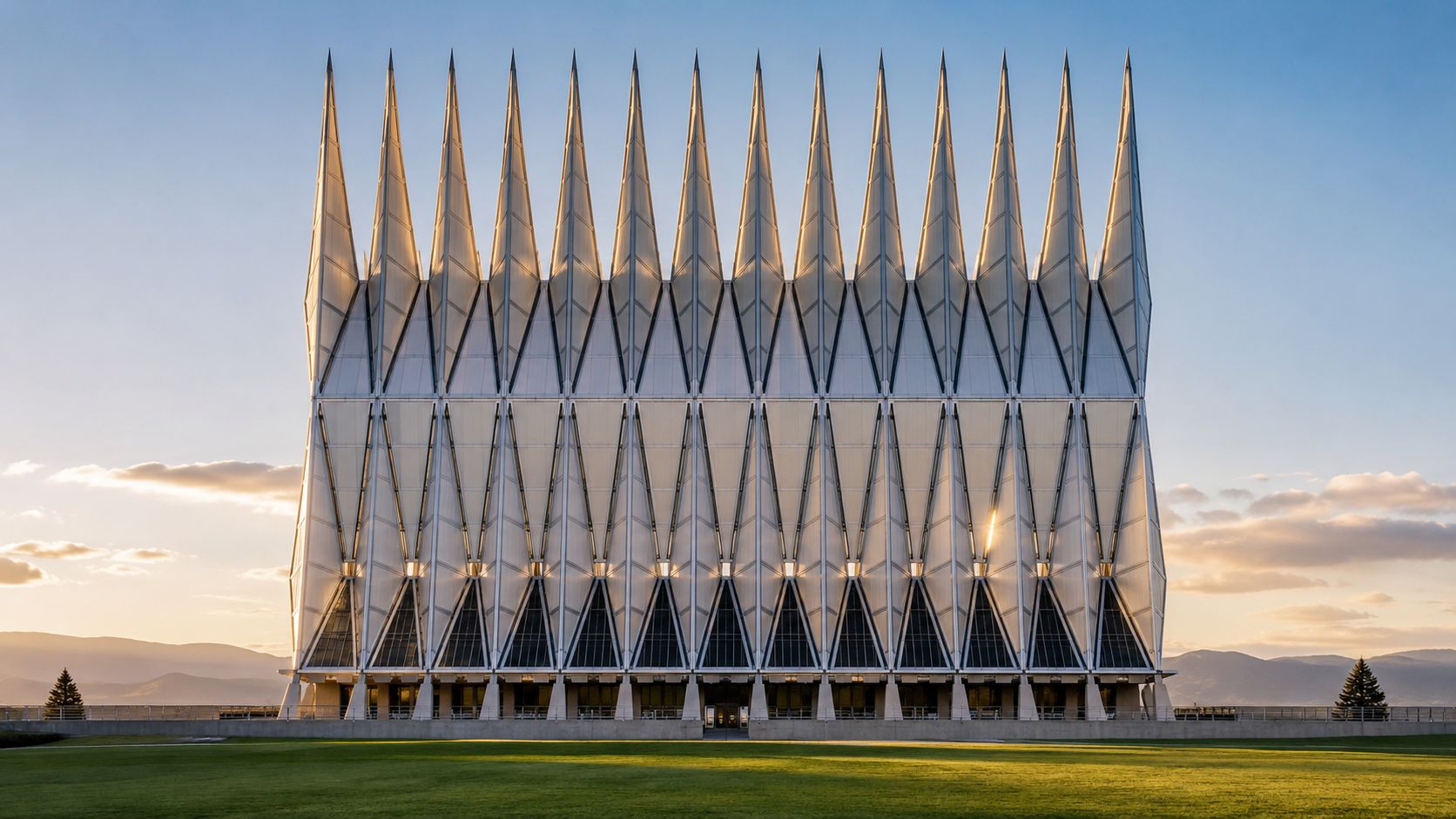
The U.S. Air Force Academy is one of the city's clearest examples of institutional architecture doing real visual work. The Cadet Chapel's aluminum spires make an instantly recognizable form language, and the campus grounds give you a controlled setting with enough openness to build serious compositions around the structure. For government, education, and contractor clients, that combination of authority and design discipline is hard to beat. It reads as official, orderly, and aspirational without needing a lot of added styling.
How to approach the campus like a professional
This is a permission-first location. Security, ID checks, and campus operations shape what you can do, and you need to plan around those realities rather than hoping to work around them on arrival. Contact the appropriate office well in advance, coordinate with parade or activity schedules when possible, and treat the site as an active institution, not a private venue.
Telephoto lenses are useful for isolating the chapel's geometry from a distance, while wider compositions help the building sit inside the Front Range context. Golden hour can make the aluminum surfaces feel warmer and less clinical, which matters if the image needs to feel welcoming rather than strictly institutional. For leadership portraits or educational marketing, the campus gives a polished sense of scale that few other Colorado Springs locations can match.
The strongest results come from respecting the setting. This is not a place to improvise heavily. It's a place to execute with clean framing, quiet coordination, and a clear shot list.
6. Broadmoor Resort and The Broadmoor World Arena
The Broadmoor is one of Colorado Springs' strongest options for luxury hospitality, event, and executive imagery because it gives you a complete visual environment, not just a pretty facade. The property blends outdoor design, water features, interiors, and formal architecture in a way that supports branding work for hotels, conferences, and premium experiences. If a client wants to signal refinement, the setting does a lot of the heavy lifting before the subject even enters the frame.
What makes it useful for brand narratives
The Broadmoor is especially effective when you need a polished but active setting. A conference team portrait on resort grounds feels more credible than a studio composite, and hospitality storytelling benefits from the range of spaces available across the property. The location also helps if you're producing a multi-use image library, since a single visit can cover exteriors, details, and event context without breaking visual consistency.
Use the resort's own operational rhythm to your advantage. Book early, coordinate with marketing or events staff, and plan for guest flow so your images stay clean and respectful. A 24-70mm zoom is a practical choice because it lets you move from intimate details to broader scene-setting without constantly switching gear. If you need a deeper review of the area for Colorado-based assignments, Jimmy Clemmons' Colorado coverage is a useful companion reference.
For this kind of property, the mistake is overdescribing the scene. Let the architecture, landscaping, and light do the signaling. Your job is to place people or products in the environment so the image feels intentional.
7. Cheyenne Mountain Zoo and Broadmoor Area Landscape
Cheyenne Mountain Zoo is one of the more unusual photography locations in the city because it combines animal imagery with mountain terrain. That makes it valuable for conservation messaging, tourism, and community-focused corporate work where the brand needs to feel connected to place without relying on generic stock-style wildlife visuals. The setting also gives you angles that work well for environmental storytelling, especially if the frame needs both habitat and horizon.
Shooting around animals and public spaces
This is a location where timing and behavior matter more than gear lists. Off-hours access is ideal, because public crowding can flatten the composition and make it harder to capture clean interactions. Work with animal handlers when possible, since they know when a subject is likely to move, rest, or reposition in a way that benefits the frame.
Fast glass helps in lower-light habitat areas, and polarizers can reduce reflections on viewing surfaces. For corporate environmental imagery, the strongest frames are usually metaphorical rather than literal. A team member in a mountain-side setting beside an animal habitat can communicate stewardship, care, or community values without forcing the concept.
The Broadmoor area around the zoo also adds scenic value. Higher points create a useful split between foreground activity and distant context, which gives you more flexibility if you're building a visual story about place, sustainability, or regional experience. It's a good site when the assignment needs warmth and authenticity, not just visual polish.
8. Old Colorado City Arts District and Galleries
Old Colorado City gives you a different kind of image language, one built on texture, color, and creative identity. It's one of the better places to take pictures in Colorado Springs if the client wants authenticity over grandeur, especially for arts organizations, small businesses, and community-centered brands. The district's storefronts, murals, galleries, and interior spaces feel lived-in, which helps when the story is about process, craft, or local character.
Working with the district's visual rhythm
This area rewards observation. Different blocks photograph differently depending on the time of day and the amount of pedestrian activity, so a quick daylight scout helps you avoid dead angles and awkward reflections. Early weekday mornings are usually the most flexible for unobstructed frames, while interior access through galleries or studios can give you a cleaner, more controlled setup if the exterior streets feel too busy.
A wide-angle lens is useful here because the district's value comes from context. You want the subject, the storefront, and the neighborhood texture all in one shot. That said, don't overpack the frame. A mural, a workbench, and a subject all competing for attention can turn a distinctive district into visual noise.
For creative brands, the best use is often process-driven. Photograph an artist at work, a small team in a studio, or a storefront interaction that feels earned rather than staged. The district has enough personality to support the image, so keep the direction clean and the styling restrained.
9. Red Rock Canyon Open Space and Kissing Camels Formation
Red Rock Canyon Open Space is the practical alternative when Garden of the Gods is too crowded or too heavily booked. Its 2,100-acre scale gives you room to work, and the red sandstone formations create a look that still feels dramatic while offering a quieter shooting environment. The Kissing Camels formation, in particular, gives you a strong natural anchor for environmental portraits, real estate context, and outdoor brand imagery. The major source for this site's prominence is the Colorado Springs location roundup, while the broader context for the city's repetitive location coverage is documented in this critique of overlapping photography lists.
Why this is a smart fallback
This is the kind of place I recommend when a session needs flexibility. The trails and formations give you enough visual material to support a clean edit, but the environment is less predictable than a manicured city property, so you need to scout in advance and keep your kit light. Telephoto compression works especially well here because it simplifies the geology and lets the rock forms feel stacked and purposeful behind the subject.
Plan for sun exposure and low shade. Water, sun protection, and cooler weather windows make a real difference in crew comfort, and comfort affects how long you can hold a good session without the energy dropping. This is particularly useful for development photography or wellness branding, where you want the environment to feel strong without becoming a logistical distraction.
Red Rock Canyon is not a Garden of the Gods clone. It's better used as a quieter, more flexible setting that still supports strong commercial framing.
10. Colorado Springs Downtown Arts and Culture District
The Downtown Arts and Culture District is where you go when a client needs sophistication with a civic edge. Museums, public art, plazas, and performance spaces create a visual environment that can support nonprofit campaigns, cultural sponsorships, institutional branding, and polished corporate storytelling. The district works because it offers both architecture and activity, so your subject can feel engaged with culture rather than placed in front of a building.
Making cultural spaces work for brand imagery
This location is strongest when you coordinate access rather than just showing up. Museums and institutions often control interior timing, and off-hours sessions are easier to shape into clean, premium-looking imagery. Public art and plaza spaces also benefit from timing analysis, because pedestrian flow can change the meaning of a frame very quickly.
Use 24-70mm coverage to move between close detail and wider environmental context. Skylights, stairwells, and architectural openings can create excellent natural-light opportunities indoors, while exteriors can support executive portraits or donor-facing imagery that needs to feel polished and culturally aware. The key is to avoid making the setting feel decorative. The district should support the message, not sit there as a backdrop for its own sake.
This is a strong fit for brands that want to communicate civic engagement, design literacy, or community connection. If the work needs prestige, the district can carry it. If the work needs casual energy, it's usually not the first choice.
10 Best Photo Spots in Colorado Springs: Comparison
| Location | 🔄 Implementation complexity | ⚡ Resource requirements | ⭐ Expected outcomes | 📊 Ideal use cases | 💡 Key tips / Key advantages |
|---|---|---|---|---|---|
| Garden of the Gods | Moderate, public access, commercial permits recommended | Low–Moderate, standard kit, telephoto for isolation | ⭐⭐⭐⭐, dramatic natural backdrops, strong visual impact | Architectural + corporate environmental portraits, real estate context | Scout early AM; use telephoto to isolate subjects; golden-hour light enhances color |
| Pikes Peak & Cheyenne Mountain | High, altitude, weather variability, access scheduling | High, redundant batteries, acclimatization, rail/road coordination | ⭐⭐⭐⭐, unique elevated perspectives, dramatic atmosphere | Establishing shots, geographic context for development/hospitality | Schedule shoulder seasons; plan rail/road logistics; allow acclimation time |
| Manitou Incline & Barr Trail | High, physically demanding access, limited shooting zones | Moderate, lightweight mirrorless, minimal crew (2–3) | ⭐⭐⭐, compelling adventure storytelling, intimate natural framing | Athletic/outdoor brand content, corporate wellness storytelling | Scout in advance; travel light; brief subjects on terrain and timing |
| Downtown Historic District & Tejon St | Low, controlled urban environment, minimal permits | Low, standard lenses (24–35mm), easy crew access | ⭐⭐⭐, authentic street-level context, predictable lighting | Commercial real estate, retail/hospitality, community-focused brand content | Shoot before 9 AM or after 6 PM; coordinate with property managers |
| U.S. Air Force Academy & Cadet Chapel | High, security, permit and schedule coordination | Moderate, telephoto for spires, formal scheduling | ⭐⭐⭐⭐, iconic institutional imagery, authoritative presence | Military/institutional marketing, educational and contractor branding | Contact Public Affairs 4–6 weeks ahead; plan around cadet schedules |
| Broadmoor Resort & World Arena | High, exclusive property, coordination with events/PR | High, full crew, interior/exterior lighting, permits/fees | ⭐⭐⭐⭐, premium luxury visuals, varied interior/exterior assets | Luxury hospitality, corporate events, high-end resort marketing | Contact events/marketing 8–12 weeks ahead; scout interiors for lighting |
| Cheyenne Mountain Zoo & Broadmoor area | Moderate, coordination with staff, animal access limits | Moderate, fast lenses, handler coordination, off-hours scheduling | ⭐⭐⭐, unique storytelling with wildlife + landscape context | Environmental nonprofits, sustainability messaging, tourism marketing | Coordinate with handlers; schedule off-hours for minimal crowds |
| Old Colorado City Arts District | Low–Moderate, local permissions helpful, variable control | Low, wide-angle and on-location lighting for interiors | ⭐⭐⭐, authentic creative and cultural narratives | Creative industries, community-focused brand content, gallery features | Coordinate with galleries; shoot weekdays mornings for fewer people |
| Red Rock Canyon & Kissing Camels | Moderate, less regulated but requires scouting and terrain prep | Moderate, lightweight kit, telephoto for compression | ⭐⭐⭐⭐, quieter, distinctive geological backdrops, cleaner comps | Corporate environmental portraits, outdoor brand storytelling | Arrive early/late; scout trails; bring water and sun protection |
| Downtown Arts & Culture District | Moderate, permits for interiors, timing with events needed | Moderate–High, interior lighting control, institutional coordination | ⭐⭐⭐⭐, sophisticated cultural context, premium institutional imagery | Museum/arts sponsorship, corporate cultural initiatives, premium branding | Request permits 4–8 weeks ahead; use skylight/natural interior light where possible |
Executing with Precision in the Pikes Peak Region
Colorado Springs rewards the photographer who plans like a producer and sees like an editor. The city has no shortage of scenic material, but the strongest work comes from matching the location to the assignment, then shaping the frame around light, access, and the actual needs of the client. A dramatic mountain can be useless if the timing is wrong. A modest downtown block can outperform a famous overlook if it gives you cleaner lines, better control, and a more believable story.
The value of this scouting report is not the list itself. It's the logic behind the list. Garden of the Gods is the obvious anchor because it concentrates iconic geology, trail access, and repeatable compositions in one place. Pikes Peak and Cheyenne Mountain expand the frame into regional context. Downtown districts, the Air Force Academy, and the Broadmoor give you structure, prestige, and operational order. Red Rock Canyon, Old Colorado City, and Cheyenne Mountain Zoo add flexibility, texture, and narrative variation when a location needs a more specific visual tone.
For commercial and architectural work, that distinction matters. Clients rarely need a pretty backdrop. They need an image that says where they are, who they are, and why the setting supports the story. That means thinking about crowd pressure, parking friction, security protocols, weather exposure, and the direction of the light before you think about the final composition.
The best sessions in Colorado Springs are usually the ones where the photographer does less improvising on location and more deciding in advance. Scout the site. Check the sun. Confirm the access rules. Bring the lens that fits the story, not the one that fits every story. When those pieces line up, the city gives you visuals that feel both unmistakable and usable, which is the standard for professional work.
If you need architectural, commercial, or portrait imagery that treats Colorado Springs locations with the same discipline you'd bring to a major brand assignment, Jimmy Clemmons Photographer can help. Visit Jimmy Clemmons Photographer to talk through location strategy, scouting, and a shoot plan built for clean, intentional results.