

A project team wraps construction, the punch list is nearly closed, and marketing needs images next week. The building looks strong in person. The setting is even stronger. In Colorado Springs, that combination can work for you or against you.
A polished office, hospitality property, school, clinic, or custom residence in this market rarely stands alone. It sits against foothills, red rock, open sky, or a mountain line that can either enhance the frame or overpower it. That's why photography in Colorado Springs has to do more than prove a place exists. It has to show why the design belongs here, how the site relates to the natural surroundings, and what a client, tenant, donor, or investor should notice first.
For architects, developers, interior designers, and corporate teams, the actual job isn't collecting attractive pictures. It's building a set of visual assets that can sell a project, support awards submissions, strengthen leasing materials, and document design intent with precision.
Your Vision Meets the Pikes Peak Region
A common scenario goes like this. An architecture firm finishes a new building in Colorado Springs and wants images that feel editorial, not transactional. The principal wants exterior hero shots. The interior designer wants material detail and lighting control. The marketing team needs horizontal web banners, vertical social crops, and a few people-forward frames that make the property feel active but not staged.
That sounds straightforward until the site visit starts. The mountain backdrop is dramatic, but it can pull attention away from the structure. The sun is bright, shadows get hard fast, and a building that feels balanced in person can photograph as all glare and contrast if the schedule is wrong.
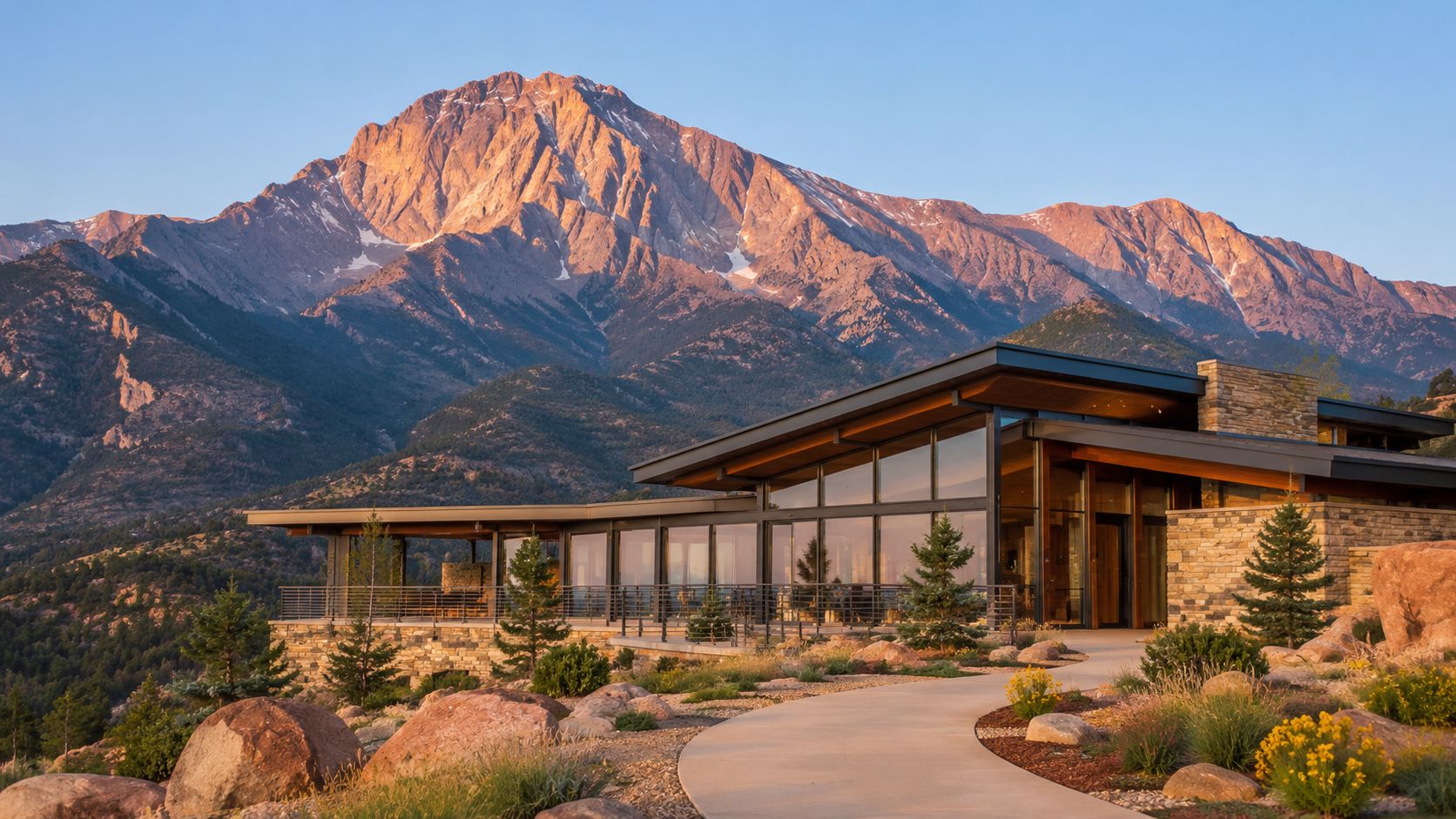
Colorado Springs rewards intentional framing
The city's visual identity has always been tied to documentation as much as scenery. Local photographer Mike Pach re-imagined 75 historic photographs for the “COS150 Then and Now” project, with an exhibit of 50 photographic pairs, linking the city's 1871 founding to the present through direct visual comparison. That matters for commercial clients because it shows a local tradition of using photography as civic record, not just decoration.
When you approach a current commission with that mindset, the brief gets sharper. You're not asking for “nice shots of the building.” You're deciding what future viewers should understand about the project. Was the design meant to blend into the terrain, or stand out against it? Is the story about craftsmanship, public presence, hospitality, or workplace culture?
Good architectural photography doesn't compete with the project. It organizes attention.
For businesses planning photography in this market, a broader regional perspective helps. A portfolio that understands mountain-adjacent architecture is usually more useful than one built only on generic city exteriors. That's the difference between scenic coverage and design coverage, and it's worth reviewing work from photographers who regularly handle Colorado architectural photography assignments.
What clients usually underestimate
The backdrop isn't the main subject. It's a supporting element that needs control.
If the mountains dominate every exterior, viewers remember the location but forget the property. If the photographer crops too tight, the images could have been made anywhere. The assignment is to find the middle ground where the region adds identity without swallowing the architecture.
That's the underlying challenge and the opportunity. Colorado Springs gives you context most cities can't. The images only perform when that context is used with restraint.
Defining Your Scope and Finding the Right Photographer
Before you call photographers, define the assignment in business terms. Most weak shoots start with vague direction. “We need updated photos” isn't a brief. It's a placeholder.
A usable brief answers a short list of decisions up front. What's being documented, who needs to respond to the images, and where will those files be used? A leasing brochure needs different frames than an editorial feature. An architecture award submission needs different priorities than a hospitality launch campaign.
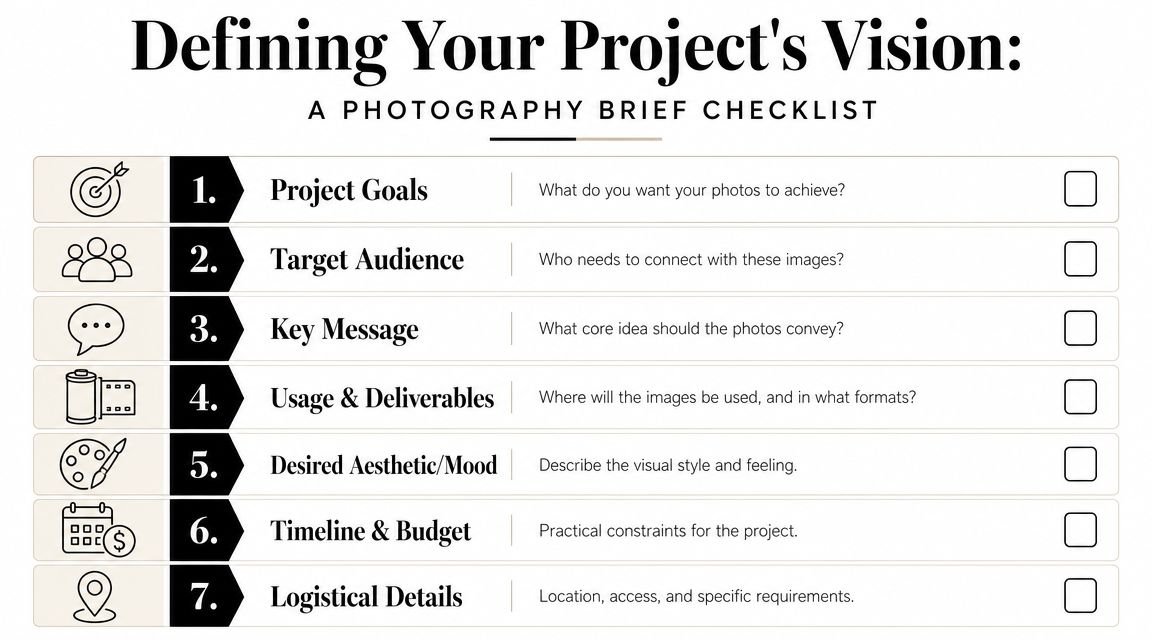
Build the brief before you review portfolios
Use the project brief as a filter, not paperwork. If the photographer can't respond clearly to your stated needs, that's useful information.
A concise creative brief should include:
- Business goal. Are the images meant to support leasing, recruiting, investor communications, editorial placement, awards, or a website relaunch?
- Priority subjects. List the spaces that matter most. Lobby, exterior approach, conference areas, amenity spaces, façade, details, wayfinding, views, and occupied environments all serve different purposes.
- Required orientations. Ask for horizontal, vertical, and negative-space compositions where needed.
- Brand tone. Clean and quiet is different from warm and active. Corporate restraint is different from hospitality energy.
- Access realities. Note occupied floors, security restrictions, window treatments, weather exposure, and times when spaces are unavailable.
Practical rule: If a shot list only names rooms, it's incomplete. It should also name purpose.
How to evaluate the photographer
Once the scope is clear, portfolio review becomes easier. You're no longer asking who takes pretty pictures. You're asking who solves your kind of problem.
Look for these signals:
| What to review | What strong work shows |
|---|---|
| Exterior coverage | Straight lines, deliberate perspective control, and a clear hierarchy between building and background |
| Interior work | Window light handled cleanly, balanced color, and attention to fixtures, finishes, and circulation |
| People in space | Natural scale reference without looking like stock imagery |
| Sequence | Wide establishing views, medium frames, and close detail images that work together |
| Editing restraint | Clean retouching without plastic surfaces or unnatural skies |
A portfolio heavily featuring natural scenes can be misleading in Colorado Springs. Someone may know how to photograph a sunrise over rock formations and still struggle with reflective glass, mixed interior color temperature, or vertical correction on architecture.
When firms need a specialist reference point, it helps to compare portfolios built around commercial architectural photography, where lines, materials, and design intent matter more than dramatic scenery alone.
Questions worth asking before you hire
Don't ask only about price. Ask how the photographer scouts, how they approach mixed lighting, whether they direct small groups of people on site, and how they plan around occupancy or weather.
Ask to see a full project set, not just a homepage gallery. A strong cover image tells you very little. A complete delivery tells you whether the photographer can maintain discipline across an assignment.
Strategic Scouting and Timing for Perfect Light
Colorado Springs gives photographers unusual range in a tight working area. You can move from red rock formations to pine forest, open field, stream edges, and mountain-backed settings without a long relocation, which makes a single-day workflow far more efficient when the project needs variety and schedule flexibility, as noted in this guide to Colorado Springs photo locations including Garden of the Gods and Cheyenne Mountain State Park.
That compact radius helps commercial work, too. A corporate campus can be photographed for clean architecture, then reframed to show context, natural surroundings, or employee arrival moments without burning the day on transit.
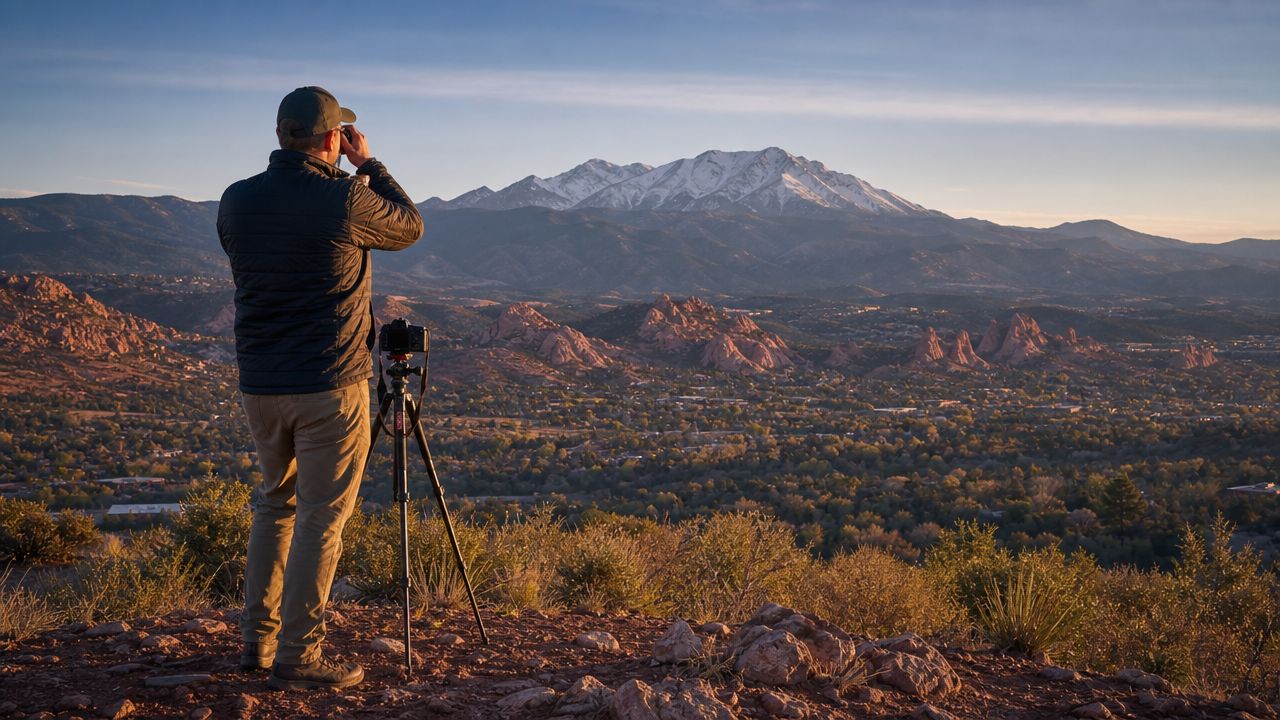
Scout for hierarchy, not just beauty
Clients often scout by asking, “Where's the best view?” The better question is, “What should the background do for the subject?”
A mountain view can do several jobs. It can establish regional identity, create depth behind a low building mass, or give a suburban development a sense of place. It can also clutter the frame if ridgelines intersect the roof poorly or if the background contrast pulls attention away from the façade.
That's why scouting should test specific compositions:
- Approach views that show how someone encounters the property
- Context frames that place the building within terrain or neighborhood
- Compressed telephoto angles that stack built form against the natural surroundings
- Interior-to-exterior views where glazing, finishes, and site all read together
The strongest shoots in Colorado Springs don't treat the scenery as a postcard. They treat it as compositional structure.
Light decides what the architecture feels like
A building can look calm, premium, and dimensional in one hour, then flat and hostile a short time later. Hard overhead light deepens some textures and destroys others. Reflective façades can go from elegant to chaotic fast.
For most assignments, the best results come from dividing the day by function rather than trying to shoot everything continuously.
- Early and late light usually works best for hero exteriors, amenity terraces, glazing, and any view where shape matters more than raw brightness.
- Midday can still be productive when the team shifts to details, shaded elevations, controlled interiors, or drone angles that need separation more than softness.
- Blue-hour windows can be useful when interior lighting and exterior tone need to meet in a balanced frame.
A short visual reference can help clients understand how quickly conditions shift across the region:
Seasonal choices change the message
Winter light can feel crisp and graphic. Summer often gives fuller texture. Shoulder seasons can be excellent for balancing site greenery with cleaner atmospheric conditions.
The season shouldn't be chosen for weather alone. It should be chosen for what you want the materials and surroundings to say about the project.
If the building relies on warm wood, natural surroundings integration, and outdoor circulation, greener months may help. If the design is more sculptural and minimalist, lower-angle light and cleaner seasonal backgrounds may support that better. The point isn't to chase a pretty day. It's to match conditions to intent.
Navigating Permits Access and On-Site Preparation
Many teams assume the hard part is camera work. Usually, the hard part is access. A shoot can fail long before the first frame if no one has cleared rooftops, coordinated tenant spaces, secured entry to service corridors, confirmed signage, or checked whether nearby public land has restrictions.
That's especially true in a market where a project may sit near popular outdoor sites. Regional guidance for photographers in the Pikes Peak area advises people to know local regulations, avoid high-use times, travel in small groups, stay on durable surfaces and existing trails, pack out waste, and protect wildlife and cultural resources, as outlined by Pikes Peak Outdoors photography guidance. For commercial clients, that translates into a simple rule. Scenic adjacency doesn't remove operational responsibility.
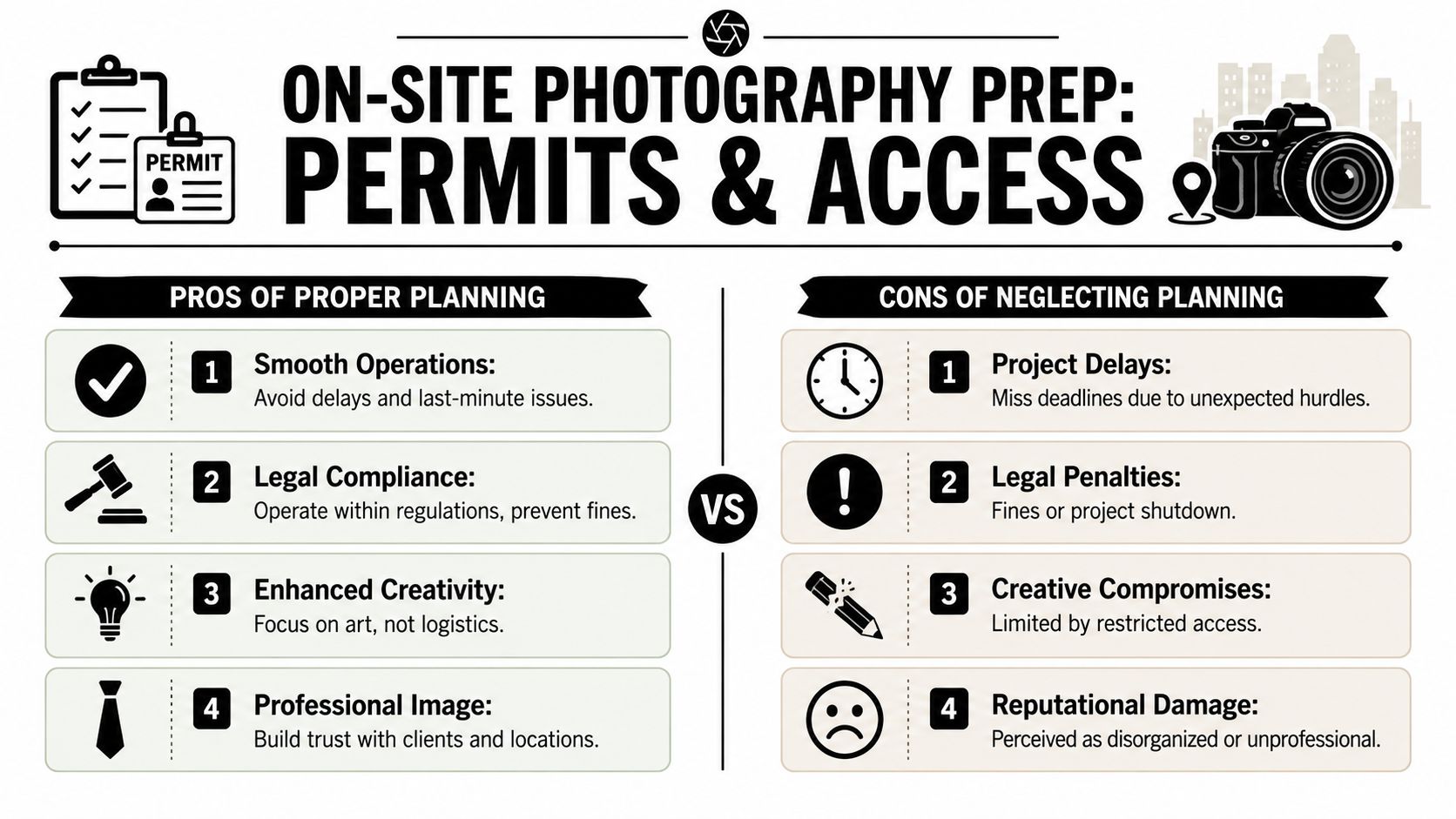
Pretty locations don't solve logistics
A building next to a recognizable natural feature sounds ideal. It can also create crowding, parking constraints, noise, restricted movement, or limited setup options.
On-site preparation usually comes down to four categories:
- Property permissions. Confirm who can authorize access to interiors, rooftops, terraces, and adjacent parcels.
- Site readiness. Remove temporary signage, cords, bins, personal items, and maintenance equipment.
- Occupancy control. Decide whether to photograph empty spaces, curated activity, or live operations.
- Timing discipline. If a public-facing angle is important, off-peak scheduling often produces cleaner frames and less disruption.
What the client team should prep
The best photography days have one client-side point person who can make quick decisions. Not a committee. One person with authority.
That person should handle:
- Access management so the photographer isn't waiting on keys, badges, or elevator holds
- Final visual review for furniture alignment, lights-on versus lights-off choices, and branded materials
- People coordination if staff, residents, students, or executives appear in selected frames
For many projects, a written prep document prevents a lot of friction. A practical checklist for staging, access, and visual readiness can save time before the crew arrives, especially if the team reviews a guide on how to prepare your project site for a professional photoshoot.
Missed permits are obvious. Missed staging is quieter, but it damages the final work just as fast.
A luxury interior with tangled cords, crooked chairs, half-lowered shades, and cluttered counters won't photograph as luxury. A clean frame is rarely accidental.
Technical Execution and On-Day Coordination
A Colorado Springs shoot can fall apart in the last hour even with a strong brief. The sun drops behind the Front Range faster than expected, glass starts reflecting the wrong side of the site, and an executive wants to add a lobby portrait while the exterior light is still working. On day-of, the job is to protect priorities, control the frame, and keep the schedule tied to the business purpose of the shoot.
Architectural photography here rewards discipline. The city gives you bright altitude light, fast contrast shifts, and a built setting that often needs to read clearly against nearby natural features without turning into a tourism image. The goal for corporate, design, and development clients is usually straightforward. Show the project as designed, show how it sits on the site, and give marketing, leasing, investor, or awards teams files they can use.
What the gear is actually doing
Lens choice sets the character of the project before lighting or retouching ever enters the conversation.
Wide lenses are useful in tight interiors, compact amenity spaces, and exterior positions where backing up is not an option. They also create problems fast. Push too wide and verticals start to strain, furniture proportions get awkward, and a polished building can look distorted.
Longer focal lengths often produce the cleaner result. They compress distance, reduce background clutter, and let the building hold its shape. In Colorado Springs, that matters when you want foothills, tree cover, or distant peaks to support the architecture instead of competing with it.
Tripods are not just about low shutter speeds. They keep height, alignment, and repeated compositions consistent across a shot list. That consistency matters when a marketing team needs a clean hero, a version with people, and a second angle for layout flexibility.
Lighting solves a different set of problems. Interior fixtures, window brightness, dark finishes, and reflective surfaces rarely balance on their own. A controlled lighting approach lets materials read accurately and keeps the space from looking flat, muddy, or overprocessed.
As noted in this regional overview of photography approaches for architecture and environmental conditions, the tools matter less than how deliberately they are used on site.
Clear roles keep the day on track
The best shoot days run with a small decision chain. One person directs image-making. One client-side lead confirms priorities. One design or property representative watches details inside the frame. One operations contact clears access problems quickly.
A practical on-site structure looks like this:
Photographer leads composition, timing, and exposure
Camera position, lens selection, lighting decisions, and sequence should stay with the photographer so the visual set remains consistent.Client point person protects the brief
This person confirms which spaces, brand moments, and use cases matter most if timing gets compressed.Designer, architect, or property representative handles visual accuracy
They catch styling issues, furniture drift, crooked shades, missing collateral, and anything else that weakens the frame.Operations contact resolves site interruptions
Occupied rooms, locked doors, parked vehicles, elevator delays, and facility conflicts need fast answers, not group discussion.
That structure prevents a common problem on commercial shoots. Too many frame-level opinions produce safe, hesitant images that satisfy no one.
Review on set with a client filter, not a preference filter
On-set review is useful when it catches omissions early. It slows the day down when every image turns into a debate about personal taste.
The right questions are operational:
- Does this image cover the briefed use case?
- Are lines, finishes, signage, and brand elements reading correctly?
- Do we need both occupied and clean versions?
- Is this the strongest angle for the final edit, or do we need one alternate before we move on?
I usually advise clients to review in clusters, not after every frame. That keeps momentum up and protects the light window, especially on exteriors where the best conditions may only last a short stretch.
On-set review should catch missing coverage, alignment issues, and avoidable mistakes before they become expensive reshoots.
If the assignment includes drone work, it needs its own shot list and purpose. Aerials are strongest when they explain site relationship, circulation, adjacency, massing, or campus scale. Random overhead views rarely help a corporate client. They add files, not value.
Deliverables Usage Rights and Budgeting Your Project
The camera day is only part of the purchase. What you're really acquiring is a set of files, a license to use them, and a visual archive that should stay useful well beyond launch week.
That long view matters in Colorado Springs because the city has a deep tradition of documenting itself. The Colorado Springs Pioneers Museum holds over 80,000 historical photographs, with the bulk dating to the late 19th and early 20th centuries, preserving civic life and urban growth since the city's 1871 founding, according to the Colorado Springs Pioneers Museum photograph collection. Commercial clients should think the same way. A project shoot isn't disposable content. It's a record of a finished environment at a specific moment in its life.
What you should receive
Deliverables need to be discussed before the shoot, not after editing begins. At minimum, clients should know which images are final, how they'll be prepared, and what formats are included.
A practical delivery package often separates files by use:
| Deliverable type | Typical purpose |
|---|---|
| High-resolution finals | Print, awards, large-format collateral, editorial submissions |
| Web-optimized files | Website pages, digital brochures, email, press kits |
| Vertical and horizontal selects | Social, banners, ads, presentation decks |
| Detail and context set | Gives marketing teams flexibility beyond hero images |
The important part isn't the label. It's whether the files match actual use cases.
Licensing is part of the value
Many clients still assume paying for the shoot means unrestricted use forever. Sometimes the license is broad. Sometimes it's narrow. That depends on the agreement.
Key licensing questions include:
- Who can use the images. Just the commissioning client, or also architects, designers, contractors, and manufacturers?
- Where can they appear. Website, social, print collateral, editorial outreach, paid advertising, awards, and third-party submissions are not always bundled together.
- How long does the license run. Some licenses are open-ended. Others are time-bound or campaign-specific.
What drives budget
The budget reflects complexity more than camera count. A half-day in a controlled interior is different from a full property campaign with exteriors, twilight, people, aerials, styling, and multiple stakeholders on site.
Costs usually move based on:
- Scope of coverage
- Pre-production demands
- Travel and scouting
- Retouching depth
- Licensing breadth
- Number of final delivered images
The right way to budget photography in Colorado Springs is to tie spending to business value. If the images will support leasing, recruiting, media outreach, proposals, and long-term brand use, they deserve the same planning discipline as any other core marketing asset.
If you need architectural or brand-focused photography for a Colorado Springs project, Jimmy Clemmons Photographer handles built environments, corporate content, location scouting, lighting design, and polished post-production with a process shaped around clear briefs and commercial use.