
So, what exactly is a commercial architectural photographer?
Think of them as a specialist—someone who doesn't just take pictures of buildings but crafts strategic visual assets that help you win awards, attract clients, and build your brand. It’s about creating magazine-quality images that tell the story of your design and its purpose.
The Real Value of Professional Architectural Imagery
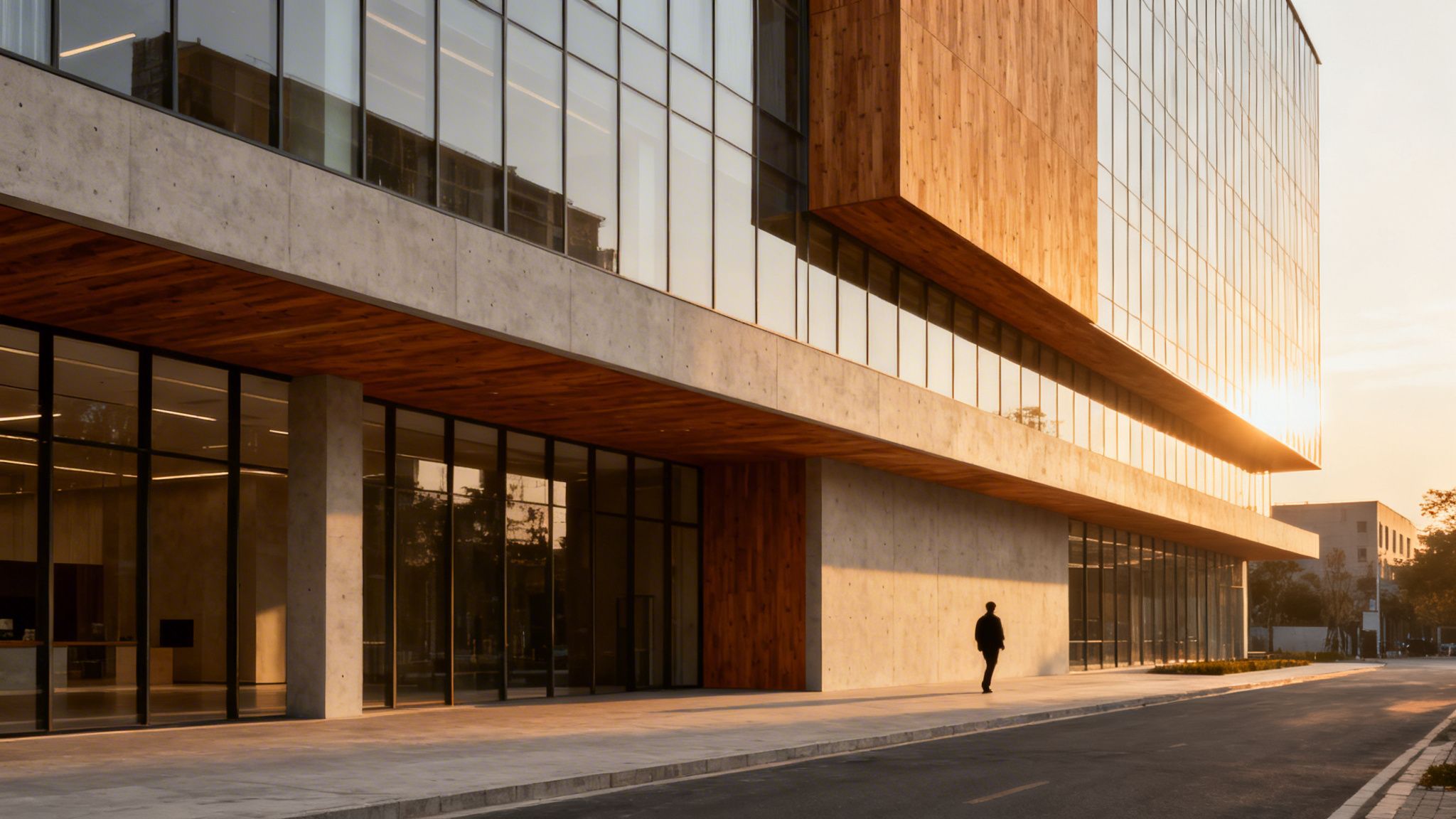
Hiring a professional isn't just another expense; it's an investment in your project's story. A true specialist becomes a creative partner, dedicated to understanding your design intent and translating it into a set of powerful, compelling photographs. We’re not just capturing a structure; we’re capturing its soul.
This means finding the right light to highlight the richness of the materials you chose. It means discovering compositions that show the intended flow of movement through a space. It’s about bottling up the specific feeling a building is meant to evoke.
That’s the difference between a simple snapshot and a carefully composed narrative. For an architecture firm, it showcases design excellence for award submissions. For a developer, it creates visuals that attract tenants by selling a lifestyle, not just square footage.
More Than Just Documentation
Anyone with a decent camera can document what a building is. A commercial architectural photographer, on the other hand, reveals what it means. This takes a unique blend of technical mastery and artistic vision that I've spent my career honing.
A specialist knows how to:
- Sculpt with light, whether it’s the golden hour sun or precisely placed strobes, to define a building’s form and set the mood.
- Find the hero angle—that one composition that perfectly balances form and function while emphasizing key design features.
- Manage the complex logistics of a shoot, from tracking the sun's path to coordinating with site managers and staging teams.
- Execute meticulous post-production, ensuring every line is perfectly vertical and every detail is flawlessly presented.
The demand for this level of specialization is growing. The global commercial photography market was valued at US$5.2 billion in 2022 and is projected to hit US$6.4 billion by 2032. With North America holding about 41% of this market, it's clear that high-quality visuals are no longer a luxury—they're a necessity.
The table below breaks down the real-world differences you can expect.
Professional vs Amateur Architectural Photography Outcomes
| Attribute | Professional Architectural Photographer | Amateur/Generalist Photographer |
|---|---|---|
| Visual Intent | Creates a visual narrative that communicates design intent and evokes emotion. | Documents the physical space with little to no narrative or emotional depth. |
| Technical Skill | Mastery of perspective control, advanced lighting techniques, and composition. | Basic understanding of camera settings; often results in distorted lines and flat lighting. |
| Post-Production | Meticulous retouching, color grading, and composite images for a polished, perfect final product. | Basic adjustments (brightness, contrast); often lacks the skill for complex edits. |
| Asset Value | High-quality, versatile assets for awards, publications, marketing, and portfolios. | Inconsistent quality, suitable for internal use or casual social media posts at best. |
| ROI | Drives brand perception, attracts high-value clients, and secures press, delivering tangible business growth. | Minimal to no return; can even devalue a project by making it look unprofessional. |
Ultimately, the choice impacts how your work is perceived for years to come.
The Impact of Intentional Imagery
The right images become the cornerstone of your marketing. They’re versatile assets that power everything from your portfolio and website to social media campaigns, press releases, and client pitches.
My job is to tell stories with images, not just take pictures. I aim to create visuals that stir emotion and forge a genuine connection between the viewer and the space.
This is why the return on that initial investment is so powerful. Great images don’t just fill a page; they directly influence public perception, attract media attention, and drive business growth. When you hire a specialist, you’re commissioning art that works for you. You can see a clearer picture of this by exploring the ROI of professional photography. It's the tangible difference between a standard record shot and a powerful, lasting brand asset.
Finding and Vetting the Right Photographer
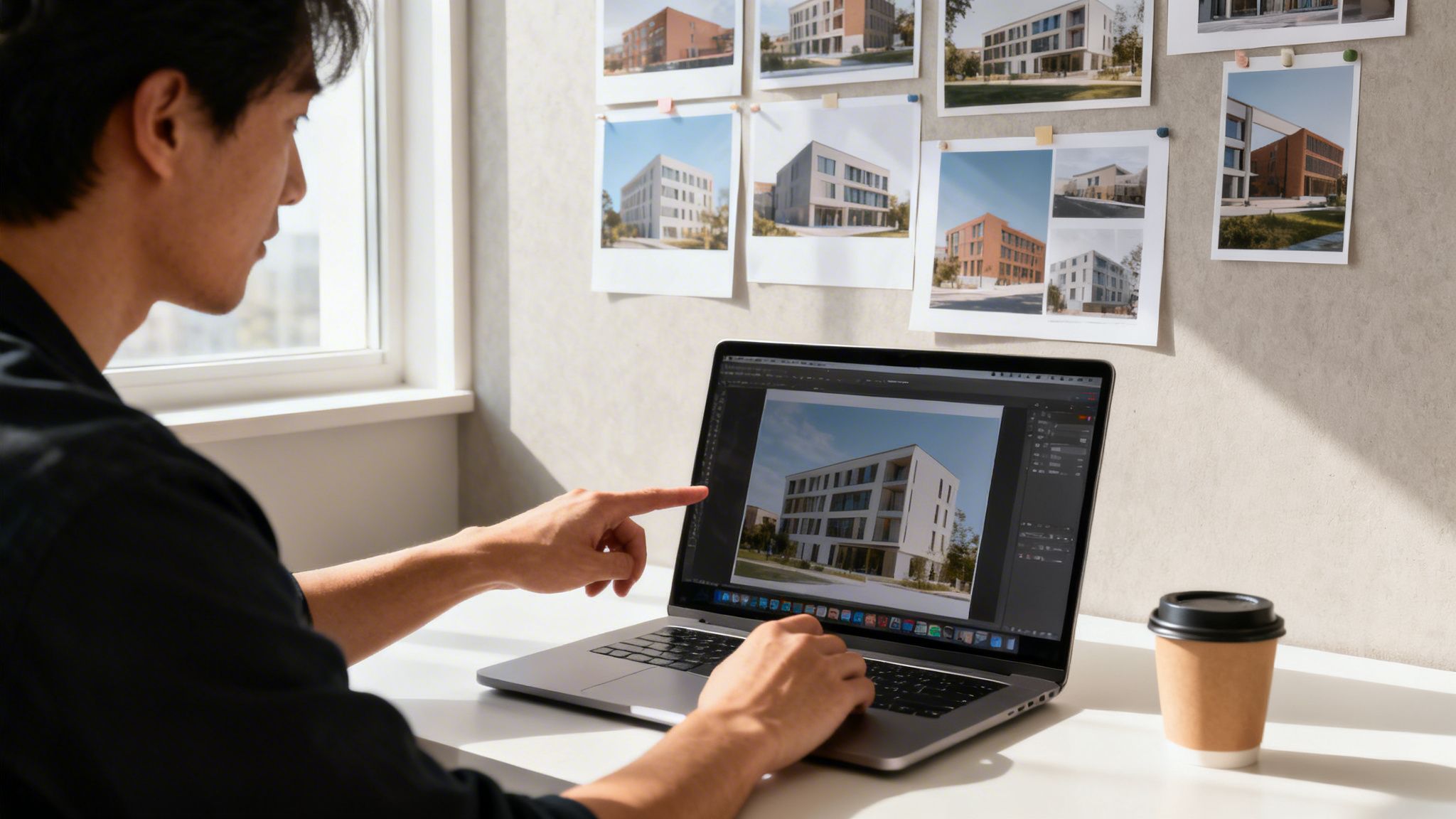
Finding the right creative partner isn’t just about ticking boxes. It’s about finding a visual storyteller whose eye aligns with your design intent and whose professionalism you can count on. A quick scroll through a website won’t cut it; you need to dig deeper.
So, where do you start? The best photographers are often discovered through curated sources. Industry awards and features in top-tier publications like Architectural Digest or Dwell are a great signal of quality—those editors have already done some of the vetting for you.
But honestly, nothing beats a trusted referral. Ask other architects, designers, or contractors you respect who they hire. A glowing review from a peer who has been in the trenches with a photographer is worth its weight in gold.
How to Analyze a Portfolio
Once you have a shortlist, it’s time to really study their work. This is where you separate the true specialists from the generalists. Don't get distracted by one or two stunning hero shots. Any decent photographer can get lucky once.
A true commercial architectural photographer delivers a cohesive, compelling set of images for an entire project, time and time again. You're looking for unwavering consistency. Does the quality hold up across different buildings, lighting scenarios, and clients? That’s the mark of a master.
As you review their galleries, zero in on these details:
- Lighting Control: How do they handle tricky lighting? Look for interiors where the view through the windows is perfectly balanced, not blown out. This requires advanced compositing and a deep understanding of light, something that separates the pros from the amateurs.
- Composition and Perspective: Are the lines perfectly straight? Verticals should be vertical. This isn't just a technical tic—it shows discipline and respect for the architecture. While creative angles have a place, a portfolio full of distorted, wide-angle-gone-wrong shots is a red flag.
- Storytelling: Does each project gallery feel like a guided tour? You should see a narrative unfold: wide shots to establish context, medium vignettes showing how spaces connect, and tight details that celebrate materiality and craftsmanship.
A strong portfolio reads like a collection of visual essays, not just a folder of random pictures. Each gallery should walk you through the space and articulate the design intent from start to finish.
This ability to craft a visual narrative is what you're paying for. It’s the difference between someone who just documents a building and a partner who helps you communicate its soul.
Look Beyond the Images
The "About Me" page is more than just fluff; it's a window into a photographer’s perspective. Their professional background directly shapes their approach. My own career, for example, started in the fast-paced world of editorial assignments for magazines like Sports Illustrated and Condé Nast. That experience taught me how to find the narrative and work under pressure—skills I bring to every architectural shoot.
Does their experience match your project's demands? A photographer with an editorial or corporate background is used to working with creative briefs and delivering on brand messaging. Someone who only shoots real estate might produce bright, wide images, but they may lack the nuance needed to capture the spirit of a high-design project.
Finally, check out their client list and testimonials. Have they worked with firms or brands you admire? Look for feedback that mentions their collaborative process, problem-solving abilities, and reliability. You aren’t just hiring a camera; you're investing in a partner who will become the visual translator for your architectural vision.
You’ve found a photographer whose portfolio resonates with you. The images feel right, and you can see your project in their style. What's next? It's time for a conversation.
This initial call is more than a formality; it’s where you find out if the person behind the camera is the right creative partner for you. You're not just buying photos—you're investing in someone who can translate your design vision into a powerful visual story. Asking the right questions upfront is the single best way to ensure we’re all speaking the same language.
Understanding Their Vision
First, you need to get a feel for how they think. Can they see beyond the concrete and glass to understand the why behind your design? You’re looking for a visual interpreter, not just someone who documents a building.
Here are a few questions I always appreciate hearing, as they open up a real dialogue about the craft:
- "How do you approach translating our design intent into a set of images?" A great photographer will immediately turn this around and start asking you questions. They'll want to know about the project's goals, the key features you're proud of, and the story you want the space to tell. They should talk about building a narrative, not just checking shots off a list.
- "Tell me about a time you shot a challenging location. How did you handle it?" This gets to the heart of real-world problem-solving. Every project has its curveballs. Listen for stories about creative lighting to solve a dark space, finding unique compositions to work around on-site clutter, or navigating tricky logistics. It shows they can think on their feet when things don’t go perfectly to plan.
- "What’s your philosophy on showing human scale in architectural spaces?" This is a revealing question, even if your project won’t feature people. A thoughtful photographer will talk about using light, shadow, and composition to suggest how a space is meant to be felt and experienced. It shows they’re thinking about the building as a place for people.
The point isn’t to find a "correct" answer. You’re listening for a confident, thoughtful process. A true pro will be excited to talk shop and will show genuine curiosity about what makes your project unique.
Digging into the Technical and Logistical Details
Once you feel a creative connection, it’s time to get practical. A successful shoot day is built on a foundation of meticulous planning and technical skill. These questions will tell you if they have the experience to run a smooth, professional production.
An experienced photographer will have clear, immediate answers for these kinds of questions. How they handle the business side of their work is just as important as how they handle a camera. For instance, their approach to things like brand photography services can directly impact your project's broader marketing goals.
Here are the critical areas to cover:
Technical & On-Set Questions
| The Question to Ask | What You're Really Asking | A Good Answer Sounds Like... |
|---|---|---|
| What's your strategy for lighting a complex interior? | "Do you know how to do more than just use the available light?" | They'll talk about blending multiple exposures, using strobes to add dimension, and balancing the bright exterior view with the interior ambiance. |
| What's in your gear bag for a shoot like this? | "Do you have the right professional tools for the job?" | They should mention full-frame cameras, and specifically, tilt-shift lenses, which are essential for controlling perspective in architectural work. A solid lighting kit is also a must. |
| What does your post-production process involve? | "How much polish and refinement will the final images have?" | They'll differentiate between basic edits and their full process, which includes color grading, detailed retouching, and ensuring every line is perfectly straight. |
Clarifying the Business Side of Things
Finally, let's talk business. Any ambiguity around cost, image delivery, and—most importantly—licensing is a recipe for headaches down the road. A professional will have a standardized, transparent process.
Be sure to ask:
- What’s your typical timeline for delivering final, retouched images after the shoot day?
- Can you walk me through your licensing agreement? What specific usage rights are included?
- If we decide to move forward, what are the next steps to get this booked?
Getting clear, direct answers to these questions builds the trust needed for a great collaboration. It ensures everyone is on the same page from day one, so we can focus on what really matters: creating stunning images that do your project justice.
Understanding Price, Licensing, and What You’re Actually Paying For
Let's talk about the financial side of things. It can seem complicated at first, but the most important thing to understand is this: you're not just buying a set of pictures. You’re investing in a license—a specific right to use those images to promote your work, win awards, and attract new clients. That value is what truly sets the price.
Pricing isn't one-size-fits-all. Some of us charge a day rate for our time on-site, others prefer a per-image fee, and many, including myself, find a comprehensive project fee works best. It all depends on the scope, but knowing these models exist helps you compare proposals from different photographers.
What to Look For in a Quote
When I send a proposal, my goal is to make sure there are no surprises. A transparent quote from any professional commercial architectural photographer should clearly break down where your investment is going.
Most quotes will itemize a few key things:
- Creative Fee: This is the foundation of the quote. It covers my time, my eye, the years I've spent honing my craft, and the standard costs of running a business.
- Post-Production Costs: This is where the magic happens after the shoot. It accounts for the hours spent meticulously editing, color-correcting, and perfecting every single image.
- Assistant Fees: On anything but the simplest shoots, an assistant is non-negotiable. They help manage gear, wrangle lighting, and keep the day running smoothly.
- Equipment and Digital Tech Fees: This covers the specialized cameras, lenses, lighting, and software required to create the high-end results your project deserves.
Experience and location play a huge role in pricing. A recent industry survey found that while a common fee in North America falls between $1,000 to $2,000 per project, the top 2% of us worldwide command day rates of $5,000 or more. You can dig into more of this data in the first APA census.
This is the final checkpoint after you've decided a photographer has the right creative vision and technical skill for your project.
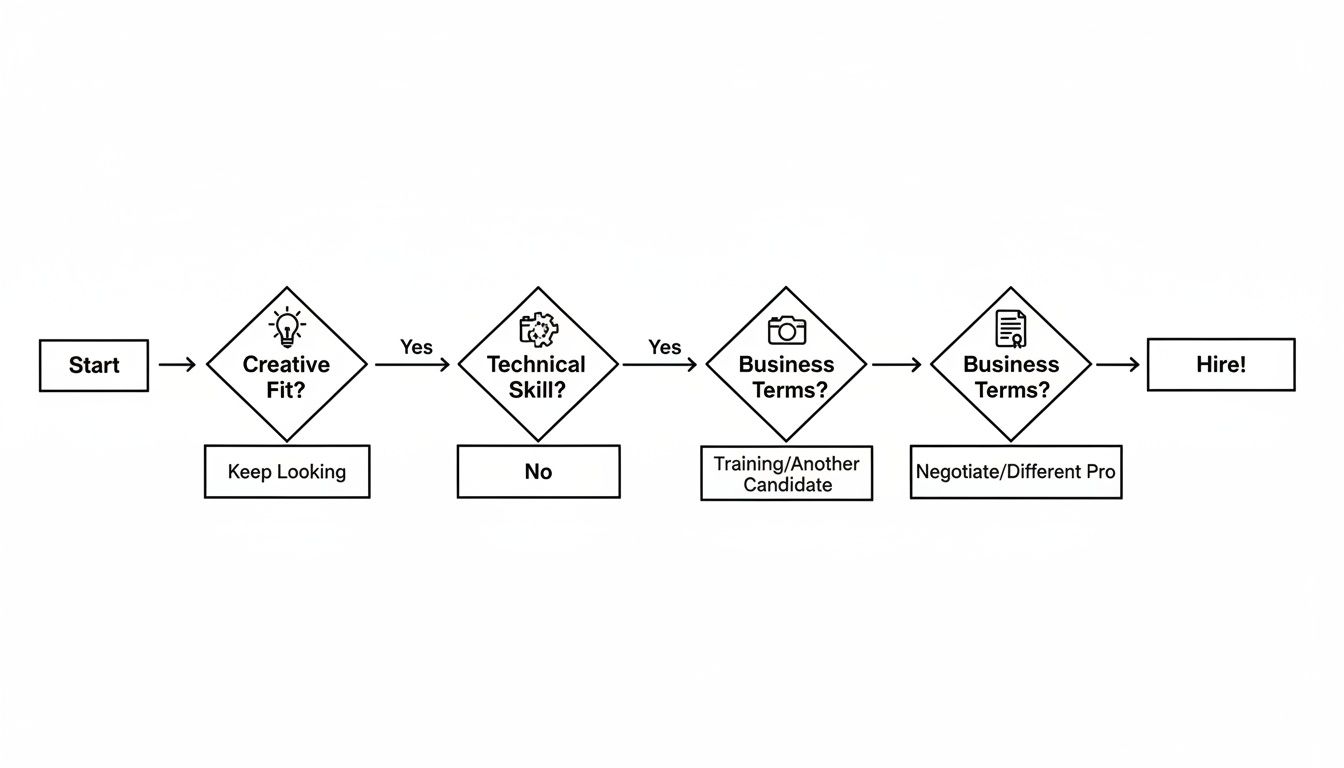
As the chart shows, getting the business terms right is just as crucial as finding the right creative fit.
The License Is the Heart of the Deal
This is, without a doubt, the most important part of our agreement. The copyright for the images almost always stays with the photographer. What you are purchasing is a license that spells out exactly how you can use those images.
Think of it like software: you buy a license to use the program under certain conditions, but you don't own the code. It’s the same with photography. You're buying the right to use the image, not the image itself.
A photographer who seems like a bargain upfront can become incredibly expensive later if their licensing terms are too restrictive. Suddenly, you might find yourself having to pay again for uses you assumed were included from the start.
Key Licensing Terms You Need to Know
Your license defines the how, where, and for how long of image use. Being crystal clear about your intentions from the beginning allows me to craft a license that gives you exactly what you need.
Here are the terms you absolutely must have a handle on:
- Usage Category: This spells out where you can use the photos. Your firm’s website, social media, award submissions, and paid advertising are all different categories with different values.
- Exclusivity: An exclusive license means you're the only one who can use the images for a set period. A non-exclusive license allows me to also license the photos to other parties, like the architect, interior designer, or publications.
- Duration: This is simply how long your usage rights last. A license might be for one year, five years, or in perpetuity, and the price will reflect that.
- Territory: This sets the geographical boundaries for use, like North America or worldwide.
Defining these terms protects both of us. It ensures you have the visual assets you need to showcase your project and market your firm, and it properly values the creative work that went into producing them.
How to Prepare for a Successful Photoshoot
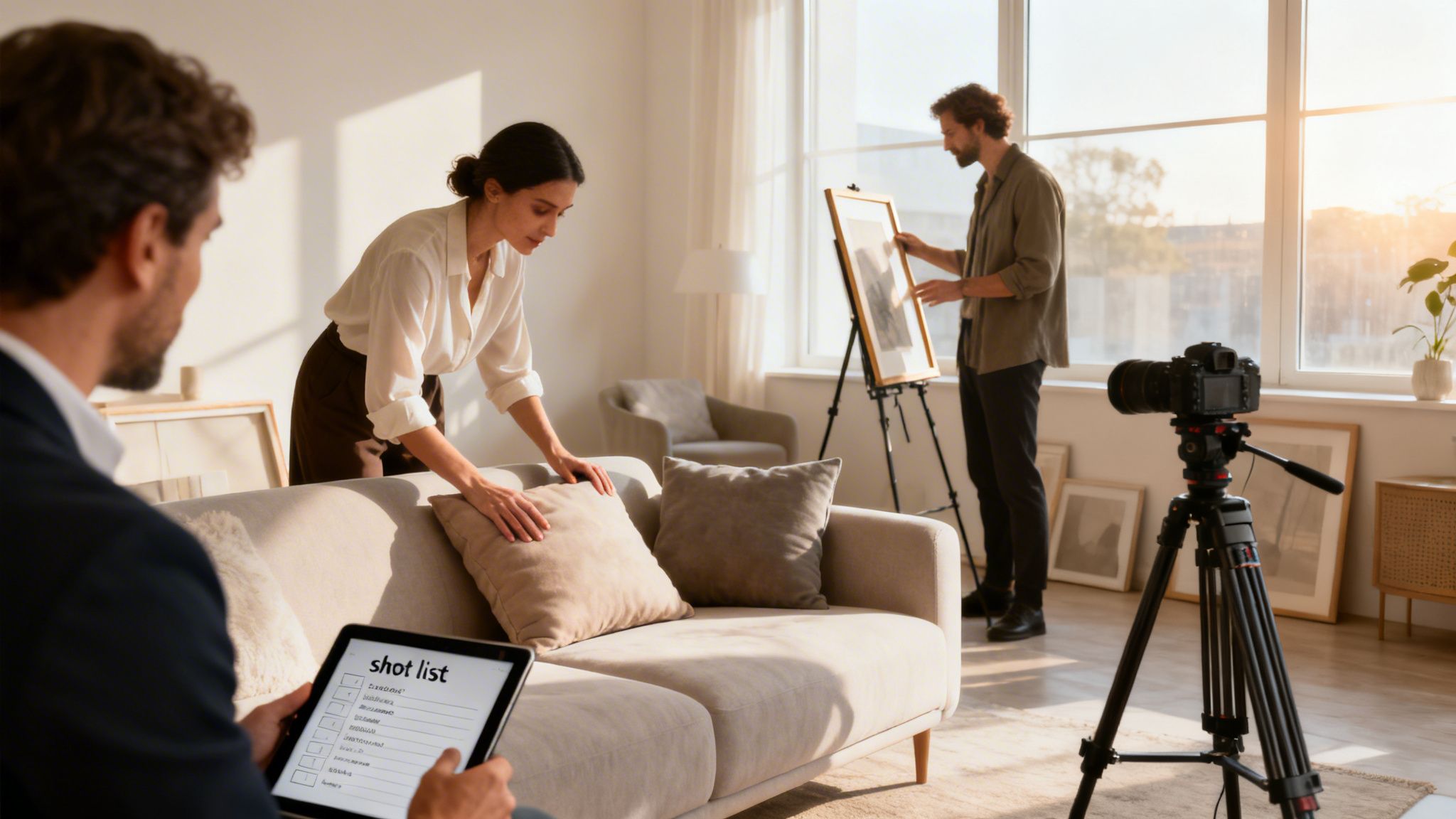
The magic you see in a final gallery of images? It almost never happens by accident. The most stunning shots are born long before the first shutter click, rooted in meticulous planning and a shared vision.
As a photographer, I can tell you that preparation is the single biggest factor separating a good shoot from a great one. It's how we transform a beautiful building into a set of extraordinary visual assets for your brand.
Good prep isn't just about a last-minute tidy-up. It's about setting the stage for me to capture the soul of your project. The work you put in beforehand directly translates into a smoother shoot day, prevents costly surprises, and ensures the final images truly deliver on your goals.
Build a Collaborative Shot List
Our shared game plan is the shot list. But this is more than a simple checklist; it's our roadmap for the day, and it's something we build together. I bring the photographic expertise, but I need your insider knowledge to identify the moments that truly define the project.
What are the "must-have" hero shots that will anchor your portfolio? Are there subtle details—a unique material connection, a custom-built fixture, a clever transition between spaces—that tell the deeper story of your design? Your input here is gold.
A well-planned list also keeps us grounded and efficient. A full day on site typically yields 12-15 meticulously composed and lit images. Aiming for 30 shots in the same timeframe only means we sacrifice the quality and artistry of each one.
Define the Narrative and Purpose
Before we even list the shots, we need to know why we're taking them. Are we shooting for an award submission that needs dramatic, artistic compositions? Or is this for a commercial leasing brochure where clarity of space and flow is paramount? The end goal dictates everything about my approach.
A shot list for an editorial feature in Dwell will look very different from one for a contractor's project portfolio. Defining the end use allows me to tailor my lighting, composition, and focus to meet specific goals.
Knowing the purpose upfront ensures every shot is strategic. We aren't just taking pretty pictures of a building; we're crafting targeted assets designed to achieve a specific business objective.
Prepare the Space for Its Close-Up
With our plan in place, it’s time to get the site camera-ready. A clean, uncluttered space is absolutely non-negotiable. This goes beyond a quick wipe-down; even small distractions can throw off an otherwise perfect composition. For a more detailed walkthrough, see our guide on how to prepare your project site for a professional photoshoot.
Here’s a practical checklist to get you started:
- Declutter Deliberately: Remove all non-essential items—stray papers, personal photos, extra furniture. We want the architecture to be the hero, not the clutter.
- Coordinate Full Access: Make sure we can get everywhere we need to be. This includes rooftops, mechanical rooms, or even adjacent properties for the perfect exterior angle. Have all keys, access codes, and contact info ready.
- Plan for People: Let any tenants, employees, or residents know the shoot schedule well in advance to minimize interruptions. If models are part of the shoot, they need to be booked and briefed.
- Pristine Cleaning: This is where the details matter. Windows must be spotless (inside and out), floors polished, surfaces dusted, and landscaping manicured. Trust me, these things pop in high-resolution images.
The On-Site Decision-Maker
This might be the most critical piece of advice I can give you for shoot day: have one key decision-maker on site. This person needs to be empowered to give the final "yes" on compositions as we shoot.
Reviewing the images with me on a tethered monitor allows you to confirm we’re getting exactly what you need in real-time. This simple act eliminates any post-shoot second-guessing or the dreaded, "I wish we had moved that chair a few inches to the left." It's a collaborative process that guarantees the final images are precisely what you envisioned.
Answering Your Questions About Hiring a Photographer
Even after we've connected and you've decided my portfolio is a great fit, a few practical questions always come up. It's a natural part of any creative partnership, and I believe in total transparency.
Let's clear the air on some of the most common things clients ask me.
How Long Does an Architectural Photoshoot Really Take?
This is the million-dollar question, and the real answer comes down to the shot list and the story we want to tell. A small retail space might be a half-day shoot, but a sprawling corporate headquarters or luxury residence could easily take a few full days.
It’s not just about square footage. It’s about the number of unique, carefully crafted compositions we need to create. My goal for a full day on-site, sunup to sundown, is to walk away with 12 to 15 truly stellar final images. That pace allows me to do my job right—meticulously refining the light, perfecting the composition, and capturing the space from its best angles.
We’re also working with the sun. To get that morning glow on the facade, the bright, airy feel at midday, and the dramatic twilight shots, I often need to be there for the entire arc of the day.
What Is the Difference Between Retouching and Post-Production?
I’m so glad when clients ask this, because the two terms get used interchangeably but they represent two completely different phases of my work.
Basic retouching is just digital housekeeping. It’s cleaning up sensor dust, making minor brightness tweaks, and ensuring the color is accurate. Think of it as the final polish.
Full post-production, on the other hand, is where the artistry happens and it's standard practice for any high-end commercial architectural photographer. This is where I truly shape the final image.
My post-production process usually includes:
- Compositing: I’ll often blend multiple shots of the same scene taken at different exposures. One for the bright view out the window, one for the shadows in the corner, and another for everything in between. Layering them together creates a single, flawless image that feels natural to the human eye, but which a single click of the shutter could never capture.
- Perspective Correction: I use specialized software to make sure every vertical line is perfectly straight. This is a non-negotiable step for professional architectural work.
- Distraction Removal: I'll meticulously remove things that pull focus from your design—unflattering exit signs, stray cords, or fire alarms—to create a clean, idealized vision of the space.
- Enhancement: This is the final touch. I’ll bring out the rich texture in a piece of wood or a metal finish and subtly guide the viewer’s eye with light and shadow.
Post-production isn't about "fixing" a bad photo; it's the final, critical stage of creating a great one. It’s how a technically sound shot becomes a powerful image that does justice to your design.
Can I Use the Photos Anywhere Once I Pay?
This is a critical detail to get right. When you hire a photographer, you are not buying the photograph itself; the copyright almost always remains with me, the creator.
What you’re actually paying for is a license to use the images for specific, agreed-upon purposes.
Your contract will lay this all out clearly. For instance, a typical license gives you the right to use the photos on your firm’s website, in your portfolio, and on your organic social media channels for a set number of years. If you later wanted to run one of those images in a paid magazine ad or on a billboard, that would require a separate usage license. Always be upfront about how you plan to use the images so we can build a license that covers all your needs from the start.
Do I Really Need to Hire a Stylist for the Shoot?
This completely depends on the project and our goals. If we're shooting a building's pure structure and form, where your architecture is the undisputed hero, we probably don't need a stylist.
But for any space meant to feel lived-in, aspirational, or active—think hospitality, residential interiors, or creative offices—a stylist is worth their weight in gold. They are masters of telling a story through objects. They know exactly what props will make a space feel authentic, from the right book on a coffee table to the perfect throw blanket on a chair. While my eye is on composition and light, theirs is on the small details that make a space feel human.
For a high-stakes project, investing in a professional stylist is one of the best ways to elevate the final images from great to unforgettable.
At Jimmy Clemmons Photographer, I believe the best work comes from clear communication and a shared vision. If you have more questions or are ready to talk about your next project, let's start the conversation. You can learn more and see my work at https://jimmyclemmons.com.