
The first time you notice Perkins and Will in Atlanta, it may not be from a logo. It's often in the way a place handles light, movement, and civic scale without feeling theatrical. That's the kind of work photographers recognize quickly, because the camera rewards buildings that already know what they want to say.
An Introduction to Perkins and Will in Atlanta
Atlanta has several firms that shape the city at a high level, but Perkins and Will Atlanta stands out because its work sits at the intersection of architecture, urbanism, workplace design, and adaptive reuse. That range matters in a city where development pressure, infrastructure needs, and identity are constantly colliding.
Founded in Chicago in 1935 by Lawrence B. Perkins and Philip Will Jr., Perkins&Will has a major Atlanta presence, with its primary office at 1315 Peachtree St, Atlanta, GA 30309, according to the firm's historical timeline. The address matters more than it first appears to. It places the studio in Midtown, in one of Atlanta's most visible cultural corridors, where architecture isn't an abstract discipline but part of daily public life.
From a design journalist's perspective, that location feels appropriate. Midtown rewards firms that can operate at multiple scales. A façade has to read from the street. A workplace has to function for the tenant. An urban intervention has to hold together when seen from a sidewalk, a bike trail, and a car window in the same afternoon.
Why the Atlanta office matters
Perkins and Will Atlanta isn't just a regional branch with a local mailing address. It functions like a serious production studio inside a major design market. That changes how you read the firm's portfolio in the city.
A large practice can sometimes become visually generic. The trade-off is clear. Bigger firms can manage complexity, but they can also smooth out local texture. Perkins and Will's stronger Atlanta work avoids that trap when it ties technical discipline to real urban conditions, especially in projects linked to redevelopment and movement through the city.
Architecture becomes legible in photographs when the underlying planning is disciplined. You can't fake coherence with a wide lens.
That's the lens for the rest of this profile. Not a corporate overview, but a close look at how the Atlanta studio works, what its projects reveal about its priorities, and how design of this caliber should be photographed.
Inside the Atlanta Studio at 1315 Peachtree
The most revealing thing about Perkins and Will Atlanta may be its own workplace. Firms often talk about integration, sustainability, and collaboration in broad language. Their office either proves those claims or weakens them.
Perkins&Will describes its Atlanta studio as a 78,500-square-foot workplace, completed in 2010 and certified LEED Platinum, and notes that it houses all disciplines and practice areas in a single location in support of an integrated design process, as detailed on the Atlanta studio project page. That's a concrete operational choice, not branding language.
What co-location actually changes
When architects, interior designers, planners, and specialty teams work under one roof, coordination doesn't become magically easy. But it does become faster, more visible, and harder to postpone. That matters on projects where envelope decisions, workplace planning, sustainability targets, and documentation all affect one another.
In practical terms, co-location usually helps in a few specific ways:
- Faster issue resolution: Teams can review drawings, material questions, and design intent in real time instead of pushing every decision into formal meeting cycles.
- Cleaner authorship: A project is less likely to feel split between architecture, interiors, and planning when the disciplines are in close conversation.
- Better visual continuity: The building, the site, and the interior often read as part of one argument rather than separate scopes.
What doesn't work is assuming proximity alone creates integration. Large studios still need disciplined review structures. Without that, even a well-designed office turns into a handsome container for siloed work.
Why the office itself reads as a tool
From a photographer's standpoint, the Atlanta studio is interesting because it isn't just polished. It communicates process. High-performing workplaces often reveal themselves through sequences, not isolated gestures. You look for how daylight moves through shared spaces, where teams intersect, and whether materials support concentration or merely photograph well for a launch-day feature.
A studio that houses all disciplines in one place also changes how spaces need to perform visually. The office has to support heads-down production, public-facing meetings, and internal critique. Those are very different atmospheric requirements.
A useful way to think about the Atlanta studio is as a working instrument:
| Studio feature | Why it matters in practice |
|---|---|
| Single-location team structure | Supports integrated delivery across disciplines |
| LEED Platinum target | Signals that performance goals were built into the workplace strategy |
| Large studio footprint | Allows different practice areas to operate without losing adjacency |
| Midtown setting | Keeps the office embedded in Atlanta's active design and cultural context |
Practical rule: When a firm's own office is this considered, clients should read it as evidence. Not proof of perfection, but proof of priorities.
The Philosophy of Living Design in Action
Design philosophies usually sound persuasive until you test them against a renovation. New construction allows cleaner narratives. Retrofit work forces choices into the open. Existing structure, aging systems, inherited limitations, and urban constraints don't leave much room for vague ideals.
That's why Perkins and Will's Atlanta office is such a useful case. The firm's office is a retrofit of a former 1980s office building, and the Sustainable Sites Initiative describes the project as a “living model” for sustainable urban redevelopment on its Perkins&Will Atlanta office feature. If you want to understand the firm's version of Living Design, the rhetoric must become technical.
Why adaptive reuse is the real test
Retrofitting an older office building demands restraint. Designers have to decide what deserves to remain, what must change, and where performance upgrades can happen without flattening the building's character. In strong adaptive reuse work, the result doesn't look patched together, but it also doesn't pretend the building was born yesterday.
For photographers, that's where the most honest images come from. A successful retrofit should show tension between old and new. You want to see evidence of continuity, not a total erasure of the original fabric. That's especially true in office repositioning, where the temptation is often to over-sanitize.
If you're studying how to frame building envelopes with that kind of clarity, this guide to office building exteriors is useful because it focuses on how form, context, and façade behavior read on camera.
Three ideas that become visible on site
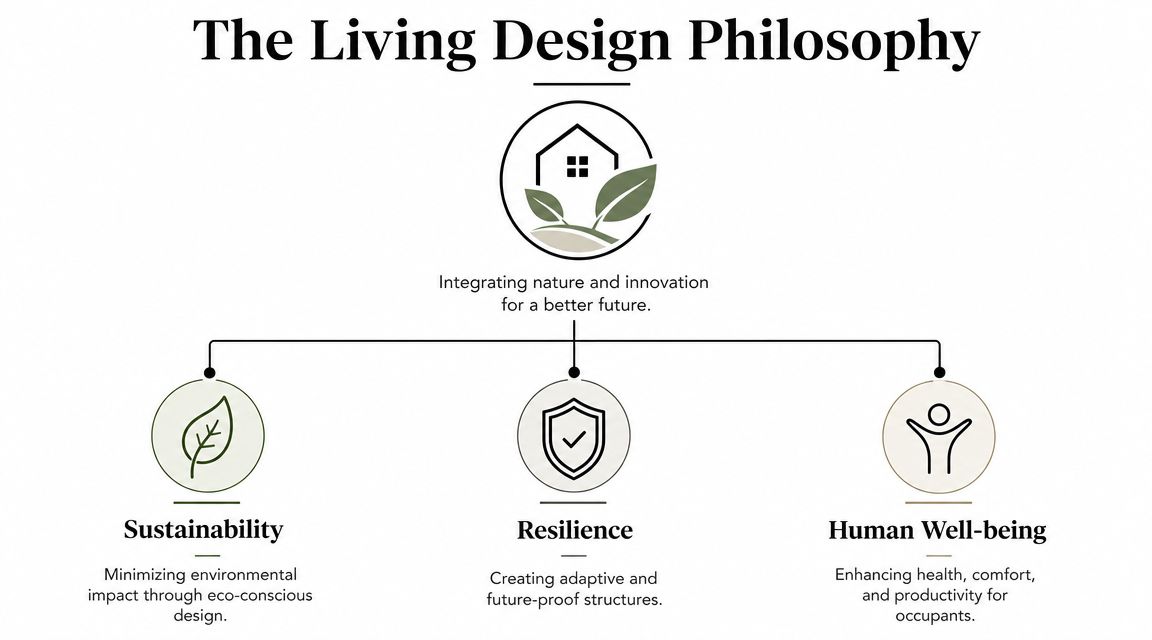
Living Design becomes believable when you can observe it in the built result. In the Atlanta studio, that framework reads less like a slogan and more like a set of design pressures held in balance.
- Sustainability: A retrofit approach suggests a willingness to work with what already exists rather than defaulting to replacement.
- Resilience: An older building adapted for current use shows whether a design team can extend relevance, not just create novelty.
- Human well-being: The office has to feel usable for the people inside it, not merely principled on paper.
The trade-offs are real. Deep sustainability goals can create material or detailing constraints. Preservation-minded decisions can complicate daylighting or systems integration. Occupant comfort can conflict with formal purity. Good firms don't eliminate those tensions. They resolve them visibly.
The best sustainable offices don't announce themselves with gimmicks. They feel settled, breathable, and precise.
That's also why this project matters photographically. It asks the camera to capture performance through atmosphere. Not every design can do that. Some buildings need explanatory text to survive scrutiny. Better ones let you read the intent in the surfaces, the plan, and the quality of light.
Notable Projects Shaping Atlanta's Urban Fabric
You understand a firm's priorities fastest in the projects where the city pushes back. In Atlanta, Perkins and Will is most persuasive at that scale. The work has to handle circulation, memory, infrastructure, and development pressure at the same time, then make those forces feel coherent on the ground and convincing in photographs.
The Atlanta BeltLine as infrastructure and image
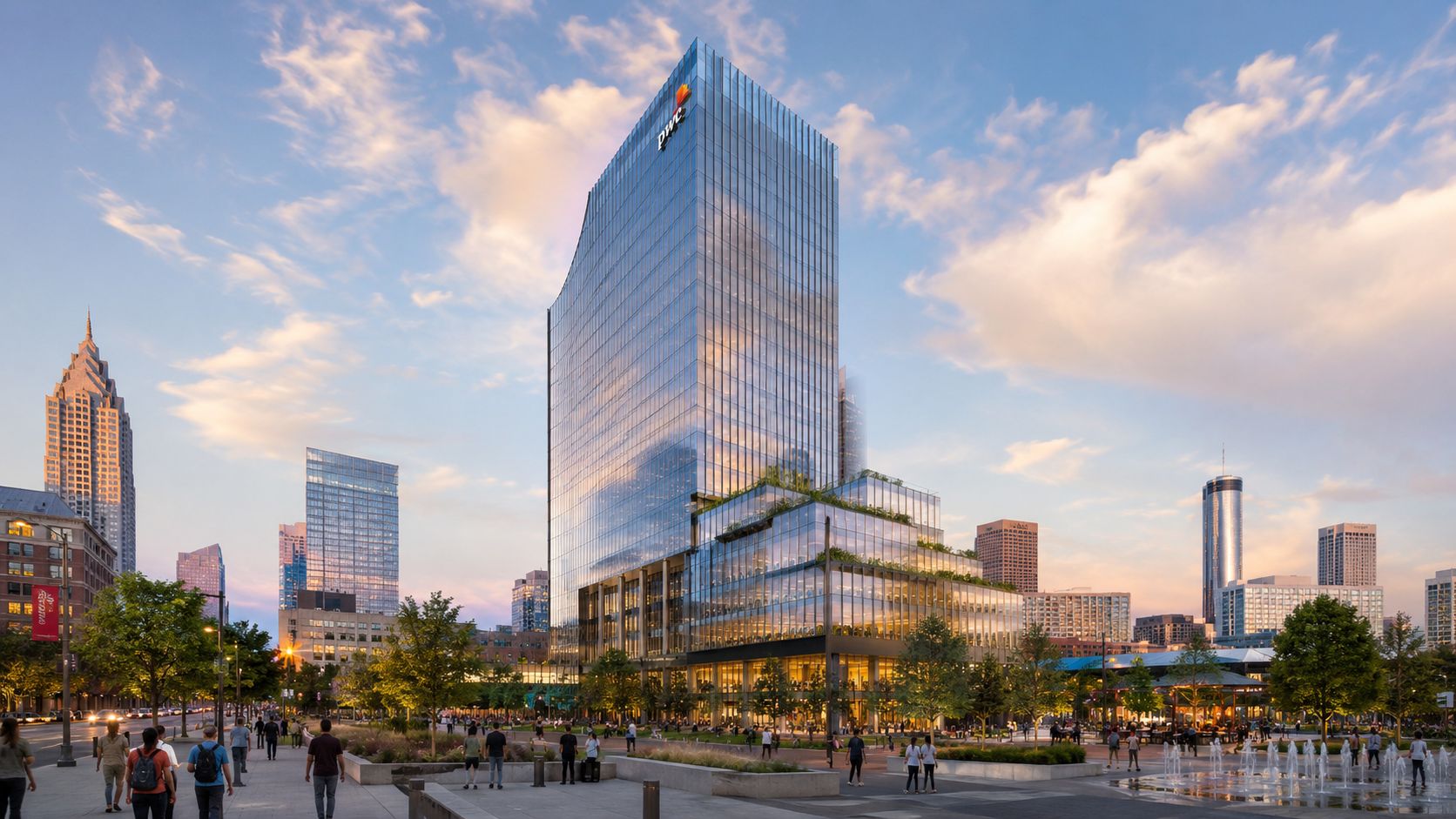
Perkins&Will's Atlanta portfolio includes the Atlanta BeltLine Corridor Design and Trails, which the firm describes on its Atlanta BeltLine project page as a reclaimed rail corridor shaped around transit, a linear greenway, and multi-use trails. That kind of commission changes the design brief. A building can resolve itself within a clear envelope. A corridor has to stay legible across shifting neighborhoods, grades, drainage conditions, planting zones, and public expectations.
It also changes how the work should be photographed.
A single hero frame will not explain a project like this. The better approach is serial. Start with long views that establish continuity. Then move closer and record thresholds, crossings, retaining edges, shade, paving transitions, and the points where civic infrastructure meets daily use. People matter in those frames because occupation is part of the design, not decoration added afterward.
For readers comparing strong outdoor civic spaces across the city, this survey of architectural landscapes in Atlanta is a useful reference for reading site planning and built form together.
Adaptive reuse that keeps memory in the frame
Independent coverage also connects Perkins and Will Atlanta to adaptive-reuse projects such as Westside Paper and Atlanta Dairies. Those commissions are worth studying because reuse exposes a firm's discipline very quickly. It is easy to preserve an old shell and drain it of character. It is just as easy to romanticize industrial roughness and leave the place awkward to inhabit. Good reuse holds a tighter line.
That tension is visible on camera. I look first at what happened where old and new meet. Connections, patched surfaces, inserted structure, and shifts in finish tell the truth faster than the marketing language does. If those moments feel forced, the whole project starts to read as styling. If they feel calm and earned, the building carries its history without turning into a museum set.
A short film can sometimes communicate that lived complexity better than stills alone:
What stands out through a photographer's lens
Three recurring traits make Perkins and Will projects in Atlanta worth documenting carefully.
First is movement. In urban and mixed-use work, the plan often reveals itself through how people arrive, pass through, pause, and turn corners.
Second is material judgment. Adaptive reuse lives or dies at the seam, where retained brick, steel, concrete, glass, and new assemblies either belong together or fight each other.
Third is the project's civic edge. The strongest work does not stop at the façade. It shapes the walk up, the threshold, the street relationship, and the public reading of the building over time.
Community Impact Beyond the Buildings
A firm's civic influence isn't measured only by signature projects. It's also visible in whether the office acts as a serious local participant in redevelopment, talent cultivation, and design discourse. That's where Perkins and Will Atlanta carries weight.
The firm is described as a global design practice, and an Atlanta Magazine profile summarized on the Perkins&Will overview notes hundreds of local employees in Atlanta. That scale matters because it means the office functions as a substantial regional employer and not a symbolic outpost.
Influence at the city scale
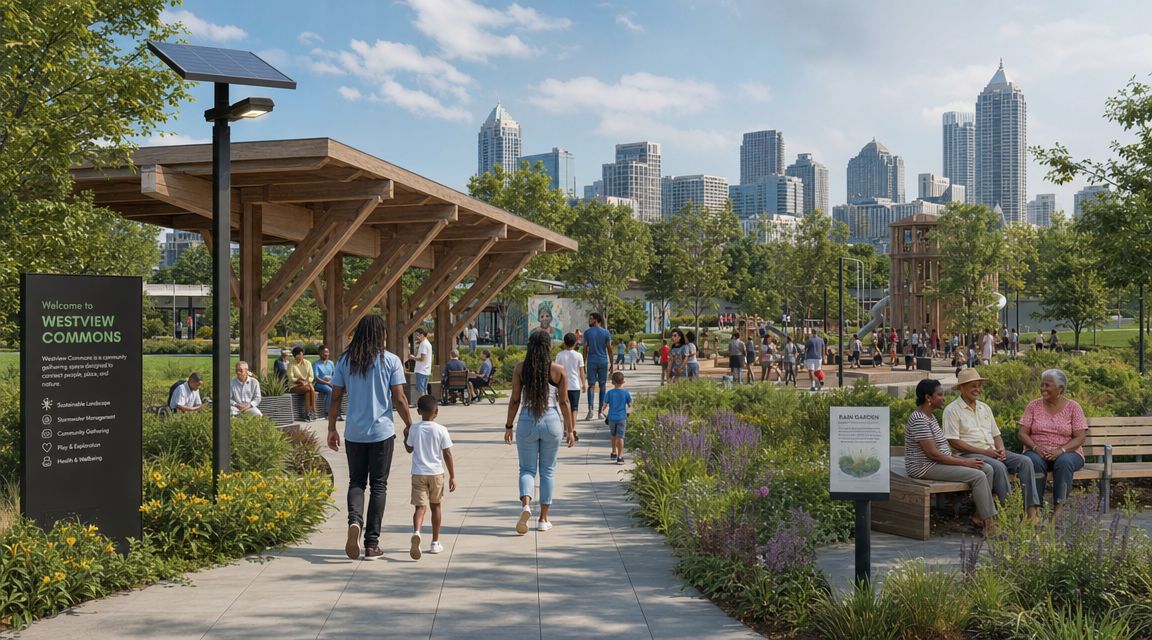
When a practice has that kind of local depth, its impact extends beyond individual commissions. Teams shape how developers frame redevelopment opportunities. They influence what clients expect from workplace repositioning. They also affect how younger architects and designers understand Atlanta as a place to build a career.
That kind of influence can be constructive or flattening. Large firms help normalize better standards around sustainability, reuse, and interdisciplinary work. But if they aren't careful, they can also produce a city of over-managed environments. The most compelling Atlanta work avoids that by preserving local grain, historical traces, and public texture.
Why redevelopment work matters culturally
Projects connected to places like Westside Paper and Atlanta Dairies signal a particular urban role. They aren't just buildings or tenant packages. They participate in the recoding of former industrial areas into active mixed-use districts.
That has visible consequences:
- Neighborhood identity shifts: Architecture helps decide whether redevelopment feels place-specific or interchangeable.
- Public perception changes: Once a former industrial site becomes accessible and legible, the area enters wider civic imagination.
- Visual memory survives or disappears: Reuse projects either retain evidence of what was there before, or they erase it.
A city remembers through surfaces, infrastructure, and reused structures. Good redevelopment lets that memory remain visible.
For photographers and editors, this is why community impact can't be covered with ribbon-cutting imagery alone. You need people in frame, edge conditions, and enough context to show whether the project participates in city life.
A Guide to Photographing Perkins and Will Designs
I usually know within the first few minutes on site whether a building will photograph honestly. With Perkins and Will projects, that test often happens in circulation spaces. A stair lands on a view at the right moment. Daylight carries farther than expected. Old structure and new insertions start to explain each other as you move. If the photographer only chases polished hero shots, that intelligence disappears.
That is the challenge with Perkins and Will Atlanta. Many of the strongest decisions are procedural and spatial rather than sculptural. Reuse strategies, layered circulation, workplace flexibility, and environmental performance rarely resolve in one dramatic frame. They need a sequence that shows approach, entry, movement, occupation, and material evidence.
Start with intent, not equipment
A good shoot begins with the architect's agenda and the client's reason for building. Is the project trying to reconnect a site to the city, reposition an existing asset, or make a workplace feel more usable and less rigid? Each objective changes what has to be photographed, when to shoot it, and how much context belongs in frame.
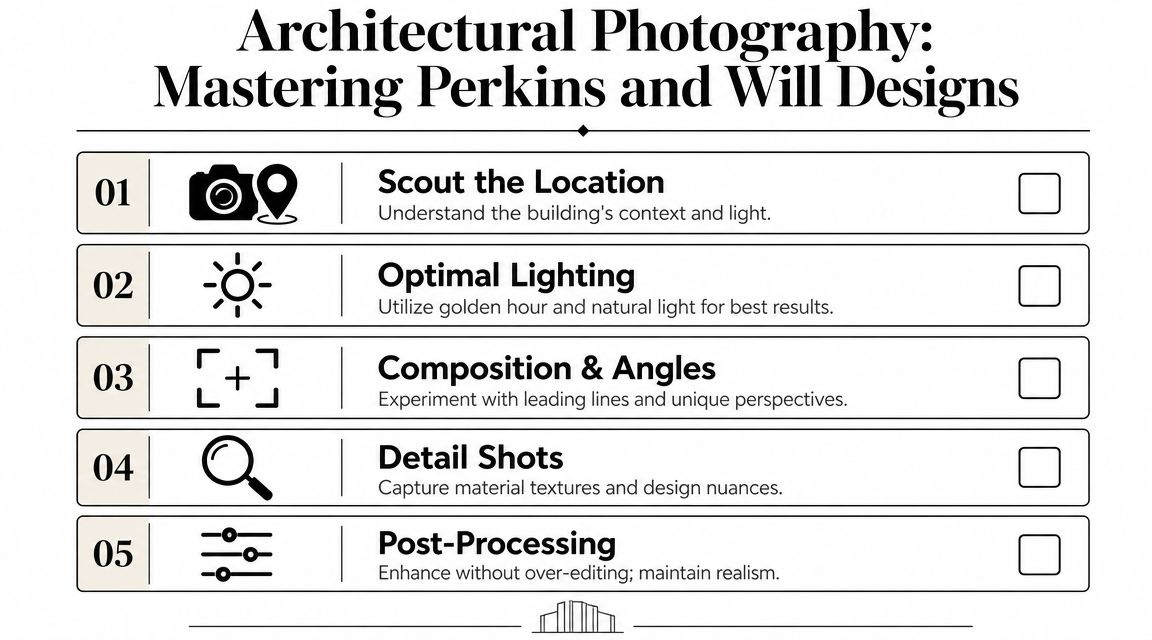
A practical brief usually includes five decisions:
- Name the editorial priority: urban presence, interior experience, adaptive reuse, workplace culture, or brand communication.
- Scout in changing light: morning, midday, and late afternoon reveal different surface depth, glare conditions, and façade legibility.
- Split the shot list into hero views and proof-of-performance views: both matter, and they serve different audiences.
- Cast occupancy carefully: people should clarify scale, circulation, and patterns of use.
- Set editing limits early: perspective correction and tonal balance help, but materials still need to look like themselves.
For teams planning a commission, this guide to photographing architecture and interiors is a useful starting point because it addresses pre-production, composition, and how design reads in an editorial set.
What works and what fails
The common mistakes are easy to spot.
Ultra-wide lenses can make an office floor or lobby feel expansive, but they often distort proportion and weaken the discipline of the plan. Transitional spaces get skipped, even though stairs, corridors, terraces, and thresholds often carry the project's clearest spatial argument. Empty-room photography creates another problem. In workplace, mixed-use, and civic projects, an unoccupied image may look clean while saying very little about how the design performs. Heavy retouching causes the last failure. Once concrete, timber, glass, and weathered steel all share the same glossy finish, the architecture loses credibility.
Stronger coverage is more selective. Use wide views with restraint. Pair them with medium frames and details that show joins, edge conditions, reflected light, and the meeting point between inherited fabric and new construction. The truth about the design is often told by those moments. In adaptive reuse work, one of the most valuable images is the frame that lets old and new remain legible together.
Commissioning the right kind of coverage
Architects, developers, and marketing teams should brief this work with more precision than “exteriors, interiors, and details.” Ask for images that show what the project is trying to solve. Ask where the design changes character over the course of a visit. Ask which spaces deserve occupancy and which require stillness.
Jimmy Clemmons Photographer can support that process with architectural photography, location scouting, lighting planning, and edited image sets for teams that need editorial storytelling as well as brand-ready assets. That range is useful when one commission has to serve press outreach, awards submissions, web publishing, leasing material, and internal documentation.
Good architectural photography translates architecture into evidence.
Partnering with a Forward-Thinking Firm
Perkins and Will Atlanta is most convincing when you look at the relationship between its office, its urban work, and its reuse projects. The common thread isn't style. It's a preference for complex problems where architecture has to perform technically, culturally, and visually at once.
The Atlanta studio is described by the firm as over 170 people strong, and its recent work, including Interface Headquarters, points to an ongoing focus on workplace reinvention and adaptive reuse, according to the Perkins&Will Atlanta studio page. That makes the office especially relevant in a market where clients are rethinking existing assets instead of treating demolition and replacement as the default answer.
Practical next steps
If you're evaluating Perkins and Will Atlanta as a client, collaborator, or prospective employee, focus on fit rather than prestige alone.
- For clients: Bring a clear brief about whether the project is about repositioning, new workplace strategy, urban intervention, or reuse.
- For development teams: Ask how the firm approaches inherited site constraints and what kind of interdisciplinary coordination your project will require.
- For job seekers and collaborators: Study the Atlanta portfolio for evidence of where the office is placing its energy, especially in sustainability-driven repositioning and mixed-use redevelopment.
The address remains a useful starting point because it tells you something about the firm's place in the city. 1315 Peachtree St isn't just where mail goes. It's where a long-established global practice meets Atlanta's current design conversation in real time.
If you need imagery that matches the intelligence of the architecture, Jimmy Clemmons Photographer creates architectural photography, brand content, and interior coverage for firms, developers, and editorial teams that want design documented with clarity, context, and strong visual judgment.