

You're usually searching for Pace Academy photos with a job to do. A clean admissions frame, a strong athletics image, or an exterior that communicates the school's long presence in Atlanta's Buckhead area all serve a specific purpose, and each one asks for different framing, light, and context. For a school founded in 1958 and serving 1,150 students from Pre-First through 12th grade, the image library has to carry history, scale, and daily life in one visual system Pace Academy's college profile Pace Academy history page.
That mix is exactly why school photography needs editorial judgment, not just documentation. A photographer has to decide which spaces deserve wide context, which details should be isolated, and where students or staff should enter the frame so the campus feels active instead of staged. For a closer look at how renovation work is translated into usable image libraries, see this before-and-after renovation case study.
1. The Professional Case Study of a Private School Renovation
A school photo library should be built with the same control used on a renovation shoot. In a project for Wesleyan School, the goal was to turn a campus upgrade into editorial-quality assets that could support marketing, proposals, and institutional storytelling, which is the same standard Pace Academy photos should meet when the campus needs to read as polished, current, and useful Wesleyan School renovation project. The work was not only about recording finished construction. It was about shaping those spaces into images with clear purpose, consistent composition, and practical value across print, web, and internal communications.
The strategy started with timing. Twilight hours were chosen to catch the new lighting design at its best, which gave the exterior and interior frames a stronger sense of atmosphere without losing architectural clarity. Rooms were photographed in phases immediately after completion, coordinated with the contractor so each space was clean, set, and ready before any trace of construction clutter could creep in. That kind of sequencing matters on an active campus, because the camera sees everything, from unfinished details to the way light falls across a corridor or commons area.
Why this matters for Pace Academy imagery
School campaigns fail when they look like records instead of assets. Good architecture photography balances clean lines, material texture, and spatial depth with enough context to show how students and faculty use a space. That matters for Pace Academy because the school's campus needs a visual system that can hold together repeated updates, different building types, and spaces with different functions without making the archive feel disconnected.
Practical rule: If the image cannot support admissions, fundraising, and brand messaging at the same time, it is probably too narrow for a private school archive.
The Wesleyan example also shows why production control matters. On an active campus, timing, staging, and coordination with the contractor kept disruption low while still capturing rooms as they came online Wesleyan School renovation project. That same discipline carries over to private schools, where classrooms, athletic facilities, and commons areas often need to be photographed without interrupting the school day. For schools that need the same level of planning in a broader visual program, brand photography for Atlanta schools has to account for architecture, people, and institutional use in one shoot plan.
The trade-off is straightforward. A specialist architectural shooter delivers a more polished and strategically framed portfolio, but the service is narrower than a general content provider. If the assignment needs still photography with architectural discipline, that is the strongest fit. If it also needs video, virtual tours, or live event coverage, the school will likely need additional vendors.
2. The Official Source From Pace Academy Itself
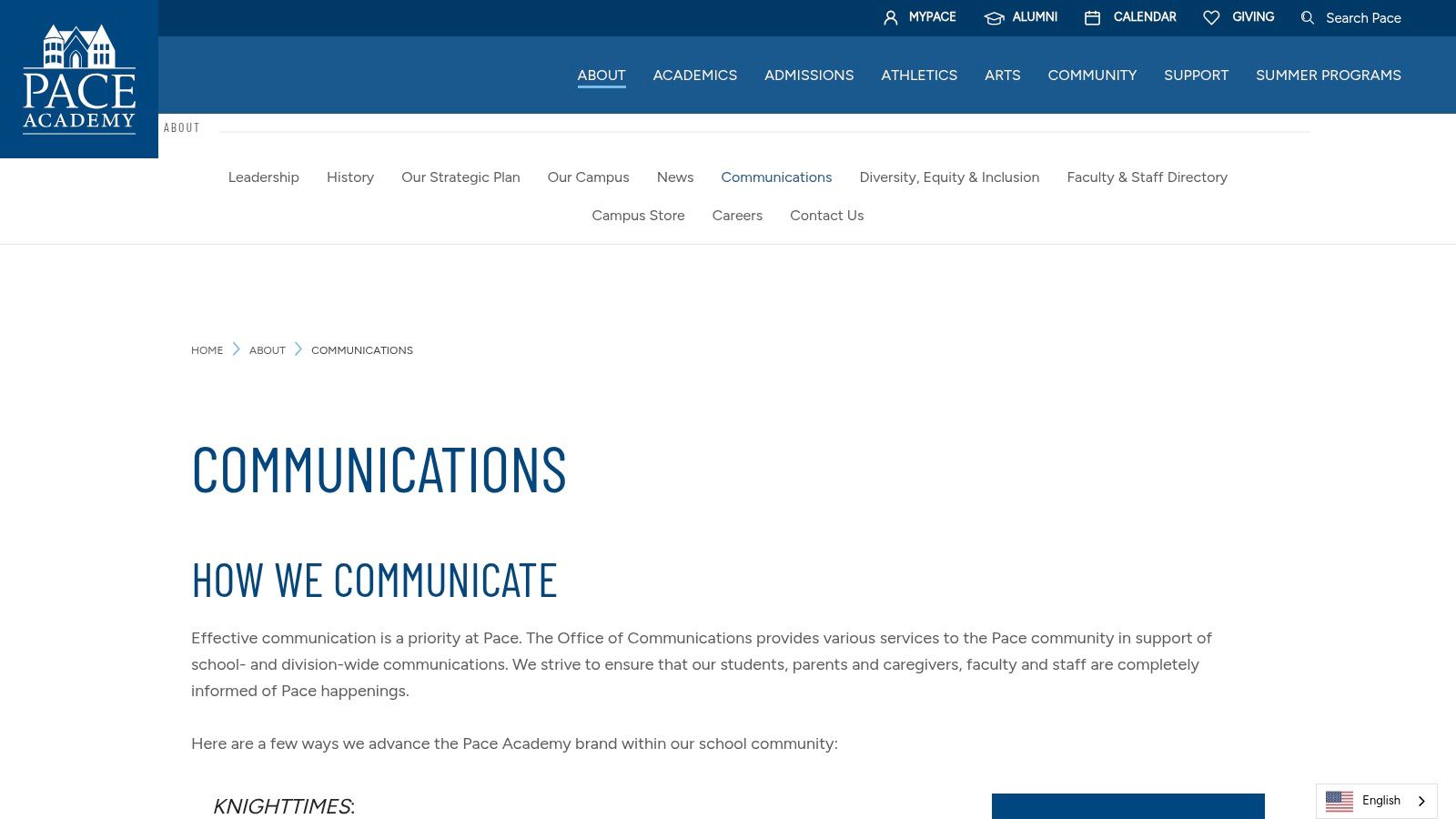
For brand-safe Pace Academy photos, the school's Communications Office is the first place to check. The official communications page points families, faculty, and media toward school-approved news and media channels, so it is the most reliable source for imagery that reflects how Pace wants to present itself in public Pace Academy Communications. That matters because official photos usually arrive with captions, context, and the right institutional tone, which is often what admissions teams and development offices need.
What works and what doesn't
Official channels are strongest when the image has to make a polished first impression. They are also the safest choice when the photo must align with school policy, school language, and school branding. The trade-off is access. Some galleries may sit behind a login, and broader usage rights usually require a formal request rather than a simple download.
Best use case: Admissions brochures, advancement campaigns, and public-facing news posts.
The school's app can also surface media for the community, which helps parents and staff find current coverage without digging through scattered posts. That said, official imagery is usually curated, not exhaustive. If you need a specific classroom, a less-photographed facility, or a wider visual survey of campus life, the official source may not be enough on its own.
A commercial photographer working on a school campaign can study this channel to understand Pace's visual priorities, then build a more complete library around them. A closer look at brand photography for Atlanta schools shows how that kind of planning turns official references into a broader archive for admissions, development, and long-term brand use.
3. The Internal Archive for Families and Staff
Vidigami is the most practical internal source for the Pace community because it centralizes school photography in one searchable archive Vidigami at Pace Academy. For parents, students, and staff, that means the fastest path to specific faces, classes, activities, and events is often the platform already used by the school. It's built for retrieval, not public promotion, and that difference changes how you should use it.
The archive is especially valuable when you need one child's recital, a specific team photo, or a classroom moment that never made it to the public website. Because access is permission-based and privacy-aware, it's better suited to internal browsing than to marketing teams looking for broad campaign material. That restriction is also the point. School image libraries have to balance usefulness with student privacy.
- Search by context: Use class, event, or activity filters first, because a school archive is only helpful if you know where to start.
- Respect permissions: If a photo is tagged or limited by policy, treat that access as governed by school rules, not as a reusable public asset.
- Use it for specificity: Vidigami is strongest when the need is personal or operational, not when the goal is a polished external campaign.
For anyone building a photo system around Pace Academy photos, this kind of archive is indispensable for depth. It won't replace a photographer who can create brand-level images, but it does solve the day-to-day need for historical, people-centered coverage that a public feed rarely captures. The weakness is obvious too. It's closed, so it won't help a marketing team that needs an externally usable image set without the proper credentials.
4. The Athletics Hub for Action and Access
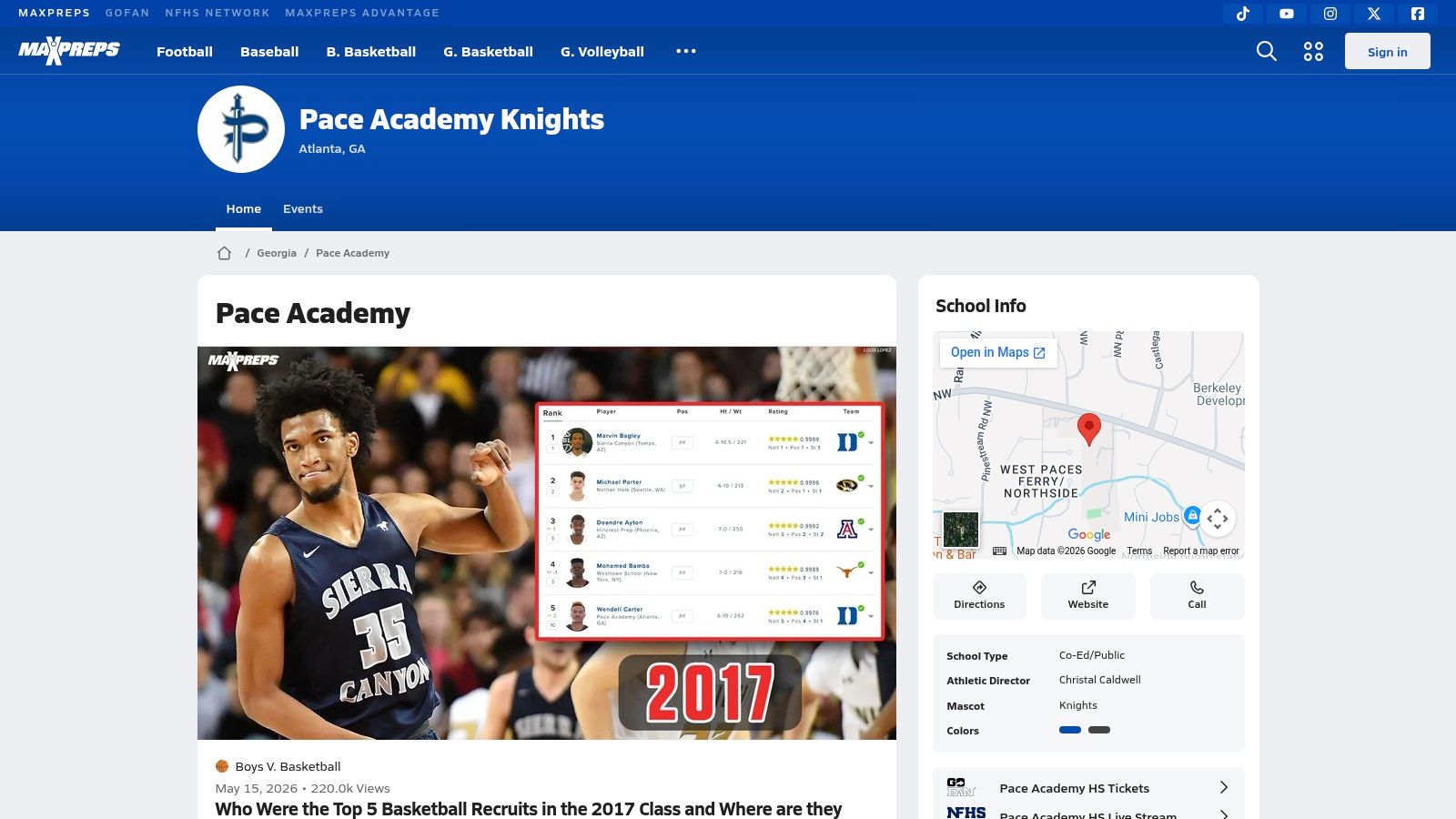
MaxPreps is the cleanest public source for Pace athletic imagery because it organizes galleries by sport and game, which makes it easier to find the exact moment you want without scrolling through unrelated school content Pace Academy Knights on MaxPreps. For parents and fans, that structure matters. It's built around competition, not campus branding, so the images usually lean into action, emotion, and game-day rhythm.
Where it performs best
MaxPreps is strongest during active seasons, when coverage is fresh and the galleries are tied to specific matchups. That makes it useful for families who want a quick path to prints or personal downloads, especially when the visual goal is a recognizable play, bench reaction, or athlete portrait in motion. The browsing flow is straightforward, which is a real advantage for non-technical users.
The limit is licensing and scope. It's an athletics-only solution, so it won't help with classrooms, arts, ceremonies, or architectural storytelling. It also tends to serve personal use better than commercial brand use, which means a school communicator usually can't rely on it as a primary source for official marketing collateral.
For photographers, the comparison with a dedicated indoor-facilities shoot is useful. A controlled sports assignment can reveal court geometry, lighting falloff, and player movement in a way that generic event coverage can't, and that's why custom work still matters Indoor athletic facilities reference. MaxPreps gives you access to the action. It doesn't give you control over how the action is framed.
5. The Editorial Eye From Regional Sports Coverage
The Atlanta Journal-Constitution is the right source when the assignment is bigger than the school and the game has regional significance AJC sports gallery. Its photo galleries bring a journalist's perspective to marquee events, which is valuable when you want context, not just celebration. Editorial coverage gives Pace athletic moments a public record with captions and narrative framing.
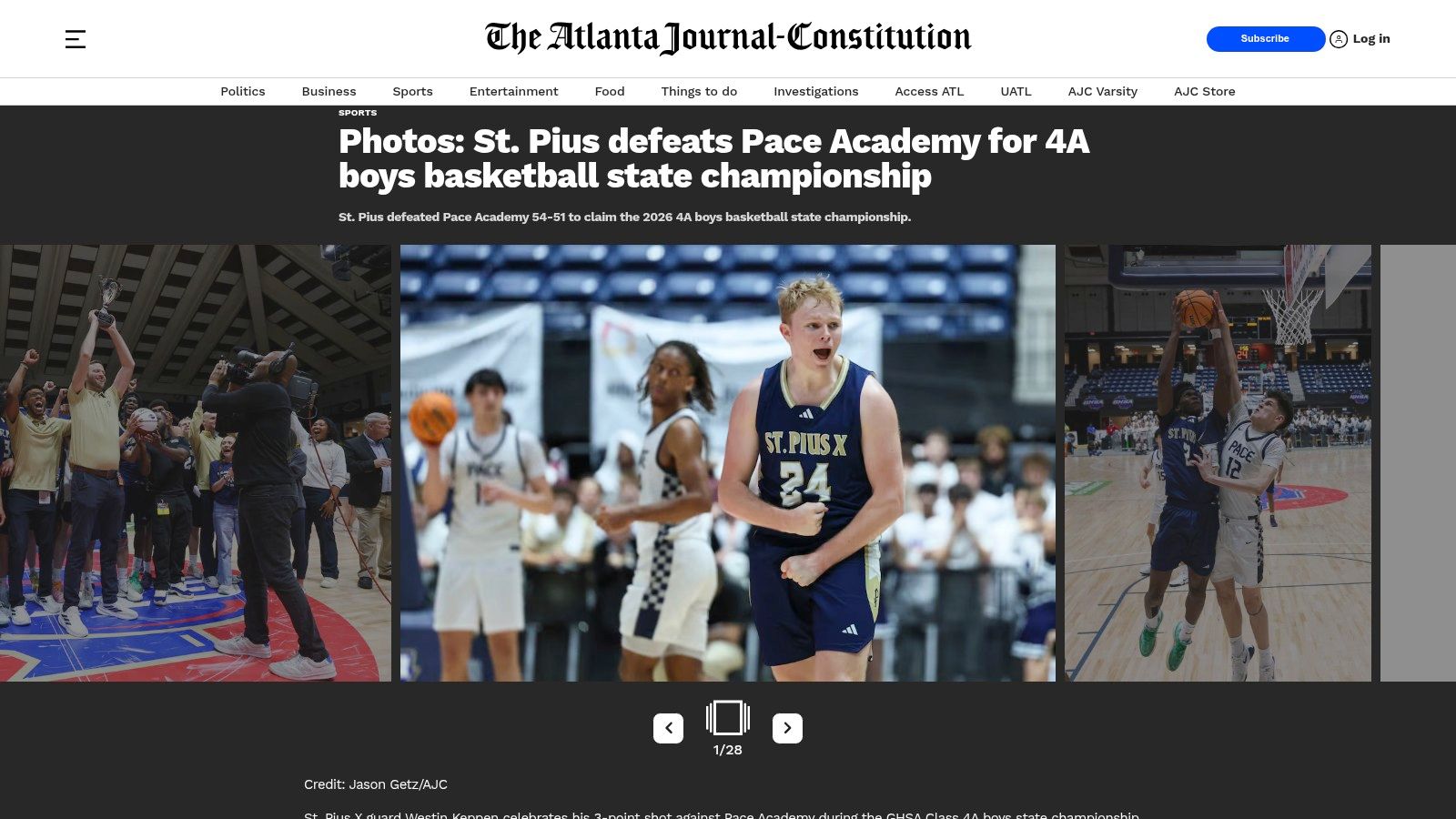
The strength here is credibility. A regional newspaper shooter sees the same moment differently from a school photographer, because the goal is documentation for a broad audience. That usually means the best frames are those that carry emotional clarity, crowd context, and competition stakes in one image. For a championship run or a high-profile rivalry, that perspective can become part of the school's historical record.
The downside is obvious. Coverage is selective, so you won't find complete season coverage or a full catalog of every event. Access to high-resolution files may also depend on the outlet's licensing terms, which makes this a better reference source than an everyday image bank. If you need a polished visual archive for the school itself, editorial coverage should complement, not replace, official or commissioned photography.
Use editorial images when the story is bigger than the roster. That's when newspaper coverage earns its keep.
For Pace Academy photos, this source works best when the school wants proof that a moment mattered beyond campus. It's the difference between a team snapshot and a public sports narrative.
6. The Niche Source for Track and Cross-Country
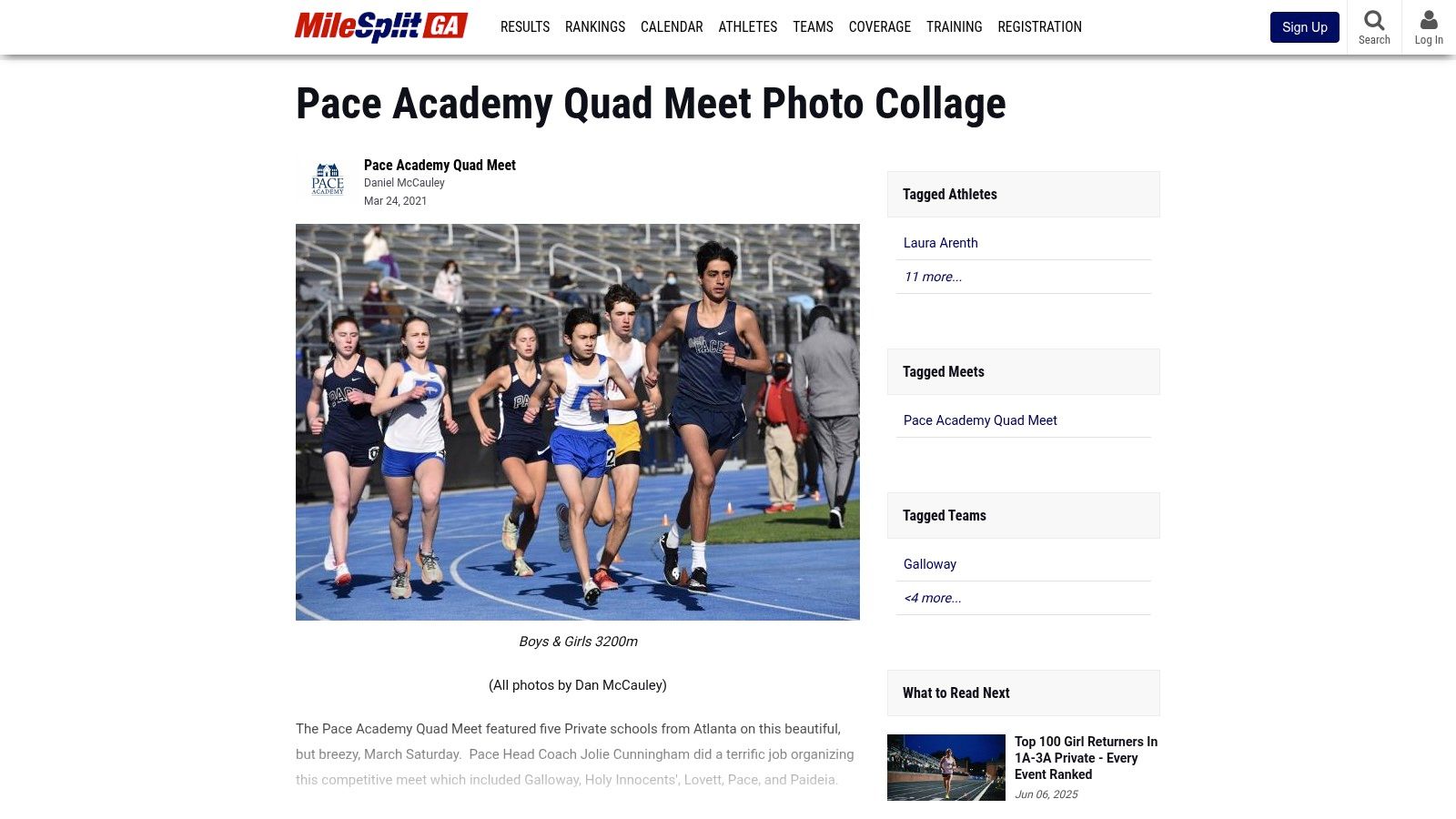
Georgia MileSplit is the most focused source for Pace track and cross-country imagery because it pairs meet photos with event coverage and results context Pace Academy quad meet photo collage. That pairing matters. When an athlete's image sits beside verified meet information, the photo becomes more than a visual record, it becomes part of the competition story.
Why specialists matter here
Track and cross-country don't photograph like football or basketball. The action is spread out, the movement is subtle, and the best frames often come from timing a stride, a handoff, or a finish-line expression. A niche platform like MileSplit understands that pacing, which is why its galleries tend to feel more sport-specific than broad public sports feeds.
That specificity helps families, coaches, and recruiters. It also helps anyone who wants to document training culture rather than just race-day outcomes. The trade-off is narrowness. MileSplit won't cover the full breadth of school life, and some features may sit behind a subscription wall, so it's a specialist tool, not a universal archive.
For a photographer building a private-school brand library, MileSplit is a reminder that different sports demand different visual grammar. A track frame needs motion and interval. A campus portrait needs symmetry and environment. The best Pace Academy photos are the ones that understand that distinction instead of treating every subject the same.
7. The Local Pro for Custom Coverage
A local photographer who already knows Pace events can be the most efficient option when the assignment is specific. smaX Photography, led by Atlanta-area photographer Jay Boatwright, includes Pace Academy teams in its portfolio, which signals practical familiarity with the school's athletic environment and shooting conditions smaX Photography portfolio. That matters when you need custom team coverage, a targeted action sequence, or an assignment that has to align with a coach's or director's shot list.
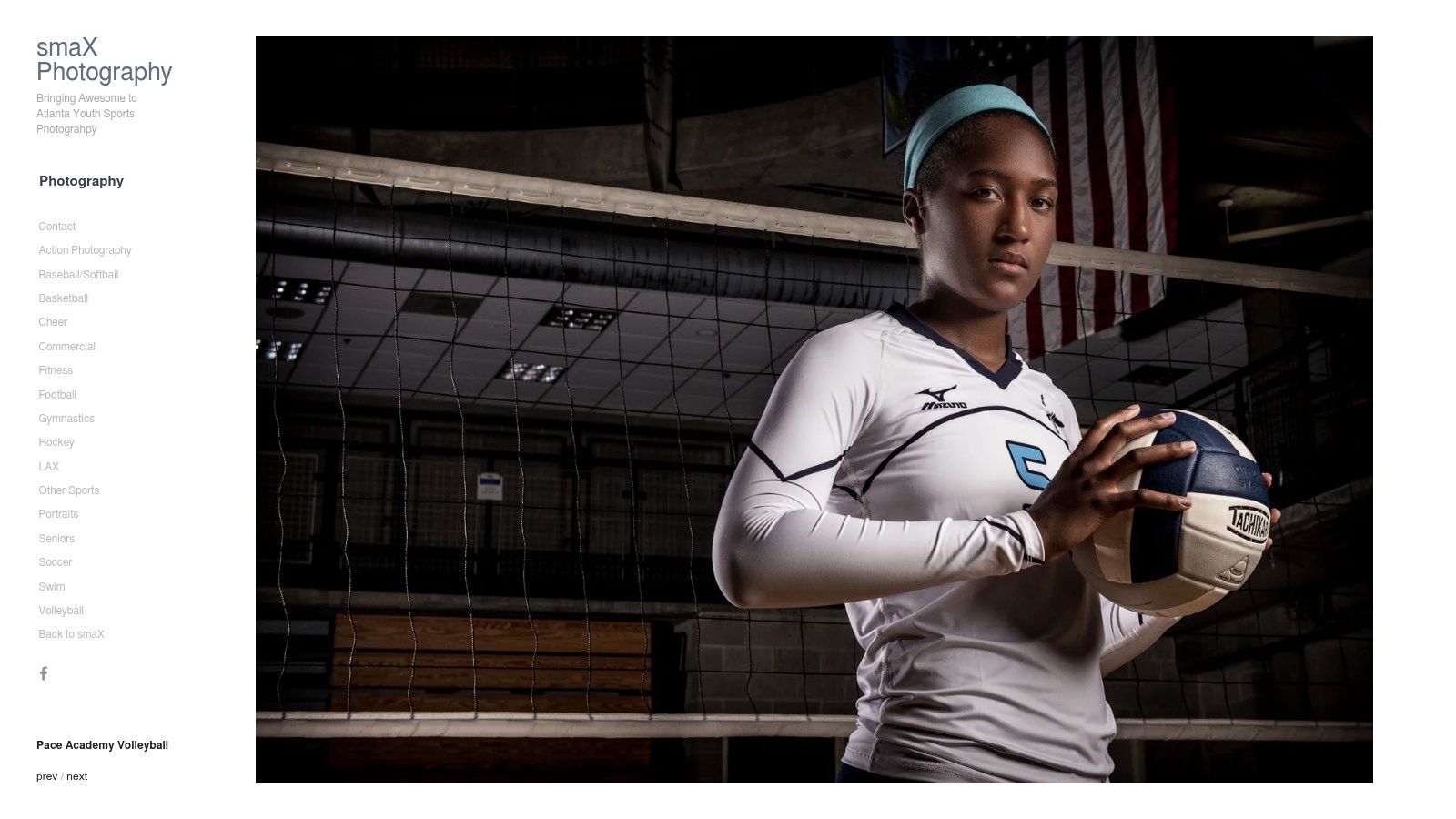
The biggest advantage of hiring locally is control. You can negotiate usage rights, request specific angles, and ask for a visual approach that matches the school's needs instead of accepting a fixed editorial package. That flexibility is valuable for athletics, but it also extends to brand portraits and event coverage when the school wants consistency across multiple deliverables.
The limitation is that the portfolio isn't Pace-exclusive, so you have to browse carefully to find the relevant work. Licensing, pricing, and delivery terms also depend on the assignment, which means the client has to be clear about intended use from the beginning. For a school marketing team, that's not a weakness. It's just part of commissioning work properly.
A strong local shooter saves time by understanding the venue before the first frame is made.
For a school looking beyond scattered public images, a local pro is often the most direct path to a cohesive visual story. That's especially true when the brief calls for repeat coverage rather than one-off event photos.
Pace Academy Photo Sources - 7-Way Comparison
| Source | 🔄 Implementation complexity | ⚡ Resource requirements | 📊 Expected outcomes | 💡 Ideal use cases | ⭐ Key advantages |
|---|---|---|---|---|---|
| The Professional Case Study: Wesleyan School Renovation | High, full-service production, staged lighting and scouting | High, pro crew, lighting/strobes, travel, extensive post‑production | Editorial‑quality marketing assets for bids, fundraising, web/print | Major campus renovations, capital campaigns, high-end marketing | Polished, design-forward imagery; commercial license; institutional experience |
| The Official Source: Pace Academy Website & Socials | Low–Medium, centralized communications workflow | Low, in‑house staff; hi-res or broad use may require requests | Brand‑compliant, timely coverage aligned with school messaging | Official announcements, web content, social posts | Authoritative, curated visuals with vetted captions; app access |
| The Internal Archive: Vidigami for the Pace Community | Medium, platform management, tagging, access controls | Medium, user contributions, admin oversight, platform subscription | Comprehensive, searchable internal archive for community use | Yearbooks, family downloads, internal comms requiring privacy | Deep collection, privacy controls, face‑tagging and organization |
| The Athletics Hub: MaxPreps Pro Photo Galleries | Low, game-indexed galleries maintained by site/photographers | Low–Medium, browse/purchase model; per-image fees for downloads | High-quality action photos available for personal purchase | Families/fans seeking action shots and season galleries | Regular seasonal updates; straightforward purchase workflow |
| The Editorial Eye: The Atlanta Journal‑Constitution (AJC) | Low (event-driven), editorial coverage of newsworthy games | Medium, subscription or licensing may be required for high-res use | Journalistic images with narrative captions; historical record value | Major championships, high‑profile rivalry games, press coverage | High production value and editorial credibility; narrative context |
| The Niche Sport Source: Georgia MileSplit | Low–Medium, focused meet coverage and result linkage | Low–Medium, site access; Pro features may require subscription | Photos paired with verified results and event context | Track & field and cross‑country meets, athlete performance records | Expert, sport-specific coverage; images linked to official results |
| The Local Pro: smaX Photography (Jay Boatwright) | Medium, direct commissioning, scheduling, custom shot lists | Medium, hire local photographer; negotiate usage/licensing | Custom team/event photos tailored to brief and venue conditions | Commissioned team photos, event coverage needing local familiarity | Familiar with Pace venues; flexible, commissionable services and rights |
Capturing Your School's Story with Intention
A school photo set can do more than show buildings, teams, and events. In practice, the stronger files shape how a school is read. They give admissions teams usable portraits of campus life, help advancement staff support a fundraising message, and give communications teams images that hold together across print, web, and social use. That kind of work depends on a photographer who can balance architecture, people, and brand in the same frame.
For an institution like Pace Academy, the visual record has to carry more than day-to-day activity. It needs to reflect a school with a long-standing identity, a defined academic culture, and a campus story that connects classrooms, athletics, and institutional memory. That story is built through controlled light, disciplined composition, and a clear sense of what each image needs to say before the shutter clicks.
I approach projects like this by planning for use first, then aesthetics. If the archive has to support admissions, fundraising, athletics, and internal communications, the shoot needs variety without chaos, consistency without stiffness, and images that still feel current months later. A polished school library starts with intent on location, not with a larger batch of random frames.
A similar private school renovation project makes the trade-offs clear. The best exterior frames were made when the architecture was cleanly separated from visual clutter, while interior images worked only after timing the light to match the room's purpose. Wide views established scale, tighter details carried material quality, and people were placed only where they added context instead of distraction. That is the same standard Pace Academy photos should meet, because the image has to serve the school first and the photographer second.
The most useful result is a photo library that can move across departments without losing coherence. It should feel polished enough for admissions, specific enough for athletics, and steady enough for institutional storytelling. Reach out to build a visual archive that reflects the campus as it is, and as it wants to be seen.
A CTA for Jimmy Clemmons Photographer.