
Your website is due for a refresh. The proposal deck looks sharp. The team has new leadership, new projects, maybe even a new office. But the photography still says “generic professional services.” That gap is expensive.
In Atlanta, that problem shows up in two places more than most firms realize. Architecture and design companies often hire photographers who know how to photograph people but not buildings. Corporate marketing teams often get clean portraits but no story. The result is a polished asset library that still fails to communicate what makes the brand valuable.
That's where Brand Photography Atlanta becomes a strategic conversation, not a cosmetic one. The question isn't whether the images look nice. The question is whether the imagery can carry brand meaning across a website, a pitch deck, recruiting materials, social campaigns, and press placements without feeling staged, repetitive, or interchangeable.
Beyond Headshots What Brand Photography Truly Means
A marketing director signs off on new photography expecting a sharper website, stronger recruiting pages, and a cleaner pitch deck. A month later, the files are polished but generic. The portraits are competent. The office candids are usable. None of it explains why the firm wins.
That is the difference between coverage and brand photography.
In Atlanta, the gap shows up most clearly with design firms and corporate teams that need more than standard personal branding imagery. Architecture, interiors, development, and hospitality companies need photographs that understand space, materials, and intent. Corporate teams need images with editorial structure, where people, environment, and interaction build a believable story instead of filling a content calendar.
Where generic brand photography falls short
Generic brand photography usually fails in one of two ways. It flattens a place into a backdrop, or it reduces a team to a row of smiling faces. Both approaches create assets. Neither gives a marketing team much to work with once the images leave the gallery and enter real use across proposals, press, recruiting, and campaigns.
For architecture and design brands, the photographer has to read a building the way a designer does. Line, proportion, circulation, daylight, finish, and point of view all affect whether the image communicates design value or just documents a room. For corporate brands, the challenge is different. The work has to feel observed. Teams need narrative coverage that shows trust, decision-making, leadership presence, and the rhythm of collaboration without looking staged.
I see this often in Atlanta. Firms hire someone who can light a flattering portrait but cannot photograph a glass facade without distortion, or someone who can shoot interiors but has no editorial instinct for how people carry the story. The result is a disconnected library with no clear point of view.
Brand photography works when the audience understands how the company operates, what it values, and why it feels credible before reading much copy.
What the work should actually capture
For architecture, interiors, development, and hospitality brands, the strongest frames often show:
- Spatial intent. How a space opens, compresses, directs movement, or reveals a focal point.
- Material accuracy. Wood, stone, metal, glass, and fabric need to read as they do in person, not as exaggerated effects.
- Human relationship to place. People provide scale and context, but only when their presence feels believable and specific to the brand.
For corporate teams, the priorities shift:
- Leadership dynamics. Who sets direction, who listens, and how authority and trust show up in the room.
- Editorial realism. Images should feel observed and purposeful, not arranged into stock-photo gestures.
- Practical coverage. Marketing teams need hero images, verticals, environmental portraits, details, and negative space for layouts, not fifty versions of the same setup.
A headshot assignment still has value. It solves a specific problem. If the need is updated executive portraits, a focused professional headshot session in Atlanta is the right tool for that job. A full brand library answers a broader business question: how the company should look when its spaces, people, and standards have to carry the message together.
Why Your Visuals Are Your Most Valuable Asset
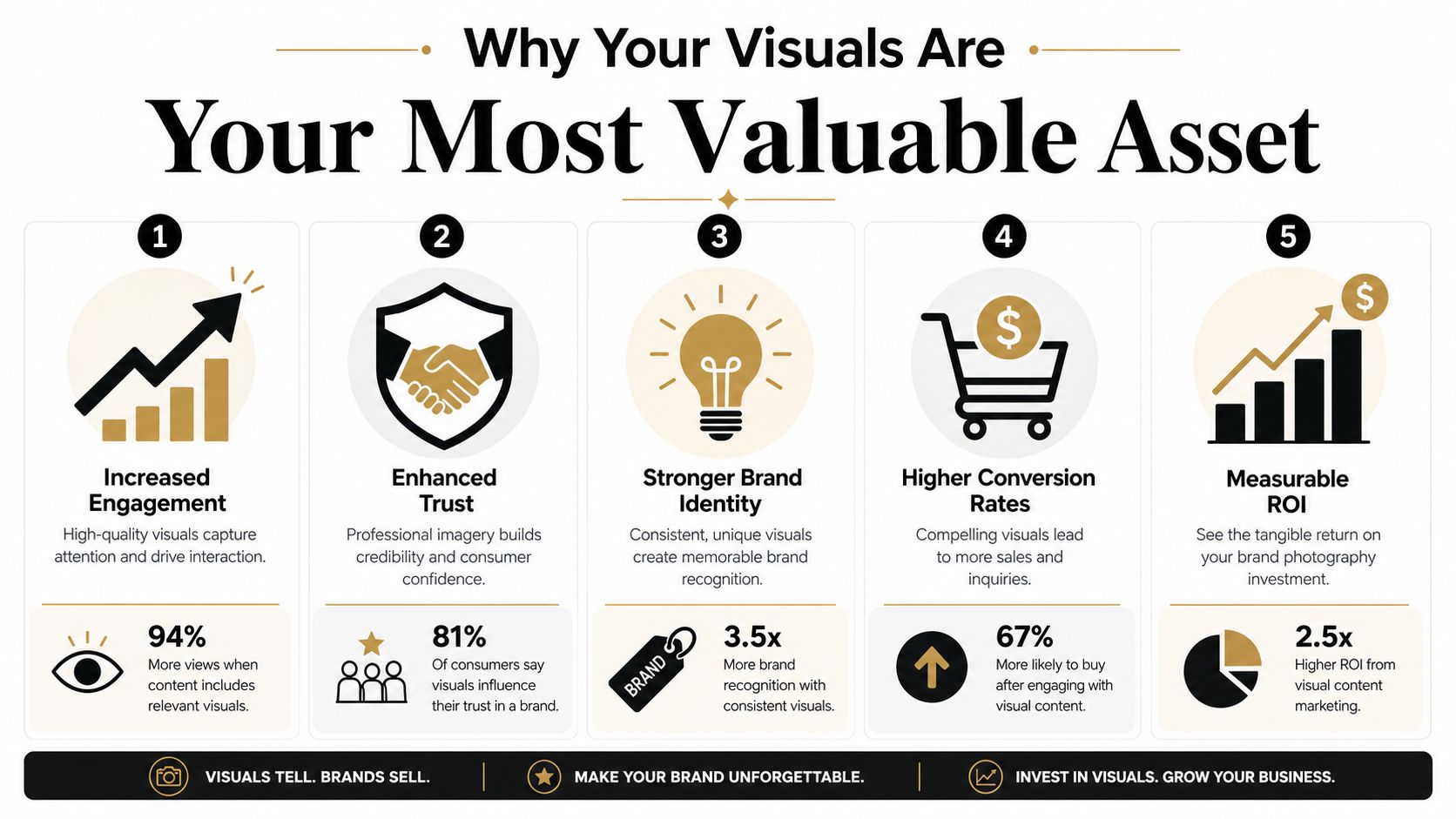
A marketing director pitches a shortlist, updates the website, sends a recruiting deck, and briefs a PR team, all in the same quarter. If every touchpoint shows a different visual standard, buyers notice. They may not say it that way, but they read the inconsistency as risk.
That is why image libraries carry more weight than many teams give them. Visuals shape recall, signal competence, and help prospects understand what kind of company they are dealing with before a sales call ever happens. Research on visual communication has long shown that people retain more information when words are paired with relevant images, as summarized by the Visual Teaching Alliance on image-supported learning and retention and by studies collected in 3M's Visual Systems Division research summary. Separate reporting on brand consistency and content performance also points in the same direction. Consistent visual identity improves recognition, trust, and response across channels.
Why custom visuals outperform stock
Stock photography creates a generic first impression. For firms in Atlanta whose value is tied to built environments, project quality, or team judgment, that is a costly compromise.
An architecture studio needs images that show proportion, light, materials, and how people move through a space. A corporate team needs photographs that show how leadership presents, how collaboration looks, and what the culture feels like when clients or recruits walk in. Those are two very different assignments. Both get flattened by generic personal-branding coverage.
Custom brand photography gives marketing teams something stock never can. Proof.
Here's how that plays out in practice:
| Business need | Generic visual approach | Strategic brand photography approach |
|---|---|---|
| Website credibility | Clean but interchangeable | Specific imagery tied to your actual spaces, team, and standards |
| Proposal support | Decorative filler | Visual evidence of process, scale, and decision-making |
| Recruiting | Standard office culture shots | Clear view of leadership style, work environment, and team chemistry |
| Social and email | Inconsistent asset mix | A repeatable visual system built for multiple formats and campaigns |
What marketing teams should care about
Strong visuals reduce friction across the entire content operation.
Designers get files that fit the brand instead of forcing stock into layouts. Writers can anchor messaging to real situations rather than abstractions. Business development teams stop reusing the same two passable images because there is finally enough coverage to support proposals, case studies, press, recruiting, and web updates without visual repetition.
For design firms, that often means an architectural brand library with wide scenes, detail frames, environmental portraits, and context shots that show authorship without overstating it. For corporate teams, it usually means editorial narrative coverage that documents meetings, leadership, collaboration, and workplace moments with enough realism to feel observed rather than staged.
Practical rule: If a competitor could use the same image without anyone noticing, it is filler, not brand photography.
The best libraries do more than look polished. They help a company present one clear standard everywhere the brand appears.
The Professional Photography Process Demystified
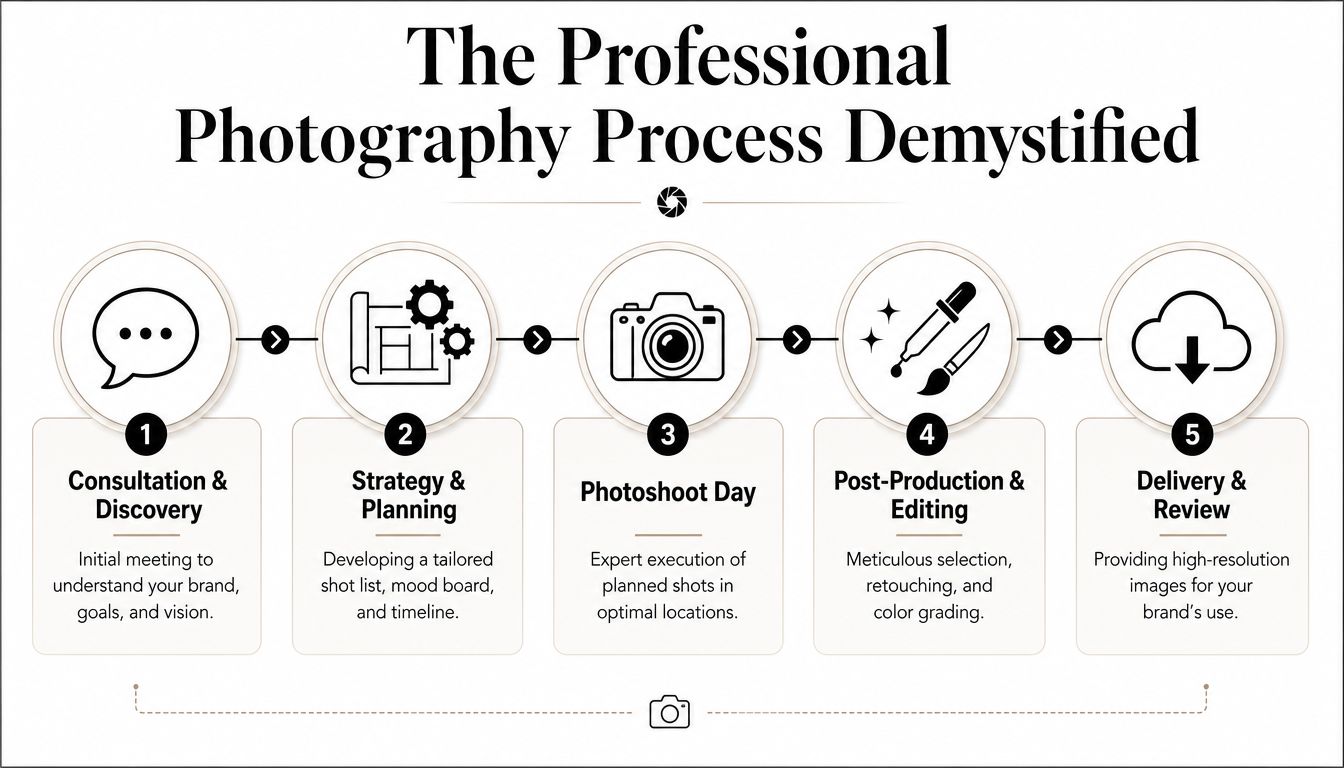
A marketing director signs off on a shoot expecting six months of usable assets. By the end of the day, the team has burned time moving furniture, guessing wardrobe, and debating which rooms matter. That usually happens because the shoot was treated like production instead of decision-making.
The productive part of brand photography starts before anyone picks up a camera. For Atlanta firms whose reputation is tied to built environments or team credibility, pre-production sets the business value of the final library. An architecture practice needs images that show authorship, materials, scale, and restraint. A corporate team needs editorial coverage that makes leadership, collaboration, and culture feel believable rather than staged.
What happens before the shoot
The first conversation should clarify use, audience, and constraints. That means identifying what the images need to do, where they will appear, who has to approve them, and how much polish the brand can support without losing credibility. A homepage hero, an award submission image, a recruiting banner, and a press portrait may come from the same production day, but they should not be planned the same way.
Good pre-production also exposes trade-offs early. If the team wants active workplace scenes, the office has to look camera-ready and the schedule has to protect real working time. If the goal is architectural brand photography, scout timing matters because sun position, traffic, landscaping condition, and interior lighting all change the result. If the assignment is editorial narrative coverage for a corporate team, the photographer needs to know which interactions are real, which can be lightly directed, and which should never look performed.
A written visual guide helps keep those choices consistent. It does not need to be bloated. It does need to be specific.
A useful guide usually defines:
- Framing standards. Camera height, lens approach, negative space, and how tight or loose each scene should feel.
- Editing boundaries. Color treatment, contrast, skin retouching, perspective correction, and how far cleanup should go before the image stops feeling truthful.
- Scene priorities. Which spaces, people, processes, and details carry the brand story, and which ones are secondary.
- Delivery requirements. Crops, file types, naming, and output sizes for web, proposals, editorial use, and social distribution.
Teams that want a clearer sense of how these projects are structured can review examples of brand photography services in Atlanta before production starts.
What happens on set and after delivery
On set, the job is control. Time, light, reflections, posture, wardrobe, room styling, and energy all need active management. Calm sets are usually the result of hard planning, not luck.
The approach changes by niche. For architecture and design firms, a strong photographer watches vertical lines, mixed color temperature, window detail, and how a space holds depth in a frame. For corporate narrative work, the harder task is human behavior. People need enough direction to look clear and confident, but not so much that every frame starts reading like stock.
That is the gap between generic personal-brand coverage and business-grade brand photography. One is built around flattering individuals. The other is built around giving a marketing team a usable system of images.
Editing is where the system either holds together or falls apart. The final delivery should show range without flooding the client with near-identical frames. Marketing teams need clear selects, logical alternates, and files prepared for actual use. The best galleries make downstream decisions faster because the images already reflect the brand standard, the intended use, and the story the company needs to tell.
Investing in Your Atlanta Brand What to Expect
Photography fees make more sense when you stop thinking in terms of “a shoot” and start thinking in terms of asset production. You're not buying camera time alone. You're buying planning, direction, technical control, editing, and a library of images your team can use repeatedly.
That's why pricing varies so widely in Atlanta. A half-day executive session is entirely different from a multi-location brand campaign for an architecture firm or a developer. The labor before and after the shoot often matters as much as the hours on site.
What usually drives the investment
Several variables shape a proposal:
- Scope of coverage. One office, one team, and one use case is simpler than a campaign spanning interiors, exteriors, leadership, process, and culture.
- Pre-production complexity. Location scouting, shot planning, scheduling, permits, and styling coordination all affect the total.
- Post-production standards. Architectural retouching, color consistency, perspective control, and final asset preparation take time.
- Licensing and deliverables. Usage expectations matter, especially if the images will support advertising, editorial placement, recruiting, and print.
A marketing director should ask whether the estimate includes pre-production, shoot time, editing, rounds of review, and final delivery formats. If those items aren't clear, the project usually gets expensive later.
Day rate versus project fee
A day rate can make sense when the brief is straightforward and the marketing team already has strong internal creative direction. A project fee is often better when the assignment includes concept development, multiple deliverables, or stakeholders with different needs.
Here's the practical difference:
| Pricing model | Best fit | Watch for |
|---|---|---|
| Day rate | Clear scope, experienced in-house team, limited deliverables | Underestimating edit time and coordination |
| Project fee | Multi-part campaign, complex planning, cross-channel use | Vague assumptions about revisions or licensing |
If you're comparing providers, review how they define deliverables, not just the total figure. A low estimate can hide thin pre-production, rushed post, or a limited image library. Teams evaluating options for brand photography services in Atlanta should look for alignment between the fee structure and the actual marketing workload the images need to support.
How to Choose the Right Atlanta Brand Photographer
A common Atlanta problem looks like this. The marketing team hires a photographer with a polished personal-branding portfolio, then realizes the images fall apart when the assignment involves a law office, a new lobby, a lab, or a leadership team that needs to look credible together. The portraits are fine. The brand story is not.
That gap matters most for two kinds of businesses. Design firms need photography that understands space as part of the brand. Corporate teams need editorial narrative images that show how people work together, not just how they look standing still.
The technical standard to look for
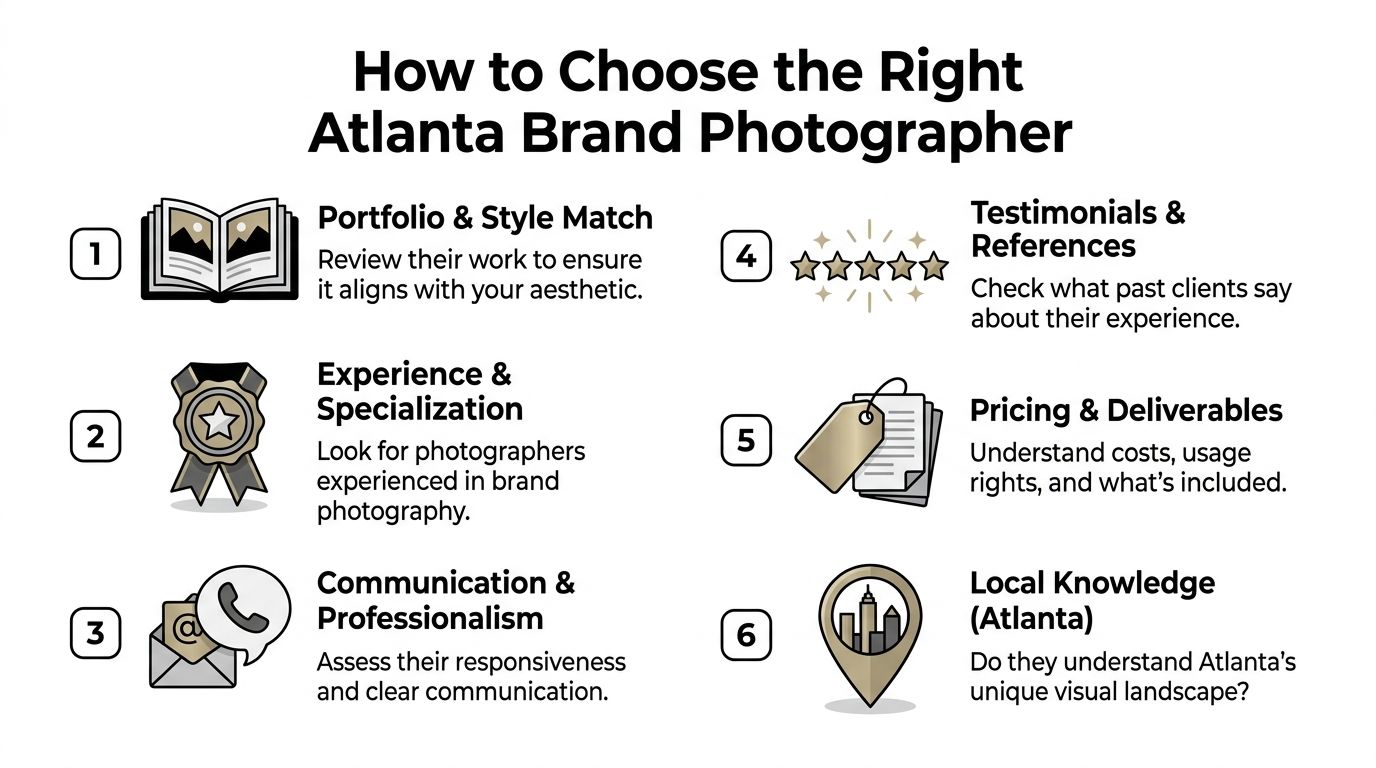
Start with the portfolio, then inspect how the work is built. Strong brand photography usually shows controlled light that still feels believable, clear subject hierarchy, intentional composition, and frames that place people or spaces in context rather than forcing everything into a generic polished look. You can see those standards across strong Atlanta brand photography examples when the photographer knows how to move between portraits, interiors, and narrative moments without losing visual consistency.
Those qualities sound obvious until the assignment gets difficult.
A conference room with window glare, dark suits, warm wood, and a skyline view requires exposure control. An architecture studio wants straight lines, accurate materials, and a sense of scale. A corporate leadership shoot needs direction that keeps people relaxed without making the interaction look staged. None of that happens by accident, and none of it is solved with presets.
This short video gives a sense of how visual decision-making shapes brand presence.
A better hiring checklist
Use questions that expose fit for the assignment, not just price or general style.
Can they photograph space as well as people?
For architecture firms, developers, schools, hospitality groups, and commercial real estate teams, review line control, reflections, color accuracy, depth, and how the photographer describes circulation and scale.Do their team images feel observed?
Editorial narrative work should show real interaction, timing, and hierarchy. If every frame looks like a staged meeting, the photographer may be strong at portraits but weak at storytelling.Can they handle mixed assignments?
Many Atlanta brands need executive portraits, workplace imagery, details, and interiors in one production day. Ask whether the photographer has done that kind of hybrid brief before.What happens before the camera comes out?
Ask to see how they prepare. Creative briefs, shot priorities, scouting notes, and production plans usually tell you more than a highlight reel does.How do they direct people who are not comfortable on camera?
Senior leadership, project managers, and technical staff need clear guidance. Good direction keeps people credible and natural at the same time.Do they understand Atlanta locations and light?
Scheduling around heat, traffic, glass-heavy buildings, mixed daylight, and fast-changing weather affects the final result. Local experience helps.
The right choice is rarely the photographer with the strongest signature look. It is the photographer who can produce the right look on purpose, under real business constraints.
Jimmy Clemmons Photographer is one Atlanta option for teams that need both architectural discipline and an editorial approach to people. That combination is useful when the brand lives in physical space, team dynamics, or both.
Atlanta Brand Stories Brought to Life
The easiest way to judge brand photography is to look at what changes after the images are made. Not vanity. Utility.
When an architecture firm needs the building to speak
A common Atlanta scenario goes like this. An architecture studio has strong work, but the website doesn't show why the spaces are good. The photography is evenly exposed, technically acceptable, and completely flat. Rooms feel smaller than they are. Material transitions disappear. Exterior views don't describe how the building sits on the site.
The fix isn't “better pictures” in the abstract. It's architectural brand photography that treats the space as the brand hero. That means photographing circulation, light falloff, thresholds, material contrast, and scale with intent. Once that visual language is in place, the firm can use the same asset library for project pages, award submissions, media outreach, and business development decks without rewriting the story each time.
When a leadership team needs more than polished portraits
The second scenario shows up inside larger companies. The marketing team has current headshots, but everything else feels stiff. Culture content looks staged. Recruiting pages feel generic. Leadership bios sit beside images that don't communicate how the company operates.
An editorial narrative approach solves a different problem. Instead of asking people to perform “company culture,” the shoot builds frames around actual interactions, movement, and environment. A conference room becomes useful when the blocking feels natural. Hallway transitions, workspace details, and team exchanges start to do real brand work.
Good corporate brand photography doesn't make a team look busy. It makes the viewer believe the team is credible, coordinated, and worth meeting.
If you want to evaluate what that looks like in practice, review a range of brand photography examples and pay attention to sequence, not just individual shots. A single strong image is helpful. A coherent set of images changes how the brand is perceived.
Your Next Step Capturing Your Brand's Vision
The firms getting the most out of brand photography in Atlanta aren't treating it as a one-off content grab. They're building visual infrastructure. They know their spaces matter. They know their people matter. They know the wrong imagery can flatten both.
That's especially true in the two niches most photographers underserve. Architecture and design firms need images that understand how buildings communicate identity. Corporate marketing teams need narrative-driven imagery that feels editorial, not staged for LinkedIn. Those are different assignments, but they require the same discipline. Clear pre-production, strong technical execution, and a point of view that serves the brand instead of overpowering it.
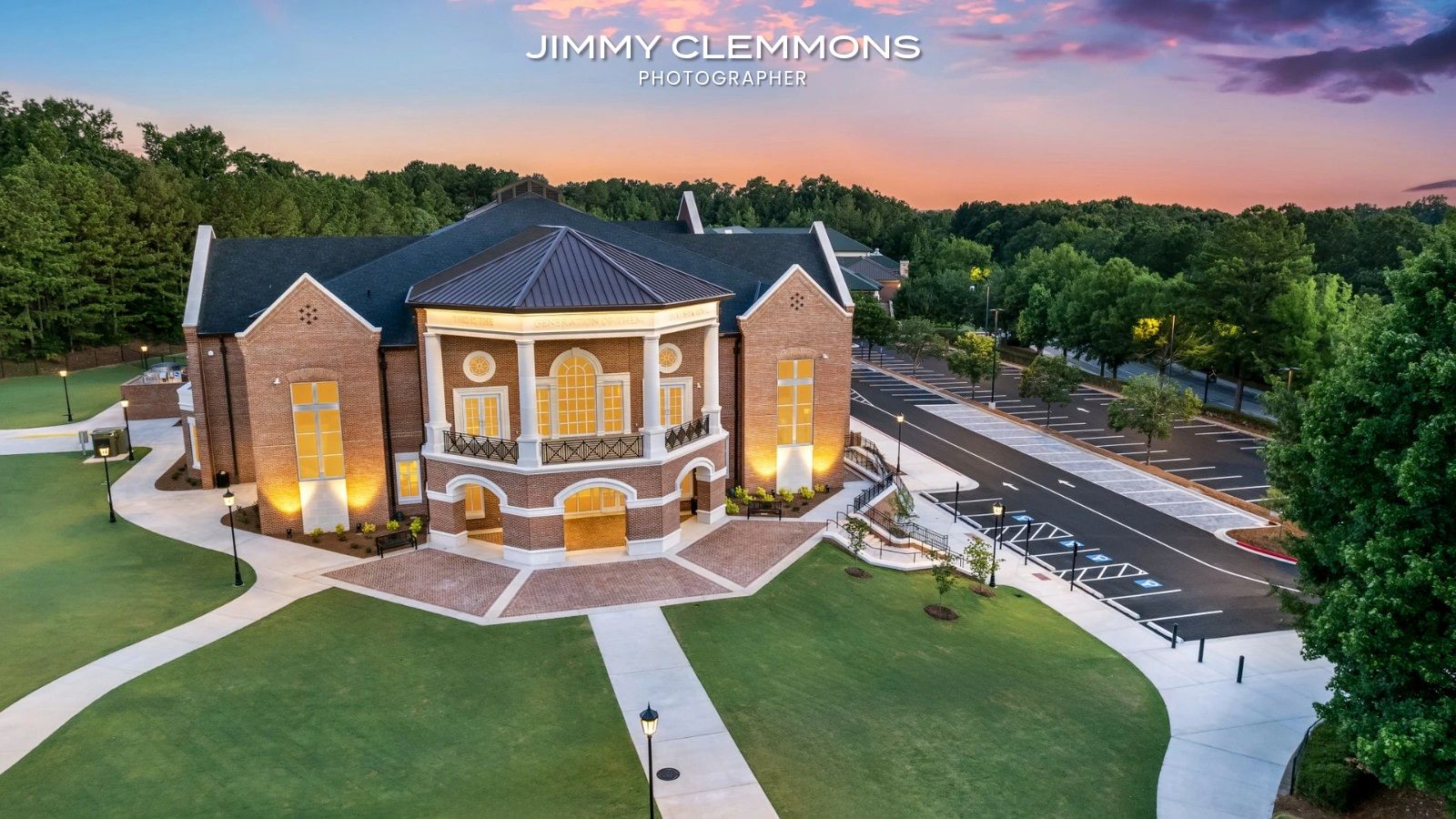
Jimmy Clemmons' background in film and editorial work for publications including Sports Illustrated, Condé Nast, Football Weekly, and Atlanta magazine is relevant here because those assignments train the exact muscles many business shoots are missing. Fast judgment. Compositional discipline. Narrative awareness. Respect for environment. For Atlanta brands whose story lives in their spaces, teams, and built work, that combination is unusually practical.
If your current image library feels polished but generic, the next step isn't another round of better headshots. It's defining what your brand should look like when nobody is reading the copy.
A conversation with Jimmy Clemmons Photographer is a practical way to review your current visual library, identify where it's underserving the brand, and plan imagery that fits architecture, corporate storytelling, or both.