
Beyond the dust, the permit binders, and the final punch list, you're trying to answer a harder question. How do you show what changed in a way that persuades a future client, investor, tenant, diner, donor, or buyer? A renovation before and after set isn't just proof that work happened. It's proof of judgment, craft, and return.
That's where renovation potential is often undersold. Waiting until the space is done, bringing out a phone, and grabbing a few wide shots yields a result that looks clean enough, but it doesn't explain the problem the renovation solved. It doesn't show circulation, brand alignment, technical upgrades, or why the finished environment feels better to use.
From a photographer's perspective, the strongest renovation stories start before demolition. They begin with intent. If I know whether the project is about preserving a facade, calming a patient waiting room, or turning a dark warehouse into a daylight-driven creative space, I can build a visual sequence that makes the finished images work harder in proposals, awards, marketing, leasing, and editorial.
That matters in a market where renovation activity is substantial. The global residential remodeling market reached USD 3.2 trillion in 2025 and is projected to reach USD 4.6 trillion by 2033, according to Grand View Research's residential remodeling market report. As competition rises, better visual proof becomes a competitive tool.
Below are 10 renovation before and after examples that show what to photograph, what to avoid, and how to turn a completed project into a useful case study rather than a forgettable gallery.
1. Historic Commercial Building Facade Restoration
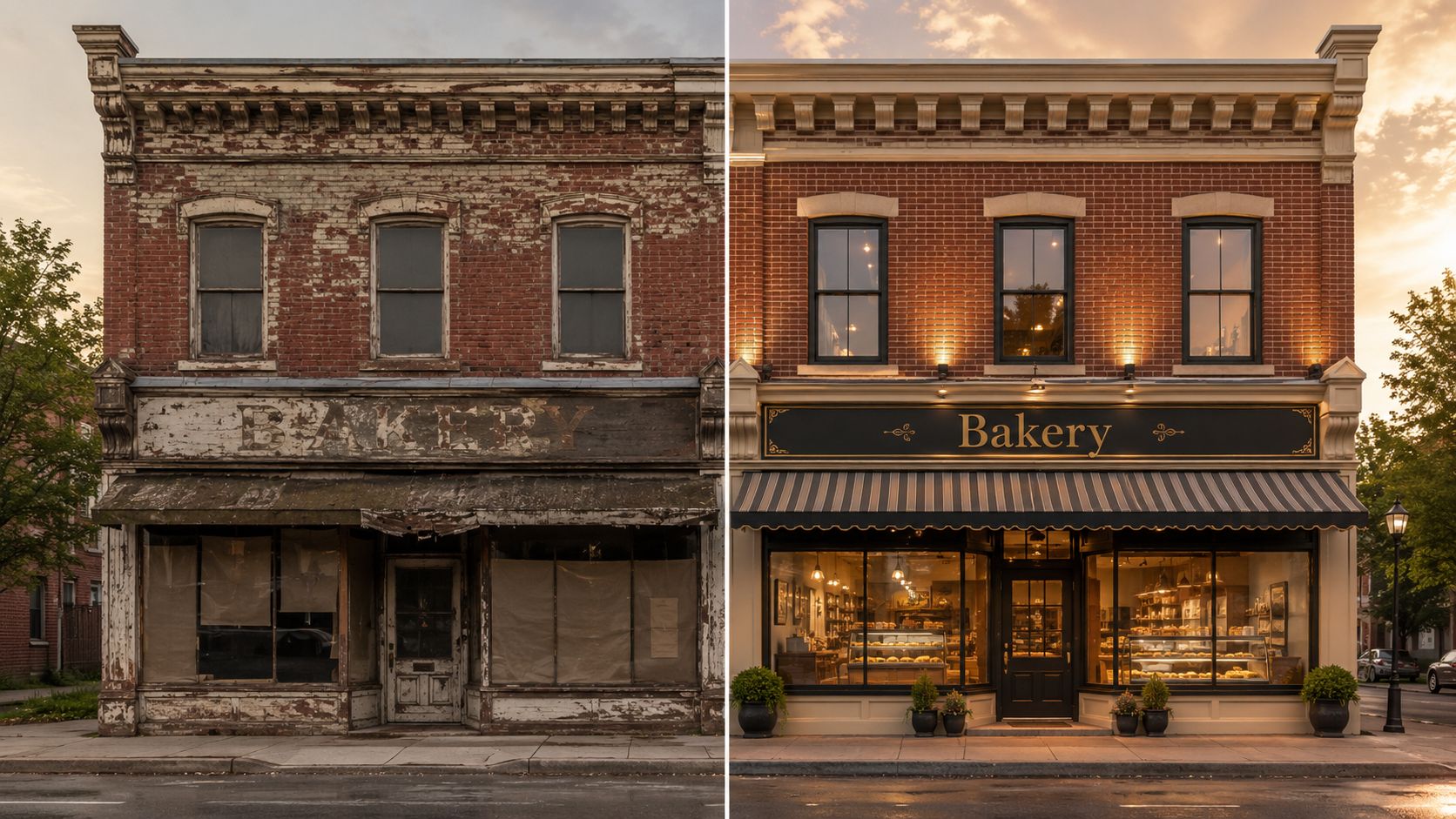
Historic facade work succeeds or fails visually at the street. A restored brick bakery, a revived warehouse storefront, or a Main Street corner building needs photographs that respect the architecture before they celebrate the upgrade. If the before image is shot too tightly, you lose the context that proves the restoration mattered.
For these projects, I want the same camera height, similar lens choice, and nearly identical framing before and after. That consistency lets the masonry repair, storefront glazing, signage restraint, entry accessibility, and lighting upgrades carry the story. It also keeps the image pair from feeling manipulated.
What the camera should prove
Preservation projects often involve subtle decisions. Repointed mortar, cleaned brick, repaired cornices, better doors, and modern code compliance don't scream from a thumbnail. The photographer has to make those moves legible.
- Street relationship: Show how the building meets the sidewalk, not just the facade in isolation.
- Material integrity: Photograph brick, stone, wood, and metal details in angled light so texture reads.
- Night identity: Capture one dusk set if exterior lighting was part of the restoration.
- Storefront function: Include the entry sequence so viewers can see accessibility and tenant usability.
Practical rule: If the after photo is prettier than the before but doesn't explain what was preserved, it's decoration, not documentation.
Teams working on corridors like Sweet Auburn Avenue, Ponce City Market-adjacent properties, or restored neighborhood retail in Decatur should think beyond a hero shot. A complete set includes the block face, the storefront rhythm, and a few detail frames that prove the building's character wasn't erased in the modernization.
2. Corporate Office Interior Modernization
An office renovation before and after story has one central job. It must show that the company didn't just replace carpet and paint. It reworked how people occupy the space.
That means the photography should trace movement. Reception to meeting area. Open work zone to focus room. Break area to circulation spine. If you only shoot finished furniture vignettes, the office looks polished but generic.
What to capture before the first styled shot
Outdated office interiors usually suffer from low-value visual clutter. Dense partitions, mixed color temperatures, dead corners, dated ceiling systems, and poor daylight management all flatten the experience. The before images should document those friction points clearly, without exaggeration.
The finished set should then show how the renovation solved them through layout, lighting, HVAC visibility, acoustics, and branded material choices. If your team is planning a professional shoot, this guide on how to prepare your project site for a professional photoshoot is the practical starting point.
Where people belong in the frame
Corporate spaces benefit from selective occupancy. Not a staged crowd. Just enough real activity to show the room working as designed.
- Collaboration zones: Photograph seated interaction, screens on, materials visible.
- Private rooms: Show transparency, privacy strategy, and lighting balance.
- Workstation areas: Keep styling clean so cable management and order read clearly.
- Brand moments: Include signage, custom graphics, or client-facing walls without turning the image into an ad.
A Midtown tech office, Buckhead professional services headquarters, or downtown financial suite should never be photographed as though every room has equal value. Some spaces prove culture. Others prove operational competence. Good sequencing tells both stories.
3. Luxury Residential Interior Redesign
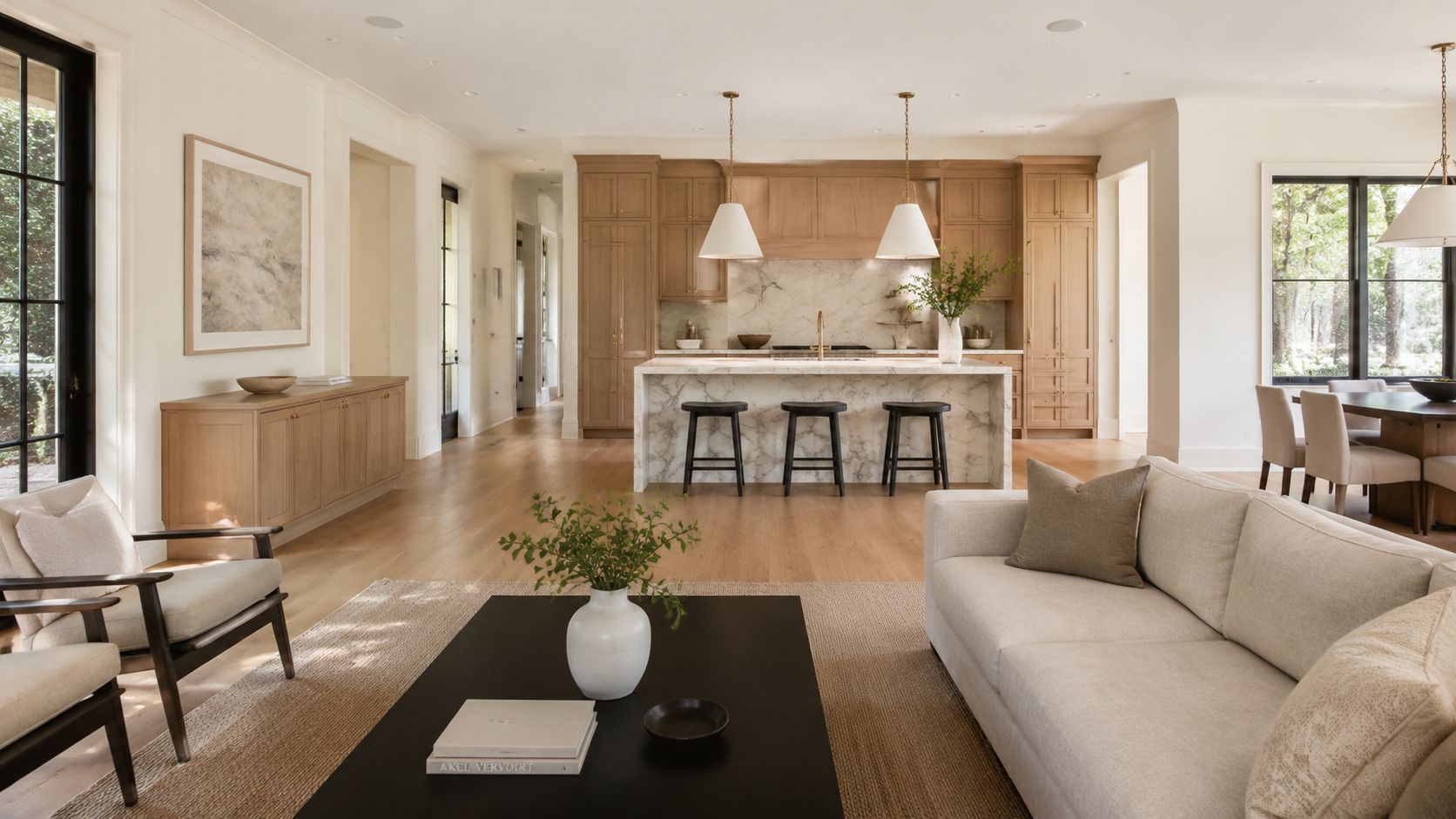
Luxury residential work often gets photographed too late in the process and too loosely in the concept. By the time the photographer arrives, everyone wants beauty shots. That's understandable, but the strongest residential renovation before and after stories also show restraint, problem-solving, and livability.
A Buckhead estate, Midtown condo, or Inman Park historic home doesn't gain visual authority from expensive finishes alone. It gains it from sequence. Entry. Transition. Reveal. Compression and release. If the camera ignores that, the images flatten the design.
The most persuasive residential frames
Residential redesign is where technical changes and emotional payoff overlap. Opened walls, custom millwork, refined kitchen layouts, layered lighting, and upgraded envelope performance all matter, but they need visual hierarchy.
The best after images usually include one broad establishing shot, one mid-room perspective that shows how a person would enter and use the space, and several details that support the craftsmanship story. For firms that want publication-ready work, turning renovations into magazine features is the right mindset.
Residential photography works when the viewer can imagine living there and can also identify what the renovation improved.
A documented whole-home remodel in Rancho Santa Margarita emphasized space expansion, functionality enhancement, aesthetic upgrades, and energy efficiency, with post-renovation use patterns and thermal performance tied to value and satisfaction in Sea Pointe's whole-home remodel case study. That's exactly how residential imagery should behave. It shouldn't stop at “beautiful.” It should show why the house works better now.
4. Hospitality Venue Brand Refresh
Hospitality renovations live or die on atmosphere. The mistake many teams make is photographing them like empty real estate. A restaurant, hotel lobby, bar, or taproom can be immaculate and still look dead if the images don't convey light, rhythm, and guest experience.
For a renovation before and after campaign, I usually want two distinct visual modes. One set is architectural and controlled. The other shows the room in use, with enough human presence to communicate scale and energy without sacrificing composition.
Ambiance is part of the evidence
A boutique hotel in West Midtown or a refreshed restaurant in Virginia Highland needs proof of brand coherence. Entry signage, host stand, bar, dining room, restrooms, corridor lighting, and back-of-house improvements all contribute to that proof.
- Exterior first impression: Show the arrival sequence, not just the logo.
- Mood lighting: Schedule part of the shoot when practical lighting has impact.
- Operational upgrades: Don't ignore kitchen or service zones if they were part of the renovation.
- Guest-facing textures: Fabrics, stone, wood, metal, and tabletops all help define the brand.
What doesn't work is over-styling every table and leaving the room empty. Hospitality buyers and marketers need to see whether the venue feels active, efficient, and memorable. The right after images should support launch campaigns, investor decks, private events marketing, and editorial outreach with the same set of files.
5. Educational Facility Infrastructure and Learning Space Modernization
Schools and universities need more than pretty interiors. Their renovation photography has to show mission. A classroom upgrade, lab retrofit, student commons renovation, or campus dining refresh should demonstrate that the building supports learning, safety, access, and contemporary use.
That changes how the before images are made. Don't just photograph deterioration. Photograph the mismatch between space and need. Low flexibility, poor light quality, awkward circulation, dated finishes, and technology gaps are the visual problems that the after sequence must answer.
Show learning, not just furniture
Educational clients often need images for fundraising, admissions, alumni communications, and internal reporting. A good set balances architecture and occupation.
- Active classrooms: Photograph students and faculty using the room naturally when permissions allow.
- Technology integration: Screens, writable surfaces, power access, and teaching walls should read clearly.
- Access and circulation: Entrances, corridors, and transitions matter as much as the classroom itself.
- Institutional identity: Include campus cues so the renovation feels grounded in the larger place.
A modernized Atlanta Public Schools building, a Georgia Tech renovation, or a private school commons upgrade benefits from one specific photographic choice. Keep some frames at student eye level. It makes the finished environment feel usable rather than ceremonial.
If every frame looks like a brochure cover, the viewer learns very little about how the building actually teaches.
6. Industrial Warehouse-to-Creative Space Conversion
Industrial conversions give you one of the strongest visual contrasts in renovation work. Raw shell. New program. Old structure. New light. That contrast can produce excellent before and after material, but only if the process is documented with discipline.
A vacant warehouse in West Midtown or Castleberry Hill doesn't become compelling on opening day alone. The transformation story lives in progress photos that show demolition, envelope repair, structural exposure, glazing installation, and fit-out decisions.
To see the kind of progress imagery that supports the final reveal, review why construction progress photos matter.
Preserve the grit that earns the polish
Too many after shoots erase the industrial character that made the conversion desirable in the first place. If the original trusses, brick, columns, clerestories, or concrete floor scars were part of the design strategy, the camera should treat them as assets, not leftovers.
A documented European deep renovation expanded heated floor area from 458 m² to 657 m² and achieved energy savings for heating, ventilation, and domestic hot water exceeding 80% after renovation, according to the IEA EBC documented case study report. That kind of project reminds clients that adaptive reuse can change both performance and spatial utility when photographed and explained well.
Here's a visual example of the warehouse conversion mindset:
Frames that matter most
- Long-axis views: Show span, daylight, and structural rhythm.
- Material junctions: Old brick against new steel or glass tells the adaptive reuse story.
- Occupiable scale: Include furniture or people sparingly so volume reads accurately.
- Code and comfort: Entries, stairs, railings, and climate upgrades deserve at least a few frames.
7. Healthcare Facility Patient Experience Renovation
Healthcare photography demands precision. A medical office, dental practice, outpatient center, or specialty clinic can't just look modern. It has to feel calm, orderly, clean, and legible.
The before-and-after value often sits in small improvements that affect trust. Better reception sightlines. Less visual noise. Softer waiting areas. Improved wayfinding. More balanced lighting. Better separation between public and clinical zones. Those are operational changes, but they're also visual ones.
Calm is designed, not implied
I approach healthcare after images with tighter control than most commercial interiors. Styling has to be minimal. Surfaces need to look immaculate. Color temperature must be consistent. Vertical lines must stay honest. Patients notice those things, even when they can't articulate why the space feels more credible.
- Reception and waiting: Make the front door to check-in sequence clear.
- Exam or treatment rooms: Photograph functionality without making the room feel harsh.
- Staff efficiency: Include areas where improved layout supports workflow.
- Human reassurance: If staff are in frame, posture and expression matter.
An updated dermatology clinic in Atlanta or a Buckhead dental office should never be photographed like a lifestyle boutique. Comfort matters, but competence matters more. The strongest renovation before and after narrative in healthcare says, “This place is easier to trust now.”
8. Retail Space Brand Experience Transformation
Retail renovation photography should answer one question fast. Does the customer understand the brand the moment they approach the storefront and step inside?
That means your before-and-after set has to begin outside. Street presence, glazing, signage, threshold clarity, and window merchandising often carry more commercial weight than a beautifully shot fitting room. If the facade changed, make it part of the story.
Photograph the path to purchase
A retail interior is a sequence of decisions. Entry, decompression zone, focal display, merchandise flow, fitting area, checkout, and exit. Good photography tracks that sequence rather than isolating every feature into disconnected vignettes.
For boutiques in Inman Park, flagship retail in Midtown, or high-end storefront redesigns in Buckhead, I usually recommend a mix of straight-on architectural frames and slightly off-axis images that mimic customer movement. That combination helps marketers use the same set for leasing packages, launch announcements, social campaigns, and press.
Retail images should show what the customer notices first, what holds attention second, and what makes checkout feel easy.
What doesn't work is overfilling every surface before the shoot. Merchandising should support the architecture, not bury it. The camera needs room to show circulation, sightlines, and product hierarchy.
9. Multi-Family Residential Building Common Area Upgrade
Common-area renovations in apartment and condo buildings often produce attractive photos and weak storytelling. The lobby looks nicer. The rooftop looks newer. The fitness room looks brighter. But the set doesn't explain how the building's daily experience improved.
A useful renovation before and after campaign should separate prestige spaces from utility spaces. Leasing teams need the former. Ownership and operations often need the latter. Both deserve coverage.
Amenity photography needs context
A Midtown high-rise lounge, Buckhead amenity deck, or renovated loft building rooftop should be photographed at more than one time of day if possible. Daylight shows layout and finish. Evening shows social use and atmosphere.
- Arrival: Lobby, concierge, and mail or package areas establish first impression.
- Retention spaces: Fitness rooms, lounges, coworking zones, and rooftop areas show resident lifestyle.
- Operational polish: Corridors, elevators, and transition spaces matter because residents use them every day.
- Detail layer: Hardware, seating, lighting, and material selections signal whether the upgrade feels durable.
The U.S. remodeling industry generated $175.4 billion in revenue in 2026 across about 704,000 businesses, according to IBISWorld's U.S. remodeling industry report. In a crowded field, property teams that document amenity upgrades well have stronger leasing and brand assets than teams that rely on quick snapshots after installation.
10. Restaurant Kitchen and Dining Experience Complete Redesign
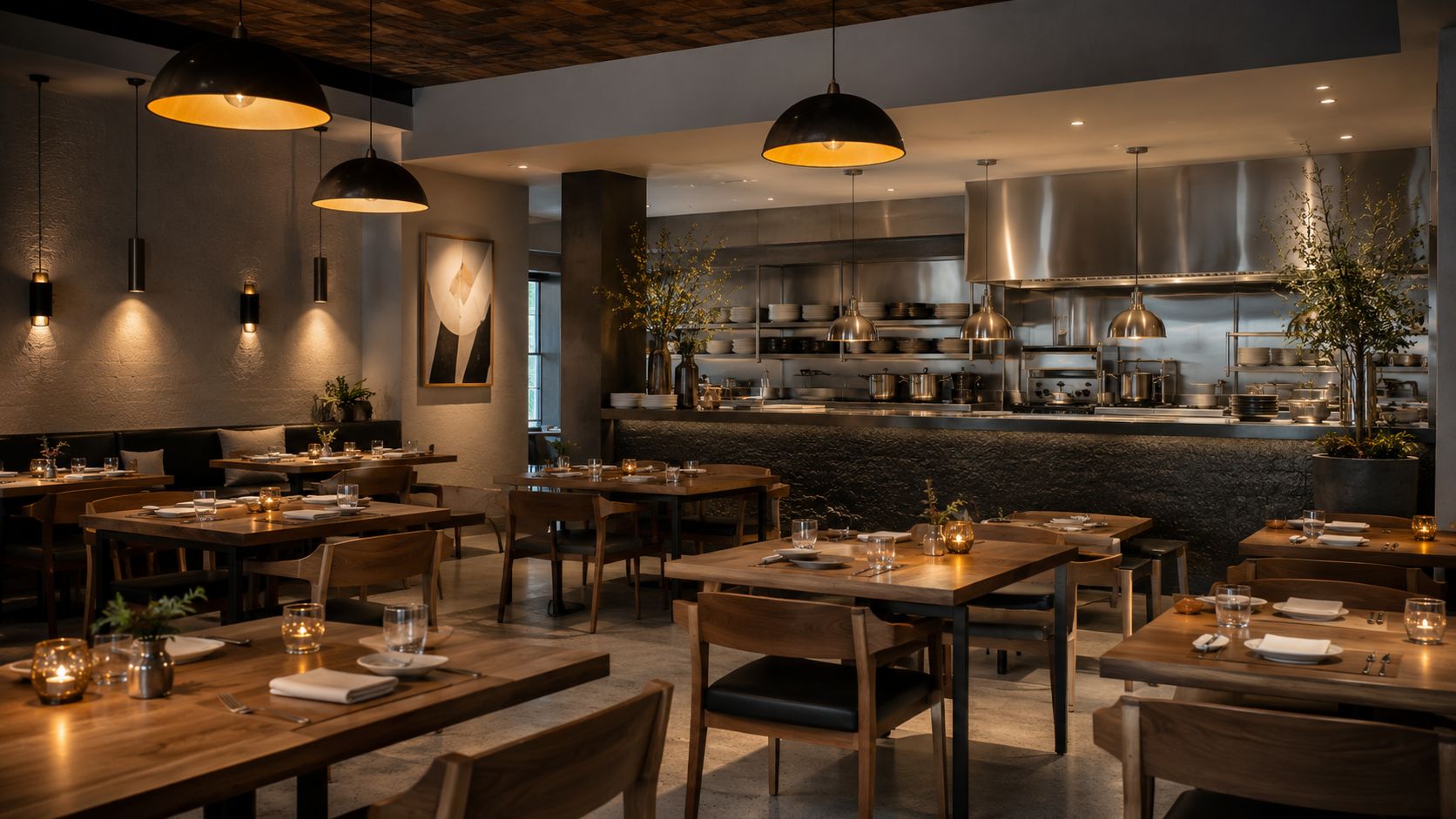
Restaurant renovations ask the camera to hold two truths at once. The kitchen must work hard. The dining room must feel effortless. If the after images favor one and ignore the other, the story is incomplete.
In practical terms, that means a full set should include entry, host zone, bar, dining room, kitchen line, service path, and at least a few moments that reveal acoustic comfort and lighting mood. A chef-driven renovation in Atlanta or a refreshed Decatur dining room should look coordinated from threshold to final plate.
Function first, then seduction
Before photos should identify the bottlenecks. Tight service circulation, dated finishes, poor ventilation expression, low-value lighting, and disconnected front-of-house and back-of-house design choices are all worth documenting. The finished photos should answer those issues with clarity.
A lot of homeowners and operators also underestimate the stress tied to final material choices and living through disruption. One source notes that 68% of renovators report regretting bold permanent choices made early on, especially around fixed finishes, in a discussion of renovation anxiety during active projects on this renovation anxiety video. Restaurant clients may not describe it in those terms, but the same late-stage second-guessing happens with tile, millwork finish, lighting warmth, and upholstery.
The shots restaurant teams actually use
- Open kitchen view: Show staff activity if the concept includes performance cooking.
- Dining overview: Capture room mood without making it feel empty.
- Bar and service points: These often carry the strongest brand identity.
- Food in context: If plates are included, they should support the space, not hijack the frame.
The best restaurant before-and-after work doesn't just say the room is newer. It says service, ambiance, and brand are now aligned.
Before & After: 10 Renovation Project Comparisons
| Project | Implementation Complexity 🔄 | Resource Requirements ⚡ | Expected Outcomes 📊 | Ideal Use Cases 💡 | Key Advantages ⭐ |
|---|---|---|---|---|---|
| Historic Commercial Building Facade Restoration | 🔄 High, specialized preservation skills; regulatory reviews and phased approvals | ⚡ High cost and long lead times; skilled contractors, period materials, possible contingency budget | 📊 Strong value uplift; improved streetscape and tenant attraction; potential historic tax credits | 💡 Downtown revitalization; heritage storefronts needing character retention | ⭐ Preserves architectural identity; boosts curb appeal and long‑term property value |
| Corporate Office Interior Modernization | 🔄 Moderate–High, complex systems upgrades and change management | ⚡ Significant capital; MEP, AV, furniture, phased occupancy planning | 📊 Improved productivity, energy savings, stronger employer brand | 💡 Companies modernizing workplace culture or supporting hybrid work | ⭐ Flexible, efficient work environments that aid recruitment and retention |
| Luxury Residential Interior Redesign | 🔄 Moderate, high customization and coordination of specialists | ⚡ Very high materials and labor costs; long custom fabrication timelines | 📊 Large resale value increase; premium marketing assets (photos/videos) | 💡 High‑end homes seeking market differentiation or lifestyle upgrades | ⭐ Delivers bespoke quality and dramatic aesthetic/value gains |
| Hospitality Venue Brand Refresh | 🔄 High, guest experience design, kitchen/FF&E, phased operations | ⚡ High capital; specialized hospitality equipment; potential temporary closures | 📊 Increased ADR/revenue, guest satisfaction, stronger market positioning | 💡 Hotels, restaurants, bars aiming to refresh brand and increase rates | ⭐ Enhances guest experience and justifies premium pricing |
| Educational Facility Modernization | 🔄 Very High, code, phasing, technology integration, stakeholder approvals | ⚡ Very high budget and long timelines; AV/IT, HVAC, accessibility, funding processes | 📊 Better learning outcomes, recruitment, operational efficiencies | 💡 Schools/universities updating facilities for 21st‑century learning | ⭐ Supports pedagogy, safety, and long‑term institutional competitiveness |
| Industrial Warehouse-to-Creative Conversion | 🔄 High, structural remediation, code upgrades, environmental hazards | ⚡ High contingency spend; remediation, glazing, MEP retrofit; possible tax incentives | 📊 Significant neighborhood revitalization and unique leasable spaces | 💡 Adaptive reuse in emerging neighborhoods seeking character spaces | ⭐ Produces distinctive, marketable spaces with historic appeal |
| Healthcare Facility Patient Experience Renovation | 🔄 Very High, strict codes, infection control, HIPAA considerations | ⚡ High specialized equipment and phased construction to remain operational | 📊 Improved patient satisfaction and clinical workflow efficiency | 💡 Clinics and outpatient centers aiming to enhance patient experience | ⭐ Boosts trust, retention, and operational quality in healthcare settings |
| Retail Space Brand Experience Transformation | 🔄 Moderate, retail flow, merchandising, storefront upgrades | ⚡ High design and build costs; coordinated merchandising and POS updates | 📊 Higher foot traffic, conversion rates, social media visibility | 💡 Flagship stores and boutiques wanting immersive brand retailing | ⭐ Drives sales and brand differentiation through experiential design |
| Multi‑Family Common Area Upgrade | 🔄 Moderate, amenity sequencing, resident coordination | ⚡ Moderate–High capex; furnishings, MEP updates, landscaping and finishes | 📊 Higher rents, lower vacancy, stronger tenant retention and NOI | 💡 Apartment/condo buildings competing on amenities and lifestyle | ⭐ Creates marketable, revenue‑generating communal spaces |
| Restaurant Kitchen & Dining Complete Redesign | 🔄 Very High, full kitchen specs, health codes, full closure often required | ⚡ Very high equipment and construction costs; lengthy downtime and inspections | 📊 Improved cuisine quality, operational efficiency, reservations and social buzz | 💡 Restaurants repositioning menu/brand or modernizing operations | ⭐ Elevates dining experience and operational performance |
Your Next Project's Most Valuable Asset
The last walkthrough is satisfying, but it isn't the finish line. It's the handoff point between construction and communication. Once the tools are gone and the dust is cleared, the project starts a second life in proposals, award entries, investor presentations, leasing packages, recruiting materials, donor campaigns, and editorial submissions.
That's why renovation before and after photography should be planned as part of the project, not added at the end as a courtesy task. If you wait until turnover, you can still make strong after images. What you lose is context. You lose the proof of constraint, the evidence of design judgment, and the visual contrast that helps outsiders understand why the renovation mattered.
The value of that contrast is practical, not abstract. In the U.S., repair and remodeling activity since 2022 has been 40 to 50% higher than the 2019 baseline, according to the Joint Center outlook summarized in Cross Private Client's renovation planning discussion. More renovation activity means more finished projects competing for attention. Better photography helps the right work rise above the noise.
It also helps teams tell the whole story, including the parts glossy galleries leave out. That same renovation planning discussion notes that 42% of homeowners fail to budget for temporary accommodations, storage, or furniture disruptions, 38% of renovation projects exceed budgets due to unplanned living costs, and 55% of renovators don't ask contractors about maintenance schedules after completion. Those details matter because they point to something visual storytelling should do more often. It should show not only beauty, but consequence, planning, and long-term use.
When I photograph a project well, I'm not trying to make it look expensive. I'm trying to make its decisions visible. Why was the wall removed? Why does the lobby feel calmer? Why does the restored facade command more respect at street level? Why does the office circulate better? Why does the restaurant finally feel coherent? Those answers are what future clients are buying.
Professional architectural photography earns its value when it creates reusable evidence. A strong set can be cropped for social, laid out for print, submitted for awards, licensed for media, inserted into capability decks, and revisited years later when a client asks for comparable work. Quick snapshots rarely survive that many jobs.
The best approach is simple. Define the story before demo. Capture honest existing conditions. Document key progress moments. Finish with a carefully produced after shoot that reflects how the space is meant to be used. Keep the sequence consistent, the styling disciplined, and the purpose clear.
Treat photography the way you treat design, planning, and construction. With intention. When you do that, the images stop being decoration and start becoming one of the most valuable assets the project produces.
If you want renovation before and after images that do more than fill a portfolio page, work with Jimmy Clemmons Photographer. Jimmy creates architectural photography with editorial discipline, strong narrative structure, and the technical control needed to show how a space changed, why it changed, and why that transformation matters to your next client.