

A marketing director opens the company website and sees five different versions of the leadership team. One portrait is a tight crop against white, another shows a partner in a conference room, and a third has been retouched until the person barely resembles the executive clients meet. The team needs updated images for the website, press outreach, recruiting, LinkedIn, and an annual report, but the original brief still says only “new headshots.”
That brief is too small for the job. Business portrait photography now works best as a coordinated asset set, not a single polished image. The right combination of portraits can give a firm a consistent visual identity while preserving the differences between a managing partner, a project architect, a construction leader, and the people who make the business credible.
What Business Portrait Photography Actually Means
Most buyers use “headshot” to describe every professional portrait. On a commercial set, that creates confusion quickly. A headshot, an executive portrait, an environmental image, and a team photograph serve different purposes, and the photographer needs to know where each image will appear before choosing the background, lighting, crop, and direction.
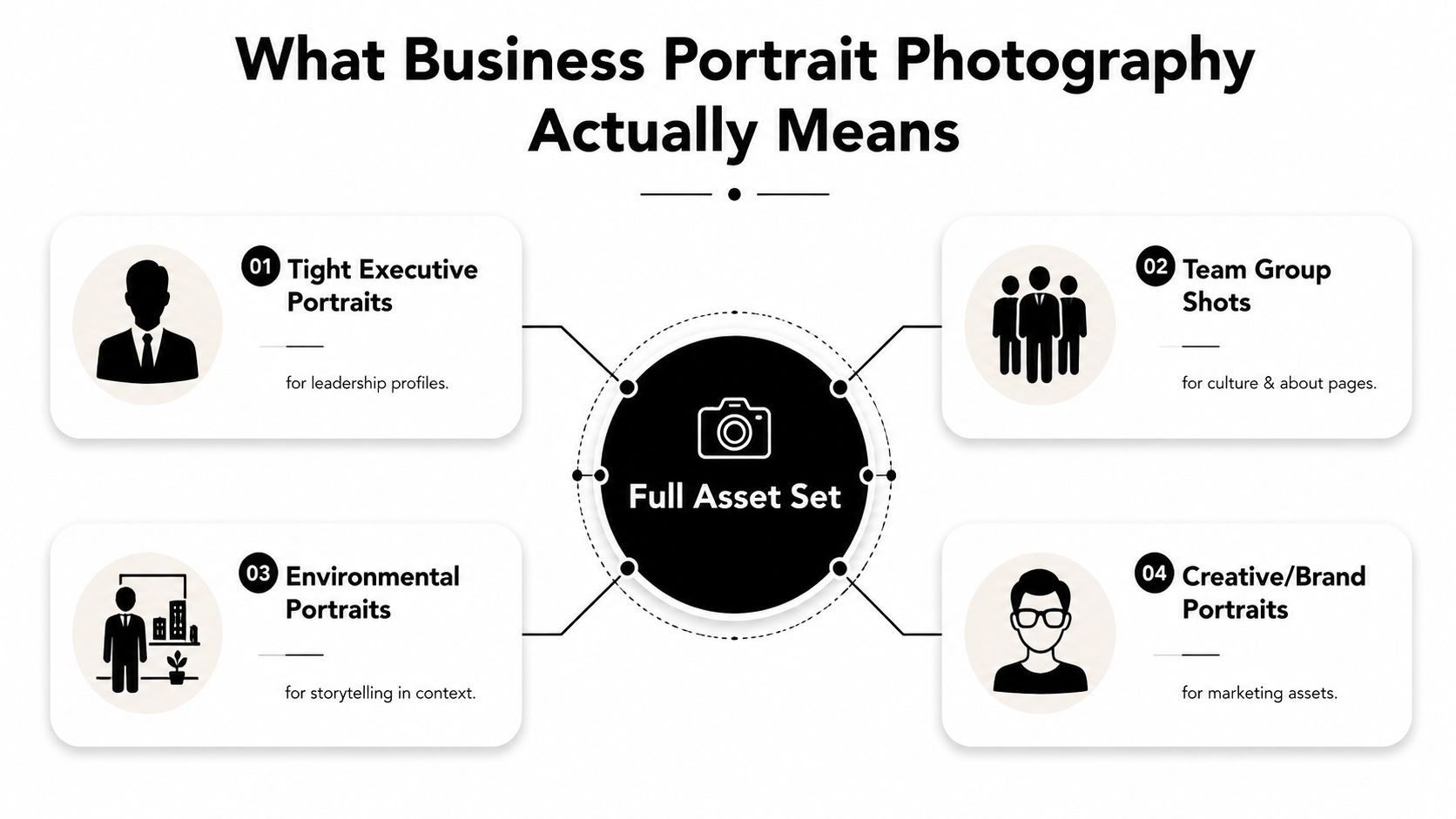
Four formats, four jobs
A clean headshot is the most controlled option. It usually frames one person from the chest or shoulders upward, with a simple background and repeatable lighting. This is the practical choice for employee directories, speaker bios, LinkedIn profiles, professional associations, and any place where several people must appear visually consistent.
An executive portrait gives one leader more presence and flexibility. The crop may be wider, the expression more considered, and the lighting more dimensional. It can still be clean and restrained, but it has enough character for a press kit, thought-leadership article, board biography, or annual report.
An environmental portrait places the subject in a meaningful setting. An architect might be photographed inside a completed project, a contractor near a carefully selected construction detail, or a hospitality executive in a finished guest space. The location supplies context, but it must support the person rather than compete with them.
A team portrait may be a formal group arrangement, a looser cluster, or a series of individual portraits made under identical conditions. The best version depends on whether the image needs to communicate culture, capability, hierarchy, or collaboration.
Brand infrastructure: A business portrait isn't vanity imagery when it has a defined job. It's a reusable visual system that helps people recognize, understand, and trust the business across multiple channels.
Start with the uses, not the camera
List the places the images will live before discussing style. A website leadership page may need executive and environmental portraits. A recruiting page may need a team image plus informal working photographs. Press outreach needs crops that leave room for editorial layouts, while an employee directory needs consistent framing and background treatment.
The strongest brief often combines formats. One controlled setup can produce clean profile portraits, while a second location can create editorial images with more context. That approach gives the brand range without making the people look as if they belong to unrelated companies.
How Different Portrait Styles Work for Brands
Portraits aren't interchangeable because audiences don't encounter them in interchangeable situations. A clean headshot answers, “Who is this person?” An environmental portrait adds, “What do they do, and where do they do it?” A team image suggests, “Who stands behind the work?” A well-planned business portrait photography assignment answers all three without forcing one image to carry the entire brand.
Match the image to the channel
A clean headshot belongs where information needs to be scanned quickly. Directories, speaker pages, staff listings, and social profiles benefit from consistent crops, similar backgrounds, and comparable lighting. The image should remain legible when displayed small, which means subtle expressions and strong eye direction matter more than elaborate scenery.
An executive portrait has more room to establish authority. Press kits and thought-leadership pages often need a portrait that can sit beside a headline, a quote, or a long-form profile. Leave negative space where a designer may need it, and deliver both vertical and horizontal options when the campaign will use multiple layouts.
An environmental portrait is particularly effective for architecture, design, construction, education, and hospitality brands because the setting can demonstrate expertise without relying on a written explanation. A project partner inside a finished building communicates a different proposition from the same partner against a neutral wall. The photographer still needs restraint. A busy background, reflective surface, or strong architectural line can pull attention away from the face. For a deeper look at how context can shape a professional image, see this guide to environmental portrait photography.
A team portrait works best when the group arrangement reflects the organization. A formal line can communicate structure and confidence. A more active arrangement can suggest collaboration, but casual doesn't mean unplanned. Height, spacing, clothing contrast, and sightlines all need attention.
| Portrait Style | Best Brand Use | Typical Channels |
|---|---|---|
| Clean headshot | Fast identification and profile consistency | Directories, LinkedIn, speaker bios |
| Executive portrait | Authority and personal visibility | Press kits, annual reports, thought leadership |
| Environmental portrait | Expertise in context | Websites, recruiting pages, editorial features |
| Team portrait | Culture and collective capability | About pages, recruiting, company reports |
Design the shoot as a library
The useful question isn't, “Which style should we choose?” It's, “Which combination will cover the brand's needs without repeating the same picture?” A firm may need a vertical partner portrait for a website, a horizontal version for a magazine submission, and a tighter crop for a profile page. Those requirements should shape the shot list before anyone arrives on location.
Architecture and design firms often gain more from carefully chosen environmental images because their spaces carry visual meaning. Law and consulting firms frequently prefer controlled executive portraits because clarity and authority matter more than physical context. Neither preference is universal. The right level of environment depends on the industry, the audience, and whether the image must explain a place or identify a person.
Inside the Production Workflow
A successful corporate portrait shoot starts before the camera comes out of the case. The photographer needs to understand the brand, the people, the location, and the delivery requirements well enough to make decisions quickly when the schedule changes.
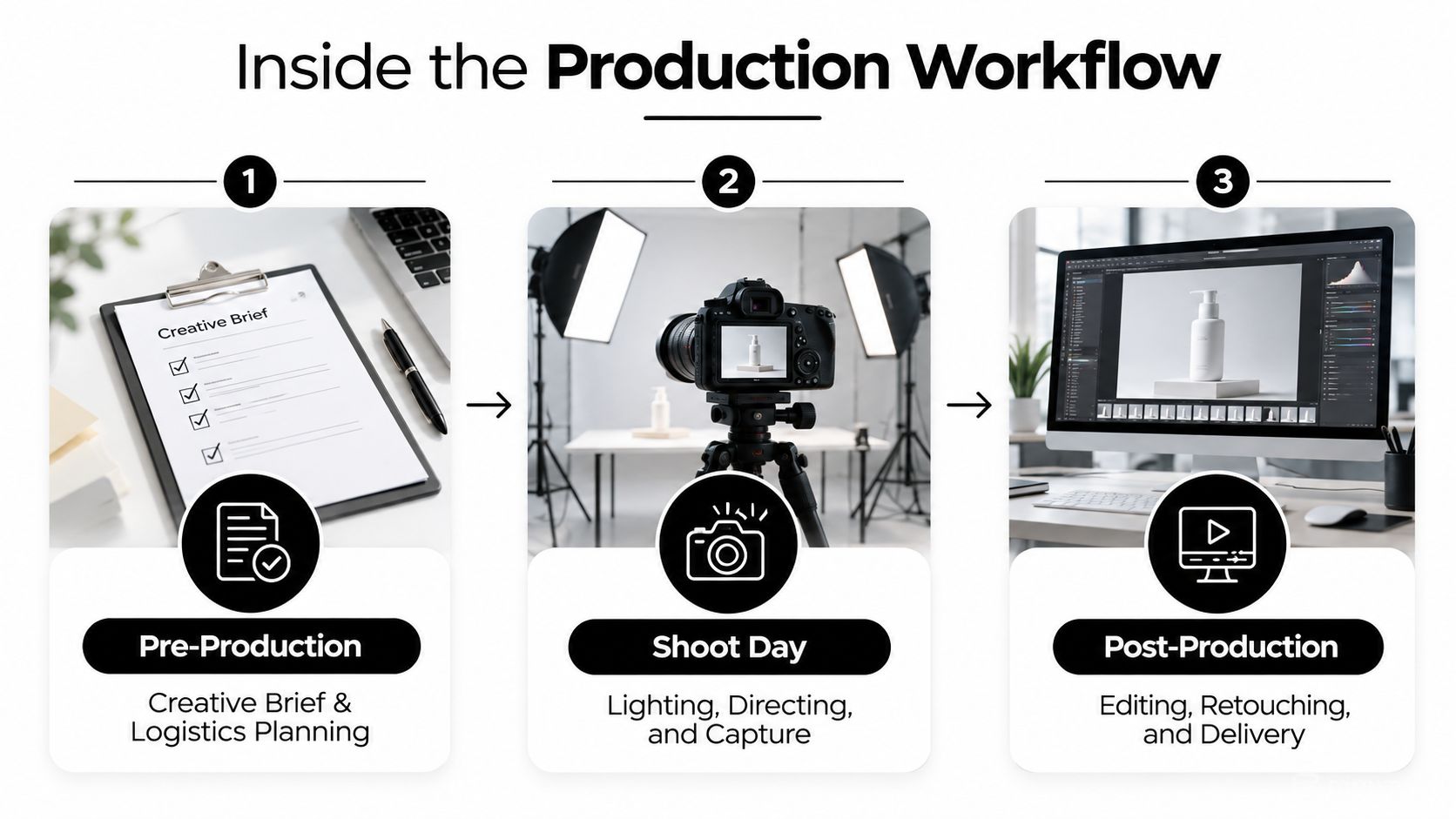
Before the shoot
The creative brief should identify the audience, planned channels, visual references, preferred crops, and any brand restrictions. A shot list then turns that direction into something operational: individual portraits, leadership combinations, team groups, environmental frames, and alternate orientations.
Location scouting matters even more for architecture and design clients. A space that looks impressive in person may produce poor portraits because the background is too bright, the lines are distracting, or the available light works against the subject. Scouting lets the photographer identify clean sightlines, power access, quiet holding areas, reflections, and practical places for the team to wait.
Wardrobe guidance should arrive before the shoot day. It doesn't need to dictate personal style, but it should prevent avoidable problems such as competing patterns, visible logos, reflective fabrics, or colors that disappear against the planned background. The photographer and marketing lead should also decide whether the company wants one consistent look or a deliberate mix of studio and location imagery.
During production
On set, the first task is usually to establish the lighting and make a test frame. The photographer checks exposure, background separation, skin tone, glasses reflections, and the way clothing renders under the chosen setup. Once the lighting works, the team can move people through more efficiently without rebuilding the entire arrangement for every subject.
Direction needs to be physical and specific. “Look natural” rarely helps a nervous executive. A small shift of weight, a relaxed shoulder, a slight turn toward the light, or a change in eye direction can make the difference between a rigid identification photo and a confident portrait. Subjects don't need to perform. They need clear instructions and enough time to settle.
A five-person team shoot takes longer than the final gallery suggests because each person has different glasses, hair, skin tone, posture, wardrobe, and comfort level. The photographer may adjust the angle of a key light for reflective lenses, refine the position of a taller subject, or make small posing changes that preserve consistency without flattening individual character.
After capture
Post-production begins with selection, not aggressive retouching. The photographer removes frames with closed eyes, awkward expressions, poor focus, or distracting gestures, then applies a consistent color treatment. Retouching should clean temporary distractions while preserving real texture, recognizable features, and the character that made the person engaging on set.
Delivery should be organized by person, format, and intended use. Include clearly named high-resolution files, web-ready versions, and the agreed crops. A photo shoot checklist can help the client coordinate subjects, wardrobe, locations, and approvals before the day arrives.
The workflow is easier to understand when you see how lighting, direction, and editing connect:
Pricing Packages and What Actually Drives Cost
A quote becomes easier to judge once its deliverables are clear. Time is only one cost driver. Subject count, locations, final files, retouching, production support, and usage rights can change the assignment more than the camera choice. For architecture, design, and construction firms, the practical question is whether the images need to function as isolated headshots or as a coordinated asset set across team pages, proposals, press materials, and campaigns.
A short individual session may use one lighting setup, one subject, and a limited group of finished portraits. A multi-person brand assignment can require assistants, location preparation, travel, several lighting arrangements, wardrobe changes, and files prepared for editorial and marketing use. More production can improve consistency, but it also adds time and coordination.
The main variables in a quote
- Session duration: More time allows for additional expressions, looks, locations, and combinations of people. It also gives the photographer room to solve problems rather than rushing through them.
- Number of subjects: Every person needs direction, selection, editing, and file preparation. Group portraits add another layer because spacing, posture, expressions, and visual balance must work together.
- Final retouched images: Some proposals specify a set number of finished files. Others provide a larger proof gallery and charge separately for retouching. Confirm which files are fully edited and which are proofs.
- Wardrobe changes: Additional clothing can make one session useful for several channels, but it adds time and may call for different lighting or backgrounds.
- Commercial usage: An internal profile image has a narrower role than a portrait used in an annual report, paid social campaign, outdoor advertising, or national publication. Confirm the permitted channels, duration, territory, and modifications.
- Studio versus location: A studio provides repeatable lighting and background control. A location introduces travel, scouting, permissions, equipment movement, and possible weather or access problems.
The quote also covers the infrastructure behind a durable professional service. In the United States, portrait photography studios number about 9,130 businesses, employ 32,491 workers, generate average annual revenue of about USD 235,000 per business, and report an average profit margin of 22.0%, according to industry data on portrait photography studios. Those figures help explain why pricing includes insurance, equipment maintenance, editing, backups, administration, and business continuity, not only time behind the camera.
A 2026 report places the average traditional professional headshot session at around USD 295, with prices ranging from about USD 50 to well over USD 1,000 according to photographer and market. Treat that range as a reference, not a universal rate. Compare the finished asset set, retouching level, production requirements, and rights before comparing totals. This professional portrait photography cost guide can help when reviewing individual line items.
The Subject Prep Checklist That Saves a Shoot
The camera doesn't create a confident expression by itself. Subjects arrive with different levels of comfort, and preparation removes the small distractions that make people tense. A clear email from the marketing team can save more time than another piece of equipment.
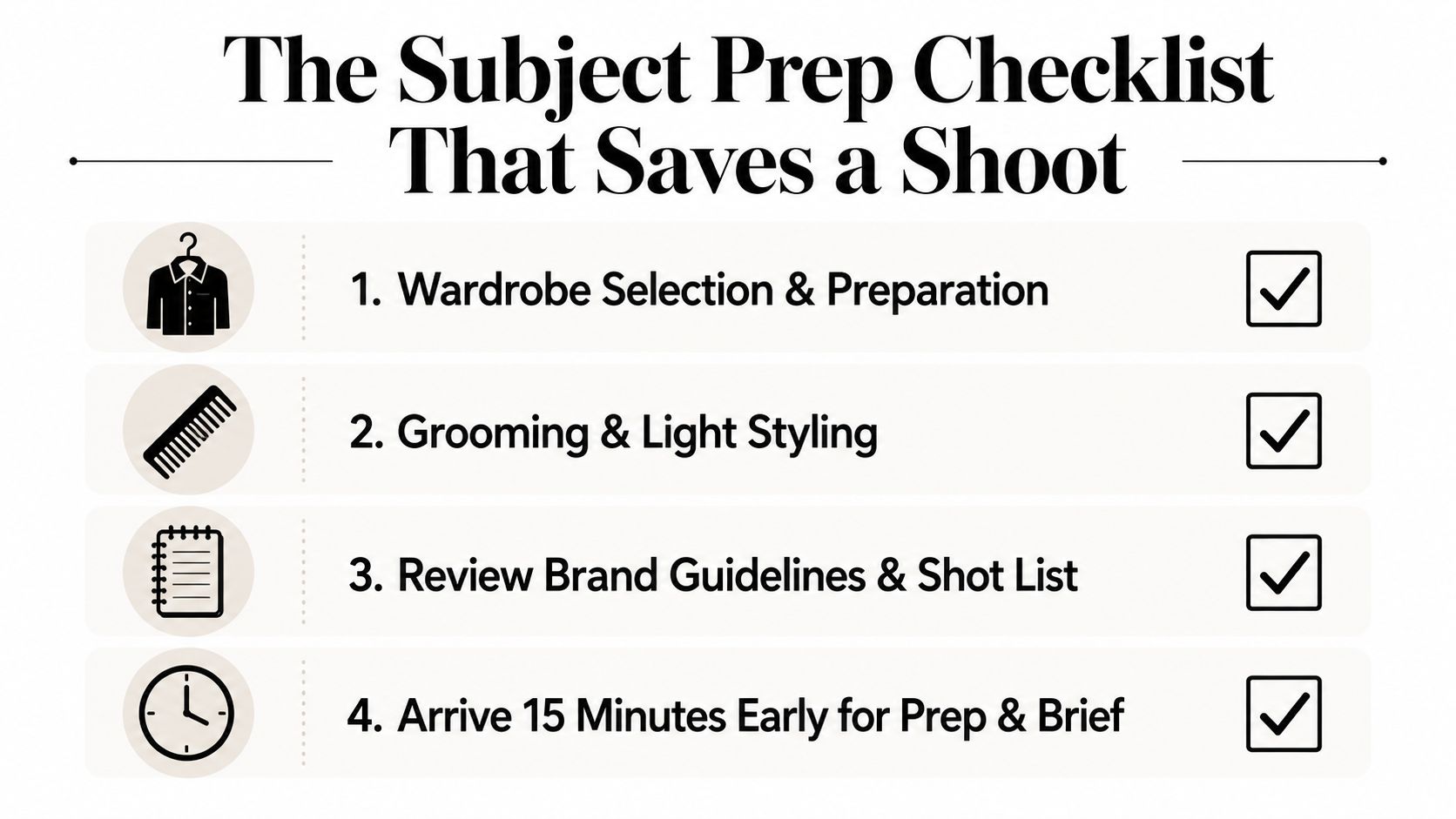
The day before
Choose clothing that fits well and supports the brand's level of formality. Solid colors and quiet textures are reliable because they keep attention on the face, while loud patterns, large logos, and highly reflective fabrics can dominate a tight crop. Bring a backup option if the schedule allows, especially when the portrait may be used against more than one background.
Grooming should look like the subject on a good workday, not a different person. Schedule haircuts far enough in advance that the style has settled, bring the usual grooming products, and avoid making a dramatic change immediately before the session. Makeup should control shine without hiding natural skin texture.
Glasses are fine, but tell the photographer in advance if the frames are essential to the person's public identity. The lighting can often be adjusted to manage reflections. Jewelry, watches, lapel pins, and phone cases deserve a quick review because small reflective objects can become prominent at head-and-shoulders framing.
The morning of the shoot
- Sleep and hydration: Arrive rested and drink water normally. Fatigue often appears first in the eyes and mouth.
- Food and timing: Eat a familiar meal and avoid arriving breathless from another meeting. A calm arrival produces better expressions.
- Face and hair: Bring a comb, brush, powder, tissues, and any products normally used for grooming.
- Pockets and accessories: Remove phones, bulky wallets, keys, and anything that creates an unwanted outline.
- Brand guidelines: Review the approved wardrobe range, background preferences, and the planned uses before stepping in front of the camera.
- Arrival window: Build in time for a quick briefing, wardrobe check, and adjustment of hair or glasses before the first frame.
What direction will feel like
The photographer may ask you to turn your torso, lower your chin, shift your weight, relax one shoulder, or look slightly away from the lens. Those instructions aren't attempts to make you pose like a model. They control facial planes, posture, light, and the relationship between your expression and the camera.
Some subjects look strongest when they speak briefly between frames. Others need stillness and a quiet reset. A good photographer pays attention to that difference rather than forcing every person into one performance.
Choosing the Right Photographer for Your Brand
Portfolio taste is only the starting point. A photographer may produce beautiful individual images and still be a poor fit for a company that needs consistent portraits across departments, locations, and delivery formats.
Evaluate the work as a system
Look for consistency across a portfolio, not just the most dramatic frame. Do skin tones remain natural under different lighting conditions? Do glasses produce uncontrolled reflections? Do people with different complexions, ages, body types, and levels of confidence receive the same care? A brand needs dependable decisions, not one lucky portrait.
Ask to see complete galleries or representative sets where possible. A single selected image shows the photographer's ceiling. A broader set reveals the floor, including how they handle ordinary expressions, mixed wardrobe, group spacing, and subjects who don't arrive with professional posing experience.
The lens and aperture choices should support facial realism. For business portraits, a full-frame 85–135mm lens range is repeatedly recommended because longer focal lengths reduce perspective distortion and produce more natural facial proportions. On APS-C cameras, that generally corresponds to about 50–85mm, as explained in this business portrait lens and lighting guide. Working apertures commonly fall between f/2.8 and f/5.6, with f/4 often serving as a practical compromise between subject separation and enough depth of field to keep the eyes and facial plane sharp.
Ask direct questions about finishing
Retouching policy matters more than software branding. Ask what the photographer removes, what they leaves alone, whether clients can review a sample, and how they preserve skin texture. Also ask whether AI tools are used for selection, background replacement, or retouching, and whether that use affects the final identity of the subject.
Recent 2025 coverage describes a market pulled in two directions. Clients want natural expressions, visible texture, and restrained retouching, while photographers are adopting AI tools for selection, background changes, and finishing, as discussed in coverage of AI-assisted portrait workflows. The important issue isn't whether a tool is automated. It's whether the final image still feels like a credible photograph of a real person.
Editing test: If colleagues recognize the polish but question whether the executive looks like that in person, the retouching has gone too far.
Confirm production capacity and rights
A photographer who excels with one executive may not have a workable process for a large team. Ask how subjects are scheduled, how lighting stays consistent, how files are named, how approvals work, and how the photographer handles a late arrival or location change.
Confirm the license in writing. The contract should state where the images may appear, who may use them, whether paid advertising is included, and whether the company can crop or adapt the files for different layouts. The right photographer brings creative judgment, technical control, and a delivery system that marketing teams can use.
Real-World Examples From Architecture and Corporate Clients
A regional architecture practice needed portraits that felt connected to its work rather than detached from it. The partners were photographed inside a completed project, with the environment kept visible enough to establish material, scale, and design intent without turning the images into building documentation. The same session also produced tighter crops for leadership pages and press materials, giving the firm one visual library instead of separate shoots for every channel.
The location choice did most of the storytelling, but restraint kept the portraits credible. The photographer avoided the most visually crowded areas, watched reflections in glass and polished surfaces, and positioned each partner where the architecture supported the face. A horizontal frame could accommodate website copy or an editorial layout, while a tighter version identified the person quickly on a profile page.
A corporate client faced a different problem. Its departments needed a consistent visual treatment for an annual report and an updated About page, but the company didn't want every employee to look anonymous. A controlled lighting setup created a shared foundation across the team, while small changes in expression, posture, and direction allowed individual character to remain visible.
The production plan treated the assignment as a collection of usable assets. Individual portraits covered staff profiles, paired images supported leadership and department pages, and a group photograph gave the company a clear recruiting and culture image. The value came from planning the relationships between those files before the shoot, not from collecting as many pictures as possible.
Business portrait photography works hardest when every image has a destination. Choose the environment carefully, keep editing honest, and build enough variation into the session that the resulting library can support the brand for more than one webpage.
Jimmy Clemmons Photographer creates architectural imagery, commercial brand content, and professional portraits with location scouting, lighting design, on-set direction, and polished editing built into the process. If your firm needs a coordinated portrait asset set for leadership, recruiting, press, and brand channels, visit Jimmy Clemmons Photographer to discuss the assignment and its intended uses.