
You're probably narrowing down a Napa stay the same way design clients evaluate a finished space. Not by star rating alone, but by the feel of arrival, the quality of light, the honesty of materials, and whether the whole property holds together once you're there. That's where Auberge du Soleil separates itself from a long list of luxury hotels that photograph well but don't always live as well.
The Auberge du Soleil Napa Valley hotel rewards close attention. It isn't only about vineyard views or polished service. It's about how the resort sits on the land, how private the accommodations feel, how the dining spaces frame the valley, and how the details support a slower, quieter kind of stay. For travelers who care about architecture, interiors, and sensory atmosphere, that distinction matters.
An Icon of Napa Valley Luxury
Arrival here feels choreographed by its natural setting rather than by spectacle. The hillside opens gradually, the terraces catch the sun, and the property reads less like a single hotel block and more like a sequence of carefully placed spaces. That first impression explains a lot about why the Auberge du Soleil Napa Valley hotel has held such a strong position in Wine Country culture.
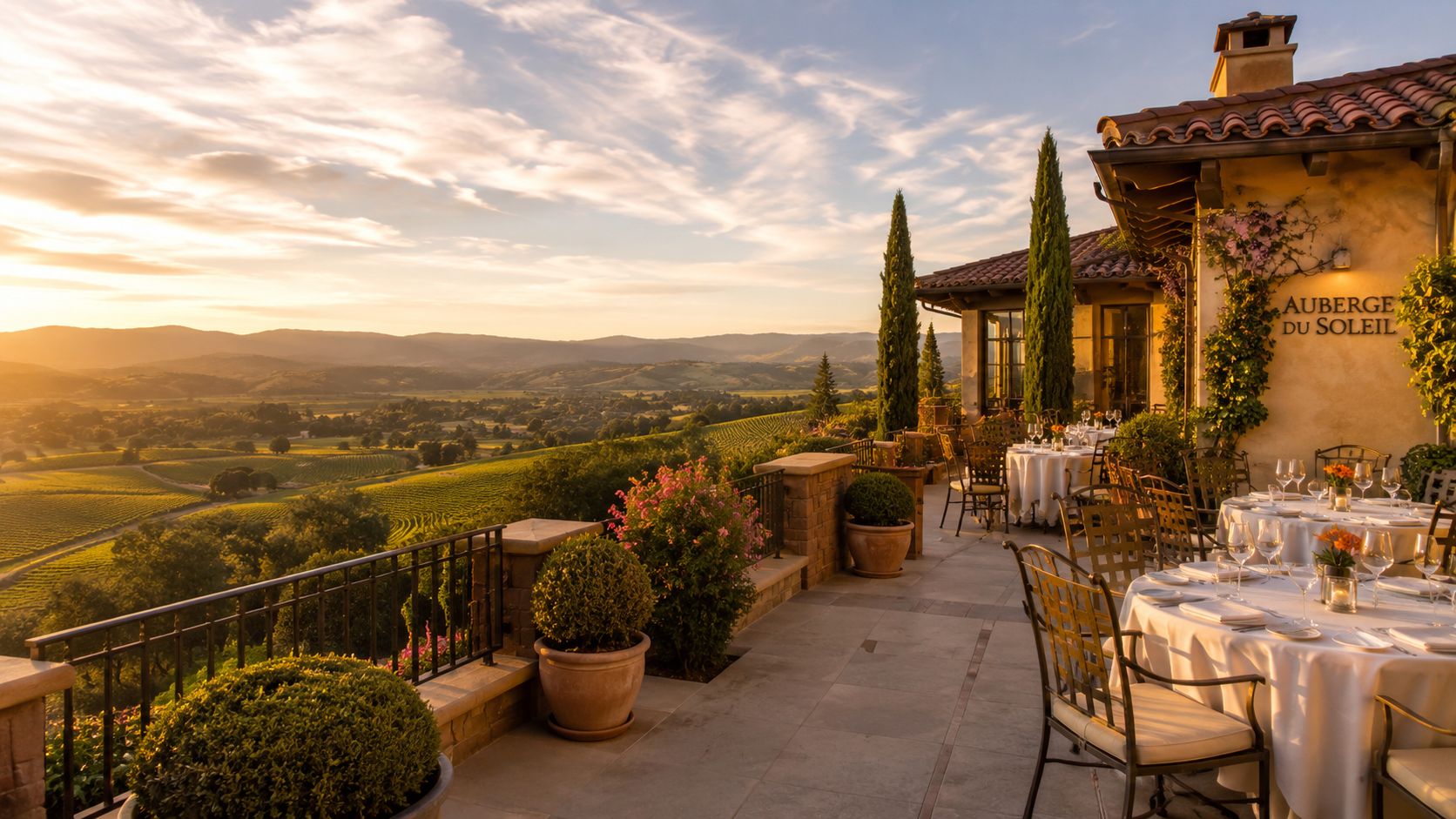
Its origin story matters. Auberge du Soleil was founded in 1981 by French restaurateur Claude Rouas as Napa Valley's first fine-dining restaurant, and its success led to the addition of The Inn of the Sun in 1986, creating a 50-room resort on 33 acres designed to reflect a taste of Provence in California. That legacy has now spanned over 40 years, as noted by Festival Napa Valley's overview of Auberge du Soleil.
Why the history still shows in the experience
Some hotels inherit prestige from branding. This one earned it through sequence. Restaurant first, lodging second. That usually creates a very different atmosphere than a resort built all at once. The food culture feels foundational, not added later as an amenity, and the architecture has a sense of adaptation that often gives older luxury properties more character than newer, more polished competitors.
From a visual standpoint, the Provençal influence works because it isn't theatrical. It doesn't aim for an exact mimicry of southern France. Instead, it borrows the warmth, the terraced logic, and the relaxed indoor-outdoor rhythm that suits Napa's climate.
Design note: The best luxury properties don't force the landscape into the background. They let views do structural work.
That's also why this is a property that rewards evening observation. The transition from late afternoon brightness to dusk softens the stone, foliage, and stucco tones in ways that feel cinematic rather than staged. For anyone who notices how hospitality spaces change after sunset, the case for blue hour in luxury properties is easy to understand here.
Your Private Sanctuary on the Hillside
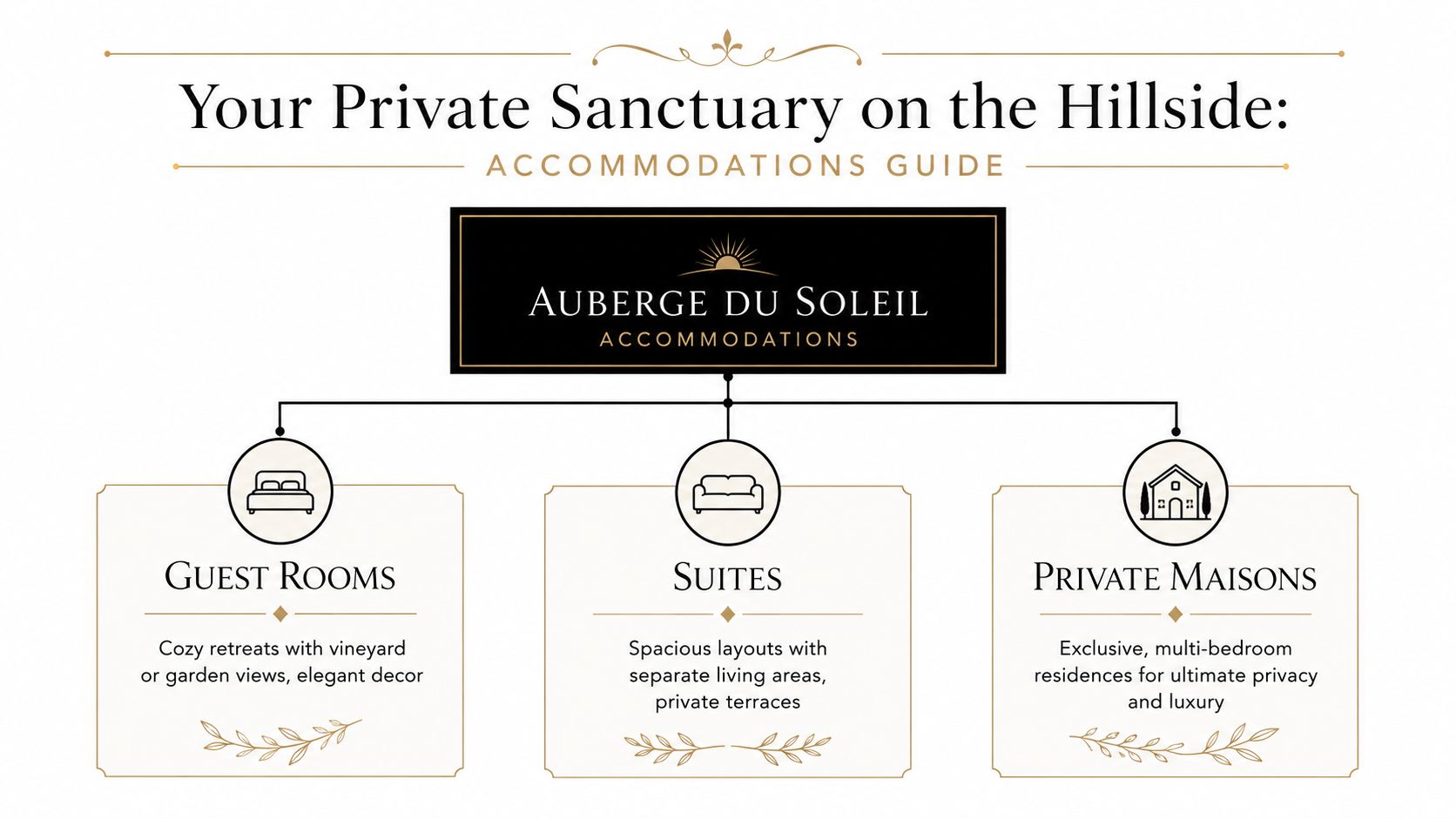
When clients ask me how to choose a room in a design-led resort, I usually tell them to ignore category names at first. Focus on spatial intent. Do you want a refined base for dining and winery visits, or do you want a room that's part of the trip itself? At Auberge du Soleil, that distinction matters.
The property has 50 rooms, with accommodations ranging from 520 square foot Classic and Deluxe Rooms to 1,800 square foot Private Mansion villas, and its standing is reinforced by a 2024 Michelin 3 Keys designation, according to Business Travel Authority's property review. That same overview points to the mix of Provence-inspired architecture, original contemporary art, and custom furnishings as part of the hotel's sustained appeal.
How to choose the right room type
The smaller rooms make sense if your priority is access to the grounds, restaurant, and spa atmosphere rather than extended in-room lounging. A 520 square foot room is still substantial by hotel standards, but the experience is tighter and more edited.
Suites and larger accommodations are better for travelers who want the room to function like a retreat. In design terms, these layouts give furniture and circulation more breathing room. That changes everything. Seating areas feel purposeful instead of symbolic, terraces become extensions of the room, and the pace of the stay slows down.
The Private Mansions sit at the top of that logic. At 1,800 square feet, they're for guests who want maximum privacy and a residential feel rather than a conventional hotel footprint.
What works well in the interiors
Here, Auberge tends to outperform more trend-driven luxury properties.
- The furnishings feel grounded: Custom pieces matter most when they control scale. Here, they help rooms feel settled rather than overfilled.
- Art is used as structure: Original contemporary art gives the interiors focal points without competing with the views outside.
- The architectural language stays consistent: Provence-inspired cues carry through without making rooms feel themed.
A practical rule for choosing here is simple:
- Choose a guest room if you'll spend most of your day exploring and want a polished, comfortable base.
- Choose a suite if you value a more generous living area and want the terrace experience to be part of the stay.
- Choose a Private Mansion if privacy is the luxury you're paying for.
Room-selection rule: In hillside resorts, the best room isn't always the largest one. It's the one that matches how long you'll actually inhabit the space.
For travelers planning photo-heavy anniversaries, design site visits, or a room-centered retreat, the same principles used in staging interiors for high-end photography apply surprisingly well to booking. Space, sightline, restraint, and texture beat novelty every time.
Michelin-Starred Dining and Serene Wellness
Auberge du Soleil's restaurant isn't just an on-site convenience. It's part of the property's identity. That distinction changes guest behavior. Guests do not dine there solely because they are staying on the property. Many stay there because the dining program already carries authority.
The culinary prestige is well established, but the detail many travelers miss is how much the January 2023 full renovation of the Main House, Restaurant, and Bar affects the present-day experience. The hotel's official information confirms that those core public spaces were fully renovated, modernizing the key dining and lounge areas for current and future guests, as noted on Auberge du Soleil's official property information.
Why the renovation matters more than most guides suggest
A lot of hotel content lags behind the property itself. That's especially true for iconic resorts, where older descriptions keep circulating long after major updates. Here, that gap matters because the Main House and dining venues are central to the stay.
From a design perspective, a renovation in those spaces affects several things at once:
| Area | Why it matters to guests |
|---|---|
| Restaurant | Dining feels current rather than preserved in amber |
| Bar | The social spaces read as intentional, not leftover |
| Main House | Arrival and transition spaces align better with the hotel's luxury position |
That doesn't mean the property lost its character. The stronger result is that the updated areas can support the brand's heritage without feeling dated. In hospitality, that balance is difficult. Over-renovate, and a legendary property loses memory. Under-renovate, and it starts relying on nostalgia to excuse fatigue.
Dining and wellness as a paired experience
The restaurant's long-standing Michelin reputation gives the hotel one kind of gravity. The wellness side provides the counterweight. That pairing is one reason the stay feels cohesive rather than indulgent for indulgence's sake.
If you're planning a trip around the full experience, I'd suggest treating the public spaces differently by time of day:
- Use the restaurant for occasion dining. The views and the service rhythm make it the obvious anchor.
- Use the bar as a transition space. It works best before dinner, after winery visits, or at the edge of sunset.
- Use the wellness areas to reset the visual pace. After a highly sensory meal program, quieter spaces matter more.
Good luxury hotels give you amenities. Great ones control tempo. Auberge does that well when you let the day alternate between stimulation and stillness.
An Architectural Photographer's Perspective
Most luxury hotel reviews stop at adjectives. Beautiful. Elegant. Serene. Those words aren't wrong, but they don't explain why the property reads so convincingly on site and in photographs. Auberge du Soleil works because the architecture understands hierarchy, restraint, and framing.
The siting is the masterstroke
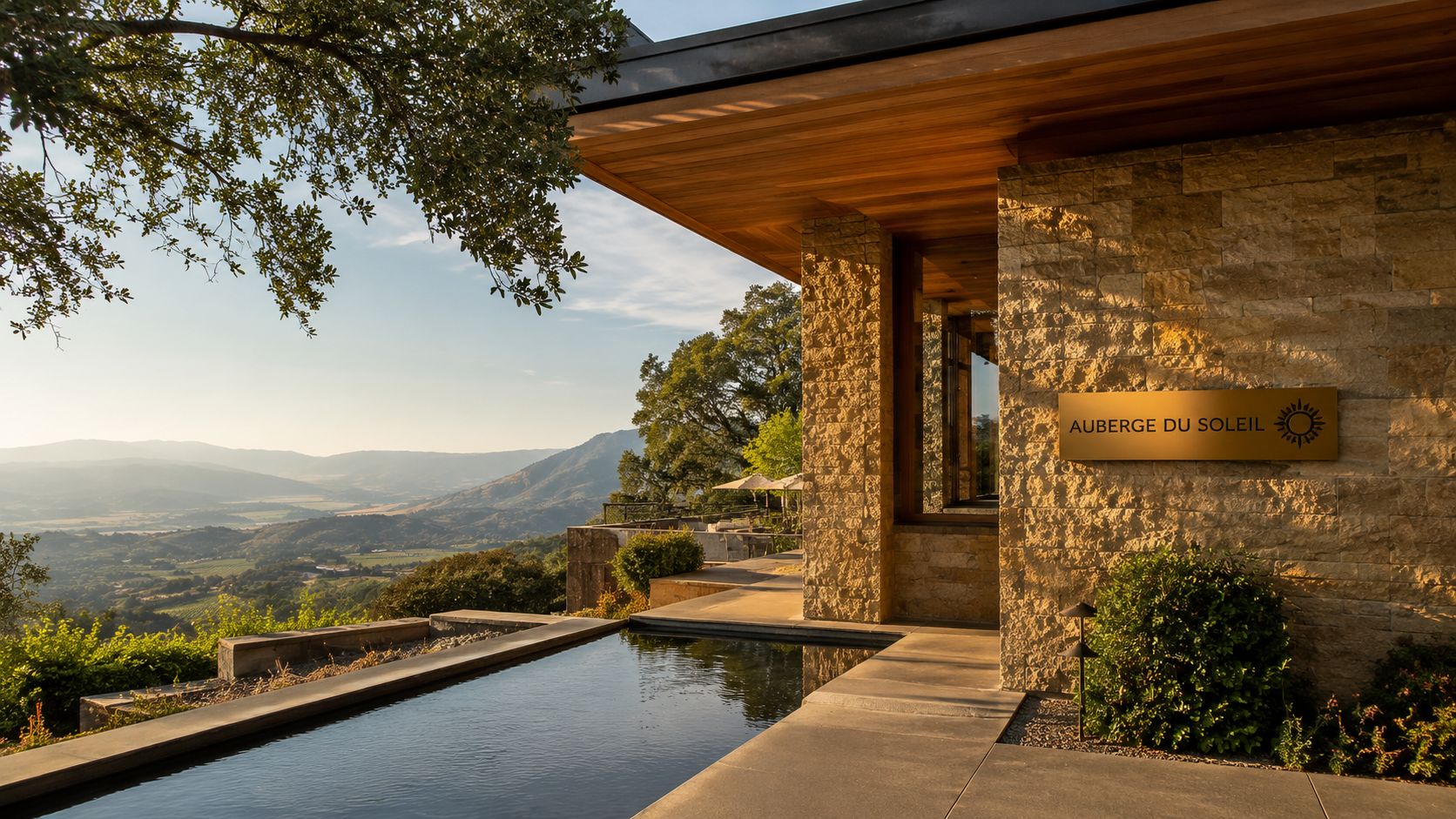
The terraced hillside approach is the property's strongest architectural move. It gives the resort layered views without forcing every guest into visual exposure. That's a difficult balance in hospitality design. Many view-driven hotels sacrifice privacy. Many privacy-driven hotels become visually inward. Auberge gets both because the site planning breaks mass into smaller experiences.
As you move through the property, the architecture reveals the valley in intervals. Not everything is visible at once. That restraint matters. A good composition doesn't show every element immediately. It edits.
For a photographer, the resort demonstrates exceptional design intelligence. Buildings, paths, terraces, and planting all act like compositional tools. Foreground, middle ground, horizon. Compression, then release. That sequence gives even casual guests a strong sense of rhythm.
Materials and atmosphere do quiet work
The Provençal influence succeeds because the palette sits comfortably under Napa light. Warm finishes, natural texture, and softened edges tend to age better than hard-edged luxury trends. You see that in exteriors, but also in the way interior and exterior zones speak to each other.
Three design choices stand out:
- Terracing instead of monumentality: The hotel avoids the bulky silhouette that dates many resort properties.
- Planting as buffer: Planting isn't decorative filler. It creates privacy, softness, and spatial pause.
- Reflective surfaces used sparingly: Water and glazing are present, but they don't overpower the setting.
Why photographers would love this property
The strongest hospitality architecture gives you multiple honest angles. Auberge does that. It doesn't depend on one hero shot. It holds up in approach views, detail studies, room perspectives, and long scenic frames.
From a shooting standpoint, these qualities make the property especially compelling:
| Photographic quality | What it means on site |
|---|---|
| Layered sightlines | Depth in images without visual clutter |
| Controlled natural light | Softer transitions across interiors and terraces |
| Material consistency | Cohesive editing across a full property set |
| Spatial privacy | Cleaner frames with fewer visual interruptions |
The best moments here aren't always the obvious ones. The entrance sequence, a framed terrace opening, a wall catching late light, or a room threshold looking out to the hillside often tells the story better than a wide establishing shot.
Photographer's test: If a property still feels composed when you step away from the postcard view, the architecture is doing real work.
For readers who think about built environments the same way, architectural and interior photography practice offers a useful parallel. Strong spaces don't need exaggeration. They need patient observation and a camera angle that respects what the architect already solved.
Exploring the Estate and Rutherford
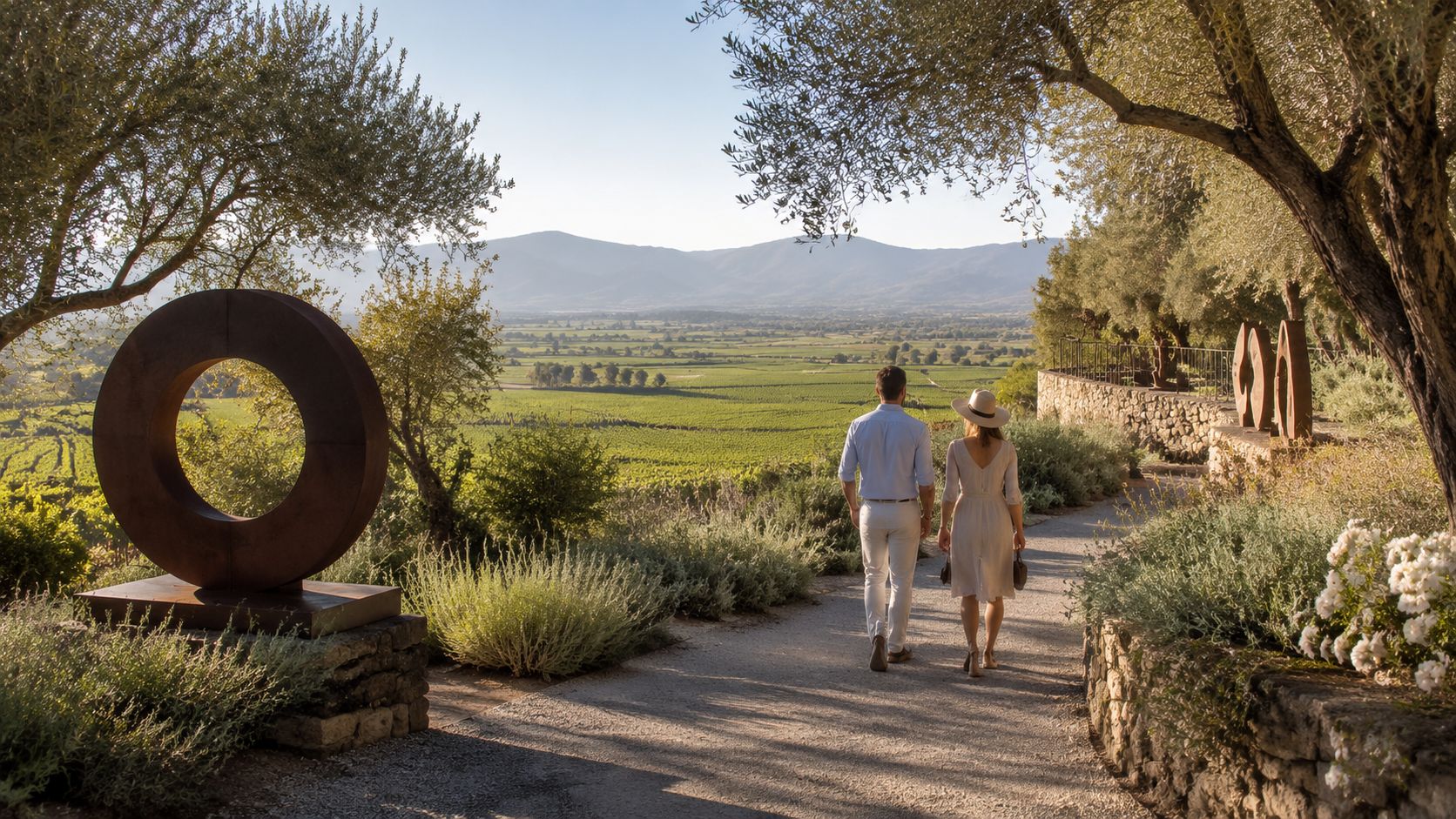
A stay here works best when you don't treat the hotel as a sleeping place between reservations. The estate invites movement at a slower scale. Morning is for walking, midday is for retreat, and late afternoon is for finding a vantage point and staying there longer than you planned.
A strong day on property
Start with a walk through the grounds while the light is still angled and the air feels cooler. The hillside setting is part of the experience, and this is one of those properties where walking reveals the design logic better than standing still at a single lookout.
Then give yourself a quiet block of time with no itinerary. That could mean the pool, a terrace, or a room with the doors open. Design-conscious travelers often overbook Napa. They chase wineries and end up missing the point of a resort built for pause.
A useful pattern is this:
- Morning: Walk the estate and notice how the property opens up under changing light
- Midday: Retreat indoors or to a shaded outdoor space
- Evening: Return to the public areas when the valley starts to soften visually
Beyond the resort in Rutherford
Rutherford suits a more edited style of exploration. Instead of stacking tastings, choose one or two appointments that match the hotel's tempo. The area works best when you build the day around quality of experience rather than volume.
That means looking for wineries and nearby stops that complement the resort's tone. Seek out places with strong architecture, calm hospitality, and enough visual breathing room to keep the day from turning transactional.
This short video gives a useful sense of the setting and mood:
If you only do one off-property outing, make it one that leaves room to come back before dusk. Auberge is at its best when you do return in time to experience the property again, not just collapse into it after dark.
Planning Your Visit Booking Tips and Logistics
Travelers often run into avoidable friction. Auberge du Soleil presents itself clearly on its own channels, but third-party listings don't always do the same job. If you book casually, you can miss policies that materially affect the trip.
According to More Time to Travel's review of Auberge du Soleil booking details, the hotel's adults-only and no-pets policies are often misrepresented on third-party sites. That same source notes the official policy requires 100% of the stay's room, taxes, and fees as an advance deposit, along with a 14-day cancellation window.
Policies to verify before you book
Don't assume aggregator listings are current. This is especially important if you're traveling with a pet, comparing couples' resorts, or planning a multistop Napa itinerary with little room for changes.
Use this pre-booking checklist:
- Confirm the adults-only rules: If quiet is one reason you're booking, verify the policy directly.
- Verify the pet policy: Don't rely on a listing that hasn't been updated.
- Read the deposit terms carefully: Full advance collection changes the financial commitment immediately.
- Check the cancellation deadline: A strict window can matter a lot if flights, winery reservations, or personal plans are still in motion.
Booking advice: For high-demand luxury properties, policy clarity matters almost as much as room category.
Timing your stay well
The best time to visit depends less on a universal “best season” and more on your tolerance for activity, heat, and visual density. Some travelers want the valley at its liveliest. Others want a quieter, more contemplative version of Wine Country.
A simple way to decide:
| Travel goal | Best approach |
|---|---|
| You want energy and activity | Book when Napa is busiest and reserve everything early |
| You want softer pacing | Choose a quieter period and let the hotel carry more of the experience |
| You care about landscape and light | Prioritize shoulder periods with comfortable outdoor time |
If you're design-minded, I'd lean toward a stay where you can spend meaningful time on property rather than maximizing outside appointments. Auberge rewards attention. Overfilling the schedule undercuts what you're paying for.
Why Auberge du Soleil Remains Unforgettable
Auberge du Soleil stays memorable because it does more than deliver luxury. It holds a point of view. The history gives it weight, the accommodations provide privacy without sterility, the restaurant anchors the experience with real authority, and the architecture keeps the valley present in nearly every meaningful moment.
What makes the Auberge du Soleil Napa Valley hotel endure isn't novelty. It's coherence. The original identity still reads, the design still feels disciplined, and the updated public spaces keep the experience current without flattening its character. That's rare.
For travelers who care about place, not just prestige, this is the difference between a high-end booking and a stay that lingers. You remember the hillside, the framed views, the edited interiors, the hush around the grounds, and the way the property lets light do half the storytelling. That's why it remains one of the defining addresses in Napa.
If your brand, property, or design practice needs imagery with that same level of compositional discipline, Jimmy Clemmons Photographer creates architectural and hospitality photography that highlights light, material, and spatial intent with clarity and restraint.