
A few years ago, I photographed a luxury property that looked immaculate in person but flat in its daytime marketing set. We went back at blue hour, turned the building into a composition of glowing interiors against a saturated sky, and suddenly the project looked like it belonged in an editorial spread rather than a leasing brochure.
Beyond the Snapshot How Light Tells a Luxury Story
Luxury projects rarely have a documentation problem. They have a perception problem.
A beautifully designed hotel, residence, corporate campus, or mixed-use development can be finished to a high standard and still feel ordinary in photos if the light doesn’t support the story. Midday sun often describes a building accurately, but accuracy alone doesn’t sell luxury. High-end marketing has to communicate mood, restraint, exclusivity, and control. That’s why the best architectural imagery isn’t just about showing a facade. It’s about shaping how the viewer feels before they read a single word of copy.
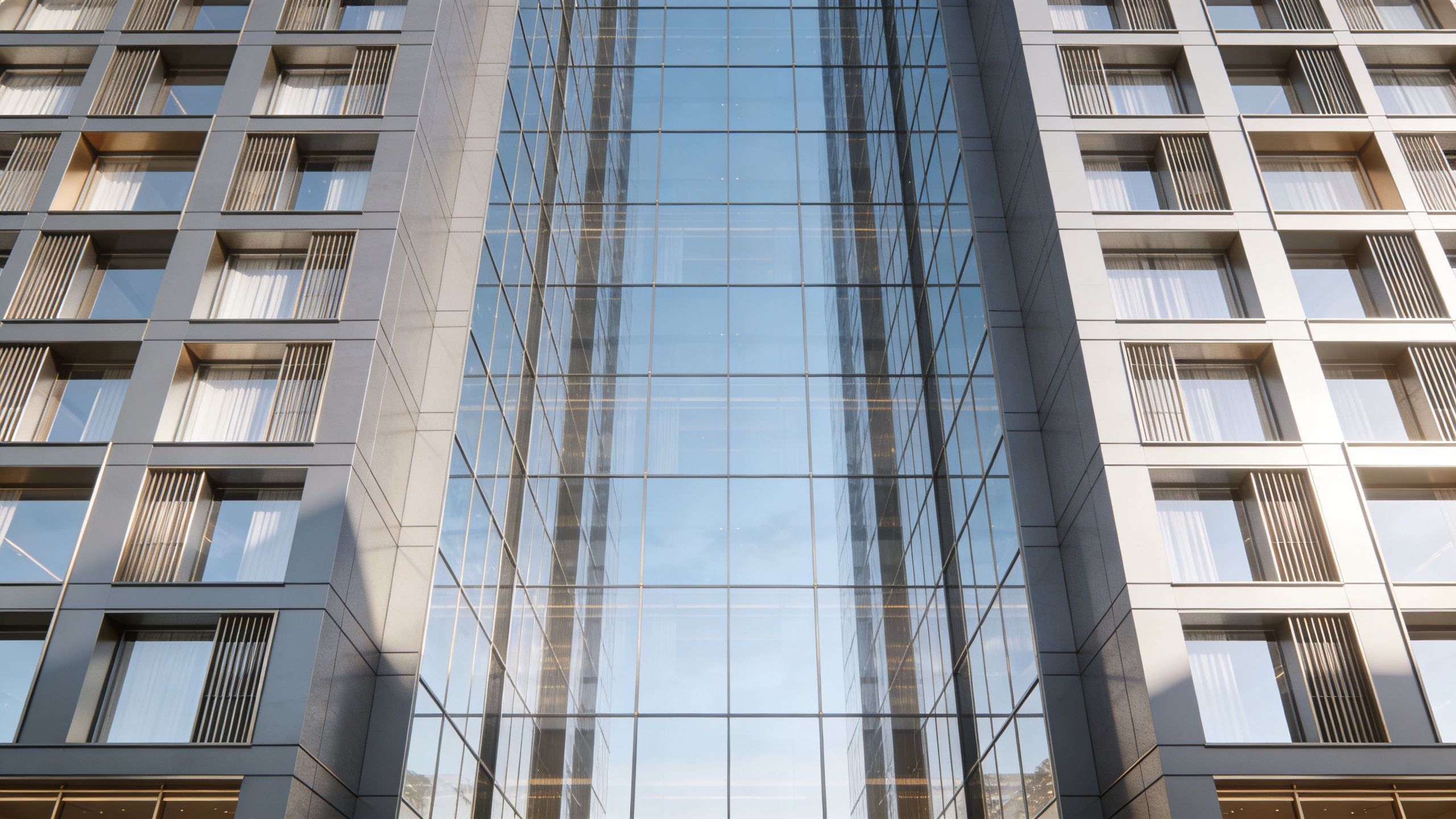
Blue hour gives us a different visual language. Glass looks richer. Stone gains depth. Interior lighting stops fighting the sky and starts working with it. Instead of harsh contrast and blown highlights, you get a controlled scene where the architecture feels intentional from edge to edge.
Why luxury clients respond to it
For architects and developers, that shift matters because buyers, guests, investors, and editorial teams don’t evaluate a project as a set of technical details. They evaluate it as an experience. Blue hour imagery helps translate design intent into something immediate and persuasive.
A luxury project often needs to communicate several things at once:
- Design sophistication: Clean lines, material texture, and lighting design need to read clearly.
- Lifestyle aspiration: The image has to suggest how it feels to arrive, stay, work, or live there.
- Brand positioning: Premium projects need photography that separates them from standard commercial listings.
- Editorial credibility: The strongest images should be capable of living in a pitch deck, ad campaign, website hero slot, or magazine layout.
Practical rule: If the goal is simply to record the property, daytime may be enough. If the goal is to elevate the property, light becomes a strategic decision.
That’s the value of blue hour for luxury projects. It turns photography from a record of the building into an argument for the building’s value.
Understanding the Blue Hour Effect
Blue hour is the brief period after sunset or before sunrise when the sun sits below the horizon, but there’s still enough ambient light in the sky to illuminate the scene. In architectural photography, it acts like a giant natural scrim. The light is soft, the shadows are restrained, and the scene feels polished instead of aggressive.
In luxury work, that matters because hard daylight can create visual friction. Deep shadows hide environmental details. Bright sun on glass creates glare. White stone can clip. Dark facade materials can go muddy. Blue hour resolves many of those problems at once.
What makes the light look different
In technical terms, blue hour occurs when atmospheric scattering shifts the color and quality of the remaining sunlight. In luxury architectural photography, blue hour typically lasts 20 to 40 minutes and is driven by the interplay of deep blue ambient sky light at roughly 5000 to 7000K with warm artificial interior or exterior lighting around 2700 to 3500K, as described in this breakdown of blue hour real estate photography.
That contrast is what makes buildings feel alive. The sky carries a cool, saturated tone while the building emits warmth. Window walls glow. Lobby lighting gains presence. Pool decks, porte-cochères, courtyards, and terraces stop reading as empty surfaces and start reading as destinations.
Why it works better than simple drama
Blue hour isn’t valuable because it’s dramatic. It’s valuable because it’s controlled.
The ambient light is still strong enough to hold cloud detail and preserve the shape of the sky. At the same time, it’s subdued enough to let architectural lighting design speak. That’s a rare balance. Blue hour’s unique characteristics, including enough ambient light to reveal cloud detail while maintaining deep sky saturation, create visual contrasts that golden hour can’t produce. The ability to incorporate celestial elements like the moon can also add narrative depth and exclusivity, which helps attract clients seeking refined, magazine-quality imagery, as noted in this discussion of blue hour aesthetics for luxury visuals.
A luxury image should feel composed, not accidental. Blue hour gives architecture that composure.
There’s also a practical creative benefit. During daytime, exterior photography often forces a choice between exposing for the sky or exposing for the building. During blue hour, those elements move closer together visually, so the final image feels less like a compromise.
What it does for the viewer
When clients say an image feels “premium,” they’re usually responding to a handful of visual cues working together:
| Visual cue | What the viewer perceives |
|---|---|
| Cool sky with warm interior glow | Hospitality, elegance, intention |
| Soft shadow transitions | Better materials, calmer design |
| Visible cloud and sky detail | Atmosphere, scale, editorial quality |
| Even light across facade and site | Control, investment, polish |
That’s why blue hour keeps showing up in top-tier hospitality, architecture, and development marketing. The look isn’t trendy. It communicates quality with unusual efficiency.
The Commercial Power of Blue Hour Imagery
Blue hour earns its place in a luxury marketing budget because it changes how a project performs, not just how it looks.
For premium real estate and hospitality, the first job of imagery is to stop the scroll, hold attention, and create a sense of distinction. Standard daytime photography can be clean and useful, but it often puts a luxury project in the same visual category as everything else in the market. Blue hour separates it immediately. The building looks curated. The lighting design reads. The atmosphere suggests scarcity and access.
What the numbers say
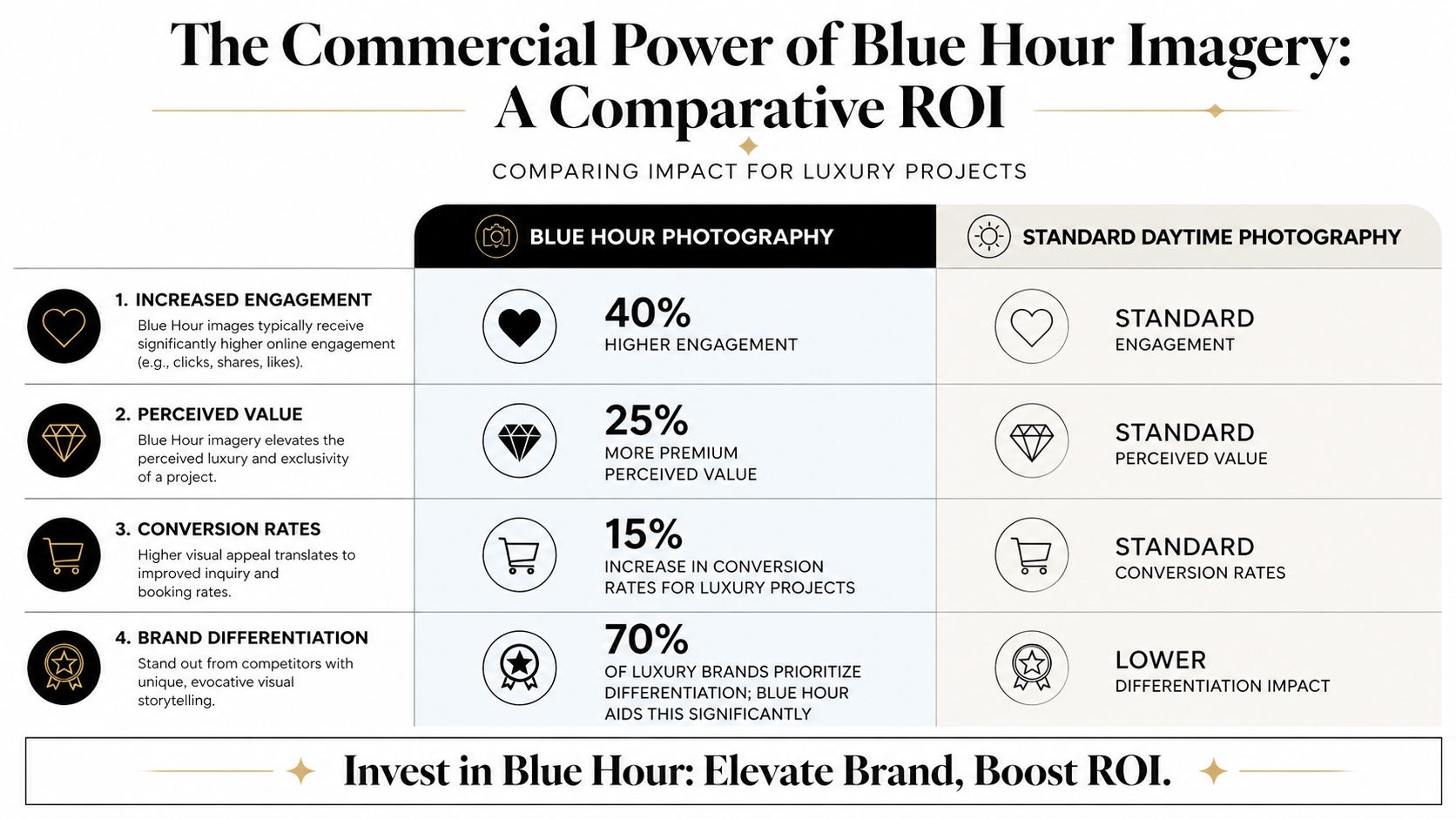
A 2025 report on luxury properties priced above $1M found that listings with blue hour exteriors achieved 22% higher engagement rates and 14% faster sales, while an ArchDaily analysis found blue hour visuals can increase a project’s perceived value by up to 30% in client pitches, according to this summary of blue hour performance in luxury marketing.
Those numbers line up with what experienced marketers already recognize. In luxury categories, perceived value is part of actual value. If a project looks more exclusive, more resolved, and more editorially credible, it enters the market with an advantage.
For teams evaluating image budgets, this is the larger issue. Photography isn’t just a production line item. It shapes first impressions across every channel. A stronger set of hero images can support leasing decks, investor presentations, hospitality campaigns, public relations outreach, and web launches. If you're weighing that spend, this perspective on the ROI of professional photography is a useful companion to the discussion.
Why blue hour helps luxury branding
Luxury buyers and guests don’t respond only to square footage, finishes, or amenities. They respond to cues that signal status and care. Blue hour delivers several of those cues at once.
- Exclusivity: Few projects are photographed well at this time of day, so the work feels less generic.
- Atmosphere: Warm interior light against a cool exterior creates emotion without looking staged.
- Design clarity: Facades, glazing, site lighting, and circulation paths read with greater coherence.
- Brand consistency: The images align more naturally with premium editorial and advertising standards.
The feeling of luxury isn’t abstract. It’s built from visual decisions, and light is one of the most persuasive of them.
Where standard daytime work falls short
That doesn’t mean daylight photography is wrong. It means it has limits.
For luxury projects, standard daytime sets often flatten lighting design, reduce the impact of interior glow, and make premium materials compete with hard sun. The result can be competent but forgettable. In crowded markets, forgettable imagery is expensive because it wastes attention.
Blue hour is especially valuable when the project includes:
- Strong lighting design: Hotels, restaurants, campuses, and residential towers with deliberate nighttime identity
- Glass-heavy architecture: Curtain walls and reflective surfaces benefit from lower glare and richer sky tone
- Arrival sequences: Porte-cochères, lobbies, drop-offs, and entries with cultivated greenery look more cinematic
- Mixed-use developments: Exterior retail, hospitality, and public space gain a sense of activity and polish
The best luxury marketing images do more than describe a building. They frame it as the place the viewer wants to enter. Blue hour is one of the few tools that does that consistently.
Mastering the Technical Craft of Blue Hour
Blue hour looks effortless only when the shoot is tightly controlled. The window is short, the margin for error is narrow, and small missteps show up immediately in the files.
If you want the final image to feel calm and luxurious, the production process can’t be casual. I treat these shoots more like a timed installation than a walk-around session. Every angle, light cue, and camera position has to be decided before the best minutes arrive.
Timing is the first technical skill
Most clients think of blue hour as a vague evening look. In practice, it’s a narrow target.
Photographers use planning tools such as PhotoPills to identify the most promising window for the site and date. That’s important because a skyline-facing hotel, a glass office building, and a tree-covered residential property each hit differently depending on orientation, obstructions, and how quickly the site loses usable ambient light.
A strong blue hour image depends on catching the brief period when the sky brightness and the building’s artificial lighting feel balanced. Too early, and the building lights don’t carry enough weight. Too late, and the site sinks into darkness while the sky loses texture.
A second layer of timing involves operations. Exterior fixtures need to be on. Interior spaces visible from key elevations need to glow evenly. If one tenant floor is dark, one sign is half-lit, or one lobby zone is left off, that inconsistency becomes a retouching problem later.
Exposure is where quality is won
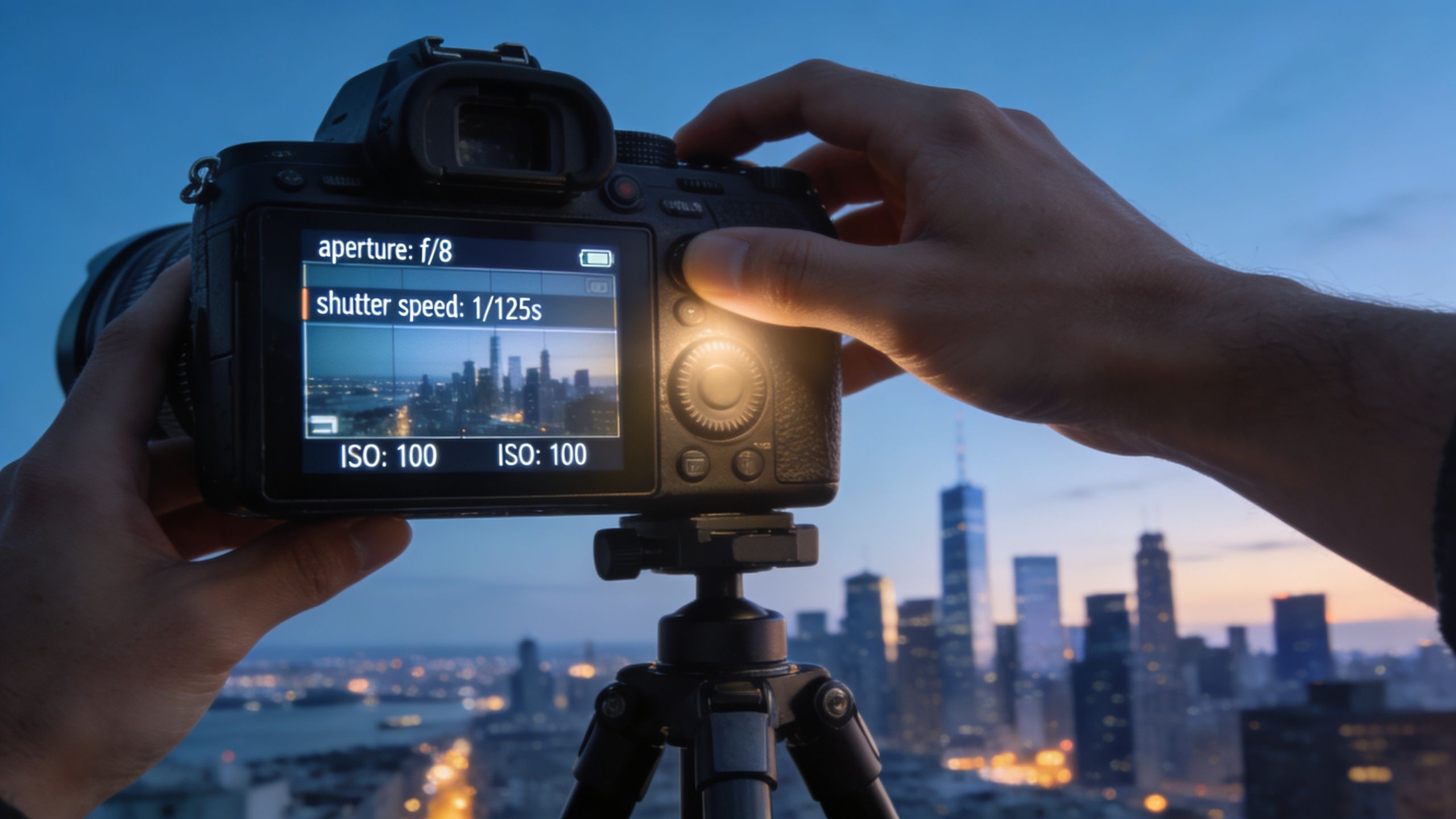
Blue hour requires balancing deep blue ambient sky light at roughly 5000 to 7000K with warm artificial lighting around 2700 to 3500K. That equalized luminance allows even exposures at settings such as f/8 to f/11, ISO 100 to 400, and 15 to 30 second shutter speeds, while capturing up to 14 stops of dynamic range and reducing clipped highlights or noisy shadows, as outlined in this technical guide to blue hour shooting.
That sounds like camera jargon, but the client outcome is simple. Better exposure control means cleaner windows, stronger sky color, more accurate material separation, and fewer compromises in post.
Here’s the short version of what usually works best on luxury exteriors:
- Tripod-based shooting: Long exposures demand stability, especially when fine architectural lines matter.
- Low ISO: Cleaner files hold texture better in dark stone, metal, planting, and glazing.
- Moderate aperture: f/8 to f/11 usually gives the sharpness and depth architectural work needs.
- Bracketing when needed: Complex scenes often need multiple exposures to hold both signage and deep-shadow landscaping.
For clients deciding between time slots, this guide to choosing the best light for a site shoot reflects the same reality we see in production. The best light depends on the subject, but luxury projects often benefit most when the architecture and lighting design can share the frame as equals.
What works and what usually doesn’t
Blue hour rewards precision. It punishes improvisation.
| Works well | Usually fails |
|---|---|
| Pre-scouted compositions | Arriving without tested angles |
| Fully operational site lighting | Hoping retouching will fix dark zones |
| Tethered review on critical shots | Judging everything from the rear LCD |
| Controlled exposure brackets | Single-frame shortcuts on high-contrast scenes |
| Coordinated interiors and exteriors | Treating the building shell and interiors separately |
On-site standard: If the lighting designer cared enough to shape the building after dark, the photography should care enough to honor that design.
Later in the process, motion can become an asset. Long exposures can soften traffic, smooth water, and add life to urban scenes without cluttering the architecture. But those choices only work when the base exposure is disciplined.
A useful visual reference for clients is below.
The final point is simple. Blue hour is premium work because it demands premium execution. The image may look serene, but the process behind it is exacting.
Planning a Flawless Blue Hour Shoot
A successful blue hour session is built before the camera comes out. By the time the light turns, the team should already know what matters, what’s visible, and what must be operational on site.
That planning stage is where luxury projects either gain efficiency or lose it. If the creative team, property team, and photographer align early, the shoot feels smooth. If they don’t, the best light window gets spent solving preventable problems.
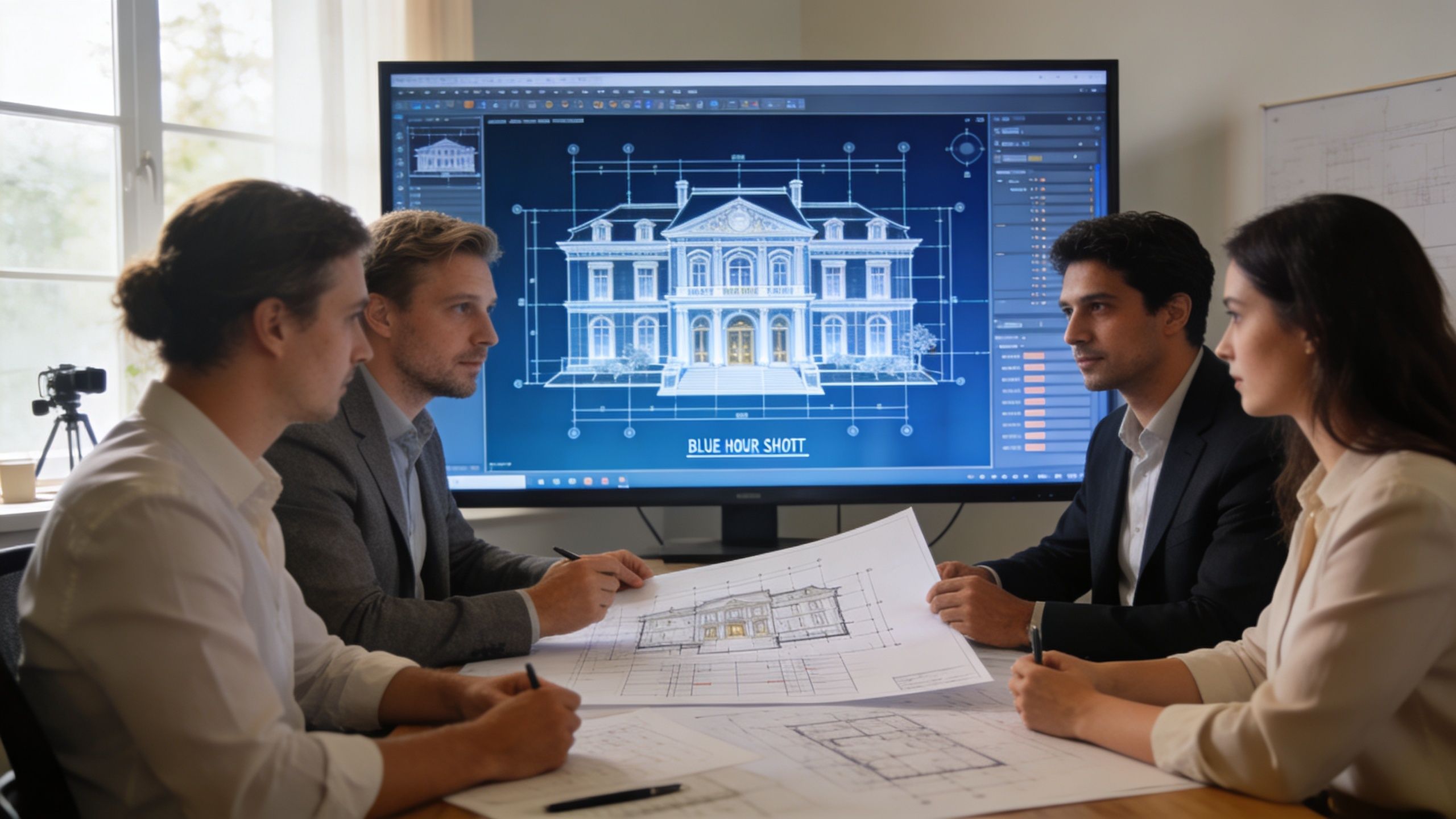
The three decisions that matter most
The first decision is what story the exterior needs to tell. A hospitality property may need to emphasize arrival, warmth, and guest experience. A corporate campus may need to stress scale, precision, and brand confidence. A residential tower may need to balance skyline presence with intimacy at the amenity level.
The second is which views justify the narrow window. Not every angle deserves blue hour treatment. Hero facades, entries, terraces, pool decks, and street-facing perspectives usually do. Utility elevations rarely do.
The third is what has to be ready on site. That includes lighting, landscaping, vehicles, access, signage, furniture placement, and any interior rooms visible from the selected angles.
A pre-production workflow that protects the investment
A good blue hour plan usually includes these steps:
- Scout the site early: Test vantage points, note obstructions, and identify where the architecture reads best.
- Build a shot list with priorities: Separate must-have hero frames from secondary options.
- Confirm operational lighting: Interior, exterior, grounds, and signage lighting should be checked before shoot day.
- Coordinate site readiness: Remove distractions, stage key areas, and assign someone to handle last-minute access issues.
- Review the site prep checklist: A resource like this site preparation guide for a photoshoot helps teams catch details that otherwise show up in every frame.
Most blue hour failures aren’t caused by the sky. They’re caused by preventable site issues that weren’t addressed before the window opened.
What collaboration looks like in practice
The best clients don’t micromanage the shoot. They inform it.
Architects often know which facade lines matter most. Designers know which interior zones need to glow. Developers know which leasing or brand messages the images must support. When that information is shared in advance, the photographer can make stronger decisions on lensing, camera height, framing, and scheduling.
That’s also how you avoid spending a premium window on low-value images. Blue hour should be reserved for the frames that carry the campaign.
Briefing Your Photographer for Maximum Impact
A strong brief saves money because it gives the photographer the right problems to solve.
Luxury photography gets expensive when the team is vague. If the direction is “make it look high-end,” the photographer has to guess whether the image needs to feel editorial, hospitality-driven, investor-focused, or sales-oriented. Those are different assignments, even when they’re shot at the same property.
What to include in the brief
The most useful blue hour brief covers five things clearly:
- Business objective: Leasing, sales, bookings, editorial placement, investor presentation, or brand launch
- Primary audience: Buyers, guests, tenants, architects, press, or corporate stakeholders
- Hero priorities: Which exterior views, amenities, entries, or skyline relationships matter most
- Mood target: Serene, dramatic, intimate, commanding, or polished
- Usage plan: Website, print collateral, pitch decks, ad placements, social, or PR outreach
That information changes how the photographer approaches the shoot. A hospitality image may lean into warmth and welcome. A developer-facing image may emphasize scale and presence. A magazine-oriented image may favor composition and narrative detail over broad coverage.
Why the premium is justified
Blue hour photography commands premium pricing because the work is specialized. For luxury applications, professional sessions can earn photographers between ₹4,000 and ₹12,000 per session, reflecting the technical complexity and exclusivity that high-end brands, architectural firms, and hospitality groups want in refined brand storytelling, according to this breakdown of blue hour photography pricing and positioning.
That premium only pays off when the brief is focused. If the team knows the campaign goals, the photographer can allocate the narrow window to the images most likely to carry value across channels.
A better way to think about the brief
Don’t treat the brief like paperwork. Treat it like alignment.
A detailed brief helps everyone decide what success looks like before production starts. It reduces missed angles, avoids unnecessary on-site debate, and makes post-production more efficient because the intent behind the images is already established.
A precise brief doesn’t limit creativity. It gives the photographer enough clarity to make better creative decisions under tight conditions.
In luxury work, that clarity is part of the final product.
Elevate Your Project From Premium to Unforgettable
The Value of Blue Hour for Luxury Projects comes down to one decision. Are the images merely documenting a finished space, or are they actively increasing how that space is perceived in the market?
Blue hour works because it aligns aesthetics, technical control, and commercial intent. It gives architects and developers a way to show material richness, lighting design, atmosphere, and brand position in a single frame. It also asks more from the production. Better planning. Better timing. Better coordination. That’s exactly why it tends to produce stronger results.
Luxury projects already invest heavily in architecture, interiors, site design, and lighting. Photography should protect and extend that investment. When the right property is photographed at the right time, the images stop feeling like records of a building and start functioning as assets that shape attention, credibility, and demand.
If the goal is to compete at the top of the market, blue hour isn’t an embellishment. It’s a strategic choice.
If your team is planning a hospitality, architectural, or commercial shoot and wants images that match the quality of the project itself, Jimmy Clemmons Photographer brings an editorial eye, technical precision, and Atlanta-based architectural expertise to the process.