
You've chosen the building, approved the mood board, and scheduled the crew. Then someone asks where the van will unload, whether the property manager has approved the exterior, or what the west-facing glass will look like at noon. A beautiful location can still create a difficult production if nobody verifies how it works.
That's the purpose of location scouting services. A professional scout turns a promising address into a practical production decision by checking light, access, permissions, power, noise, parking, and the details that rarely appear in a listing gallery. For architectural photographers, commercial producers, and brand teams, scouting is risk control with a camera in hand.
When the Perfect Location Almost Ruins the Shoot
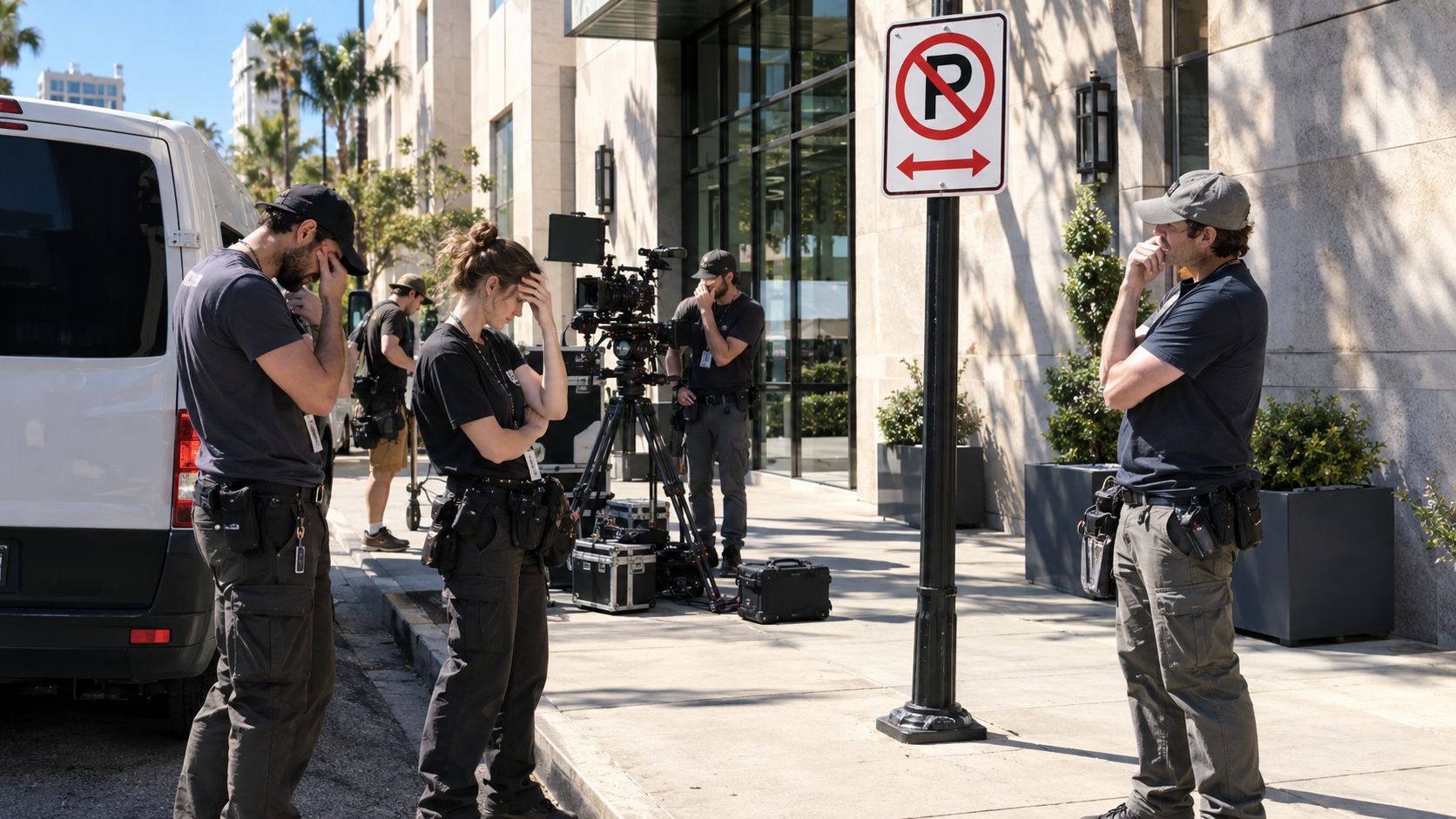
The crew arrives before sunrise. The exterior is exactly what the client wanted, the interior photographs beautifully online, and the shot list is ambitious but realistic. Then the building manager explains that the loading entrance is too narrow for the lighting cases, the nearest legal parking is several blocks away, and the glass facade catches direct glare during the planned hero shot.
None of those problems were visible in the property photos.
A location scout would have walked the access route, photographed the building from useful angles, checked the light at the intended shooting time, and asked who controls the space. The production might still choose the same building, but it would arrive with a better plan, different equipment, or a revised schedule.
A pretty image isn't a production answer
Online research is useful for building an initial pool of possibilities. It can't reliably tell you whether a neighboring business creates intermittent noise, whether a crew can stage equipment without blocking residents, or whether a property owner will approve the intended brand use.
For architectural and commercial photography, those practical questions shape the final images. A difficult load-in can delay the first setup. Uncontrolled reflections can limit the angles. A permit issue can remove a key exterior from the schedule altogether.
Practical rule: Treat every attractive location as unverified until someone checks how it will support the actual shoot.
This guide gives you a way to assess that work. You'll learn what location scouting services include, how a scout moves from a creative brief to a locked site, when virtual tools help, and how to compare proposals without focusing only on a day rate. The central question is simple: will this place work when people, equipment, time, and permissions enter the frame?
What Location Scouting Services Really Do
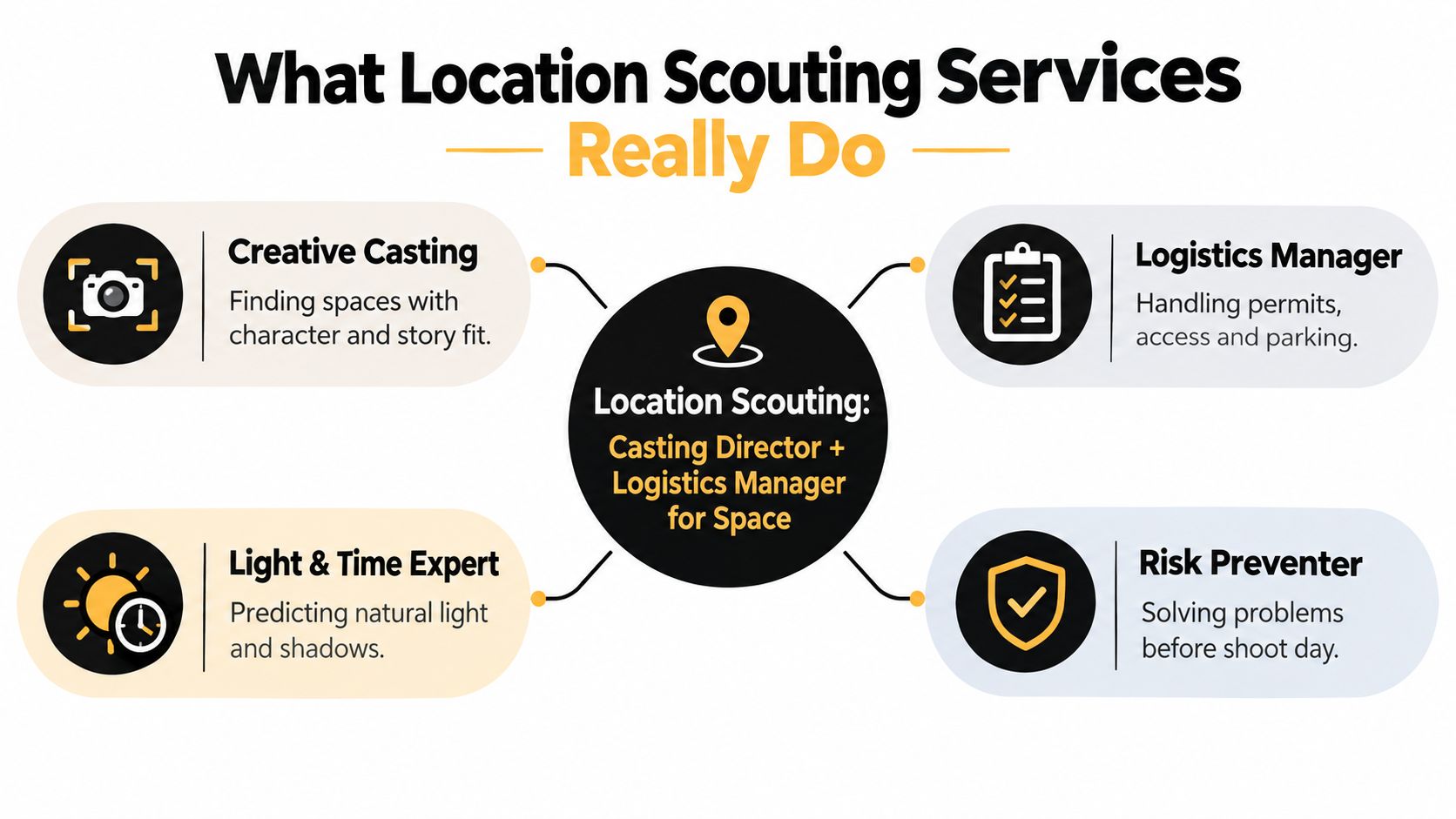
Think of a location scout as part casting director and part logistics manager for a physical space. The casting side asks whether the architecture, atmosphere, materials, and surrounding context fit the story. The logistics side asks whether the crew can enter, work, move equipment, control the environment, and leave without creating avoidable problems.
That distinction matters because finding a location and verifying a location are different tasks. A search may produce a long list of visually promising spaces. A professional scout narrows that list by documenting what production teams need to know before they commit.
From fieldwork to a production specialty
Location scouting developed as film production became more complex. It moved beyond the assistant director's duties into a dedicated role by the 1950s on large studio features, became common across the industry by the late 1970s, and later evolved through location databases and descriptive panoramic photography documented in archival collections. New York City also formalized on-location production support in 1966, when Mayor John Lindsay signed Executive Order 10 creating the Mayor's Office of Film, Theatre and Broadcasting. These milestones are summarized in the history of location management.
Today, the service can support a feature production, a hospitality campaign, a corporate brand library, or a focused architectural assignment. The deliverable isn't an address. It's a reasoned recommendation supported by images, notes, access information, and a clear understanding of tradeoffs.
The four questions behind the work
A strong scout keeps four questions active:
- Does it tell the right story? The space should support the client's visual language, not merely look fashionable.
- Can the team use it safely and efficiently? Access, staging, parking, and circulation affect every setup.
- Will the light and environment cooperate? Time of day, reflections, shadows, weather, and ambient sound influence the result.
- Can the production secure and control it? Ownership, permits, neighboring activity, and stakeholder approvals determine whether the plan is dependable.
The global location services for filming market was valued at $1.8 billion in 2024 and is forecast to reach $3.9 billion by 2033, implying a CAGR of 8.7%, according to MarketIntelo's location services market overview. That market is a useful proxy for the paid infrastructure around finding, evaluating, and securing locations. In the same source, film and television production is identified as the largest application segment in the location scouting software market, while North America leads that software segment. The broader lesson is that scouting now sits inside an organized production ecosystem, rather than functioning as an informal favor before a shoot.
What Is Included in Professional Location Scouting
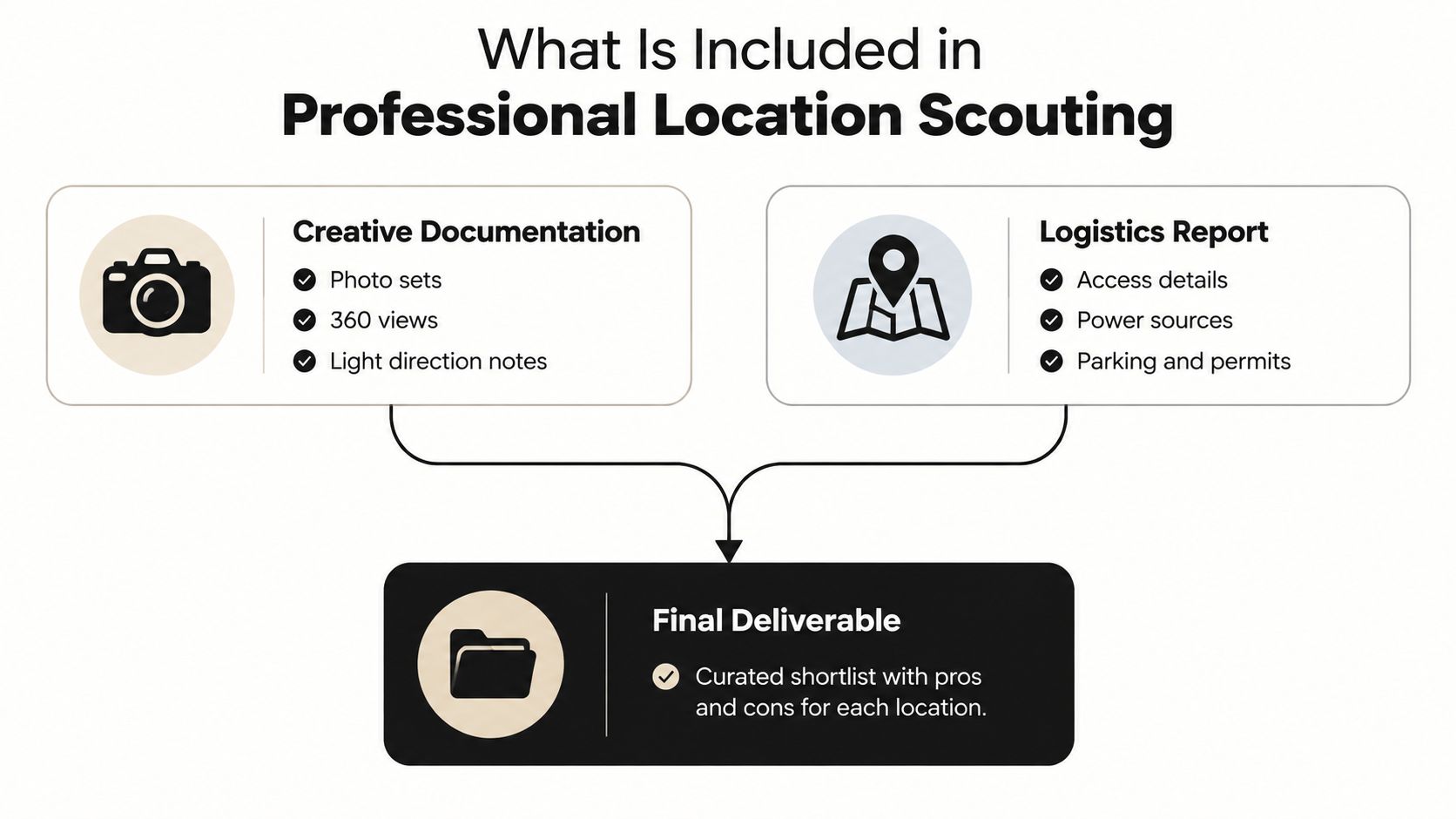
A useful scout report has two parallel tracks. The first records creative evidence, so the client can judge the space. The second records operational evidence, so the production can decide whether the space is usable.
The creative track starts with more than one attractive wide shot. A scout should photograph the room, exterior, circulation paths, important surfaces, sightlines, and details that may become part of the composition. Multiple angles help the photographer understand how the architecture reads from different positions, while time-of-day notes reveal whether a promising facade will be softly lit or overwhelmed by contrast.
Creative documentation
For an architectural or commercial shoot, ask whether the report includes:
- Wide views: Show the overall scale, proportions, circulation, and relationship between major architectural elements.
- Detail views: Record materials, fixtures, textures, furniture, signage, and distracting elements that may matter in a close composition.
- Multiple angles: Reveal which viewpoints support a strong frame and which ones expose clutter, tight corners, or unwanted context.
- Light observations: Note the direction and quality of natural light at relevant times, especially around glass, polished surfaces, and deep interiors.
- Context images: Show neighboring buildings, streets, landscaping, entrances, and background conditions that affect the final visual story.
The commercial shoot location scouting guidance from NYIP emphasizes documenting both aesthetics and feasibility, including wide and detail shots, parking, access, and natural light by time of day. That combination turns photographs into a decision tool.
Operational documentation
The logistics report should answer questions before they become production emergencies:
- Access and load-in: Where can vehicles stop, how far must equipment travel, and are there stairs, elevators, gates, or restricted hours?
- Parking and crew support: Can the team stage cases, wardrobe, holding, restrooms, and meals without disrupting the property?
- Power and rigging: What outlets, rigging points, generator positions, and cable routes are available?
- Noise and connectivity: Are there roads, mechanical systems, businesses, construction activities, or weak internet access that could affect the work?
- Permissions: Who can approve the shoot, what insurance documentation is required, and which permits or neighbor notifications may apply?
A technical scouting checklist from Silverstein Locations highlights power, rigging, load-in routes, noise, climate control, technical vehicles, holding, wardrobe, restrooms, and internet connectivity. These details influence equipment choices and crew efficiency, particularly when a location must support more than a small stills setup.
The final deliverable should curate options rather than bury the client in unfiltered material. Each shortlisted location should include its creative strengths, operational limitations, approval status, and the conditions that would make it work. If the assignment involves property marketing, a separate resource on pricing and ROI of property video can help frame how visual production fits into a broader property-content decision.
For a practical starting point, use this location scouting template for architectural and commercial photography to organize the same categories before a scout visits the site.
How the Location Scouting Process Works Step by Step
A location can look perfect online and still fail on shoot day. The entrance may not fit the equipment case, the quiet office may sit beside active construction, or the attractive facade may leave no workable camera position. Professional scouting follows a sequence because each stage controls a different production risk.
Start with the brief
The first conversation defines the visual goal, property type, intended use, shooting dates, crew needs, access expectations, and site requirements. “Modern and minimal” needs context. The scout must know whether the client wants a quiet editorial interior, a working corporate environment, a dramatic exterior, or a flexible space for several brand setups.
The brief also identifies approval complexity. A privately owned residence, occupied office, public street, and heritage property may each require a different permission process. Those differences affect the schedule before anyone arrives with a camera.
Search remotely, then narrow deliberately
Databases, maps, listing platforms, previous location libraries, virtual walk-throughs, drone material, and satellite views help reduce unnecessary travel. Remote research lets the scout compare architectural character, surrounding context, travel distance, and likely access before selecting sites for physical review.
The result should be a short field list, not a final decision. A listing may conceal construction, furniture changes, neighboring noise, restricted access, or a mismatch between the photographed room and the intended camera position. Online images establish a hypothesis. The site visit tests it.
Visit the site with the shot list in mind
On site, the scout follows the production's planned movements. They walk from vehicle access to the working area, test likely camera positions, inspect ceiling height and outlets, observe reflections, and photograph the space from useful viewpoints. They also identify places for crew support without blocking circulation or entering the frame.
A visual preference becomes a production judgment. A narrow hallway may suit a detail sequence but fail for a larger crew. A dramatic facade may work in soft morning light and become difficult once the sun moves across reflective surfaces. The scout records these conditions so the client can choose with the actual setup in mind.
Build the report and shortlist
The report organizes images and notes for consistent comparison. It should separate verified facts from assumptions, identify unresolved questions, and explain what each option requires.
A client should not have to infer that one property offers simple parking while another needs a remote staging plan. The report turns attractive images into a decision document, showing where a location supports the brief and where it creates exposure to delays, extra handling, or unusable angles.
Secure, confirm, and prepare
After selection, the work continues through owner negotiations, permits, insurance, access windows, technical discussions, and final confirmations. Permit timelines can stretch from roughly two weeks to six weeks in some regions, and heritage approvals can add delay, according to Direct Bookings Italy's regional scouting guide. The exact process varies by market, so the production should confirm timing before fixing the shoot date.
A virtual scene reference can support communication about proposed spaces. Teams organizing locations digitally can consult the VideoTour.ai help adding location for a practical reference.
For architectural assignments where the scout must also support image-making decisions, location scouting photography services connect site review with composition, lighting, and final capture planning.
Why Human Scouting Still Beats Virtual Tools Alone
Virtual tools are valuable. AI can sort location data, virtual walk-throughs can reduce travel, drone flyovers can reveal larger site relationships, and augmented-reality overlays can help teams test a visual idea before visiting. Recent coverage also describes virtual location scouting as a fast-growing market, with a projection from $2.1 billion in 2025 to $7.8 billion by 2034, as reported in TasteRay's overview of movie location services. That points to adoption, not the disappearance of human judgment.
A remote review is strongest when the question is mainly visual and the consequences of being wrong are limited. It can help a team eliminate unsuitable spaces, compare architectural styles, and prepare a focused itinerary. It can't reliably verify every condition that changes once equipment, people, property rules, and time pressure enter the picture.
Use remote tools for these decisions
Remote scouting is often sufficient for early filtering when:
- The visual brief is straightforward: The team needs a general architectural type or atmosphere.
- The production is small: Equipment, crew movement, and support needs are limited.
- The site is familiar: A trusted property partner can verify current conditions.
- The location is flexible: The team has acceptable alternates if a detail changes.
Require physical verification when the risk is material
A person should visit when brand-critical details matter, when a client or property owner must approve the exact plan, or when access and infrastructure could affect the schedule. Hospitality, corporate, and architectural projects often depend on subtle conditions, such as how a lobby reads from the intended height, whether a facade reflects nearby signage, or whether a working building can accommodate a quiet production window.
Human scouting also catches social and approval issues. A manager may be open to photography but restrict certain rooms. A neighboring tenant may control a shared entrance. A heritage property may require a specialist review. Those aren't just visual variables.
For a workflow that combines remote research with structured field verification, this virtual location scouting guide provides a useful reference. The best approach is usually hybrid: let digital tools reduce the search burden, then send a qualified person to verify the locations that carry meaningful creative or operational risk.
How to Choose and Hire the Right Location Scout
A polished portfolio can show taste without showing production discipline. Before hiring a scout, ask to review a real report, not only selected location photographs. Look for how the scout records permissions, verifies conditions on site, distinguishes confirmed facts from open questions, and explains decisions that affect the shoot.
Local knowledge matters because access rules, property relationships, municipal processes, and travel conditions differ by market. Technical awareness matters just as much. A beautiful staircase is of limited use if the building has no practical power, the loading route is blocked, or the crew cannot move equipment through it on schedule.
Read the report before you compare the fee
A useful report should document:
- intended camera positions and alternate angles
- parking, loading, elevators, stairs, and travel distance
- natural light and reflection conditions
- power, rigging, generator, climate-control, and connectivity questions
- noise, neighboring activity, and crew-support areas
- ownership, permit requirements, insurance, and approval status
- strengths, limitations, unresolved items, and recommended next actions
The format should help you make a decision quickly. Clear images, annotated access notes, and a separate list of open items let a producer see what is ready, what needs approval, and what could still disrupt the schedule.
A reliable proposal describes decisions, not just deliverables. It explains what the scout will verify, how the findings will be presented, and what happens if the first shortlist needs revision.
Understand the total landed cost
The scout's fee covers only one part of the location package. Budget for scouting labor, local fixers, permits, location fees, insurance, access support, transport, and revision time. A low day rate may exclude local liaison work, or it may require another visit because the first report did not answer operational questions.
Regional guides illustrate how fixer rates and permit packages vary by market, so build estimates around the complete package. Treat any published example as market-specific rather than a universal rate. The useful comparison is the full cost of making the location ready for the crew, including the work required to confirm access, secure approvals, and resolve remaining questions.
Compare candidates consistently
| Evaluation Criteria | What to Look For | Red Flag |
|---|---|---|
| Creative judgment | Portfolio images that show architecture, context, light, and useful viewpoints | Only polished hero photos with no field documentation |
| Local network | Experience working with owners, managers, municipalities, and fixers | Vague claims with no explanation of the approval path |
| Technical discipline | Notes on power, loading, parking, noise, rigging, and crew support | A report focused entirely on appearance |
| Reporting quality | Clear images, maps or access notes, limitations, and next actions | An address list with little verification |
| Communication | Direct answers, realistic timing, and documented assumptions | Promises that every issue can be solved later |
| Cost structure | Separate line items for labor, permits, fees, travel, and revisions | An unclear package that hides exclusions |
Before signing, send the shot list, dates, crew profile, equipment expectations, insurance requirements, and approval contacts. Ask what the scout needs from you, which assumptions they will test, and what decisions you must make after receiving the report.
The exchange itself is informative. A prepared scout will identify dependencies, document uncertainty, and explain how unresolved issues will be handled. That approach turns attractive references into a location plan the production can use.
Bringing It All Together for a Flawless Shoot
The strongest location is not necessarily the most dramatic one. It's the place that supports the visual story while giving the crew a workable path through access, light, equipment, permissions, and time.
That's why scouting belongs in the creative conversation from the start. A report that identifies glare, weak power, difficult loading, or a restrictive owner doesn't diminish the location. It gives the production a chance to adapt before the crew is standing outside with cases on the sidewalk.
For an Atlanta architecture or commercial assignment, the decision can be straightforward:
- define the visual and operational brief
- use remote tools to narrow the search
- verify meaningful risks in person
- request a report that separates creative fit from production feasibility
- budget the full location package
- secure approvals before the schedule becomes inflexible
Jimmy Clemmons Photographer is an Atlanta-based studio offering architectural imagery, commercial brand content, location scouting, lighting design, on-set direction, and professional editing for local and regional assignments. The same field discipline that protects the schedule also improves the final frame, because the photographer can plan around the building's actual light, circulation, surfaces, and story.
If your next project needs more than attractive location references, visit Jimmy Clemmons Photographer to discuss a scouting and photography plan built around the space, the production logistics, and the images your brand needs. Share the property, intended use, dates, and operational concerns so the first conversation can lead directly to useful decisions.