
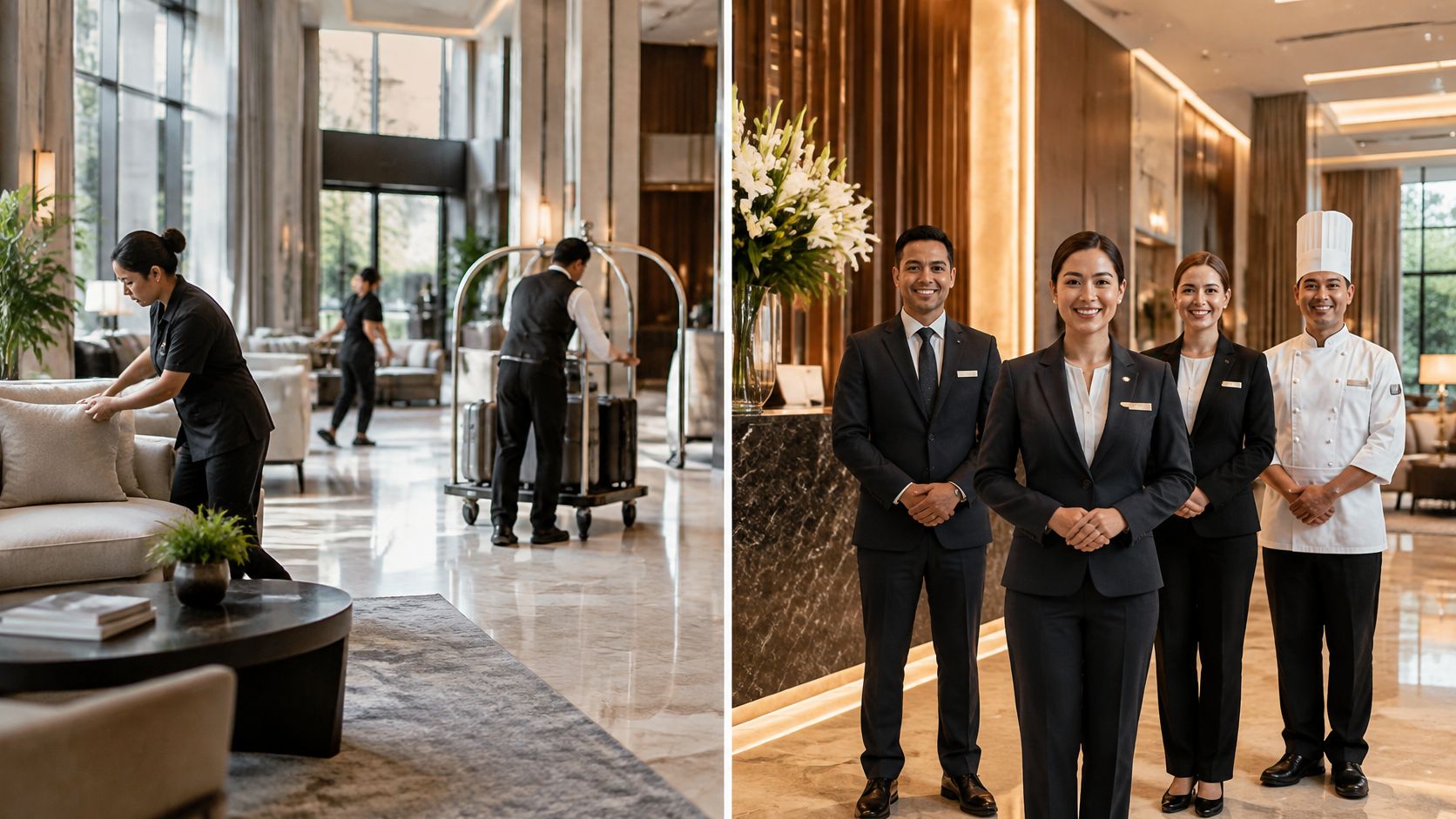
Ask which licence a photograph needs and people often describe how the picture looks. A candid frame of people at work reads as editorial. A styled frame with a lit product reads as commercial. That logic is easy to follow, and it fails often enough that campaigns get pulled, reshot or shelved.
The category isn't set by the frame. It's set by the rollout: where the image will appear, who is recognizable in it, and whether it carries a claim or a call to action. A documentary photograph of a finished lobby is perfectly editorial in a design magazine and unmistakably promotional on the same building's leasing page.
That distinction matters most to the people who commission built-environment work, where one shoot is expected to feed a feature pitch, a website, a brochure, a conference deck and a paid social campaign. What follows works through purpose, control, clearance, workflow and cost in that order, because that's the order in which decisions harden.
Editorial and Commercial Photography Side by Side
One sentence separates the disciplines. Editorial photography documents and informs. Commercial photography promotes a product, service, place or brand. Every production choice, from lighting to crop to retouching depth, follows from which of those jobs the image has to do. Commercial photography covers products, people and spaces for brands, so control sits at the centre of it in a way it never does in reportage.
| Criterion | Editorial photography | Commercial photography |
|---|---|---|
| Main purpose | Inform or document a news or feature subject | Promote a product, service, place or brand |
| Typical subjects | People, events and places in their real context | Products, people and spaces arranged to carry a brand message |
| Who commissions it | Magazines, newspapers and online publications | Brands, agencies, developers and corporate teams |
| Control over the image | Documentary; moments are captured as they happen | Art-directed; lighting, styling and casting are planned in advance |
| Releases usually needed | Often none; editorial files generally lack model and property releases | Model and property releases where relevant |
| Permitted use | Illustrating public-interest matters in editorial contexts | Advertising, packaging, paid media and promotion |
The release difference is the one that catches teams out. Editorial files generally don't include model or property releases, while commercial content must be fully released where relevant, as Getty Images' licensing basics sets out. The usage difference is just as sharp: editorial imagery may appear in newspapers, magazines, editorial broadcasts, non-commercial websites, blogs and social posts illustrating matters of public interest, but not for commercial, promotional, advertorial or endorsement purposes, according to Getty Images' working files guidance.
The table stays abstract until one building goes through both treatments. Say a hospital wing has just been renovated. A magazine feature sends a photographer to follow staff through a working corridor at shift change, waiting for the moment a nurse pauses over a chart, taking the light exactly as the window delivers it. The campaign version of the same building shows staff posed beside the finished lobby, wardrobe checked, exposure balanced to a brand palette, shot at an hour when the space can be cleared. Same camera, same lenses, same sensor.
The difference lies in the image's job, not its equipment.
Quick test: ask what the image is for, who will see it, and whether it helps sell something. If the honest answer to the third question is yes, plan for commercial clearance even when the frame looks like reportage.
How Creative Control Shapes the Image
Control is where the two disciplines diverge most visibly on set, and it's usually the first thing a client notices when the frames land.
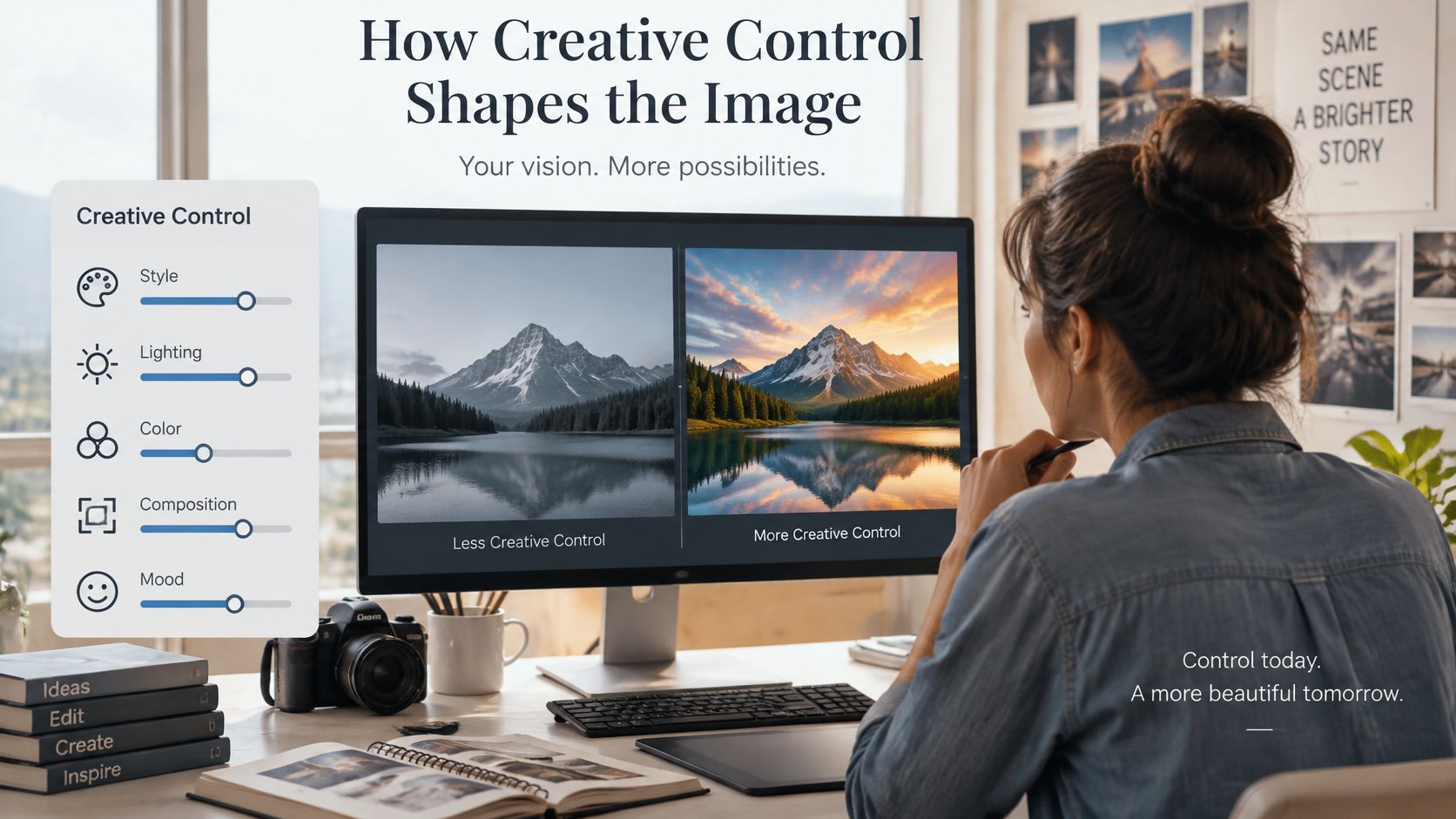
Editorial work runs on access and timing. The photographer negotiates entry, follows the subject, and shoots in whatever light the place provides at the hour the story happens. Nobody moves a chair to balance a composition, and if the light on the faces is uneven at four in the afternoon, that unevenness is part of the record.
Commercial work runs on a brief that has already answered the hard questions: hero frames, detail frames, people-in-space variants, a lighting plan, casting, wardrobe, styling and a retouching level agreed in writing before anyone travels. The photographer isn't waiting for a moment. The photographer is executing a decision made two weeks earlier in a pre-production call.
An editorial frame records what happened. A commercial frame records what was decided.
Put one building through both plans and the difference stays visible. An editorial team photographs a 12-storey office block while tenants use it, accepting mixed daylight and a lobby full of coats because that's the building as it lives. A commercial brief for the same address asks for a dusk exterior with the interior lights at a set level, a symmetrical reception frame shot at an agreed hour with the desk cleared, and a close-up of one material, probably brushed brass or precast concrete, lit to read as texture rather than surface. The camera and lens choice could serve either job. The plan is what separates them.
Where Commercial Work Borrows From Editorial
The strongest brand work steals editorial habits rather than editorial licensing. Location research that turns up the loading bay nobody photographs, observed interaction between staff, images that show how a space is used instead of how a brochure says it should be. Those habits make campaign imagery credible without giving up the controls the campaign needs.
Our own view is that great photography is crafted rather than caught, which is why even documentary frames need a decision about where to stand and when to press. In the film era, one job could demand fashion, portraits, still life, food and architecture in a single day, across multiple film formats and more than 30 rolls of film. A day like that is a planning problem before it's a shooting problem.
The discussion below covers how direction and pre-visualisation change the frames a production delivers.
Set the level of control by what the job needs, not by a taste for either style. A client who wants reportage credibility and a client who wants a campaign-ready hero frame are asking for different production plans, and both are legitimate.
Licensing and When an Image Turns Commercial
Clearance decides the category, not the camera. Adobe's guidance on stock usage and licensing frames the primary technical distinction between editorial and commercial photography as rights clearance rather than camera or lighting specification, noting that editorial images are generally intended to inform or document newsworthy subjects and may lack model or property releases, while commercial images used to promote a product, service, organization or brand require licensing that explicitly permits promotional use.
That overturns the shortcut most briefs still lean on, where editorial means magazine and commercial means advertisement. Stills' explanation of commercial versus editorial licensing puts the practical issue on the image's function: if it helps promote a company, property, service or organization, it is generally commercial, even when it appears on a website, blog, social channel or press page. Visual style does not determine legal usage.
Three rollouts that change an image's category
- The principal's portrait. A documentary frame of an architect reviewing drawings at a site table is editorial in a trade feature about the practice. Move the same frame onto the services page under a "book a consultation" button and it becomes commercial, because the image now carries a call to action.
- The hotel lobby. Guests crossing a lobby at dusk illustrate a travel piece under an editorial licence, no releases needed. The same frame above a check-availability button in a booking campaign is promotional, and every recognizable guest in it needs a signed release.
- The leadership group shot. A team portrait in an annual report serves investor communication. The moment it runs in paid media or a recruitment advertisement, the releases and the licence have to match the new use, not the original one.
None of those three changed how the photograph looked. What changed was the job it was doing.
The release matrix
Treat this as a lookup rather than a philosophy. It answers the question a producer asks in the planning meeting: for this placement, what has to be signed?
| Intended use | Editorial licence works? | Model release needed? | Property release needed? |
|---|---|---|---|
| Newspaper or magazine article | Yes | Usually not | Usually not |
| Non-commercial blog post on a public-interest topic | Yes | Usually not | Usually not |
| Company website or brand blog | No, treated as commercial | Yes, for recognizable people | Yes, for identifiable private property |
| Paid social media advertising | No | Yes | Yes |
| Advertorial or sponsored content | No | Yes | Yes |
| Product packaging or merchandise | No | Yes | Yes |
An editorial-use licence should never be treated as a fallback commercial licence. Editorial assets commonly can't be used in advertisements, advertorials, promotions or merchandise, and may be restricted to minor technical corrections and cropping so the documentary meaning survives.
What a commercial licence has to define
Choosing the word commercial doesn't end the negotiation. Six terms settle the rest: the medium (web, print, broadcast, packaging), the term (one campaign flight or perpetual), the territory, exclusivity and whether a competitor can license a similar look, permitted adaptations such as cropping and compositing, and whether the photographer retains copyright.
For an architecture, interiors or corporate-brand assignment, that also means confirming property permissions from the owner or manager, employee releases where the client requires them, and a written answer on whether the images may appear in paid advertising, on the website, in social media, in an annual report or in third-party publications. Clients consistently underestimate the last one. A contractor handing a finished frame to a trade publication has created a placement nobody licensed.
Fair use isn't a clearance shortcut
There's a persistent belief that a small enough crop or a short enough run falls under fair use. The U.S. Copyright Office's fair use FAQ states there is no rule allowing a specific number of words, musical notes or percentage of a work, and that a photograph's fair-use status depends on the statutory factors and may ultimately be settled only by a federal court. Labelling a use editorial doesn't grant permission on its own.
Clearance rule: map every image to its rollout before production starts, clear each recognizable person and each piece of identifiable private property before the shoot, and separate the selections deliberately when one shoot has to serve both goals.
Much of our work sits in architectural photography and corporate brand content, and the frames clients most want to redeploy are the sweeping exteriors and refined interiors that highlight form, light and detail. Those are also the frames most likely to travel from a feature into a brochure without anyone rechecking a licence, which is why the rollout map belongs in the estimate rather than in a follow-up email. If a feature frame is heading for a campaign, licensing a photo for commercial use sets out the terms to renegotiate before publication, not after.
How the Workflow Differs From Brief to Delivery
Commercial production is a repeatable process. Editorial production is a responsive one. Here is the commercial path, with the failure mode that shows up at each stage.
- Map the rollout first. Every image gets a destination list: feature pitch, owned site, paid social, print brochure, investor deck, awards entry. The destination sets the licence, and the licence sets the releases you need on the day.
- Write the shot list against that map. Hero exterior and interior frames, detail images, vertical and horizontal crops, people-in-space variants. One beautiful frame that only exists as a horizontal can't fill a hero banner or a square social post, and discovering that in the edit is expensive.
- Scout and clear. Locations get scouted for light direction, access windows and sightlines. Releases get signed before the shoot: property permissions from owners or managers, model releases from every recognizable person, employee releases where the client requires them.
- Fix the look in advance. Lighting design, styling, casting and colour-management requirements are agreed before the crew arrives, so nobody is improvising with a client watching.
- Shoot to the list and check frames against it. The list is a checklist, not a suggestion. If a variant is missing, shoot it on the day rather than hoping it can be cropped later.
- Edit to the agreed limit and package the delivery. Retouching depth is set in writing, and the set ships as web, print, social and presentation versions with usage documentation attached.
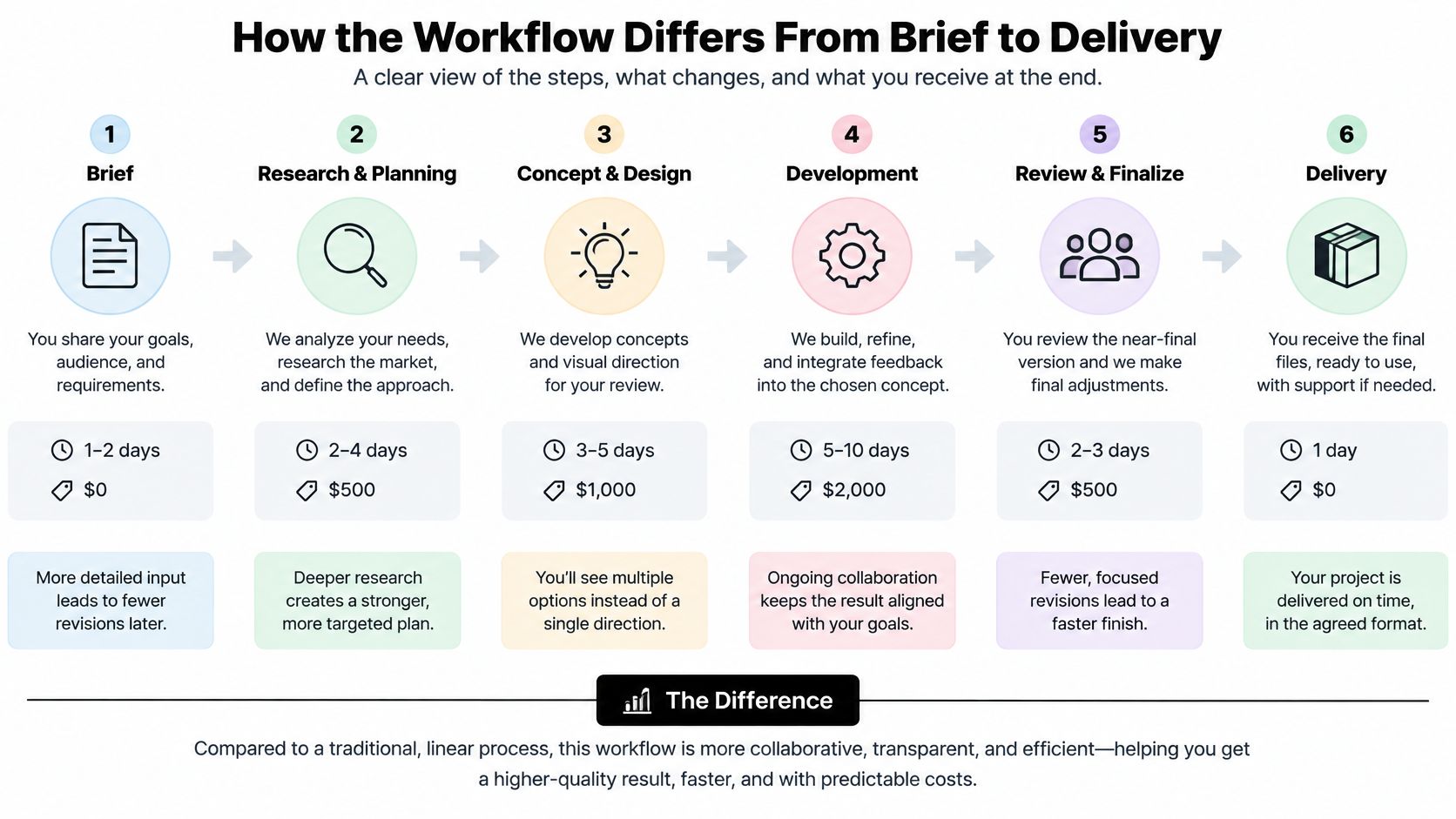
The editorial path is shorter and less controllable. Pitch the story, research the subject and the setting, shoot the moments that carry the narrative, keep the sequence that preserves context, apply light edits, caption with credit. Nobody hands you a shot list, and the frame that runs is usually not the one you planned. Editorial images may require visible attribution and should retain their informational meaning, while commercial deliverables need documented usage scope and releases aligned with the campaign, as the FTC's native advertising guidance implies in its rules on promotional content that borrows an editorial format, where disclosures must be clear, prominent and placed close to the associated promotional content.
Two slips cost the most. Releases gathered after the shoot, when the campaign date is already set, turn a finished image into a reshoot. A single crop that can't serve both a banner and a square post sends everyone back to the location for a second day.
Professional editing is one of the specialties we list, largely because a commercial set has to look like it came from one camera on one afternoon. Managing client visual expectations is the conversation to have before the pre-production call, not after the first proofs. Separating feature documentation from brand promotion at commissioning decides the brief, the release package, the edit policy and the rights in a single decision.
What Each Approach Costs to Commission
Reported 2026 freelance day rates in major markets run $300 to $800 for editorial photography and $1,500 to $5,000 for commercial and brand photography, according to Mediabistro's photojournalist rate data.
| Assignment type | Typical day rate (2026) | What the fee covers |
|---|---|---|
| Freelance editorial | $300 to $800 | Shooting time, basic editing and a single-use editorial licence |
| Commercial and brand | $1,500 to $5,000 | Planning, crew, styling and multi-channel usage rights with releases |
| Architectural or licensing add-ons | Priced per project | Quoted once usage term, territory and exclusivity are known |
The gap isn't a markup on skill. It pays for rights and stakes. A commercial fee covers pre-production planning, a larger crew, styling and casting, release management, and usage rights across several channels for a defined term. An editorial fee covers shooting time, basic editing and a licence for a single editorial use. Commercial photography is also a large, crowded market, with an estimated $9.1 billion in global revenue across 12,994 companies in 2025, per Kentley Insights' commercial photography industry report, which is part of why commercial day rates span such a wide band.
Take a hypothetical pair of budgets. An editorial feature: one day on location, a reporter and a writer, a licence for a single print edition. A brand campaign for the same building: a two-day shoot, releases for staff and property, styling, and paid social use for a year. The campaign comes in at several times the feature day, and most of that difference sits in rights and planning rather than hours.
Reusing editorial images for promotion isn't the cheaper route. A licence that doesn't permit advertising forces a new commission, a new clearance round and a new fee, which is why the rollout map from the start of the project is the cheapest document in the file. Before a campaign day, teams sometimes test styling and lighting directions with AI-generated fashion campaign visuals rather than discovering the look on the day with a full crew standing by.
Price the usage first, then the day.
That order also makes the estimate legible to a finance team. Start from the published price list for shoot time, then add the licence line separately so the client can see what a broader term or an extra channel costs.
Choose the Right Approach for Your Next Project
Work through the questions in this order, because each one constrains the next.
- Where will the images appear? List every channel, including the ones nobody has asked about yet, such as a recruitment page or a partner's brochure.
- Who is recognizable in them? Count faces and identifiable private property. That count sets the release budget.
- Does any image carry a claim or a call to action? A button, a claim about service quality or a brand line makes the image promotional regardless of how it looks.
- Which channels need paid rights? Paid social, display and print advertising need a licence that explicitly permits promotion.
- Does the project need documentation or persuasion? Answer directly and the discipline usually picks itself.
A purely reported or public-interest project suits editorial work. A project with paid placement, owned marketing or a brand message needs commercial work with releases. A project that has to do both should commission two sets of frames separated by rollout, rather than stretching one licence across both jobs.
Accessibility belongs in the same conversation, because an image nobody can read isn't finished. A 2025 review cited WebAIM data showing 18.5% of home-page images lacked alt text, while a broader scan reported 60% of images without it, according to this Scholarly Kitchen review of image accessibility. A commercial image's value therefore depends partly on whether its description states subject and purpose for people using assistive technology.
Define deliverables beyond JPEGs: an image narrative, crop and orientation variants, release and usage documentation, descriptive alt text, and metadata that matches the client's website and campaign systems. That package is what makes a shoot reusable two years later.
Working across disciplines is normal rather than unusual. Around 10% of photographers worked across more than one specialization in 2024, including client-based, event-based, art-production, commercial, photojournalism and editorial photography, per the 2025 State of the Photography Industry survey. Jimmy Clemmons Photographer came to this from magazine editorial and from professional labs and advertising agencies, which is a useful combination on a project that needs both a credible story and conversion-ready imagery. The frames can feel observational and still be planned for reuse, accessibility and search.
The verdicts are simple. Choose commercial for any image that sells. Choose editorial for any image that informs. When one project has to do both, plan two sets of frames and two clearance paths from the start, and the shoot will hold up wherever the images end up.
Jimmy Clemmons Photographer builds architectural and corporate brand imagery for clients who need the story and the licence to line up: sweeping exteriors, refined interiors, and team portraits that hold up in a feature or a campaign. If you're planning a project that starts as documentation and ends in promotion, we'll map the rollout, the releases and the deliverables before the first frame. Visit Jimmy Clemmons Photographer to talk through your next shoot.