
You're standing in a finished lobby or a nearly complete tenant suite, the client is nodding at the details, and someone on the team says, “We should get a testimonial from them.” That moment is easy to feel and hard to turn into something useful. If you just point a camera at the happiest person in the room and ask them to improvise, you usually get a polite compliment, a few vague lines, and footage that never gets reused.
A strong client testimonial video does something more valuable. It captures the client's credibility, the space's proof, and the reason a future buyer, tenant, board member, or marketing lead should care, all in one asset. For architecture and commercial work, that matters because the product isn't a gadget you can hold up to the camera, it's a built environment that has to be experienced through imagery, language, and trust.
Why Architecture and Commercial Brands Need Testimonial Video Now
A finished project can still leave a decision-maker unconvinced. I've watched principals and developers do the hard part well, careful design, clean execution, thoughtful materials, only to realize the missing piece is someone else explaining why the work mattered. A satisfied client on camera turns design intent into business proof, which is what the next buyer, tenant, or stakeholder needs.
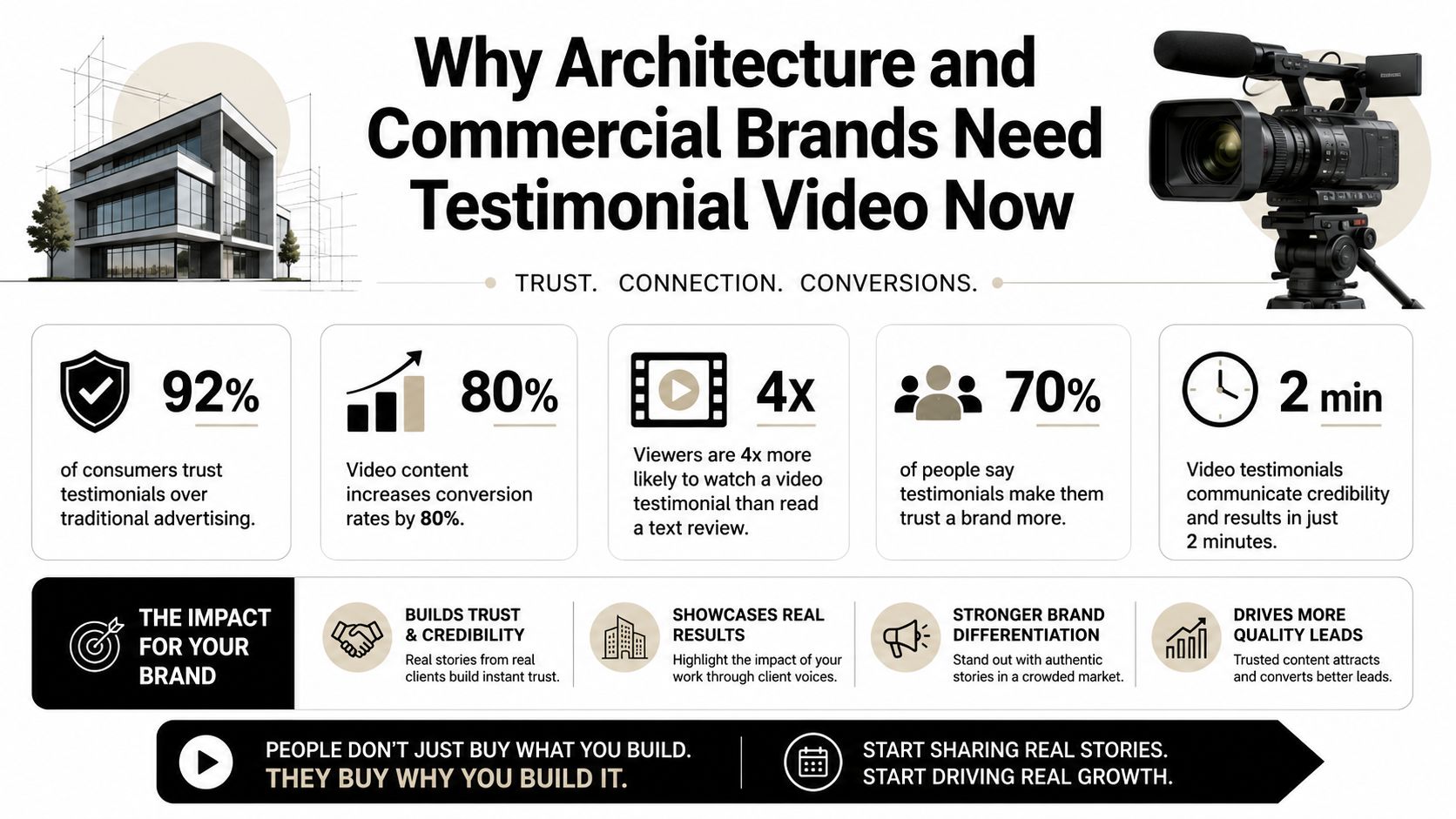
The credibility gap is real. 72% of customers trust a brand more when it uses positive video testimonials, 79% say they've watched a video testimonial to learn more about a product, service, or company, and in B2B, 92.4% of buyers consult reviews and testimonials before making a purchase decision, according to the compiled benchmark data in the source set (Famewall's video testimonial statistics). For architecture firms, developers, and commercial brands, that matters because the work often has to prove itself through imagery, language, and trust before anyone can touch the space.
Why the format works better for built environments
Built-environment work gives video an advantage that product brands do not always have. The space itself is the evidence, and the client's voice gives that evidence a human frame. A testimonial filmed in a completed office, lobby, campus, or retail interior feels more believable than a stock-style talking head because the camera can show the outcome while the client explains the decision.
Practical rule: let the space do part of the selling. If the viewer can see the materials, daylight, circulation, and usage in the same frame where the client is talking, the testimonial carries more weight.
That matters even more on active sites and in finished spaces that never sit still for long. A shot list keeps the crew focused on the angles, reactions, and cutaways that support the story, which is why I always build one before I arrive on site. A clear plan also helps the interview stay grounded in what the viewer needs to know, rather than drifting into a generic praise reel. For a practical breakdown of that process, see this shot list photography guide.
The format also travels farther. Benchmark data notes that video testimonials get shared more often than text testimonials and images combined, which explains why a good interview can spread credibility across marketing channels faster than static proof points. The same research set also reports that landing-page video testimonials can produce meaningful conversion lifts, with some implementations reaching much higher results. Those are not guarantees for every project, but they make the trade-off clear. A testimonial video is not decoration, it is part of the decision path.
The strongest use case is simple. If the space is the product, the testimonial becomes the narrator that tells the buyer why the space solved a problem.
Planning the Interview and Shot List Before the Crew Arrives
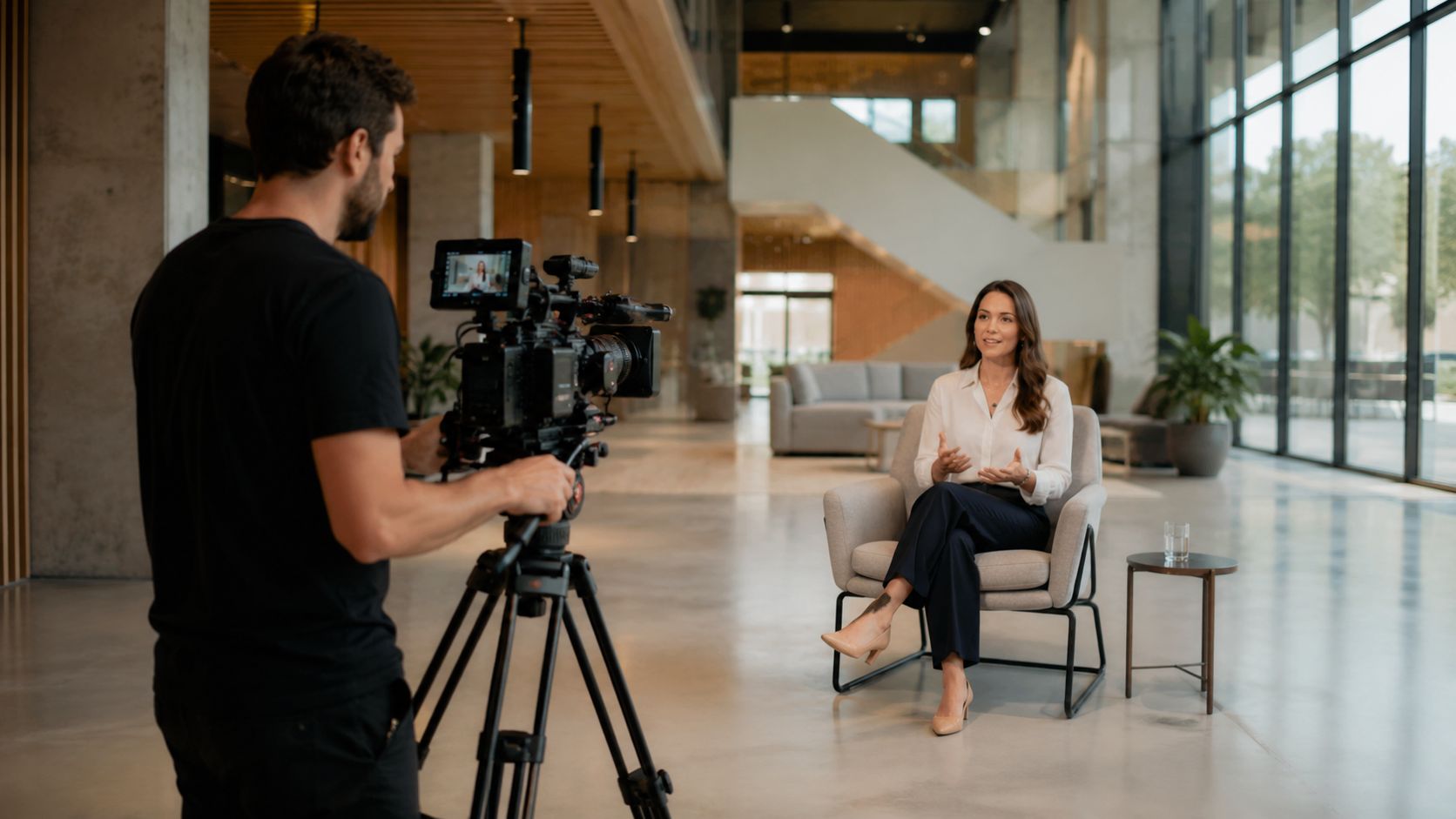
The best testimonial shoots are won before anyone touches a tripod. The wrong client, the wrong room, or the wrong question flow can make even a well-funded production feel generic. I'd rather work with a thoughtful, slightly reserved client whose story maps cleanly to a buyer objection than with the loudest advocate in the room.
Choose the story, not just the personality
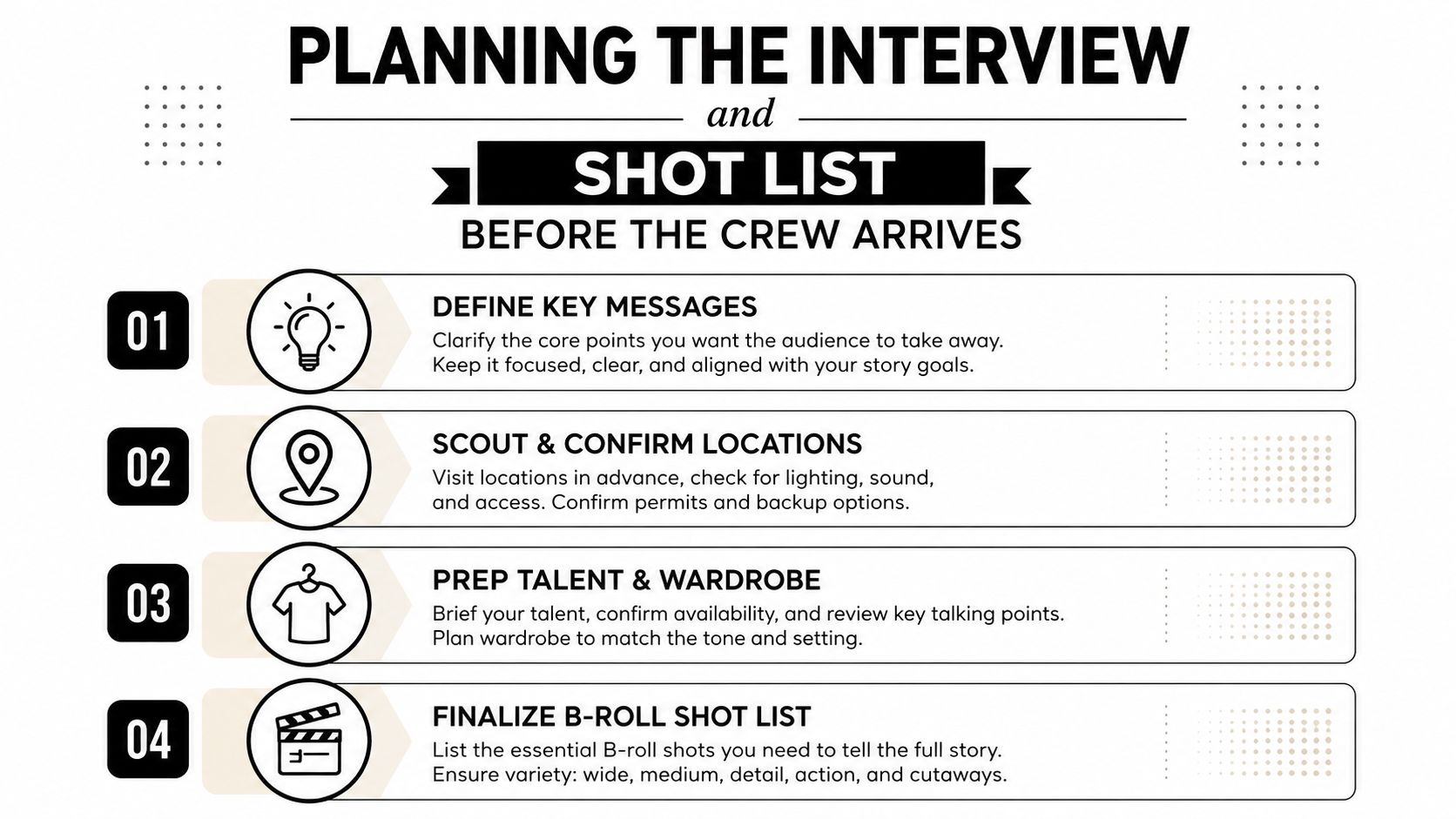
Start by selecting a client whose experience matches the next prospect's concern. For an architecture or commercial project, that might be a principal talking about schedule coordination, a facilities leader describing post-occupancy usability, or a developer explaining how the finished space supports leasing, brand, or operations. Enthusiasm helps, but clarity sells.
Send questions in advance, but don't hand over a script. Structure the questions around problem, solution, and outcome so the client speaks conversationally rather than memorized. A strong client testimonial video needs that shape because it keeps the answer grounded in real experience instead of polished marketing language.
A simple question flow works better than a polished monologue:
- Problem: What was happening before the project started, and why did it matter?
- Solution: What did the team do differently, and what made the process work?
- Outcome: What changed in the space, in the organization, or in the client's confidence?
Scout with video in mind
Location scouting should happen at the time of day you plan to shoot. Daylight shifts, HVAC noise changes, and reflective finishes behave differently depending on the hour. In a built environment, the best testimonial location is the one that carries the story while staying quiet enough for clean dialogue, and it may be a lobby, conference room, or finished exterior rather than the most polished corner of the project.
Pay attention to what the background gives you. A lobby with strong lines, a conference room with glass, or a finished exterior with depth can reinforce the message. Just make sure the client isn't competing with a logo wall, a chaotic job-site notice board, or a window that blows out the exposure.
Before the crew arrives, build a shot list that covers interview framing and supporting visuals. The supporting material should show materials, hands at work, circulation, equipment, occupancy, and detail. If you need a refresher on how to organize coverage cleanly, this shot-list planning approach is the kind of framework that keeps a production from drifting.
Keep the interview simple enough to trust and the B-roll specific enough to prove the story.
A built-environment testimonial also benefits from a practical backup plan. Active sites change fast, and a room that looked clean in the scout can pick up crew traffic, deliveries, or loud work by the time talent arrives. I usually identify one primary interview spot and one fallback that still supports the story if the first choice gets compromised. That small bit of redundancy saves time, protects the interview tone, and keeps the schedule from unraveling when the site shifts under you.
Shooting Interiors and Exteriors That Make the Words Land
On set, architecture instincts help, but they can also get in the way if you treat the interview like a still image. A perfect frame is useless if the client feels stiff or the audio picks up every footstep in the corridor. I've had the best results by thinking like a photographer for composition and like a documentary shooter for behavior.
Place the camera so the space stays present
Inside a finished interior, don't bury the client against a wall just because it's easy. Let the camera see enough of the room to make the location feel intentional, but keep the speaker dominant in the frame. If the windows are beautiful and the exterior matters to the story, use them as part of the composition, then manage them with flags or exposure control so the background doesn't overpower the face.
Mixed light is where a lot of architectural shoots get messy. Warm interior practicals, daylight from glazing, and reflective surfaces can make skin tones drift if nobody watches the balance. The fix is not to flatten the room until it looks sterile, it's to shape the light enough that the client looks natural while the architecture still feels like itself.
Direct non-actors so the room feels lived in
The client doesn't need to perform. They need to answer in plain language, look at the interviewer, and settle into a pace that sounds like a real conversation. I'll usually ask for one or two clean takes of a key answer, then let the client repeat it more naturally on the second pass once the nerves drop.
A few production moves make the footage easier to edit:
- Use a small number of strong angles. One clean interview angle and one slight variation usually give the editor enough room.
- Capture B-roll with motion, not just prettiness. A slow push through a doorway, a hand on a railing, or a corridor reveal gives the cut energy.
- Show use, not only finish. Occupied desks, people moving through the space, and a client touching materials make the project feel real.
For exteriors, wait for the light that fits the architecture. A facade testimonial can feel powerful when the building is readable and the speaker is framed against context, not against clutter. Just don't shoot B-roll that's so decorative it stops supporting the interview. If the camera move doesn't add meaning, it's just padding.
Editing for Pacing, Length, and a Hook That Earns the Click
Editing is where a decent testimonial becomes believable, or overly slick. On architecture and commercial jobs, that line matters more than people think. A polished cut can help a firm look disciplined, but if every answer is trimmed into perfection, the client starts sounding manufactured. The best version keeps a little human texture in place, because the audience is usually deciding whether this project and this team feel credible.
The edit also has to respect how these videos are used. Practical guidance on testimonial structure still points to a short opening hook and a focused runtime for B2B use, because a testimonial that drifts too long loses the point before the viewer gets to the proof (VEED). That target is useful because it forces a hard question, what is the single idea this client can prove on camera. If the answer takes too long to tell, the story is trying to do too much.
Cut for meaning, not for completeness
Use the interview as raw material, not as a transcript to preserve line by line. A viewer does not need every sentence the client said. They need the clearest line that states the problem, the solution, and the result in plain language. In architectural and commercial work, that usually means cutting toward the moment where the client explains why the space, the process, or the delivery mattered in practice.
The strongest hook usually comes from the most specific answer in the interview. If the opening states exactly why the project mattered, people keep watching because they understand the stakes. If it starts with broad praise, the piece blends into every other brand video in the feed. On built-environment work, specificity beats polish because the audience can tell when someone is describing a real project instead of repeating marketing language.
You also want the question structure to do more work before the edit even starts. Build the interview around problem, solution, and outcome, so the editor has a clean path to follow. That keeps the final cut grounded in how the project was experienced, instead of forcing the post team to rescue a wandering conversation.
Let the audio sound like a real place
Ambient sound matters in architecture and commercial work. A low room tone, a door closing in the distance, or the soft hum of a finished space can make the interview feel rooted in the site. Music should support that feeling, not cover it with a generic corporate sheen. If the project took place in a lobby, a corridor, or a completed tenant space, the sound should remind the viewer that the work happened there, not in a neutral studio.
Practical rule: if the music sounds more confident than the client, it is too loud or too polished.
The point from the testimonial example reviews still holds. Strong edits rely on concise sound bites, natural delivery, and selective trimming rather than over-scripted claims, and shorter versions often need to work on social as well as on a project page. That means the core interview has to stay honest even when it is cut into smaller pieces for different placements (TeraLeap). The edit should still feel like a real person speaking from actual experience, which matters even more when the subject is a building, a site, or a service that cannot be brought into a studio.
If you're sorting out image and footage rights for architectural work, a close look at architectural image rights and licensing helps clarify what the edit can reuse and what needs separate permission. That matters once the same testimonial is expected to live in more than one place.
Releases, Rights, and the Legal Work Most Teams Skip
Testimonial footage for architecture and commercial brands gets reused more often than people expect. It can live on a project page, in a pitch deck, on LinkedIn, in an award entry, or inside a sales presentation months later. That reuse makes the legal side more important than it looks on shoot day.
You need clear paperwork for the person speaking, for the property where the footage was captured, and for whatever the final usage will be. If the site is leased, privately managed, or still under construction, get the property permission sorted before anyone brings in lights. If the testimonial is meant to support multiple campaigns or placements, don't assume a general interview release covers every future use case.
Music also deserves real attention. A track that works for one campaign can become a problem if the video needs to live for years or be cut into multiple versions. Custom music can make sense when the testimonial is a core brand asset, because it avoids the mismatched feel that stock music often brings when a space is serious and the subject matter is technical.
If you're sorting out image and footage rights for architectural work, the licensing considerations around built environments are worth reviewing in more detail at this architectural rights and licensing guide. The key is to know which permissions are tied to a single use, which are campaign-specific, and which allow broader repurposing.
A simple release checklist keeps headaches down:
- Talent release: signed by the person on camera.
- Property permission: documented for the location and any restricted areas.
- Usage scope: clear on where the testimonial can appear.
- Music rights: licensed for the intended lifespan and channels.
- Archive copies: stored so the team can prove what was approved later.
If counsel needs to review anything, route it before the edit is locked. That's cheaper than re-cutting a finished piece because one clause blocks the next campaign.
Distributing Across Web, Social, and Sales Without Losing Trust
A testimonial that only sits on a landing page is leaving value on the table. In architecture and commercial work, the interview usually has more range than that, because the buyer may first see it on a project page, then hear it again in a proposal, then revisit it in a sales conversation. The job is to keep the story recognizable as it moves, not to break it into scraps that feel pasted together.
The most practical placements are usually the ones closest to the buyer's decision. Project pages, a homepage hero, an About page, and a team or culture page can all work when the client is speaking in plain language about the finished space and the process behind it. Sales teams can also use the same footage in a deck, a one-sheet, or a project submission when the audience needs more than a still image and a caption.
Repurpose the interview, don't dilute it
Short edits can work for LinkedIn, Instagram, and email, but they need to stay tied to the full interview. Start with the strongest line, keep the surrounding copy honest, and choose visuals from the same job so the cut still feels like evidence, not decoration. If the social version loses the context that made the original interview believable, it starts to look like a generic ad.
The shareability advantage is still there. Video testimonials generate 12x more shares than text testimonials and images combined, as noted in the benchmark data above. That matters for architecture and commercial brands because the same piece can support trust on the website and travel farther through social and sales channels without changing its core message.
A few placements work especially well for built-environment projects:
- LinkedIn cutdowns for principals who want to speak directly to peers or prospects.
- Vertical edits for Instagram when the visual detail of the project matters.
- Embedded loops in pitch decks for developers, tenant reps, or corporate marketers.
- Project submission clips where awards, publications, or partner organizations need proof beyond stills.
For teams adapting footage into technical presentations, this video walkthrough framing for engineering proposals is a useful reference for keeping the message clear across formats.
Consistency is the part that protects trust. One story, many placements, no identity drift.
Measuring Impact and Common Mistakes Worth Avoiding
The cleanest way to judge a testimonial video is to connect it back to business behavior, not applause. If the video gets comments but doesn't support pipeline, it may be entertaining without being useful. The metrics that matter are the ones that show whether the asset helped a real buyer move forward.
For web placements, look at view-to-completion behavior on the page version and how it relates to the surrounding call to action. In the CRM, check whether leads touched the testimonial before they converted. For sales use, ask the team whether the clip helped open a conversation, reduce objections, or support a proposal. Those are slower signals than likes, but they're tied to revenue work.
Common failure modes
The most frequent mistake is sameness. If the testimonial sounds like every other branded interview, with broad praise and no project-specific detail, the buyer won't remember it. Another common issue is over-editing the speaker until the voice sounds too neat, which can erase the very authenticity that made the interview valuable.
B-roll can fail in the opposite direction. If the visuals look beautiful but don't support the spoken point, the edit becomes decorative instead of persuasive. The space should reinforce the story, not compete with it.
A short production checklist keeps the next shoot focused:
- One buyer objection to solve.
- One client who can speak credibly to that issue.
- One location that visually proves the outcome.
- One interview arc built on problem, solution, outcome.
- One edit strategy that preserves natural delivery.
That checklist works whether the team is in-house, hiring a videographer, or pairing video with architectural stills. It also keeps the production from drifting into vague brand content that looks polished but doesn't carry a decision.
If you need the same kind of disciplined, location-first approach for a testimonial interview, Jimmy Clemmons Photographer brings architectural precision and on-set judgment to projects where the space has to do real marketing work. Visit Jimmy Clemmons Photographer to talk through a testimonial shoot that shows the building, the client, and the business value without losing authenticity.