
You're probably looking at a website, brochure, or social feed that feels uneven. One photo looks polished, another feels like a quick phone shot, and the team page doesn't match the product images or the office photos. That disconnect is usually where people start searching for brand photography examples. They don't just want inspiration. They want to see what “good” looks like in practice.
Brand photography works best when it shows a business the way customers experience it. That might mean architecture that feels editorial instead of clinical, product images that look designed instead of improvised, or portraits that feel like the team rather than stiff headshots. The strongest examples don't rely on one type of image. They combine space, people, product, and mood into a visual system.
The list below moves across different kinds of studios so you can compare styles, strengths, and use cases. Some are best for architecture and corporate environments. Others lean toward retail, luxury, food, or consumer brands. As you read, pay attention to the type of story each studio tells. That's usually the fastest way to tell whether their work fits your brand.
1. Jimmy Clemmons Photographer
A common brand problem looks like this. The office photos feel flat, the leadership portraits feel formal in the wrong way, and the project images look like they came from a different company altogether. Jimmy Clemmons Photographer is a strong example of how to fix that kind of visual mismatch.
The studio is based in Atlanta and works across architecture, commercial brand content, and portraits. What makes the work useful as a reference point is the consistency. The images share the same level of control across spaces, people, and details, which helps a brand feel recognizable from one page to the next.
That consistency comes from an editorial background. In practice, that usually shows up in three places. Composition feels deliberate, lighting describes materials and faces clearly, and the image sequence has pacing instead of randomness. For architects and interior designers, that means a finished space still looks dimensional in a photograph. For corporate teams, it means workplace imagery can show culture without slipping into generic conference-room scenes.
Why this is a useful benchmark
A lot of brand photography examples show one skill well. Some studios are strong with interiors but weaker with people. Others can direct portraits but do not build a full image library that holds together across a website, pitch deck, and campaign. Jimmy Clemmons Photographer is a helpful benchmark because the work covers both sides.
That matters more than it first appears. A brand image library works like a set of instruments in the same key. If the portraits are bright and casual but the architecture is dark and formal, the overall brand starts to feel inconsistent. When the visual approach stays specific across categories, the business looks more established and easier to trust.
You can also see why that matters in the long run when you look at the ROI of professional photography for marketing and brand use. Good images are not only about appearance. They give teams assets they can reuse across sales materials, editorial submissions, recruiting pages, and social content without rebuilding the look every time.
Practical rule: If clients judge your business by taste, precision, or professionalism, your photos need to show those traits before anyone reads a line of copy.
Where it fits best
This studio is a strong fit for architects, developers, hospitality groups, interior designers, commercial real estate teams, and corporate marketers who need refined visuals instead of quick content volume. The style is polished, design-aware, and narrative-driven.
A few practical takeaways:
- Strong choice for design-led brands: If your physical space affects how clients judge quality, this style supports that perception directly.
- Useful for multi-channel asset libraries: Services like location scouting, lighting setup, on-set direction, and editing help create images that can work across websites, presentations, and print materials.
- Helpful for teams that need direction on camera: Executives, staff, and project teams often photograph better when the photographer gives clear guidance during the shoot.
There are tradeoffs. Pricing is not published, so you will need a customized quote. The studio is Atlanta-based and works regionally, so brands outside that area may need to account for travel and scheduling.
2. Swanson Studio
Swanson Studio gives you a different kind of brand photography example. Their work is built around campaign production for performance, apparel, technology, and lifestyle brands. If you've ever looked at a footwear or sport-lifestyle campaign and wondered how brands keep the visual world so cohesive, this is the kind of studio setup behind it.
Their portfolio signals full production capability, not just capture. That matters because many brand shoots fall apart in the transitions between art direction, photography, and post-production. Swanson's work feels designed as a complete system.
What makes the work distinct
This studio is a good benchmark for brands that need a high level of control across studio shoots, location work, and retouching. The images often feel built for campaign rollout, not just single-page use. That's the same reason businesses often ask whether professional photography is worth the spend in the first place, and the answer usually comes back to the long-term value of usable assets, a point discussed in this piece on the ROI of professional photography.
In practical terms, Swanson Studio is a useful example when you need:
- End-to-end execution: Production, capture, and post sit under one roof.
- Complex set work: Studio and on-location visuals can share a consistent art direction.
- Campaign polish: Retouching and finishing feel built into the creative process rather than added later.
A strong brand photo doesn't only look good alone. It also has to belong to the set around it.
The main limitation is fit. Their portfolio leans heavily toward sports, apparel, and consumer-facing campaign aesthetics. If your company needs architecture, executive portraits, or editorial-style environmental storytelling, you may want a studio with a broader corporate or built-environment emphasis.
Still, for product-heavy brands or marketing teams that need a turnkey visual partner, Swanson Studio is a valuable reference point. It shows how brand photography examples can function as a campaign engine, not just a gallery of isolated images.
3. Simon Lewis Studio
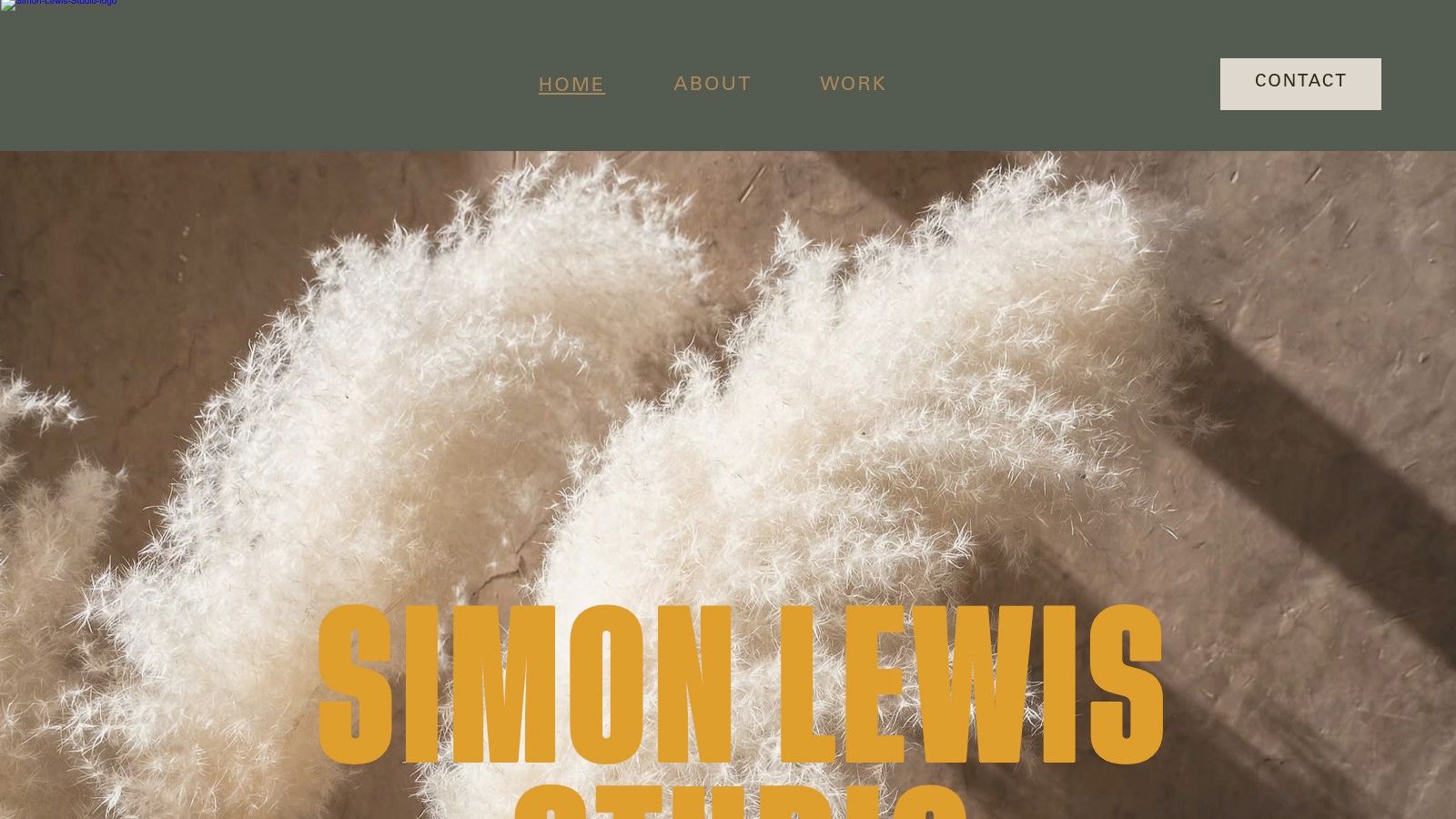
Simon Lewis Studio is especially useful if your brand lives in a physical environment. Luxury retail, hospitality, flagship spaces, and experiential design all depend on imagery that captures more than surfaces. The work needs to communicate atmosphere, flow, and intention.
That's where this studio stands out. The portfolio and case-study style presentation help you see how images support a broader brand story. Instead of treating photography as a final deliverable, the work sits closer to visual strategy.
Why the case-study format matters
Many portfolios show beautiful images without explaining what they're solving. Simon Lewis Studio gives more context around environment-driven brand experiences, which is helpful if you're trying to educate internal stakeholders. A marketing lead, creative director, or retail team can point to examples and say, “This is how photography supports the experience, not just the brochure.”
That's also why this kind of work pairs well with broader marketing asset creation. A single flagship location or branded environment often needs more than hero shots. It needs details, wide views, signage moments, staff interaction, and images that work across launch materials, press outreach, and internal decks.
Best use cases
Simon Lewis Studio is a strong reference if you need photography for:
- Luxury retail environments: The imagery captures the relationship between product, display, and space.
- Hospitality storytelling: Mood, finishes, and guest experience all read clearly.
- Multi-location brand rollouts: Consistency matters when a concept appears across different settings.
The tradeoff is that the luxury focus may be more than some mid-market brands need, both stylistically and operationally. Teams looking for simple brand portraits or straightforward product-on-white photography may find the approach more strategic than necessary.
Still, if you want brand photography examples that show how an environment becomes part of brand identity, this is one of the clearest examples on the list.
4. Salt Paper Studio + Productions
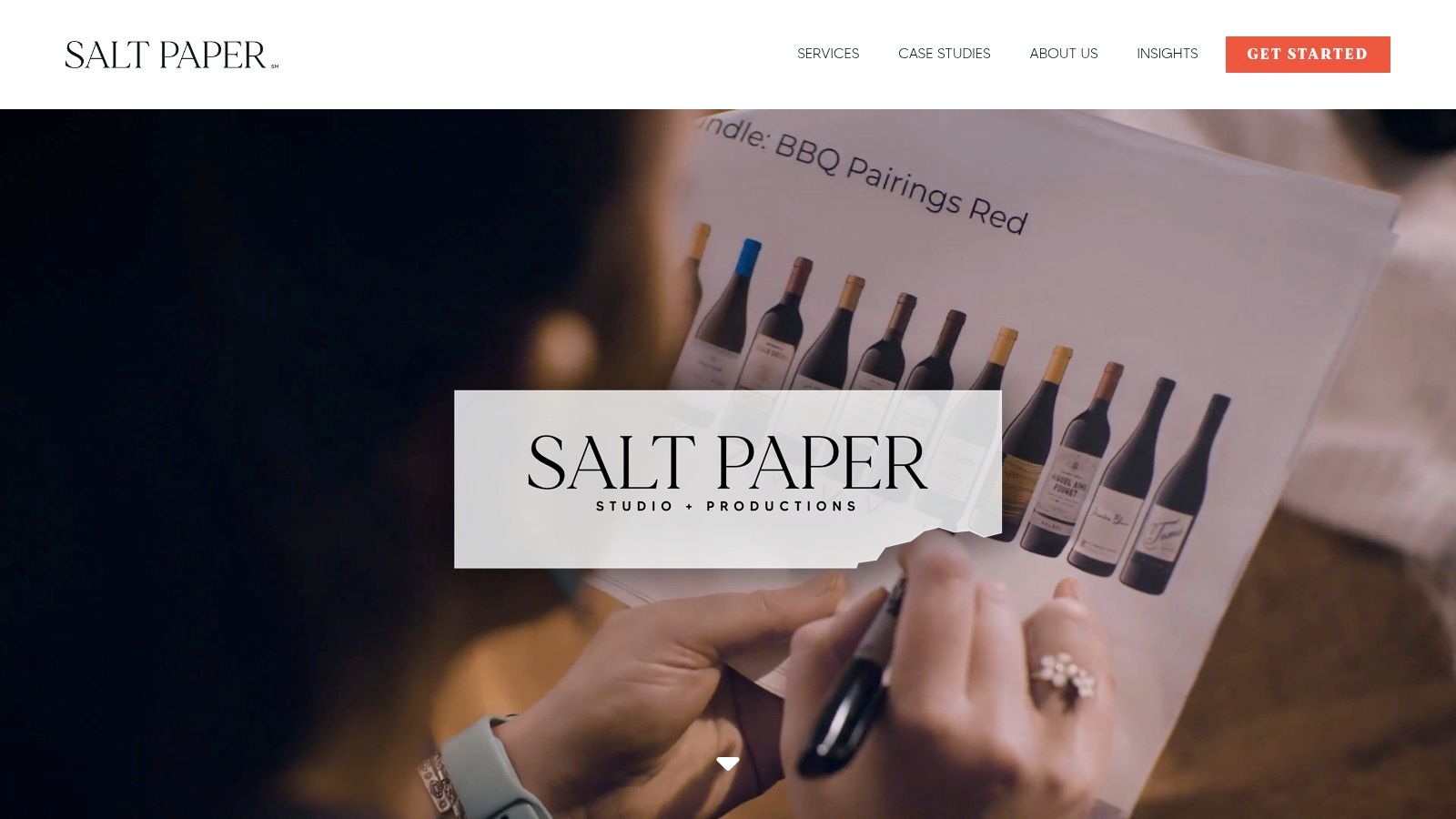
Salt Paper Studio + Productions is the example to study when you need repeatable campaign content at scale. The company operates as a full-service content and production house, with photography, motion, styling, and set design all working together. For retail and CPG teams, that integrated setup can solve a lot of coordination problems before the shoot even starts.
You can see the difference in how the portfolios are organized. Food, lifestyle, product, beauty, and pharmaceutical work are treated like separate production lanes. That tells you the team isn't approaching every assignment with the same visual recipe.
What this teaches about brand systems
One of the practical lessons here is that brand photography examples aren't always about a single hero image. Sometimes the primary challenge is building a content system. A retailer may need packaging shots, lifestyle scenes, ingredient details, seasonal variants, and motion cutdowns that all feel related. A one-stop production environment can make that easier.
This studio is especially helpful to study if your team needs:
- Set design and build: Useful when the visual world has to be controlled rather than found on location.
- Cross-format production: Stills and motion can share one art direction.
- Category-specific expertise: Food styling and beauty lighting require different decisions than hard goods or healthcare content.
On-set lesson: The more versions of an asset you need, the more pre-production matters. Good brand photography often starts with production design, not camera settings.
There are limits. If you need highly technical architectural imagery or restrained editorial portraiture, this isn't the first example I'd point to. The strength here is consumer-facing campaign production, especially where volume and repeatability matter.
For marketing teams managing multiple product lines or frequent campaign refreshes, Salt Paper Studio + Productions shows what an operationally mature brand photography partner looks like.
5. Ford Media Lab
Ford Media Lab sits in an interesting position because the studio presents photography as part of a broader content pipeline. That makes it worth studying if you're less concerned with a one-off photoshoot and more concerned with how assets move into campaign execution.
The portfolio focus leans toward spirits, luxury, and CPG. That usually means a stronger emphasis on packaging, texture, reflective surfaces, launch content, and channel-ready creative. If your product lives on shelves, menus, or social campaigns, those details matter.
Where the approach feels modern
Some studios talk mainly about style. Ford Media Lab talks more about systems, deliverables, and workflow. That's useful for internal marketing teams because it matches how content gets used after production. Images don't stop at approval. They move into ads, social posts, product pages, and broader campaign libraries.
A few strengths stand out:
- Channel-aware production: The work appears built with downstream use in mind.
- Luxury and beverage fluency: The studio language and portfolio suggest comfort with premium packaging and polished product presentation.
- Process clarity: For teams that need operational confidence, a clear production framework helps.
This can also be a mismatch for some brands. Companies that want an entirely in-camera, documentary, or editorial feel may not connect with a workflow that strongly emphasizes expanded asset systems and performance-led content thinking.
Still, Ford Media Lab is a strong example of where brand photography is heading in many consumer sectors. The camera is still central, but the primary deliverable is a flexible content library that can keep working after the shoot ends.
6. Andrew Kung Photography / Andrew Kung Group
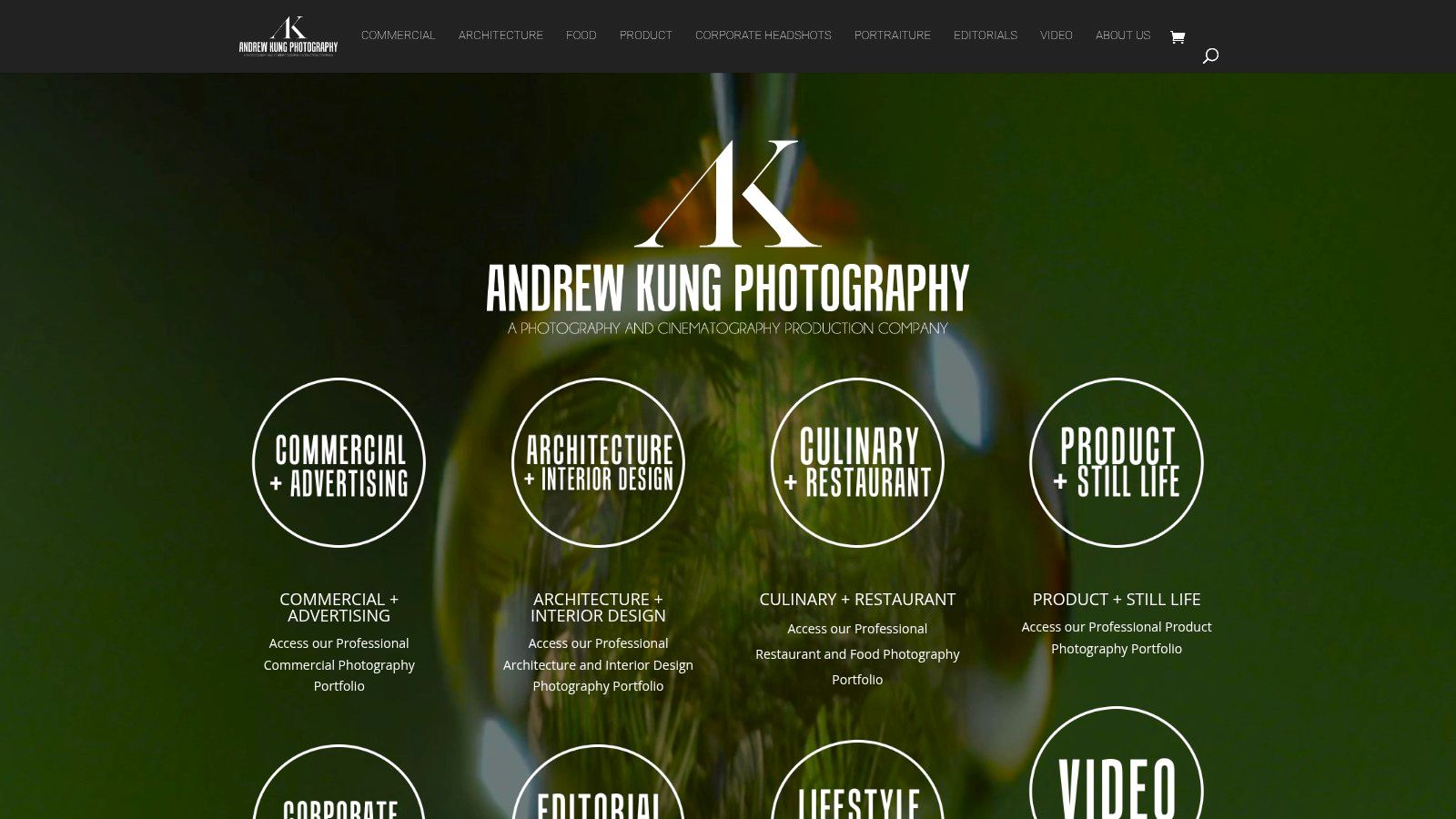
Andrew Kung Photography / Andrew Kung Group is one of the more versatile examples on this list. The studio works across lifestyle, product, architecture and interiors, food and beverage, portraiture, and beauty or fashion. That kind of range can be a real advantage when one brand needs several kinds of imagery but still wants a unified look.
Think about a hotel group launching a new property. It may need exterior architecture, interior detail shots, chef portraits, plated food, lifestyle images of guests, and broader brand collateral. A studio with broad category experience can keep all of that from feeling visually fragmented.
Why range can help or hurt
The upside is obvious. Fewer creative handoffs usually means a more coherent image library. If one team understands how to photograph your spaces, products, and people, the final brand presence can feel much more intentional.
The caution is equally practical. A wide-ranging studio still needs a focused brief. Without that, a versatile portfolio can tempt a brand into asking for too many styles at once.
A useful way to approach this kind of studio is to define the visual center first:
- Choose the core tone: Editorial, polished commercial, lifestyle, or something more restrained.
- Identify the must-match assets: Portraits, architecture, and products should share a visual logic.
- Build around campaign priorities: Don't treat every image type as equal if only a few will lead the rollout.
Broad capability is helpful only when the client gives clear visual direction.
Andrew Kung Group is a good example for multi-division companies, hospitality brands, real estate groups, and design-focused businesses that need one partner across categories. If your challenge is consistency across different subjects, this portfolio shows what that can look like in practice.
7. Sugar Shoots by Jules Frazier
Sugar Shoots by Jules Frazier is a useful example for brands that need flexibility without the scale of a giant production house. The studio works across product, lifestyle, food, fashion, portraits, and some architecture or real estate. That mix makes it easier to build campaign-style imagery while still handling practical catalog or e-commerce needs.
This kind of studio often fits growing consumer brands well. You might need clean product shots for listings, styled imagery for social, and a few portraits or lifestyle scenes for your about page or seasonal campaign. A smaller, versatile team can often move through those needs efficiently.
What stands out in the portfolio
The category-organized galleries make it easier to judge whether the studio can maintain consistency across different asset types. That's one of the more useful things to look for in brand photography examples. A brand doesn't benefit much if the lifestyle images feel warm and expressive but the product shots feel detached and generic.
Sugar Shoots appears especially well suited for:
- Retail and consumer brands: Product and lifestyle work sit naturally together.
- Catalog plus campaign hybrids: Brands can cover practical sales assets and more styled visuals in the same relationship.
- Lean production teams: A smaller setup can be easier to schedule and adapt.
The likely limitation is scale. Very large productions or highly specialized industrial and B2B assignments may call for a bigger crew or a more niche visual approach. But for many companies, that smaller-team adaptability is the point.
If you're trying to understand what approachable, commercially useful brand photography looks like, Sugar Shoots is a helpful benchmark. It shows that strong brand imagery doesn't always require the biggest production footprint. It requires clarity, consistency, and a style that fits how the business sells.
Brand Photography: 7-Studio Comparison
A side by side table is useful, but only if you know how to read it. The core question is not which studio looks the most impressive on paper. It is which one matches the kind of shoot your brand needs.
A simple way to compare these seven studios is to read each row like a production map. Implementation complexity tells you how much coordination the shoot usually requires. Resource requirements tell you what kind of crew, space, and process may be involved. Expected outcomes point to the type of image library you are likely buying, whether that means polished campaign assets, narrative brand stories, or efficient commercial coverage.
| Provider | Implementation Complexity 🔄 | Resource Requirements ⚡ | Expected Outcomes ⭐📊 | Ideal Use Cases 💡 | Key Advantages |
|---|---|---|---|---|---|
| Jimmy Clemmons Photographer | Moderate, editorial on-location shoots with tailored direction 🔄 | Small-to-medium team, regional travel and custom quotes ⚡ | Magazine-quality, compositionally precise imagery ⭐⭐⭐ 📊 | Architecture, interiors, corporate branding, editorial 💡 | Editorial film-set discipline, full-service production, narrative-driven visuals |
| Swanson Studio | High, complex studio builds and end-to-end production 🔄 | Large studio capability with extensive post-production support ⚡ | Cohesive, campaign-ready assets with strong retouching ⭐⭐⭐ 📊 | Product, apparel, sport-lifestyle national campaigns 💡 | Turnkey production for tier-one brand campaigns, repeatable processes |
| Simon Lewis Studio | Moderate-high, strategy-led, multi-location narrative shoots 🔄 | Specialized luxury-focused teams and case-study workflows ⚡ | Narrative-rich retail and hospitality visual stories ⭐⭐⭐ 📊 | Luxury retail, hospitality flagships, experience documentation 💡 | Strong brand narratives, strategic consulting, long-term partnerships |
| Salt Paper Studio + Productions | High, large-scale, repeatable campaign production 🔄 | Very large facility, set build, full production crew ⚡ | Scalable, repeatable campaign and motion content ⭐⭐⭐📊 | U.S. retail and CPG teams needing high-volume content systems 💡 | One-stop production, category-specific pipelines, set build capabilities |
| Ford Media Lab | Moderate-high, hybrid studio and digital pipeline with tech focus 🔄 | Multi-discipline tech stack, AI-enhanced workflows, and studio operations ⚡ | Performance-driven, rapidly scaled assets, including computed content ⭐⭐⭐ 📊 | Spirits, luxury, and CPG with channel and performance needs 💡 | Clear pipelines, channel-thinking, sustainability commitments |
| Andrew Kung Photography / Group | Moderate, full-production across stills and motion 🔄 | Mid-large studio with national service footprint ⚡ | Cohesive visuals across products, people, and spaces ⭐⭐⭐ 📊 | Multi-division clients, architecture and interiors, integrated campaigns 💡 | Broad category coverage, stills and motion under one roof |
| Sugar Shoots by Jules Frazier | Low-moderate, agile small-team production for retail shoots 🔄 | Small, versatile team, efficient for catalog and campaign work ⚡ | Cohesive lifestyle and product imagery with fast turnaround ⭐⭐📊 | Consumer brands, e-commerce catalogs, campaign shoots 💡 | Fast-turn options, versatile small-team approach, client testimonials |
One useful pattern appears quickly. Jimmy Clemmons, Simon Lewis, and Andrew Kung sit closer to the brand storytelling side of the spectrum. Swanson and Salt Paper look more like production engines built for larger campaign systems. Sugar Shoots favors agility. Ford Media Lab sits in a hybrid position, where content creation and channel performance are tied together more closely than in a traditional studio model.
That distinction matters because many brands choose a studio by visual taste alone. A better filter is operational fit. If your team needs ten variations of a product campaign across channels, a studio with set-build capacity and a larger post-production process will usually be easier to work with. If you need a founder portrait series, interior coverage, and brand details that all feel human and consistent, a more editorial studio may produce a stronger result.
Another detail many comparison tables skip is how complexity affects approval speed. Higher-complexity studios often produce more polished systems, but they can also require tighter briefs, more stakeholders, and longer decision cycles. Lower-complexity teams can be faster to schedule and adapt, which is often a better match for brands testing offers, refreshing seasonal creative, or building a first serious image library.
So the table works best as a matching tool, not a ranking. The strongest choice depends on your content mix, approval process, and how much production weight your team can realistically support.
Final Thoughts
The most useful brand photography examples don't just show attractive images. They show alignment between subject, style, and business need. That's the essential comparison to make as you review studios. A luxury retail environment needs something different from a corporate office. A food brand needs different production choices than an architecture firm. A developer marketing a property needs different images than a consumer brand launching a seasonal product line.
That's why “best” is usually the wrong question. Better questions are more specific. Does the studio know how to photograph space, people, or products in the combination you need? Can they direct a shoot so the final images feel like one brand, not several disconnected projects? Do they present work that solves the same kind of communication problem your company has right now?
If your business relies on trust, design quality, or a polished customer experience, brand photography isn't a decorative extra. It becomes part of how clients judge competence before they ever make contact. That's especially true for architecture firms, developers, hospitality groups, schools, construction companies, and corporate marketing teams. In those fields, the camera doesn't just record reality. It interprets it.
Another practical point often gets missed. The strongest image library usually includes more than one visual mode. You may need wide architectural views, detail shots, environmental portraits, team photos, and campaign-ready lifestyle images that all feel connected. A studio that can create that continuity saves you from rebuilding your visual identity every time you need new content.
If you're using this list to narrow options, start with the kind of story you need to tell. If the story is about built environments, material quality, and trust, look closely at studios with strong architectural and editorial instincts. If the story is about consumer energy, product volume, or retail campaigns, lean toward production houses built for those demands.
Good brand photography examples teach one simple lesson. The right images don't only make a brand look better. They make the brand easier to understand.
If you need brand photography that captures architecture, interiors, corporate culture, and polished portraits in one cohesive visual language, Jimmy Clemmons Photographer is worth a closer look. The studio's editorial eye, production discipline, and design-forward approach make it a strong fit for firms that want imagery with clarity, credibility, and lasting marketing value.