
Your interior design project is finished. The styling is resolved, the lines are clean, and every material choice says exactly what you wanted it to say. Then comes the part many firms underestimate. Turning a built space into images that still feel intentional once they leave the room.
That's where the best interior design photographers separate themselves. A strong photographer doesn't just record a finished project. They control perspective, manage mixed light, edit distractions out of the frame, and build a visual narrative that works for portfolio pages, magazine submissions, hospitality marketing, developer decks, and award entries. The wrong hire can make a remarkable space feel flat, distorted, or generic. The right one can make your work read with clarity and authority.
Buyers often get stuck because most roundups focus on names, publications, and client lists, but don't answer the practical question of fit for use case, as noted in this critique of photographer list content. That's the gap this guide is built to solve.
Below is a working shortlist, but also a hiring toolkit. Use it to decide whether you need editorial storytelling, hospitality polish, brand-focused imagery, or a portfolio partner who can give your body of work a consistent visual identity for years.
1. Jimmy Clemmons Photographer
A project can photograph beautifully in person and still fail on screen. The usual cause is not styling. It is coverage. If the brief calls for interior detail, architectural clarity, and brand-ready images from the same shoot, Jimmy Clemmons Photographer is a strong fit.
The studio's work carries an editorial sensibility without losing commercial discipline. Compositions are tightly controlled. Vertical lines stay honest. Styling reads as intentional rather than fussy. That balance matters for designers and architects who need images that can serve more than one job at once, from portfolio updates to press outreach and sales materials.
Jimmy Clemmons has photographed for outlets including Sports Illustrated, Football Weekly, Condé Nast, and Atlanta magazine. That background shows up less in name recognition than in process. The frames are selective. Secondary details support the hero image. A room is photographed as part of a sequence, not as an isolated vignette.
Why this studio stands out
For hiring teams, the practical advantage is scope control. The studio handles pre-production, location scouting, lighting strategy, on-set direction, and editing. That reduces a common problem on interior shoots. Decisions about styling, angles, and deliverables often get made too late, after the light has shifted and the schedule is already tight.
Clients can also learn a lot from Jimmy's writing on commercial architectural photography for marketing and editorial use. It makes the trade-off clear. Wide coverage alone does not solve a brief. The stronger approach is deciding in advance which images need to sell atmosphere, which need to describe layout, and which need to carry a brand narrative.
Use that as a hiring test. Ask whether the photographer can map hero shots, detail shots, vertical crops, and publication-friendly frames before shoot day.
Best fit and trade-offs
Best fit:
- Design firms building a consistent visual identity: You need images that hold together across website projects, team bios, proposals, and social channels.
- Developers and hospitality groups: You need production support, lighting control, and polished delivery that goes beyond standard property coverage.
- Editorial-minded studios: You care about sequence, restraint, and images that can stand up in a magazine pitch as well as on a portfolio page.
Trade-offs:
- Pricing requires a conversation: The studio quotes by scope, usage, and production needs, so buyers need a clear brief.
- Travel adds logistics: Atlanta is the base, which is workable, but regional and national shoots need more scheduling discipline.
For firms using this article as a hiring toolkit, Jimmy Clemmons is a good benchmark. If a photographer cannot explain pre-production choices, usage planning, and shot prioritization at this level, keep looking.
2. Scott Frances
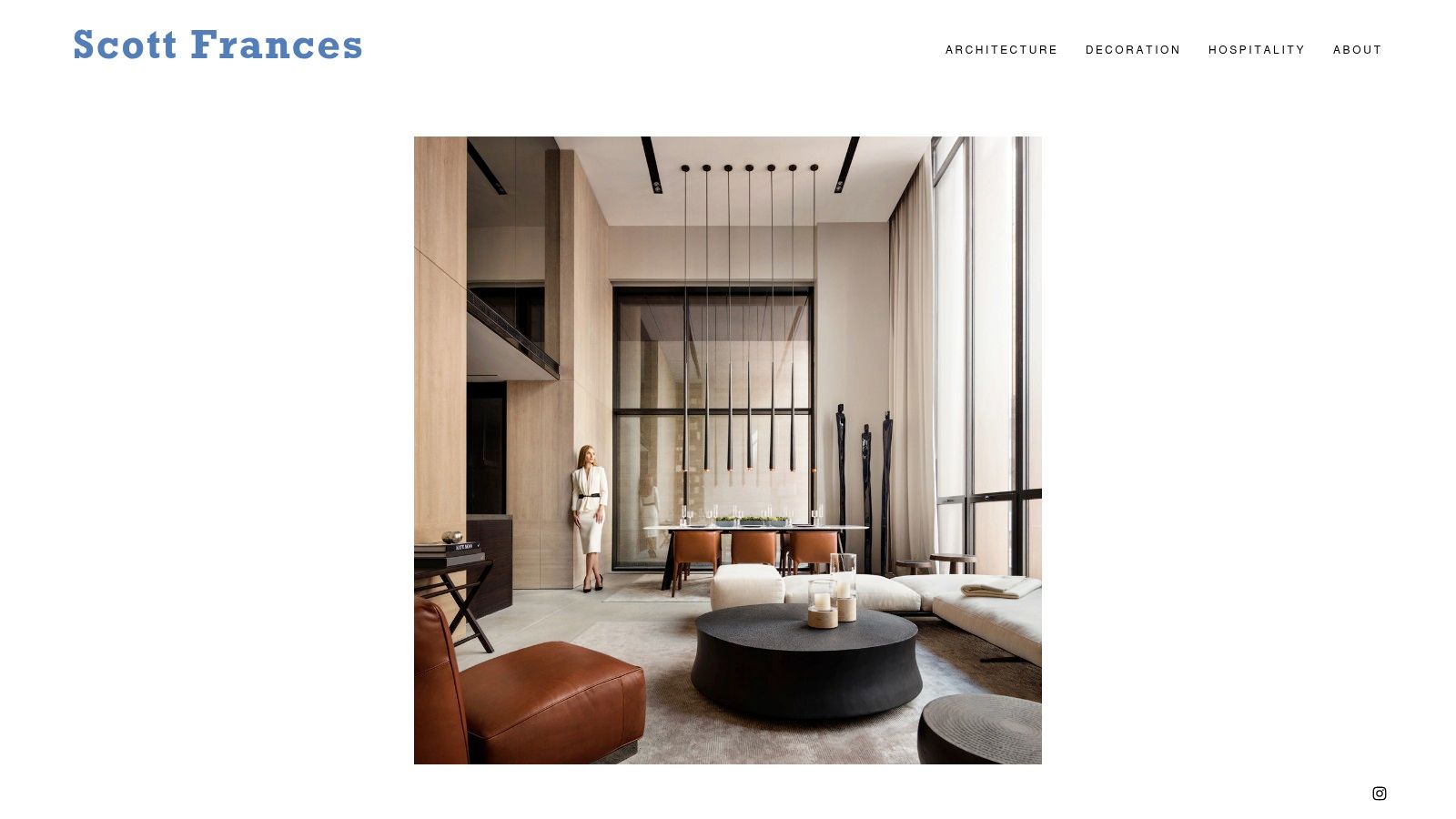
Scott Frances is the kind of hire you make when the brief is luxury, polish, and publication-grade consistency. His work has the refined restraint that high-end residential, hospitality, and developer marketing all benefit from. Materials read clearly. Light feels controlled. Rooms hold their structure.
He's especially strong when the assignment needs to satisfy more than one audience at once. Designers want the project represented faithfully, editors want visual clarity, and developers or agencies want assets they can license and repurpose cleanly.
Where he fits best
Scott Frances makes sense for clients operating at the premium end of the market. If you're aiming for hospitality launch assets, luxury residential portfolio work, or brand campaigns that need to sit comfortably next to top-tier editorial imagery, this is the lane.
A useful way to think about that fit is to compare editorial architectural photography with broad-coverage commercial work. Jimmy Clemmons' perspective on commercial architectural photography is helpful because it makes the distinction visible. The strongest photographers in this space don't just go wider. They make tighter decisions about story, hierarchy, and what the frame is supposed to do.
Buyers often ask for “a mix of wide shots and details” without saying what the images are for. That's where projects drift. A portfolio shoot, a hotel launch, and an editorial pitch need different picture priorities.
Trade-offs
The upside is predictability. You're hiring someone known for magazine-standard output and a strong understanding of commercial image usage.
The trade-off is access. This level of photographer usually works on larger-budget assignments, and lead times can be longer. If your project is small, fast-turn, or loosely organized, you may not get the best from a photographer built for more structured productions.
3. Roger Davies
Roger Davies is a strong pick when you want interiors to feel crisp, composed, and visibly premium. His portfolio has the kind of clean, legible visual language that performs well in both print and digital settings. That matters for firms balancing design press, client presentations, and branded content.
He's particularly credible in luxury residential and hospitality contexts where a room has to read as both a complete environment and a sequence of sellable moments. Some photographers can do one or the other. Roger Davies tends to do both.
What works in his style
A recognizable style can be an asset when it supports the project rather than overpowering it. Roger's work has enough consistency to feel authored, but it still leaves room for the interior itself to remain the subject. That's useful for designers who want publication-ready images without losing the identity of the space.
Preparation matters with this type of work. Styling and staging decisions will show up in every frame, especially in projects where luxury is communicated through restraint, spacing, and material balance. Jimmy Clemmons' advice on staging for high-end interior shoots is a good reference point for what clients should sort out before the camera ever comes out.
Trade-offs
Roger Davies is best for clients who can plan ahead. He's often associated with design-forward assignments that require coordination, travel flexibility, and clear usage terms.
Keep an eye on licensing expectations if brand and editorial uses overlap. That doesn't make him difficult to work with. It just means complex projects should be scoped carefully from the start.
4. Adrian Gaut
Adrian Gaut suits projects that need restraint on camera. His interiors work tends to prioritize structure, proportion, and the relationship between planes over overt styling cues. That makes him a strong candidate for architects and designers whose work depends on quiet details reading clearly in the final frame.
His photographs usually hold the room steady. Lines stay believable, negative space has purpose, and materials are allowed to separate from one another without a heavy-handed editorial treatment. For clients, that matters because subtle projects are easy to over-photograph. Once the camera exaggerates scale or pushes atmosphere too hard, the design can start to feel less precise than it is in person.
Best use cases
He's especially well suited to assignments like these:
- Contemporary residential projects: Homes where millwork, junctions, proportion, and finish consistency carry the design story.
- Furniture and product-forward interiors: Spaces where fixtures, seating, lighting, and objects need to read cleanly for both editorial and brand use.
- Architecture-interiors crossover work: Projects with gallery, cultural, or mixed-use qualities, where the images need to respect both spatial design and object placement.
This style also helps when a client needs a disciplined shot list, not just attractive hero images. Wide shots can establish layout without obvious distortion. Mid-range views can isolate joinery, circulation, or material transitions. Detail frames can support product credits, press requests, and specification decks. If you are hiring for a full documentation set, not just a portfolio refresh, that distinction matters.
Trade-offs
Gaut is not the obvious pick for every brief.
Clients looking for layered styling, visible lifestyle cues, or a warmer editorial mood may want a photographer whose visual language adds more atmosphere. His strength is control. That works best when the design itself has enough clarity to carry the image.
There is also less publicly packaged guidance around process than some buyers may prefer. Go into the inquiry with a clear framework: ask how he approaches lens choice, what mix of wide, medium, and detail shots he recommends, how styling responsibilities are handled on set, and which usage rights are included. Those questions will tell you quickly whether the fit is right for your project and your deliverables.
5. Nicole Franzen
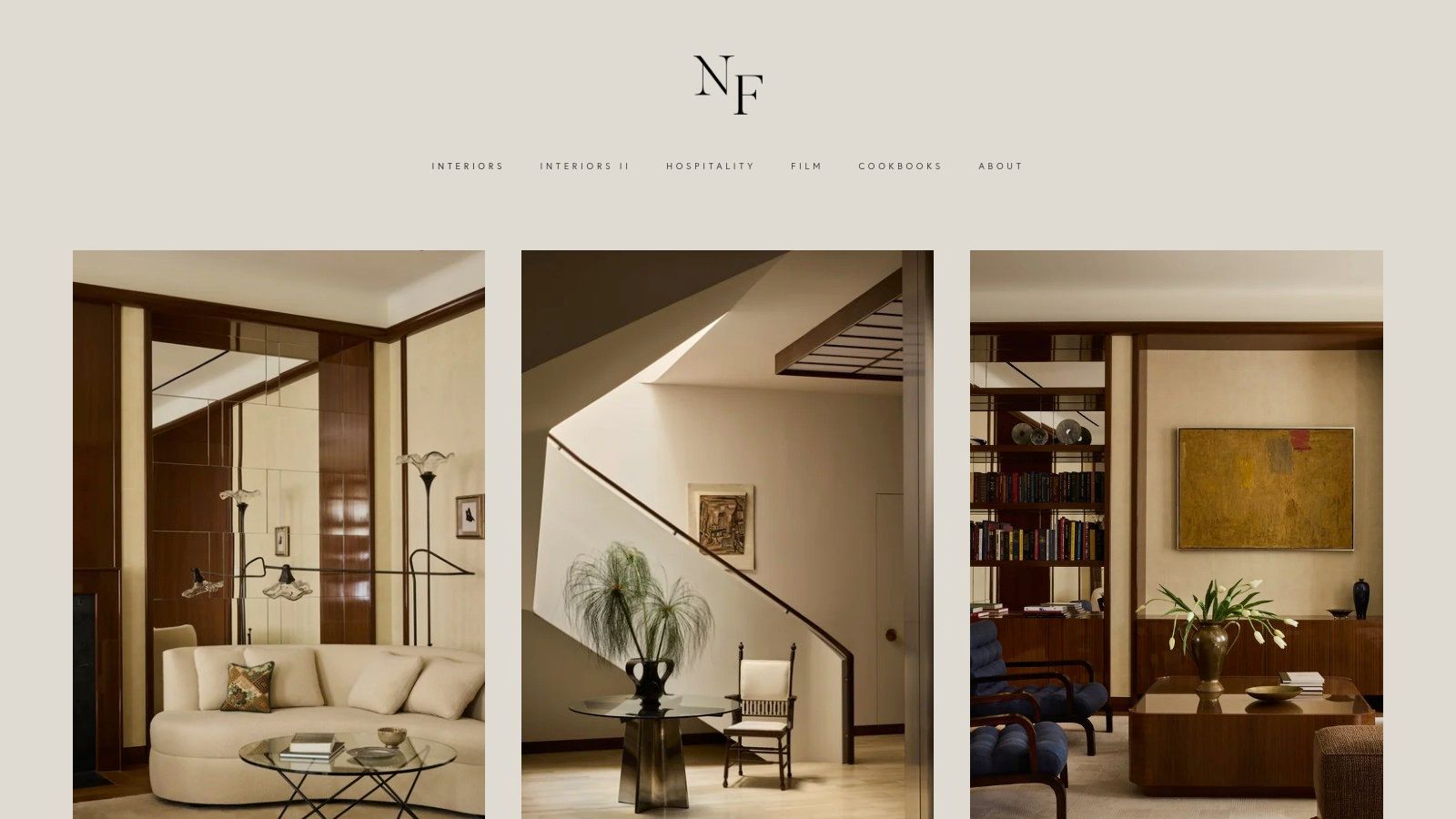
Nicole Franzen is one of the clearest examples of an interiors photographer whose signature look is also a brand asset. Her images feel inviting, lived-in, and polished without losing control. That balance is hard to fake. Plenty of photographers can produce “natural light” images. Fewer can make them feel editorial and commercially usable at the same time.
She's a strong fit for residential designers, hospitality brands, and product-forward interiors that benefit from warmth and softness instead of a more severe architectural treatment. Kitchens, baths, bedrooms, and full-home narratives all tend to sit well within that world.
Why clients hire her
This is often less about technical novelty and more about emotional read. Her images tend to make viewers feel like they understand how the space lives. That's valuable for social, portfolio work, and design brands trying to connect with clients through mood as much as specification.
If you already know you want a photographer's signature look, stop pretending you're shopping purely on neutrality. The real question is whether that look strengthens your project or competes with it.
Trade-offs
Nicole Franzen is most valuable when the client wants her visual language specifically. That's good when there's alignment, but it's a limitation if the brief asks for multiple styles from one shoot.
She's also likely to be in demand. If your timeline is rigid or your team is still making styling decisions late in the process, that's not an ideal setup for this level of specialist.
6. Matthew Millman
Matthew Millman is a practical choice for firms that need an experienced architecture and interiors specialist who can handle complexity without overdramatizing the work. His images are clear, controlled, and useful. That last point matters. Great portfolio photography doesn't have to be flashy. It has to hold up under repeated professional use.
Millman is particularly well suited to architects, West Coast residential firms, and teams with projects that blend interior and exterior relationships. Modernist houses, institutional spaces, and commercial environments all benefit from a photographer who understands sequencing, site conditions, and how a project needs to read as a whole.
Why experienced clients trust this type of photographer
A lot of value here is operational. Photographers who've spent years shooting complex architecture usually know how to manage a site, pace a multi-day schedule, and maintain consistency across changing light conditions.
Technical discipline sits under all of that. One specialist guide recommends a starting point of f/9, notes many interior photographers work between f/8 and f/11, keeps ISO at 100, and reports shutter speeds from 4 seconds to 1/125th of a second, with tripod use and a 2-second timer or remote trigger as part of the workflow. Buyers don't need to memorize those settings, but they should understand what they signal. The photographer is prioritizing sharpness, low noise, and stable geometry over speed.
Trade-offs
Millman's structure is built for professional architecture and design clients. That's a benefit if you have a serious brief and clear usage needs.
It can feel oversized if you're looking for a casual, quick-turn property shoot. He's a better fit for lasting portfolio assets than fast listing coverage.
7. Joe Fletcher
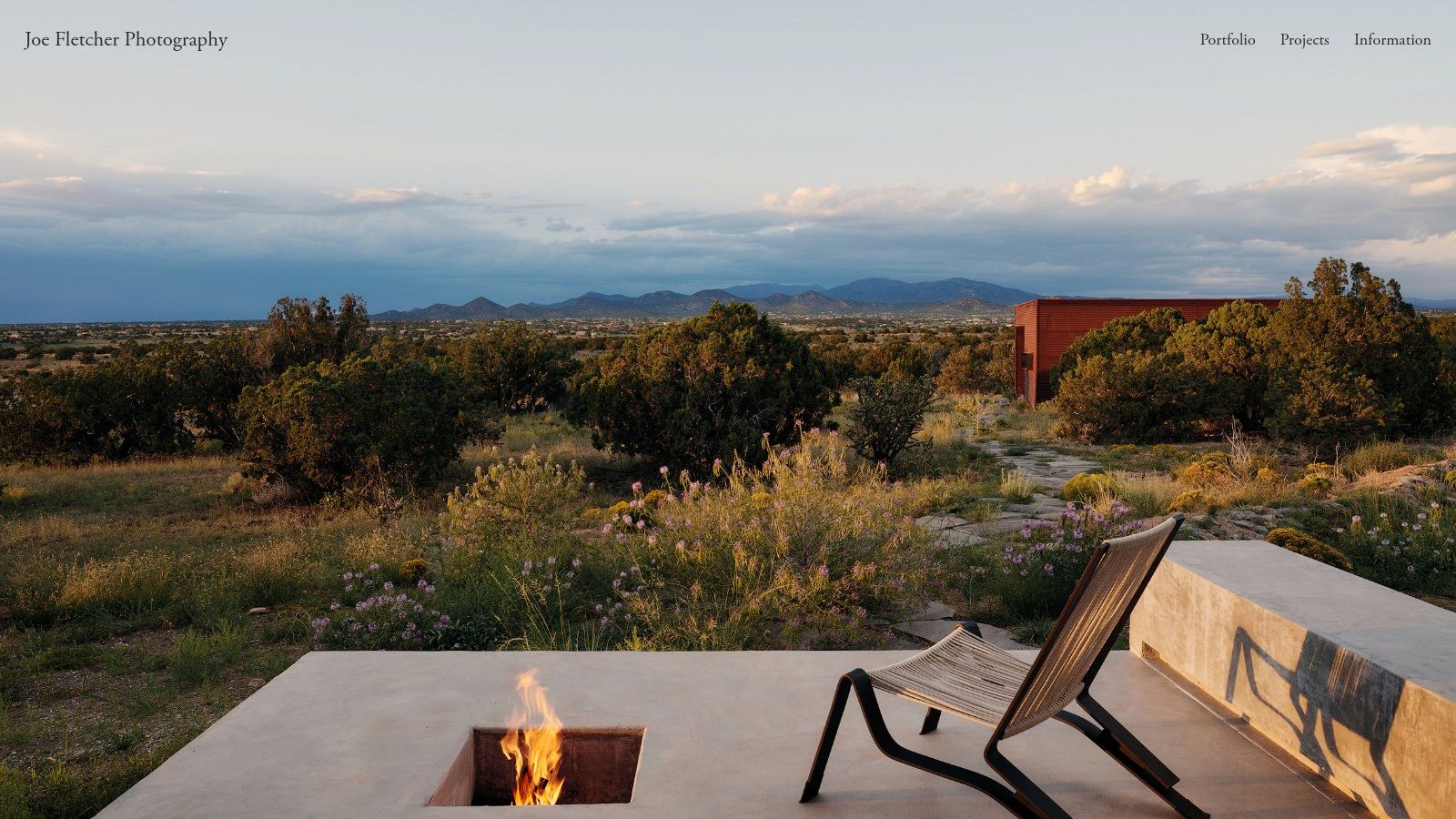
Joe Fletcher is for clients who highly value composition. His work often feels architecturally rigorous without becoming sterile, which is why so many design-led projects sit well in his portfolio. He understands how to let natural light shape a frame, but the images still feel deliberate rather than opportunistic.
For modern residences, hospitality spaces, and culturally significant buildings, that combination can be powerful. You get photographs that communicate atmosphere while preserving structure.
What sets him apart
Joe Fletcher is especially strong on spatial storytelling. He doesn't rely on coverage alone. He builds a sequence, which is exactly what designers and architects need when the goal is a portfolio, award submission, or press package rather than a set of disconnected hero shots.
Mixed light is where this skill becomes visible. Creator guidance on interior shoots describes photographers shutting off most practical lights, standardizing to one color temperature, and capturing multiple corners plus wide, medium, and detail views in order to keep the project visually coherent, as discussed in this interior shoot lighting walkthrough. Fletcher's style benefits from that kind of discipline because it keeps tonal relationships believable.
Trade-offs
He's not the right choice for clients who want rapid-fire real estate coverage. His market position is more design-centric, and the work reflects that.
Scheduling can also require patience. Photographers with this level of design credibility tend to be booked around projects that have been planned carefully, not assembled at the last minute.
Top 7 Interior Design Photographers Comparison
| Photographer | Process complexity 🔄 | Resource needs ⚡ | Expected outcomes ⭐📊 | Ideal use cases 💡 | Key advantages ⭐ |
|---|---|---|---|---|---|
| Jimmy Clemmons Photographer | Full-service, editorial workflow; moderate-to-high coordination | Studio crew, location scouting, lighting design, pro retouching; regional travel | Design-forward, narrative-driven brand and architectural imagery | Architecture & design firms, real estate, hospitality, corporate marketing | Film-trained editorial eye, cohesive production, strong publication pedigree |
| Scott Frances | High, large-scale, magazine-level productions | Premium crew, art direction, licensing support; longer lead times | Polished, luxury editorial images that meet magazine standards | High-end hotels, luxury residential, A&D features, brand campaigns | Refined editorial polish, licensing expertise, marquee clients |
| Roger Davies | High, editorial shoots with travel and staging | Professional crew, styling, frequent location travel | Crisp, modern, print-ready imagery with consistent look | West Coast hospitality, luxury residences, designer portfolios | Recognizable aesthetic, broad client list, strong magazine placement |
| Adrian Gaut | Moderate, minimalist, pared-back process | Lean crew, ambient-light setups, focused styling | Contemporary, art-driven images emphasizing spatial clarity | Design brands, galleries, product/design-focused projects | Minimalist compositions, design-forward visual language |
| Nicole Franzen | Moderate-to-high, lifestyle editorial with natural-light approach | Experienced production, styling, travel for commissions | Warm, inviting, editorial lifestyle and interiors imagery | Residential lifestyle, hospitality, brand/content for web & social | Signature natural-light aesthetic, strong web/social resonance |
| Matthew Millman | High, complex site logistics and multi-day shoots | Larger crew, controlled lighting, travel (esp. non–West Coast) | Precise, technical imagery suited to editorial and awards | Institutional/commercial projects, architects, award submissions | Deep West Coast network, proven editorial/award track record |
| Joe Fletcher | High, rigorous compositions and precise lighting | Skilled crew, location coordination, travel; editorial focus | Portfolio-defining, consistent images for print and digital campaigns | High-design residences, architect portfolios, hospitality | Sophisticated light management, trusted by leading architects |
How to Hire Your Perfect Visual Partner
You review the finals from a beautifully designed project and feel the problem immediately. The rooms look polished, but the images do not explain the space, support your publication goals, or cover the views your marketing team needs. At that point, the issue is rarely camera quality. It is a hiring and planning problem.
A strong interior photographer does more than produce attractive frames. They need to read the project correctly, understand how the images will be used, and build a shoot around those priorities. Portfolio work, editorial submissions, award entries, hospitality marketing, investor decks, and social crops all ask for different coverage, file treatment, and licensing. If those decisions are fuzzy at the estimate stage, the photographer will default to their usual process. Sometimes that aligns with your needs. Often it does not.
This is why hiring should be handled as a production decision, not a taste decision.
Your Hiring Checklist
Define the job before discussing price
Start with usage. Say whether the assignment is meant for portfolio refresh, magazine pitching, awards, hospitality booking platforms, branded content, or a mix. A photographer who is excellent for editorial storytelling may not be the best fit for a fast-moving marketing library, and the reverse is also true.Ask to see a full project, not only highlights
A homepage gallery shows signature images. It does not show how someone covers secondary bedrooms, corridors, transitions, powder rooms, or difficult corners. A full take tells you how consistent the photographer is across an entire property.Discuss process early
The first useful conversation usually has more to do with the space than with equipment. Good photographers want a walkthrough, background on the design intent, and clarity on what must be communicated in each room. As noted earlier, that kind of pre-shoot conversation shapes composition, furniture adjustment, styling priorities, and lighting choices.Clarify deliverables in writing
Spell out what is being delivered and what is not. That includes final image count, proofing process, retouching rounds, stylist involvement, file formats, vertical and horizontal crops, and licensing terms. If publication support matters, ask whether files will be prepared with editors and submission standards in mind.Read the estimate line by line
Interior photography quotes can vary for good reasons. Crew size, scouting, assistants, digital tech, travel, lighting complexity, retouching depth, and licensing all affect cost. Pricing guidance for photographers selling to interior designers also points out that underpricing tends to weaken perceived value and distort expectations, as discussed in this guide to pricing photos for interior designers.
The Pre-Shoot Questions That Matter
Use these questions in the first serious call or proposal review:
- Lighting approach: Do you rely mainly on available light, strobes, or blended composites?
- Pre-production: Will you help build the shot list, review plans, and flag rooms that may need extra time?
- Crew: Who is on site besides the photographer?
- Timing: When do proofs arrive, and when are finals delivered?
- Licensing: Which uses are included, and which require additional rights?
- Problem solving: How do you handle mixed color temperature, limited window light, weather changes, or reflective materials?
- Feedback: How do you want comments on selects and retouching notes?
- Client prep: What needs to be finished before shoot day?
- Editorial structure: Can the shoot be organized to support magazine, awards, or PR submissions?
- Missed frames: What is the policy if an overlooked shot is discovered after wrap?
A better hiring question than "What camera do you use?" is "How do you decide what this project needs to say?"
That question exposes judgment. Judgment is what separates a photographer with a recognizable style from one who effectively serves the project.
A signature look can help. It can also overpower the work. The critical question is whether that look strengthens your project or competes with it.
A Sample Shot List Template
Use this as a working brief and adjust it to fit the property, publication goals, and licensing plan:
- Establishing shots: Wide views that explain layout, circulation, and architectural intent.
- Primary feature frames: Hero images of the kitchen, bath, stair, living area, suite, bar, or other spaces that will carry the project publicly.
- Medium narrative views: Frames that connect furniture, materials, light, and spatial flow.
- Vignettes: Smaller compositions that show transitions, styling restraint, and moments of character.
- Detail images: Hardware, millwork, textiles, stone, joinery, fixtures, and material junctions.
- Context frames: Exterior approach, entry sequence, window views, and room-to-room relationships where relevant.
- Optional human element: Light occupancy only if it supports the brand, publication target, or campaign concept.
One practical note. Ask how the photographer handles practical fixtures and color temperature before shoot day. Warm sconces, cool daylight, LED strips, and reflected green from landscaping can create ugly files fast if no one has decided in advance whether the room should read natural, corrected, or intentionally atmospheric.
Hiring well comes down to fit between process, visual language, and use case. The strongest option for your firm is not always the most famous name. It is the photographer who can cover the project completely, solve technical problems without drama, and deliver images that work in the places you need to publish them.
If you need a photographer who can treat interiors as both design work and brand communication, Jimmy Clemmons Photographer is a strong place to start. The studio's mix of editorial discipline, architectural sensitivity, and full-production support suits designers, developers, hospitality teams, and firms that want an ongoing visual partner rather than a one-off shoot.