
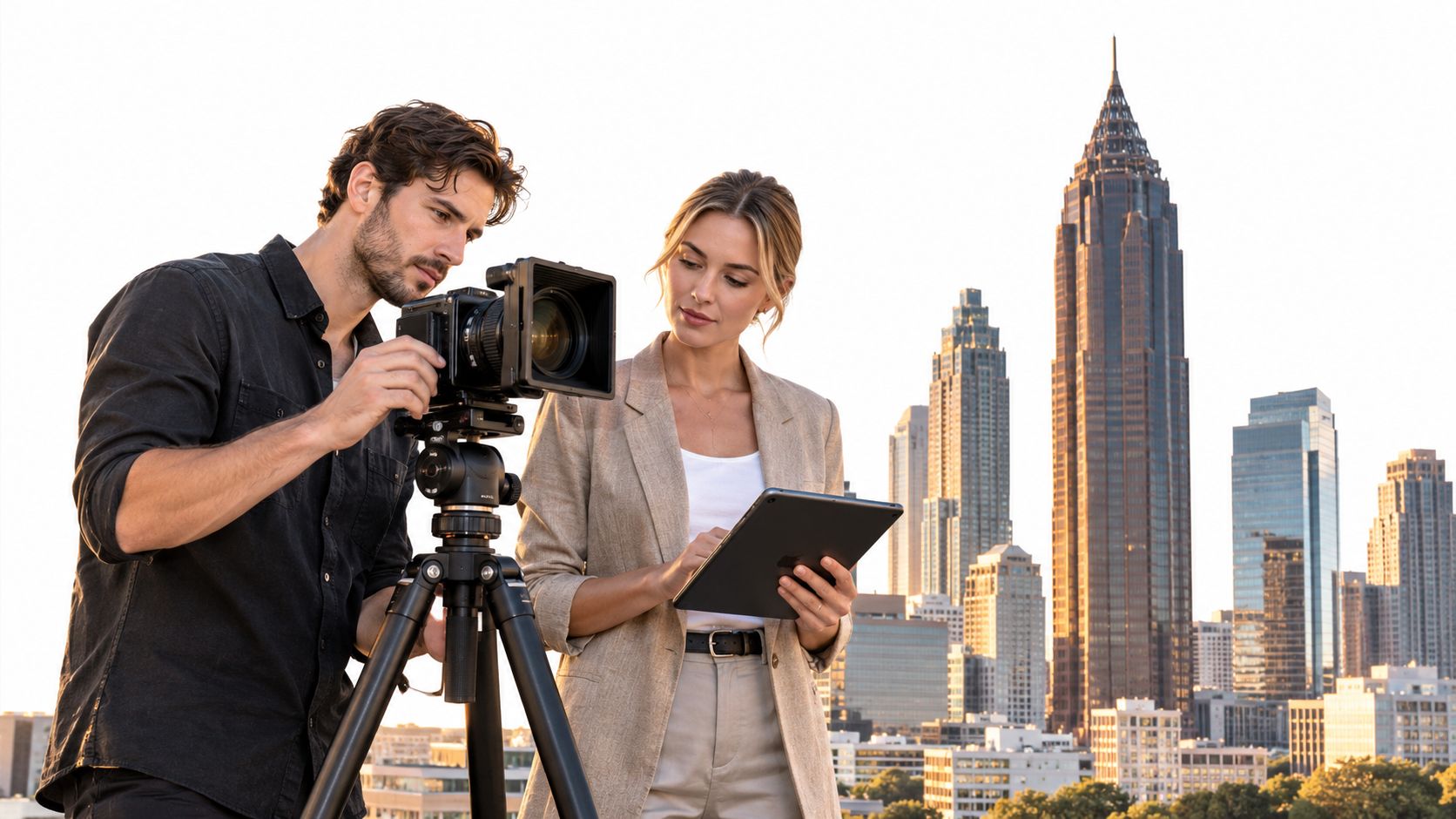
You're probably looking at a finished building, a nearly finished renovation, or a property that needs to start working harder in your marketing. The architect wants accuracy, the developer wants images that support leasing or sales, and the brand team wants a visual story that feels distinctive across websites, brochures, press coverage, and social channels. A photographer who only records rooms and elevations may deliver technically acceptable files without showing why the project matters.
Hiring an Atlanta architectural photographer is therefore less about finding someone with a camera and more about matching visual judgment to the assignment. Atlanta's layered history, compressed skyline, strong daylight, and fast-moving commercial development reward photographers who can control perspective while also building a narrative. The difference between basic documentation and editorial-grade work usually appears in the planning, the light, the editing, and the photographer's ability to decide what the viewer should notice first.
Understanding Atlanta's Architectural Context
Atlanta's built environment was shaped by loss as much as by construction. The city has few surviving structures from before 1864, and only one documented antebellum building remains in its architectural record. The Georgia Railroad Freight Depot, completed in 1869, is the oldest building in Downtown Atlanta, while the Equitable Building, opened in 1892, introduced the city's first skyscraper. These facts create a visual context where historic reference points are comparatively scarce and modern growth carries much of the city's identity. Atlanta's architectural history provides useful background for understanding that contrast.
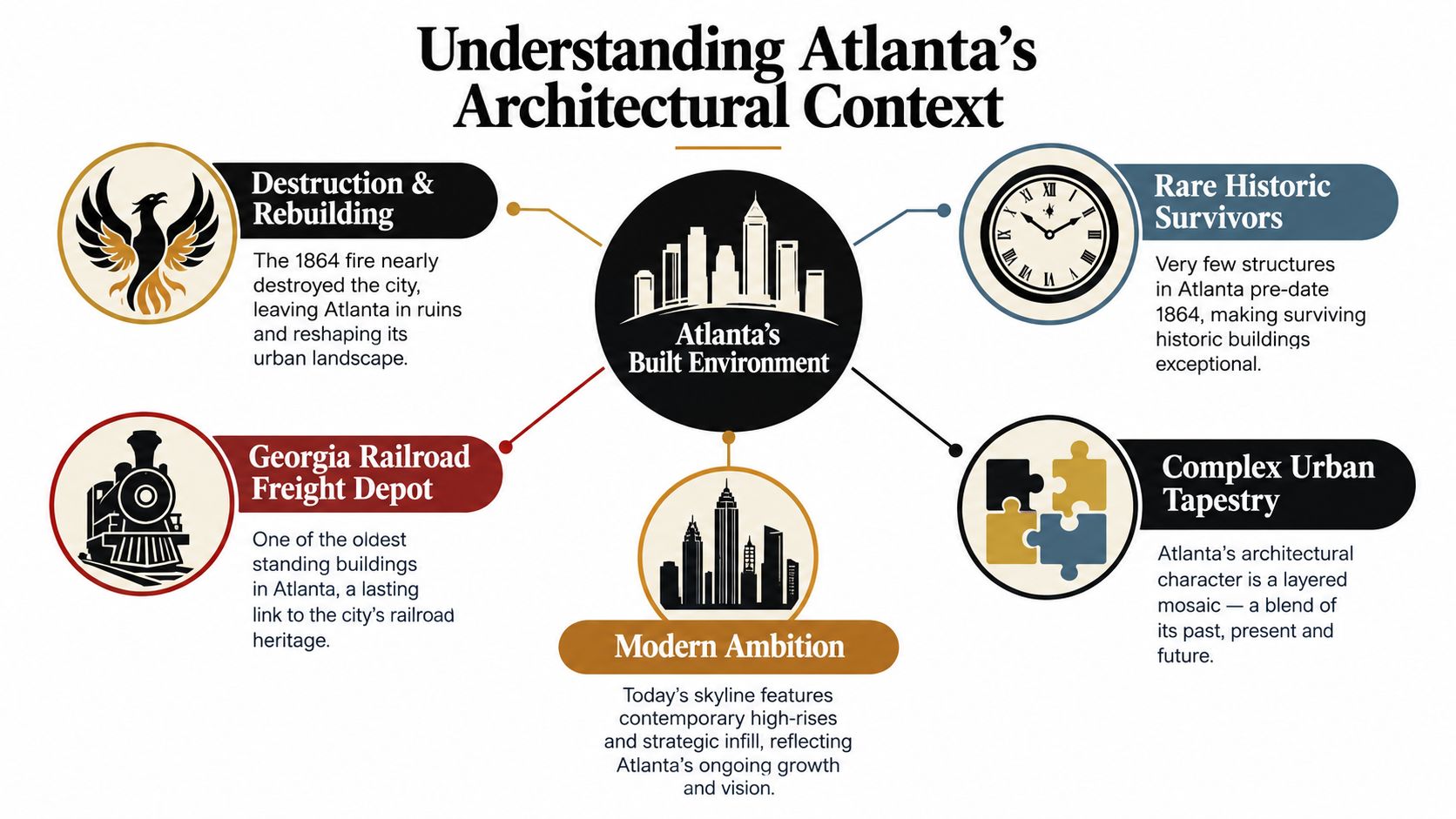
The pace of change was especially visible during the twentieth century. By the 1960s, Atlanta had added 17 buildings higher than 15 floors, and Downtown hotel inventory rose from 4,000 rooms in 1965 to 14,000 by 1975, according to the same architectural record. That compressed development history means a photographer often has to show relationships between eras, not just isolate a single facade.
Why the skyline changes the brief
Atlanta's high-rise identity depends on a relatively compact group of major towers. The Bank of America Plaza rises 1,023 feet, or 312 meters, and was completed in 1992. It remains the tallest building in Atlanta, the Southern United States, and one of the tallest in the United States. Other defining towers include One Atlantic Center at 250 meters, Westin Peachtree Plaza at 220 meters, and SunTrust Plaza at 264 meters, as listed in Atlanta's skyline overview.
That concentration creates practical challenges. A small change in camera position can alter how towers overlap. The same building can feel dominant, secondary, or almost absent depending on the hour, haze, reflections, and surrounding construction. A qualified photographer should be able to explain not only which angle looks attractive, but why that angle communicates the project's place in Atlanta.
Historic renovations also require more than a generic city backdrop. Before hiring, ask how the photographer will balance original materials, new interventions, and surrounding development. For useful planning context, review these decision criteria for reuse before defining the visual priorities. A broader reference to Atlanta's top architectural landscapes can also help your team identify the city views and architectural relationships that deserve consideration.
Defining Your Project Goals and Visual Intent
A photographer can't make the right visual decisions until the client defines what the images need to accomplish. Start with the audience, not the shot list. A developer preparing leasing material needs images that clarify circulation, amenities, scale, and the relationship between interior and exterior spaces. An architecture firm preparing a submission may need precise details, material studies, and images that communicate the design logic. A hospitality group may need atmosphere as well as accuracy.
Write the project brief in plain language before reviewing portfolios. Answer these questions:
- Who will the images be seen by? Identify prospective tenants, buyers, editors, design professionals, executives, students, or the general public.
- Where will the images appear? A website hero image, printed brochure, press feature, presentation deck, construction record, and social post all impose different framing demands.
- What must the viewer understand? Decide whether the priority is massing, craftsmanship, wayfinding, workplace culture, amenities, historic character, or a combination.
- Which spaces are essential? Rank the exterior, lobby, public areas, tenant floors, details, surroundings, views, and operational features rather than treating every room as equally important.
- What should the project feel like? Words such as calm, civic, warm, precise, dramatic, efficient, or tactile can guide the photographer without dictating every composition.
Separate documentation from persuasion
Documentation answers, “What is here?” Editorial photography also asks, “Why should anyone care?” Those are different assignments even when they involve the same building. A clean elevation may be essential for an architect's record, while a carefully timed image showing a lobby in relation to the street may do more for a marketing campaign.
A useful brief distinguishes must-have accuracy from creative interpretation. The first category includes correct proportions, material color, spatial relationships, and clear views of important features. The second includes atmospheric light, human presence, selective detail, and compositions that create a sense of arrival or movement.
The distinction matters when choosing a specialist. Someone experienced with large commercial towers may be comfortable managing scale, access, and repeated architectural lines, but that doesn't automatically make them the right fit for a delicate residential restoration. Conversely, a photographer skilled at intimate interiors may not have the equipment or planning discipline required for a complex exterior campaign.
Build a format plan early
Still images no longer stand alone in many property campaigns. A 2025 to 2028 outlook describes a shift from images toward immersive media, with 63% of agents planning to create more video content in the next two years, 53% of professional real estate photographers offering virtual staging, and 59% of agents expecting to spend more on visuals over the next two to three years. Those projections are detailed in the future of real estate imagery.
That doesn't mean every assignment needs every format. It does mean you should ask whether the photographer can support a coherent system of stills, video, floor plans, and 3D or 360 tours, or collaborate effectively with specialists who can. The strongest brief defines the role of photography within the wider campaign before production begins.
Evaluating Portfolios for Technical Fit
A portfolio should be read like a technical record, not browsed like a mood board. Start with the building lines. In a strong architectural image, verticals generally remain vertical, horizontal planes feel stable, and the viewer doesn't sense that the structure is leaning backward. Slight upward camera tilt creates the familiar keystone effect, where walls appear to fall away from one another.
Look for evidence of a tilt-shift or perspective-control lens, or another reliable method of correcting perspective. The equipment itself isn't the decision. The result is. A photographer may use a technical lens, a carefully leveled tripod, or a controlled correction in post-production, but the portfolio should show consistent control across tall exteriors, narrow interiors, and wide rooms.
Compare the light, not just the composition
Open several images from the same portfolio side by side. Ask whether bright windows retain exterior detail while the room still has readable shadow areas. If windows are white shapes or interiors are muddy, the photographer may be relying on a single exposure where the scene requires more control.
Strong architectural work often begins with a clean ambient exposure and adds deliberate supplemental light where needed. A bounced strobe can reduce mixed color casts and bring interior brightness into a more natural relationship with the exterior. Commercial property photography guidance recommends a level camera, perspective control, and a base ambient exposure before supplemental lighting.
Editing deserves the same scrutiny. Natural color and believable contrast usually serve architecture better than aggressive clarity, halos around windows, or exaggerated skies. A portfolio that looks impressive at first glance can become a liability if the finished files make materials, glazing, or room proportions appear unlike the actual project.
Portfolio test: Find the least dramatic image in the gallery. If the photographer can make a plain corridor, service area, or restrained facade look clear and intentional, the portfolio is showing judgment rather than relying on spectacle.
Look for repeatable sharpness
Professional architectural work requires detail from near foreground elements through distant planes. A commonly recommended working range is f/8 to f/11, paired with a low ISO such as 100 to 200, a tripod, and longer shutter speeds when conditions require them. These settings are discussed in this architectural photography technique guide.
You don't need to demand a particular camera body. Ask how the photographer handles sharpness, vibration, focus, and low light. Examine window frames, stone joints, wood grain, signage, and furniture edges in the portfolio. Technical competence appears in the details that remain controlled when the image is enlarged or placed in print.
Finally, check consistency. Can the photographer move from a sweeping city view to a quiet interior without changing the project's visual language? Editorial-grade portfolios usually have range, but they also have discipline. The images feel like parts of one story rather than unrelated attractive frames.
Key Questions to Ask Before Hiring
The interview should reveal how a photographer thinks under real production constraints. Ask candidates to describe their process from the first site walk through delivery. A vague answer about “capturing the space beautifully” tells you very little. A useful answer identifies scouting, sun orientation, access, camera position, lighting, image selection, editing, and delivery.
Start with the light. Ask whether the photographer plans around the direction of the sun and schedules exterior facades when they're front-lit. Ask how they handle a room with bright exterior windows, mixed artificial light, reflective surfaces, and dark materials. The answer should explain decisions, not just list equipment.
Questions that expose the workflow
How will you scout the property? Look for discussion of vantage points, sun path, reflections, access, and the relationship between the building and its surroundings.
How do you keep vertical lines accurate? The photographer should be comfortable discussing a level tripod, a geared head, a tilt-shift or perspective-control lens, and controlled post-production.
How do you balance interior and exterior exposure? Bracketing is a standard approach. One technical guide recommends capturing three exposures for dark areas, midtones, and bright areas, while another recommends keeping ISO and aperture fixed and varying shutter speed in approximately two-thirds-stop or one-stop increments. See this exposure-bracketing reference.
How do you avoid artificial HDR? The goal should be a believable tonal range, not an image with glowing edges, flattened contrast, or unnatural color. Ask to see an unedited base frame and a finished example if the workflow includes blending.
What aperture and ISO do you typically use? The answer should connect settings to sharpness, available light, movement, and the needs of the space. A fixed rule matters less than a deliberate explanation.
Will you use supplemental lighting? Ask whether the photographer uses bounced flash or strobe, how that light will be placed, and how mixed color will be controlled.
What exactly will be delivered? Confirm image count, file types, resolution, crops, retouching, color treatment, and whether alternate orientations are included.
What is the delivery timeline? Get the schedule in writing, including proofing, revision rounds, and final export.
What usage rights are included? Clarify whether the license covers websites, print, press, paid advertising, social platforms, presentations, and future portfolio use. Architectural images visible from public places also fall under a specific U.S. copyright exception. Section 120(a) allows photographs and other pictorial representations of buildings visible from public places, as explained in this overview of architectural photography copyright. That rule doesn't replace a clear agreement between client and photographer.
Who handles releases and permissions? Determine whether the client must secure access, occupant permissions, artwork clearances, or property-specific approvals.
Listen for trade-offs
A professional may recommend shooting over more than one lighting condition, using a longer schedule, or narrowing the final shot list. That isn't necessarily inefficiency. It may reflect the difference between making a record and producing images that work across several channels.
Be cautious when a candidate promises that one quick pass and aggressive editing will solve every problem. Architecture has reflective glass, changing daylight, active work sites, uneven color temperatures, and spaces that look different from every angle. A reliable photographer explains what can be solved on location, what belongs in post-production, and what the brief needs to change.
Preparing for the Shoot and Managing Logistics
The best shoot days feel calm because the decisions happened before the camera arrived. Give the photographer current plans, access information, floor layouts, parking instructions, security requirements, and a contact who can make decisions on site. If the building is occupied, identify when people, vehicles, deliveries, and cleaning teams will affect the frames.
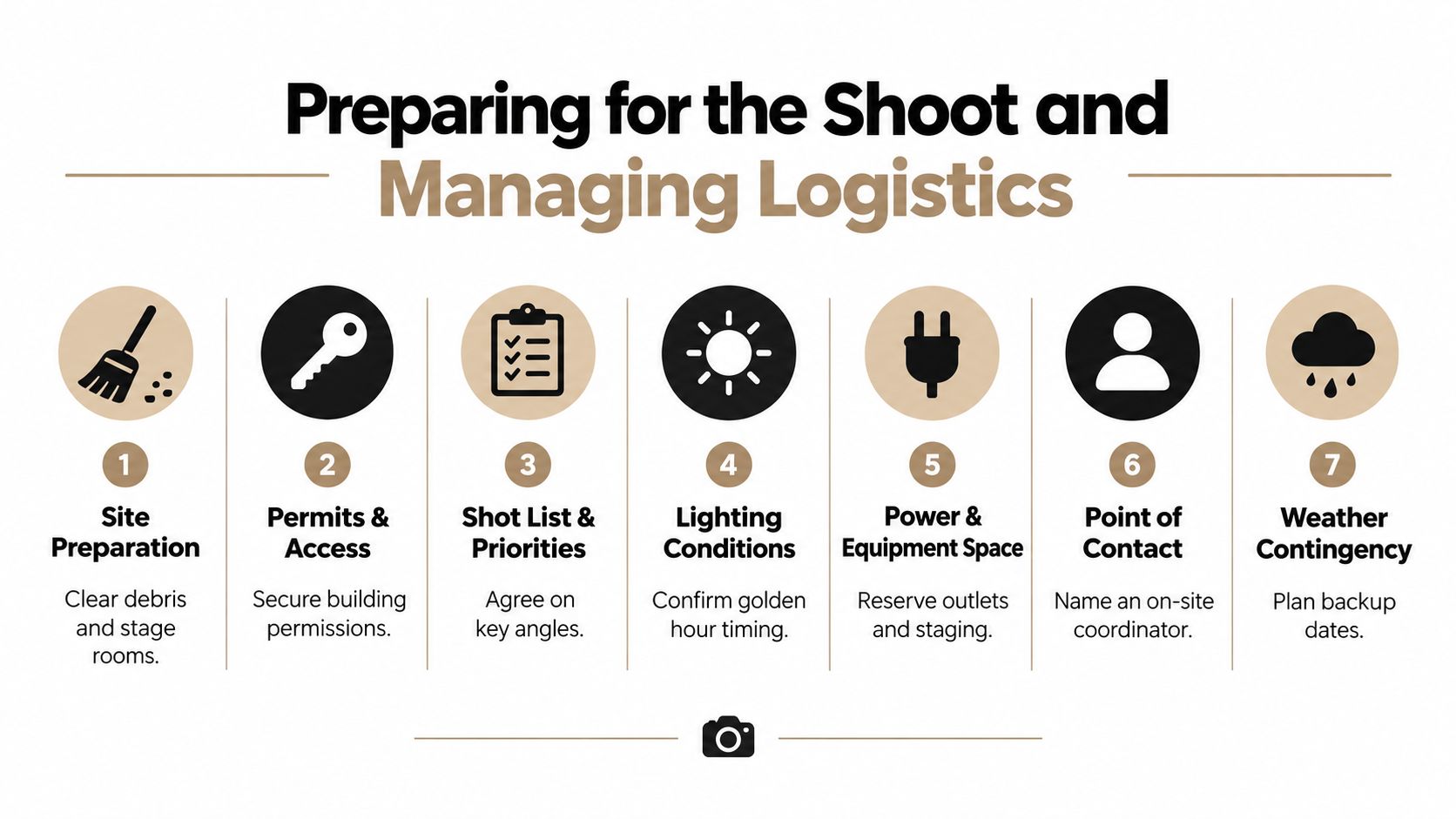
Prepare the property
Use a practical checklist rather than assuming the photographer will solve site conditions alone:
- Clear and stage the rooms: Remove debris, temporary signage, unnecessary bins, loose cables, and objects that distract from the design.
- Confirm permissions and access: Arrange keys, elevators, loading areas, parking, security clearance, and access to roofs or restricted spaces.
- Rank the shot list: Separate essential views from optional details so the photographer can protect the most important work if conditions change.
- Check lighting conditions: Share the building orientation and identify the preferred time for exterior views, interior atmosphere, or sunset exposure.
- Reserve equipment space: Provide a safe place for cases, stands, lighting equipment, and computers without interfering with occupants.
- Name one point of contact: A single coordinator prevents conflicting instructions and keeps approvals moving.
- Plan for weather: Keep a backup date available for exterior work when clouds, rain, haze, or harsh sun undermine the intended result.
A useful project-site preparation guide can help owners and project teams organize these details before production.
Coordinate the working day
Tell the photographer what can't move. Construction schedules, tenant meetings, deliveries, cleaning windows, grounds work, and security restrictions can shape the sequence more than creative preference. If the exterior needs front light and the interior needs a controlled atmosphere, the photographer may work in a specific order rather than following the floor plan from top to bottom.
Chest-height interior compositions often preserve natural proportions, while a tripod and geared head help maintain a level platform. The photographer should be able to work efficiently without rushing the decisions that protect perspective and light. Your role is to make access and site conditions predictable so the visual team can concentrate on the building.
The Value of an Editorial-Trained Eye
Basic documentation records the presence of a building. Editorial photography gives the viewer a reason to pause. The distinction isn't created by adding drama to every frame. It comes from deciding which relationships, gestures, materials, and moments express the project's purpose.
A photographer trained by high-pressure magazine and sports assignments brings a useful discipline to architecture. Sports work teaches anticipation, timing, and the ability to find a decisive moment inside an unpredictable environment. Magazine work teaches hierarchy, context, visual continuity, and the need to deliver images that support a larger story rather than exist as isolated samples.
What editorial judgment changes
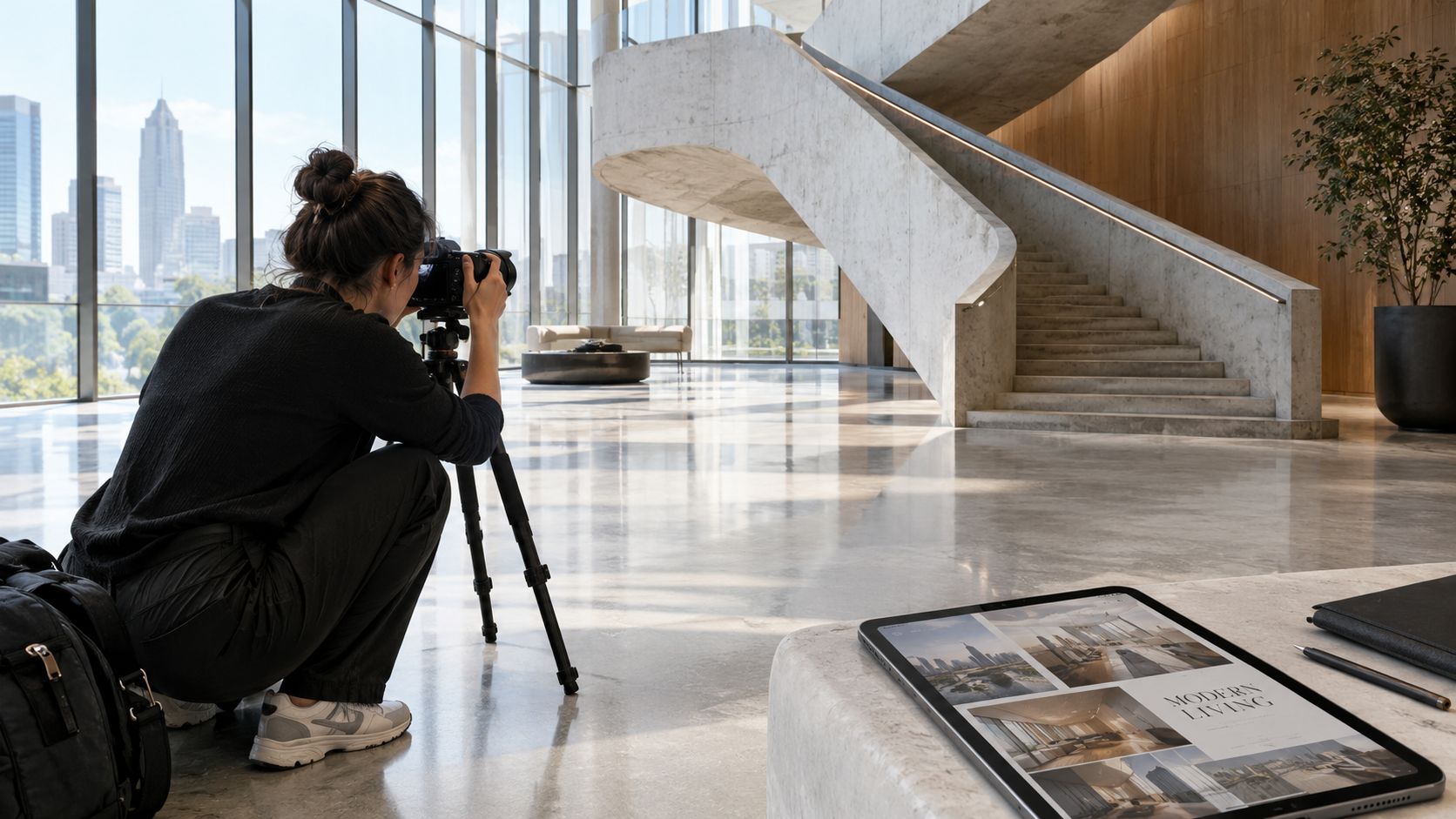
A documentation mindset might select the widest available angle and include every feature. An editorial eye asks whether the frame has a clear subject, a visual entry point, and enough context to explain the experience of the space. It may choose a narrower view of a stair, a reflection that connects two volumes, or a human presence that establishes scale without turning the image into a lifestyle advertisement.
That judgment also affects sequencing. A strong set might open with the building in its urban setting, move into arrival, reveal the main interior, isolate a material detail, and close with a view that gives the project a sense of place. Each frame earns its position. The photographer is not just collecting options for someone else to organize later.
The same principle applies to corporate and hospitality work. People, furniture, signage, greenery, and daylight should support the architecture instead of obscuring it. Editorial experience helps the photographer direct small changes on site, such as moving a chair, waiting for a passerby, or asking a team member to enter the frame at the right moment.
A useful comparison appears in magazine and editorial photography, where timing, composition, and narrative purpose carry as much weight as technical cleanliness.
Speed without carelessness
High-pressure assignments don't justify rushed architectural images. They teach the photographer to prepare thoroughly, make decisions quickly, and remain observant when conditions change. If the sun breaks through clouds, a lobby clears, or a reflection suddenly aligns with the facade, an experienced photographer can recognize the opportunity without abandoning the technical standard.
The best result feels unforced. Straight lines remain straight, the materials look credible, the light has direction, and the image communicates how the building wants to be experienced.
Editorial training also creates accountability around deadlines. Publications and campaigns don't wait for a photographer to discover a visual idea after delivery. The photographer must return with a coherent set that can serve a cover, feature, web gallery, presentation, or campaign without losing the project's identity.
Finalizing Your Partnership Strategy
The final choice should balance technical control, visual intent, and operational reliability. A photographer may produce beautiful images but lack the process needed for a complex occupied building. Another may deliver accurate documentation that doesn't give your project a distinctive narrative. The right partner can explain both the creative decisions and the production mechanics.
Use the portfolio review, interview, and site-preparation conversations to test alignment. Confirm that the photographer understands the audience, can maintain perspective accuracy, knows how to balance ambient and supplemental light, and treats editing as a way to preserve credibility rather than exaggerate the property. Ensure the license and deliverables support the channels where the images will ultimately perform.
Think beyond one assignment. A building may need launch images, detail studies, construction milestones, team portraits, video, or updated photographs as the surrounding context changes. A photographer who understands your visual standards can make future work more consistent and reduce the time spent explaining the same priorities.
The strongest partnership doesn't turn every project into the same visual formula. It establishes a dependable level of craft while leaving room for the building's character, the client's objectives, and Atlanta's changing architectural setting. Choose the photographer who can document what exists, interpret why it matters, and deliver images your team can use with confidence.
Jimmy Clemmons Photographer offers Atlanta architectural imagery with location scouting, lighting design, on-set direction, and professional editing for built-environment and commercial brand assignments. Review the approach at Jimmy Clemmons Photographer and start a conversation about the spaces, formats, and visual goals your next project requires.