
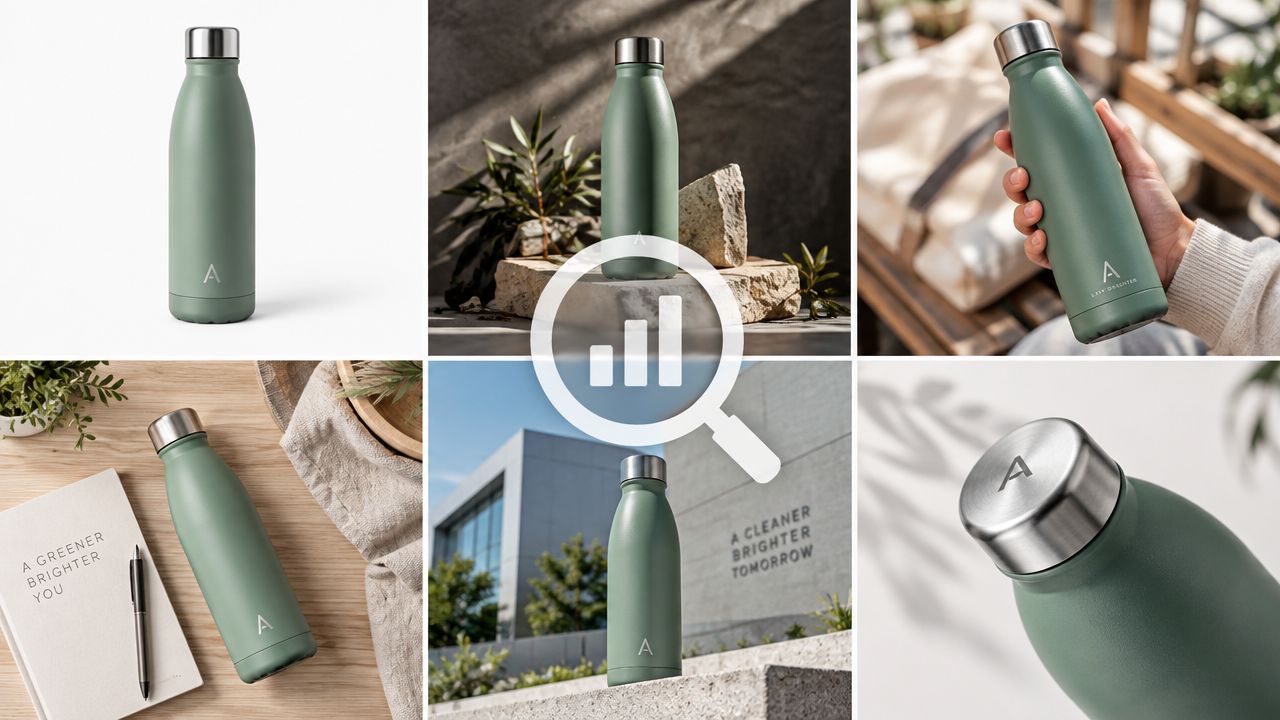
The same product can look purely functional, premium, tactile, architectural, or human, depending on the visual system around it. A brushed metal fixture photographed against white communicates specification and cleanliness. Place that same fixture in a carefully lit interior, and it can communicate material quality, scale, and design intent. These product photography examples compare seven distinct approaches through lighting direction, composition, client objective, usage context, production considerations, and a practical takeaway. Every example is generalized or hypothetical, with no named companies or commercial entities used as project references. For teams that need location scouting, lighting design, art direction, and cohesive editing, a design-conscious photography studio can turn individual images into a consistent visual language. Before commissioning a shoot, it also helps to understand product photography pricing models, because production scope changes substantially between a clean catalog set and a fully directed campaign.
1. Jimmy Clemmons Photographer
A lighting fixture installed in a lobby, a furniture piece in a finished interior, or a material sample on an architect's table has to communicate more than its dimensions. Its surroundings establish scale, use, and design intent. That makes the image useful to architects, property teams, and brands selling through a considered environment.
Jimmy Clemmons Photographer offers an Atlanta-based, full-service production approach informed by film experience and editorial picture-making. The work suits architecture and design firms, real estate and commercial property teams, corporate marketing departments, interior designers, hospitality groups, and editorial clients. Sweeping environments, refined interiors, team portraits, and product campaigns can be planned within one visual system, which helps a brand keep its imagery consistent across a website, proposal, campaign, or publication.

Why the system works
The production choice is controlled atmosphere. A broad, soft source can describe stone, metal, wood, or glass without flattening the surface. Carefully placed contrast then separates edges, reveals depth, and keeps the object visually present within the setting. Clean geometry supports a design-led message, while a human arrangement can show how the product functions in a workplace, hospitality setting, or lived interior.
The composition should follow the client's communication goal. Use a wider frame when scale and architectural context matter. Move closer when finish, junctions, or material quality carry the story. Styling stays restrained so the environment supports the product instead of competing with it.
The studio's services include location scouting, lighting design, on-set direction, and professional editing. That combination is useful when product images must align with architectural photography, corporate content, or editorial placements rather than serve only a product page. Experience connected to Sports Illustrated, Football Weekly, Condé Nast, and Atlanta magazine also reflects an editorial concern for purposeful framing and clear visual hierarchy.
Practical rule: If the product needs to communicate design value, photograph its relationship to space, material, and use, not just its isolated silhouette.
The trade-off is production flexibility versus logistical simplicity. A collaborative, location-led shoot can create a more coherent brand story, but pricing isn't listed publicly, so teams need a custom quote. Atlanta-based availability may also require additional planning for distant assignments. For commercial photography examples, this approach fits projects where the object, environment, and wider brand story need to feel connected.
2. The Line Studios
A premium beauty, jewelry, or accessory image depends on restraint. The camera needs to show texture, finish, packaging, and proportion without allowing styling to compete with the product. The Line Studios uses that principle across e-commerce and campaign imagery, with a portfolio spanning beauty, fashion, jewelry, accessories, home, and consumer goods.
The visual language favors refined still life, on-figure presentation, texture studies, swatches, and macro detail. For a skincare bottle, that might mean a controlled close-up that reveals the quality of the label and the viscosity of the product. For jewelry, the composition may use a model or sculptural prop to show scale while keeping the product as the sharpest visual priority.
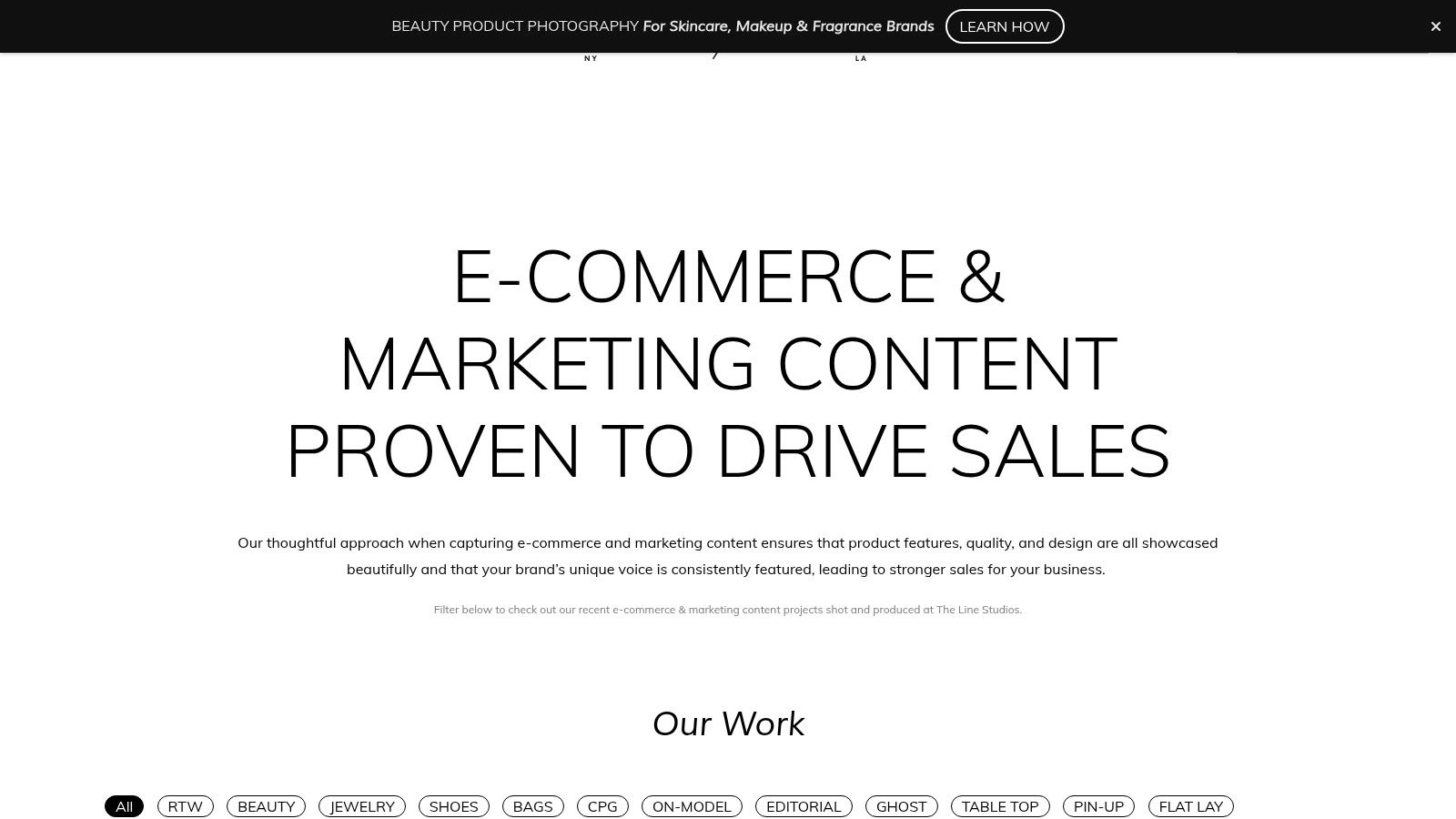
Editorial polish at catalog scale
Lighting should be calibrated to the material. Glossy packaging needs controlled reflections and clean highlight shapes. Powder, fabric, and brushed surfaces need directional light that reveals texture without producing distracting hotspots. The composition can then stay simple, allowing the product's physical qualities to carry the narrative.
The practical strength here is operational maturity. A brand preparing a launch or recurring multi-SKU production can benefit from a calibrated workflow that keeps color, framing, styling, and retouching consistent across a catalog. Remote or satellite capabilities can also support distributed production needs.
The trade-off is budget and lead time. Custom pricing is generally a better fit for mid-market and enterprise teams than for a brand commissioning a small batch of isolated images. Production may also take longer than an on-demand service with per-image menus. Still, when a product range needs a unified visual identity across product detail pages, campaign assets, and social content, editorial consistency often makes the investment easier to justify. Explore The Line Studios' portfolio to assess how their still-life and on-figure systems match your category.
3. Squareshot
Catalog photography must let shoppers inspect a product quickly while giving the brand a repeatable system across many SKUs. Squareshot supports that workflow through ship-in production, studios in multiple U.S. cities, and standardized options for on-white product pages, ghost mannequin images, flat lays, and model inclusions.
The production target is consistency. Scale, shadow treatment, color, and camera angle should remain stable from one listing to the next. That approach suits apparel, accessories, consumer goods, and any catalog where shoppers compare several products on the same screen. It also gives marketing teams a dependable base for resizing and reusing assets across channels.
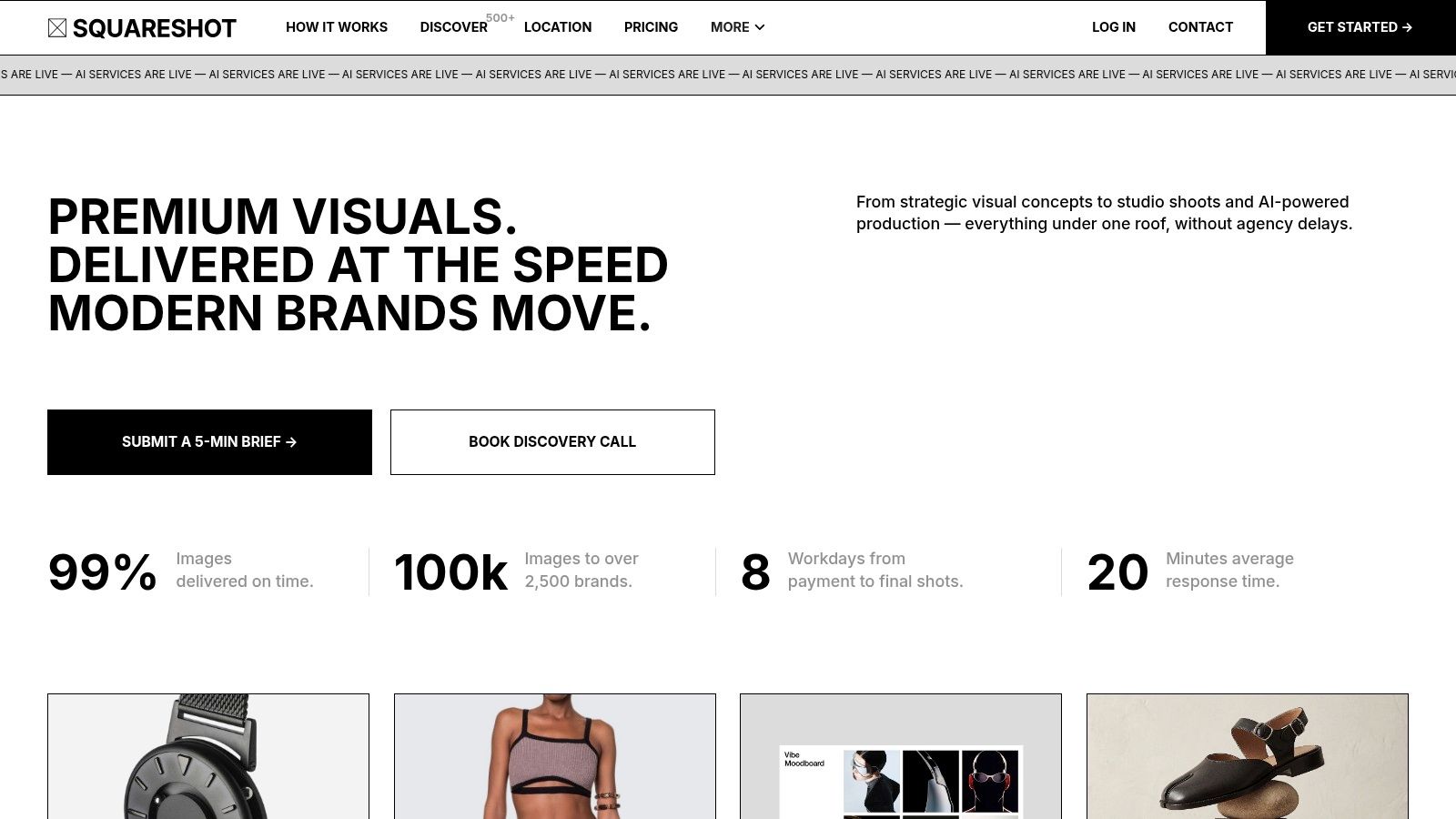
Where repeatability beats experimentation
Composition stays functional by design. On-white images clarify shape, materials, and product details. Ghost mannequin photography shows fit while keeping the model invisible. Flat lays provide an overhead view for garments and grouped accessories, while model inclusions establish proportion and everyday context.
A membership plan removes minimums and lowers per-image rates, which may suit ongoing catalog maintenance. Non-members can face minimums, including an example product minimum of $300 and separate model minimums. The right choice depends on the item count, image types, and frequency of updates.
Creative range is the main constraint. Complex set construction, elaborate prop styling, or a tightly specified campaign concept may require add-ons or another production partner. Squareshot works best when the brief prioritizes clarity, consistency, and throughput over visual spectacle.
Architects, brands, and marketing teams can assess the fit against a broader commercial photography portfolio before scaling a rollout. Review Squareshot's services with a sample SKU list, then confirm that the lighting, composition, styling, and retouching standards support the intended communication goal.
4. soona
Speed changes the production decision. A direct-to-consumer team may need new product images for a listing test, a seasonal update, or a social launch without commissioning a fully bespoke campaign. soona is designed for that middle ground, combining virtual shoot direction with in-studio options across the United States.
The lighting and composition tend to stay accessible. A clean tabletop setup can produce a sharp product detail page image, while a lightly styled scene introduces color, props, or a human hand without requiring a large set build. That makes the approach useful for teams testing variations in background, crop, pose, or product grouping.
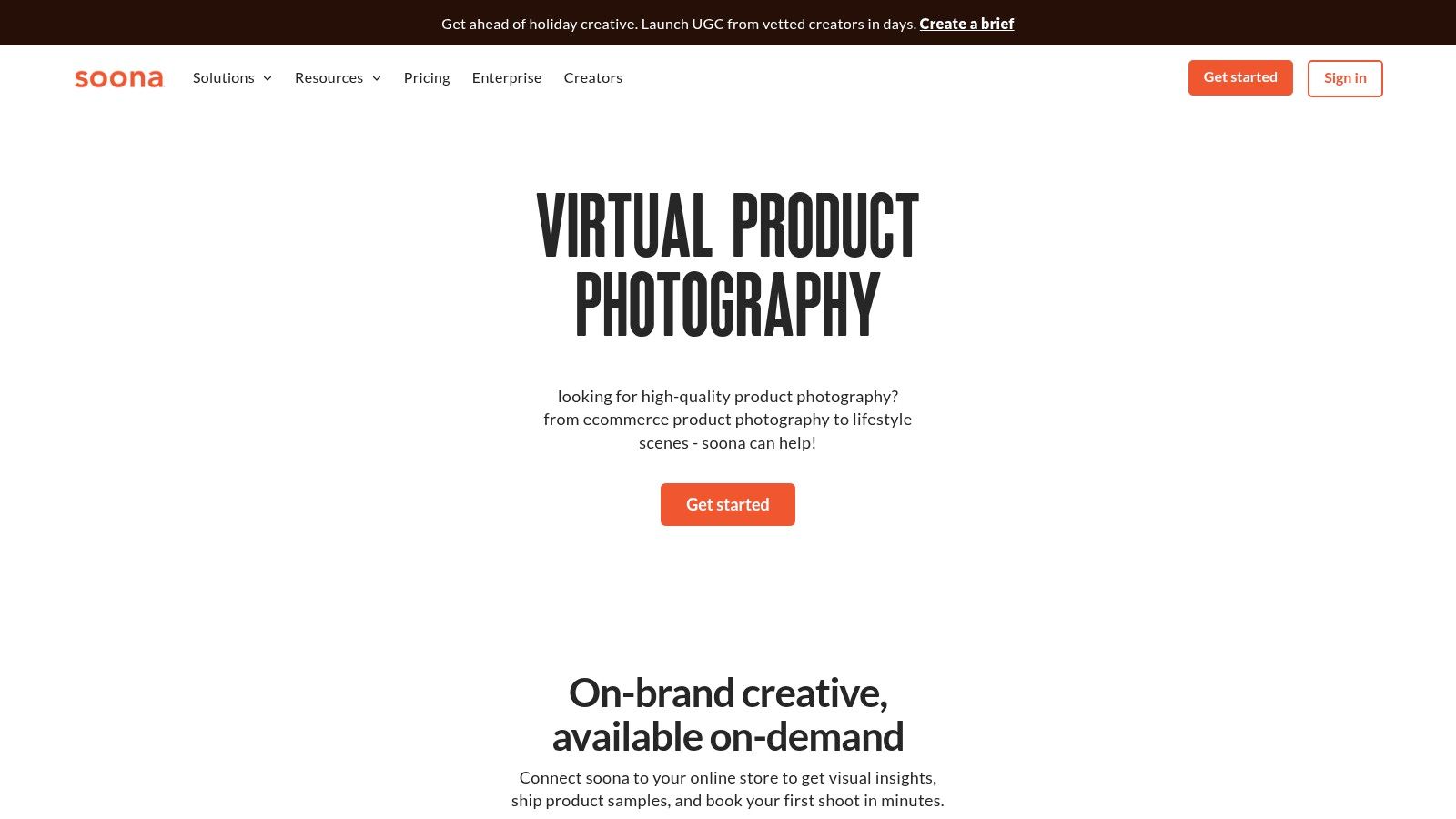
Fast feedback, narrower creative range
Flat pricing starts at $39 per photo, and the service pairs that structure with quick editing turnaround. The price is a verified feature of the listed service, but the right comparison isn't just cost per image. Teams should also assess whether the visual result can hold up across the product page, paid social, email, and brand channels.
Live remote art direction is a meaningful advantage for small teams. A marketer can guide styling, framing, or prop selection during the shoot instead of relying entirely on a final gallery review. Access to models, stylists, and props expands the output beyond isolated packshots, while Studio Pass and subscription options support recurring content needs.
The compromise is creative ceiling. Highly engineered sets, unusual materials, challenging reflective surfaces, or demanding art direction may not fit the fast-turn model. Results can also vary by team and location, so a visual reference sheet is essential. Define the required crops, surface treatment, light quality, and retouching standard before production, then connect the assets to a broader social media photography strategy. Explore soona's virtual studio service when predictable production matters more than a distinctive campaign signature.
5. ProductPhoto.com
Marketplace photography has a different job from campaign photography. The main image needs to present the product clearly and comply with platform rules, while secondary images can explain features, demonstrate use, and add lifestyle context. ProductPhoto.com focuses on that conversion-ready ecosystem through on-white imagery, lifestyle scenes, 360-degree spins, video, and A+ content.
The visual system begins with compliance. A pure white background is a recurring requirement for main marketplace imagery, and one published guideline specifies RGB 255,255,255 for Amazon and Walmart, while secondary images may allow contextual or lifestyle backgrounds. That distinction should shape the shot list before the camera is set up. A beautiful scene that fails the main-image requirement isn't a useful primary asset.
Build the listing around buyer questions
Composition should answer practical concerns in sequence. The clean hero shot identifies the item. A close-up can reveal finish or construction. A lifestyle frame can establish scale and use. An infographic or short video can explain an operation that a still image can't communicate efficiently.
For online product imagery, a square image around 2000 by 2000 pixels is a practical default for sharp display and zoom, with one recommendation specifying 2048 by 2048 pixels and describing 1000 by 1000 pixels as the low end of acceptable guidance for many platforms. See the recommended product photography resolution when preparing a platform-neutral master file.
ProductPhoto.com is a strong option for sellers that want listing images and brand content from one vendor. Its weakness is specialization. The core strength is marketplace performance, not high-concept editorial production, and ship-in workflows require planning around transit and production windows. For teams comparing types of commercial photography, this approach fits products whose success depends on complete, compliant, information-rich listings. Review ProductPhoto.com's portfolio, and use Zemith for clean cutouts when background removal is part of the post-production workflow.
6. RARE Studio LA
Some products need a visual world before they need a catalog image. RARE Studio LA approaches still life through crafted sets, color stories, tactile arrangements, and graphic compositions. That makes the studio a natural fit for consumer goods, packaging, beauty, accessories, and campaign moments where the image must establish mood as well as identity.
The composition can be bold without becoming arbitrary. A sneaker might sit against a saturated plane that echoes its sole or packaging. A cosmetic compact might be surrounded by materials that suggest softness, polish, or ritual. The props should add meaning, not just fill empty space. A strong set gives the product a context that the audience can understand in a glance.
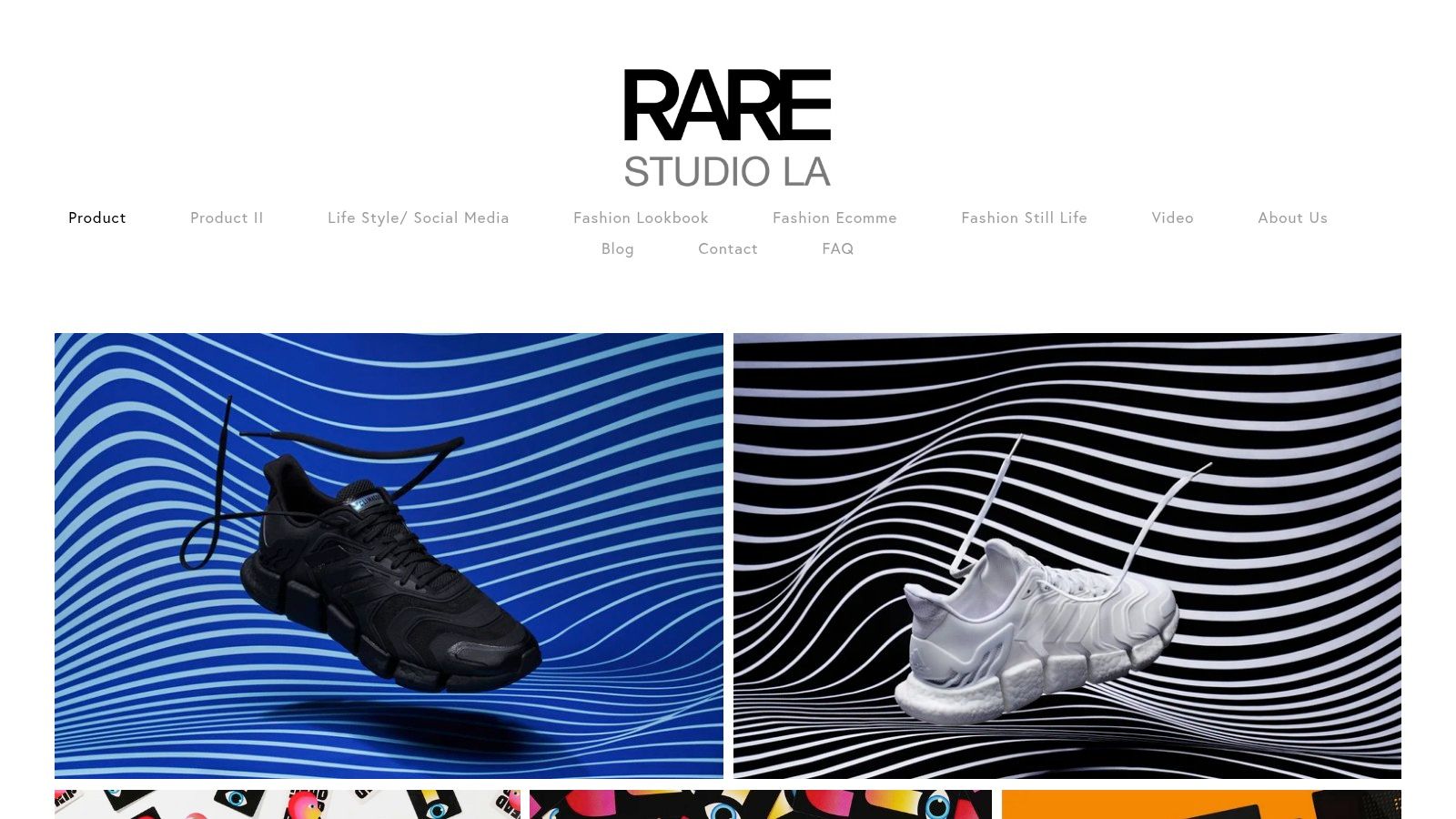
Tactile images need controlled contrast
Lighting direction is central to this style. Side light can bring out raised lettering, leather grain, molded edges, or fabric texture. A broad overhead source can keep a graphic arrangement readable, while a tighter accent can separate the hero object from a similarly colored background. The photographer must control reflections and shadow density carefully, especially when packaging includes glass, foil, or gloss varnish.
The advantage is a distinctive visual language and hands-on preproduction. That can help a brand launch, seasonal campaign, or packaging refresh feel recognizable before the audience reads the copy. The trade-off is that bespoke scopes and fees aren't publicly listed, and the approach is less efficient for a high-volume product detail page requiring dozens of nearly identical frames.
The right question is whether the image needs to create desire, explain function, or do both. RARE Studio LA is best suited to the first two jobs working together. Explore RARE Studio LA when the product needs a tactile, art-directed setting rather than a neutral catalog treatment.
7. Razor Creative Labs
Large catalogs need discipline more than novelty. Razor Creative Labs focuses on high-volume e-commerce output, clean on-white imagery, and 360-degree spins for brands that need consistent assets across consumer goods and housewares.
The standard workflow prioritizes repeatability. Product placement, camera height, background treatment, and shadow control should remain stable from one SKU to the next. A white-background image can clarify silhouette and finish, while a 360-degree sequence gives the shopper a more complete view of shape, closure, hardware, or construction.
Interactive coverage has a specific purpose
A spin is most useful when the buyer needs to inspect the product from multiple sides. That might apply to a chair, appliance, storage product, or object with details hidden in a front-facing image. It shouldn't replace still images that show use, scale, or tactile finish. It should complement them.
One industry compilation reports that products with multiple angles can see roughly a 58% average lift in sales, while a separate summary says a major retailer reported a 35% reduction in returns after testing 360-degree product photos. These figures come from published product photography performance summaries, and they should be treated as directional evidence rather than a guarantee for every category.
Razor Creative Labs positions bulk delivery around a one-week timeline, which suits catalog refreshes that need a defined production rhythm. Pricing is quote-based, so the brief should specify SKU count, required views, spin requirements, retouching, and delivery format. The limitation is clear too. Brands seeking elaborate lifestyle scenes or concept-driven sets may need a separate creative production partner. Review Razor Creative Labs' product photography service if throughput and consistency are the primary requirements.
Top 7 Product Photography Studios Comparison
| Service | Implementation complexity (🔄) | Resource requirements (⚡) | Expected outcomes (📊) | Ideal use cases (💡) | Key advantages (⭐) |
|---|---|---|---|---|---|
| Jimmy Clemmons Photographer | 🔄 High, bespoke location shoots, detailed lighting & direction | ⚡ High, on‑site crew, scouting, custom post‑edit; regional travel | 📊 Premium, editorial‑grade imagery that elevates brand perception | 💡 Architecture, hospitality, corporate campaigns, editorial spreads | ⭐ Editorial craft, high‑profile credits, cohesive brand storytelling |
| The Line Studios | 🔄 Medium‑High, editorial production with scalable pipelines | ⚡ Medium‑High, studio teams, stylists, scalable workflows | 📊 High‑quality campaign and PDP assets suitable for premium brands | 💡 Beauty, fashion, jewelry, product launches and brand refreshes | ⭐ Scalable premium systems and operational maturity |
| Squareshot | 🔄 Low‑Medium, standardized ship‑in and studio workflows | ⚡ Medium, membership options lower per‑image cost; shipping logistics | 📊 Consistent, repeatable catalog PDPs at scale | 💡 Multi‑SKU e‑commerce brands needing catalog throughput | ⭐ Transparent services, membership plans for volume savings |
| soona | 🔄 Low, virtual/live direction and in‑studio quick shoots | ⚡ Low, flat pricing, remote direction, fast editing turnaround | 📊 Fast, predictable PDP and light lifestyle assets | 💡 DTC/marketplace brands testing variations or needing rapid content | ⭐ Predictable costs and rapid turnaround for small teams |
| ProductPhoto.com | 🔄 Medium, ship‑in studio with varied deliverables (360, video) | ⚡ Medium, shipping windows, category‑specific setups; transparent packages | 📊 Marketplace‑ready, conversion‑focused images (Amazon/A+ ready) | 💡 Sellers needing listing + brand content from one vendor | ⭐ Amazon compliance, 360° and video options, clear pricing ranges |
| RARE Studio LA | 🔄 High, concept‑driven, art‑directed set builds and consults | ⚡ High, boutique preproduction, controlled studio time | 📊 Distinct, campaign‑level visuals with strong brand voice | 💡 Campaigns, packaging, beauty and high‑concept product work | ⭐ Hands‑on art direction and bold visual language |
| Razor Creative Labs | 🔄 Low‑Medium, standardized white‑background and spin workflows | ⚡ Medium, ship‑in/local throughput for bulk SKUs | 📊 Consistent on‑white catalog images and interactive 360° spins | 💡 Large catalog refreshes, consumer goods, housewares | ⭐ High throughput, consistency, 360° capability |
Turn Inspiration Into a Repeatable Shot Plan
The right reference isn't necessarily the prettiest image. It's the example that matches the buyer's decision stage, the product category, the distribution channel, and the trust threshold. A clean catalog image works when shoppers need to identify shape and finish. A tactile still life works when material and mood drive desire. Editorial polish supports a brand launch, lifestyle context explains use, and interactive coverage helps shoppers inspect products that are difficult to understand from one angle.
Start with the audience and channel. A marketplace listing may require a compliant white-background hero image, while a campaign can give the photographer more freedom with color, surface, environment, and human presence. Baymard's benchmark found that 25% of e-commerce sites provide product images with insufficient resolution or zoom for visual evaluation, showing why technical detail remains part of the user experience, not a minor production preference. That finding is summarized in Baymard benchmark coverage.
Use this compact shot-planning checklist before approving a production:
- Product priorities: Identify the features buyers must understand, such as scale, texture, finish, construction, operation, or packaging.
- Surface and props: Choose backgrounds and supporting objects that reinforce the product's material and use without crowding the frame.
- Light direction: Decide whether the product needs soft, even description, directional texture, controlled reflections, or a more dramatic campaign mood. Neutral color remains a technical baseline, with daylight-balanced guidance commonly placed around 5,500K to 5,600K and a typical daylight range of 5,500K to 6,500K, as outlined in product photography lighting guidance.
- Framing variants: Plan for hero, detail, alternate angle, scale, lifestyle, and any required vertical or square crops.
- Required deliverables: List still images, spins, video, cutouts, infographics, retouched masters, and platform-specific exports before the shoot.
- Approval criteria: Judge color accuracy, edge quality, shadow control, legibility, consistency, and whether the image answers a real buyer question.
- Reuse: Design the system so assets can support product pages, campaigns, social content, email, sales materials, and editorial placements.
Professional images can have a measurable commercial role. One industry summary estimates the global commercial photography market at US$5.1 billion in 2025, rising to US$6.4 billion by 2035, while another estimates the global e-commerce product photography market at $163.91 million in 2025 and $275.4 million by 2030, implying an 11.6% CAGR, as reported in product photography market statistics. Those projections help explain why teams increasingly treat imagery as sales infrastructure rather than decoration.
The production choice should remain grounded in communication. Use lighting prompts to change photo lighting only as a supplement to deliberate lighting design, not as a substitute for deciding what the product needs to say. Strong product photography is purposeful visual communication, not merely attractive styling.
Jimmy Clemmons Photographer provides architectural imagery, commercial brand content, professional portraits, and product-centered campaigns with location scouting, lighting design, on-set direction, and polished editing. If your product photography needs to connect with a wider built-environment or brand story, visit Jimmy Clemmons Photographer to discuss a cohesive visual plan.