

Typical architectural photography shoot-day rates run $1,500 to $4,000, with most working photographers between $1,500 and $3,000 before licensing and retouching. In major metropolitan markets, a complete project often reaches $3,000 to $6,000, depending on scope, usage, location complexity, and deliverables.
You may be looking at three quotes for the same building and wondering why one photographer is several thousand dollars higher than another. The difference usually isn't a mysterious premium or a simple matter of camera equipment. One quote may cover portfolio use only, another may include marketing rights, and a third may account for publication-quality retouching, twilight work, additional spaces, or a compressed deadline.
Architectural photography rates reflect the commercial value and production demands of the assignment. The most useful comparison isn't the photographer's day rate alone. It's the complete definition of what gets photographed, how the images will be finished, and where your firm can use them.
Why Architectural Photography Rates Vary So Much
Three photographers can inspect the same residence and submit quotes that differ by thousands. Photographer A may offer one shoot day and a limited set of final images. Photographer B may include extensive perspective correction, detailed retouching, and broad marketing rights. Photographer C may schedule an exterior session at sunrise, a later interior session, and images prepared for editorial submission.
The building is identical. The assignments are not. A shoot designed for portfolio documentation has different production demands from one intended for awards, publication, developer marketing, paid advertising, or a recurring brand campaign.
Practical rule: Compare the scope and rights line by line before comparing the totals.
A 2026 pricing guide estimates that a shoot day commonly produces about 10 to 15 finished images and places typical architectural shoot-day rates at $1,500 to $4,000, with many working photographers between $1,500 and $3,000 before licensing and retouching. The 2026 architectural photography pricing guide offers a useful reference point, not a fixed menu. A smaller image count can still require extensive planning and finishing.
Architectural photography is commercial creative work priced around intended use, not only hours on site. If images will represent a firm for years, the photographer may plan more carefully, refine fewer frames more thoroughly, and set different licensing terms. Portfolio use, marketing, awards, editorial publication, and advertising should therefore appear as separate deliverables in the quote.
A quote from a specialist offering architectural photography services may not resemble a general property photography estimate. Separate the creative fee, post-production, and usage rights. A lower opening figure may leave retouching, additional spaces, or permitted uses undefined.
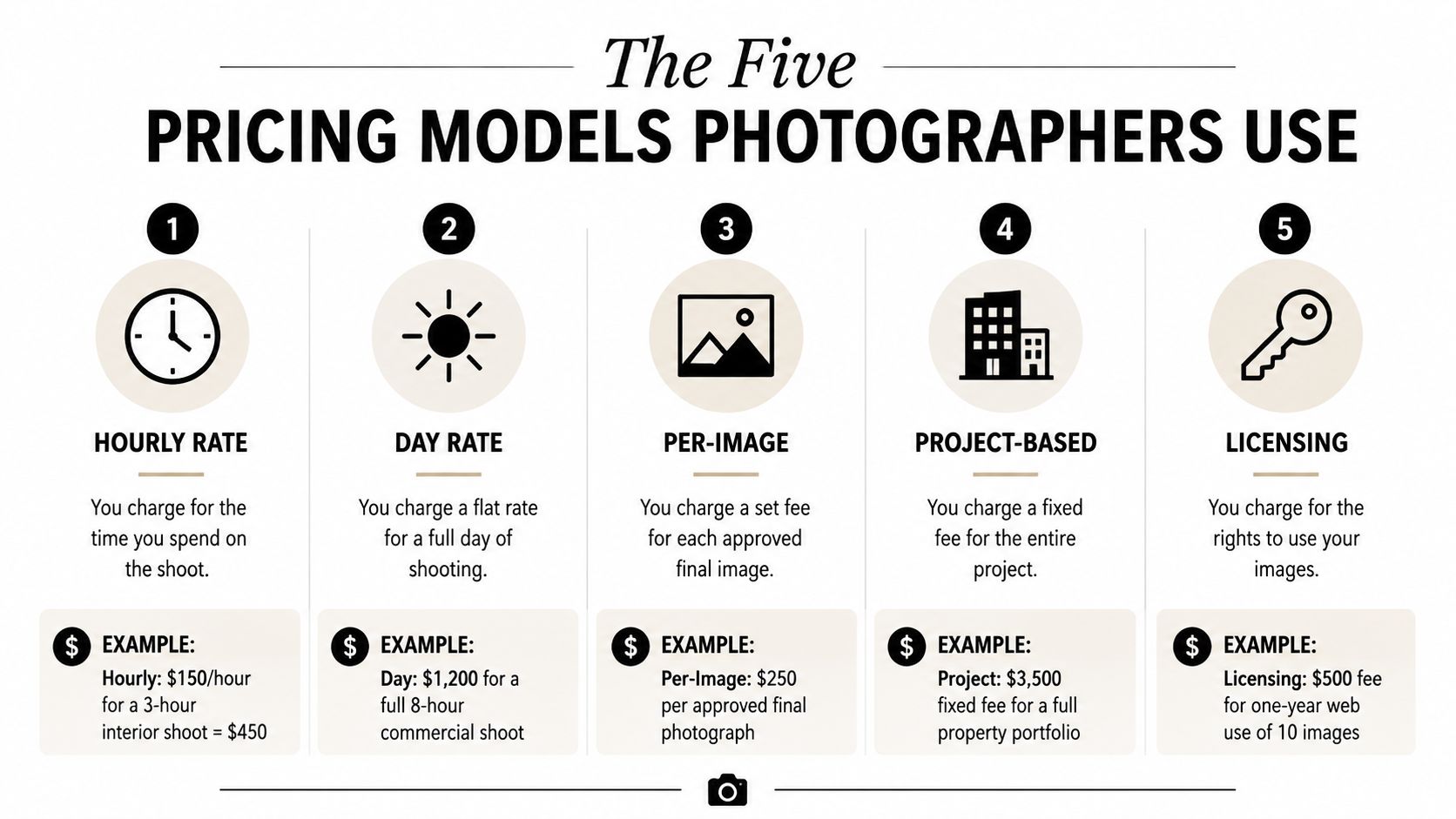
The Five Pricing Models Photographers Use
The same building can receive very different quotes because the photographer may be charging for time, production access, finished images, a defined outcome, or usage rights. Identify the model first, then check exactly what the fee includes.
Hourly pricing
Hourly pricing suits a tightly defined assignment, such as photographing one interior for a design firm's project page. A simple quote might cover three hours on site, with editing, travel, and licensing listed separately.
The advantage is clear time accounting. The risk is that efficiency can work against the client or photographer. A fast photographer may deliver the required result in fewer billed hours, while a difficult location can add preparation, waiting, setup, and post-production that the hourly figure does not cover.
Ask whether the rate includes travel, scouting, equipment setup, image selection, retouching, and usage. If those items sit outside the hourly fee, a low-looking quote may not represent the final cost. The model works best when the brief has a firm time limit and a short, stated deliverable list.
Day-rate pricing
A day rate gives both sides a shared production window. It fits a building with several interiors, exteriors, and changing light conditions, especially when the photographer needs flexibility to follow the site and the available light. The fee may cover the shoot day, while processing and licensing remain separate.
Define “day” in writing. It may mean a full working day, a shorter session, or a fixed number of hours. Also specify whether the client receives every usable frame, a curated selection, or a stated number of finished photographs.
A day rate can be efficient for broad coverage, but it does not automatically include unlimited images or rights. Confirm the delivery count and the post-production standard before comparing it with an hourly quote.
Per-image pricing
Per-image billing charges for selected final photographs. The shoot may have a separate creative fee, followed by a charge for each approved image.
This structure gives the client control over the final count. It can suit an award submission or publication that needs a tightly edited set. The trade-off is reduced freedom during editing. If every additional image raises the fee, useful supporting views may be rejected before the visual story is fully considered.
Clarify whether proofing, alternate crops, additional selections, and advanced retouching cost extra. The quote should also say whether the per-image amount includes usage rights or covers only the finished file.
Project-based pricing
A project fee sets one price around a defined outcome. A photographer might quote a completed property portfolio that includes planning, photography, editing, delivery, and agreed usage.
This model gives the client budget certainty and allows the photographer to manage the work without tracking every task by the hour. It depends on a precise brief. List the locations, shooting conditions, final image count, retouching level, delivery schedule, revisions, and permitted uses.
A professional photographer price list can show how a studio structures standard services, but an architecture assignment still needs a custom written scope. A generic menu cannot define the access, visual requirements, or rights for a specific building.
Licensing-based pricing
Licensing separates the cost of creating the images from permission to use them. The creative fee covers production, while the license states whether the photographs may appear on a website, social media, printed materials, award submissions, editorial pages, or paid advertising.
This model explains why identical photographs can receive different quotes. A firm's portfolio use has a different commercial purpose from a developer's launch campaign, and both differ from third-party advertising. The agreement should name the duration, channels, territory where relevant, authorized users, and whether other parties may reuse the images.
Write those deliverables beside the production fee. A quote that separates creation, finishing, and usage is easier to compare and less likely to produce an unexpected rights dispute.
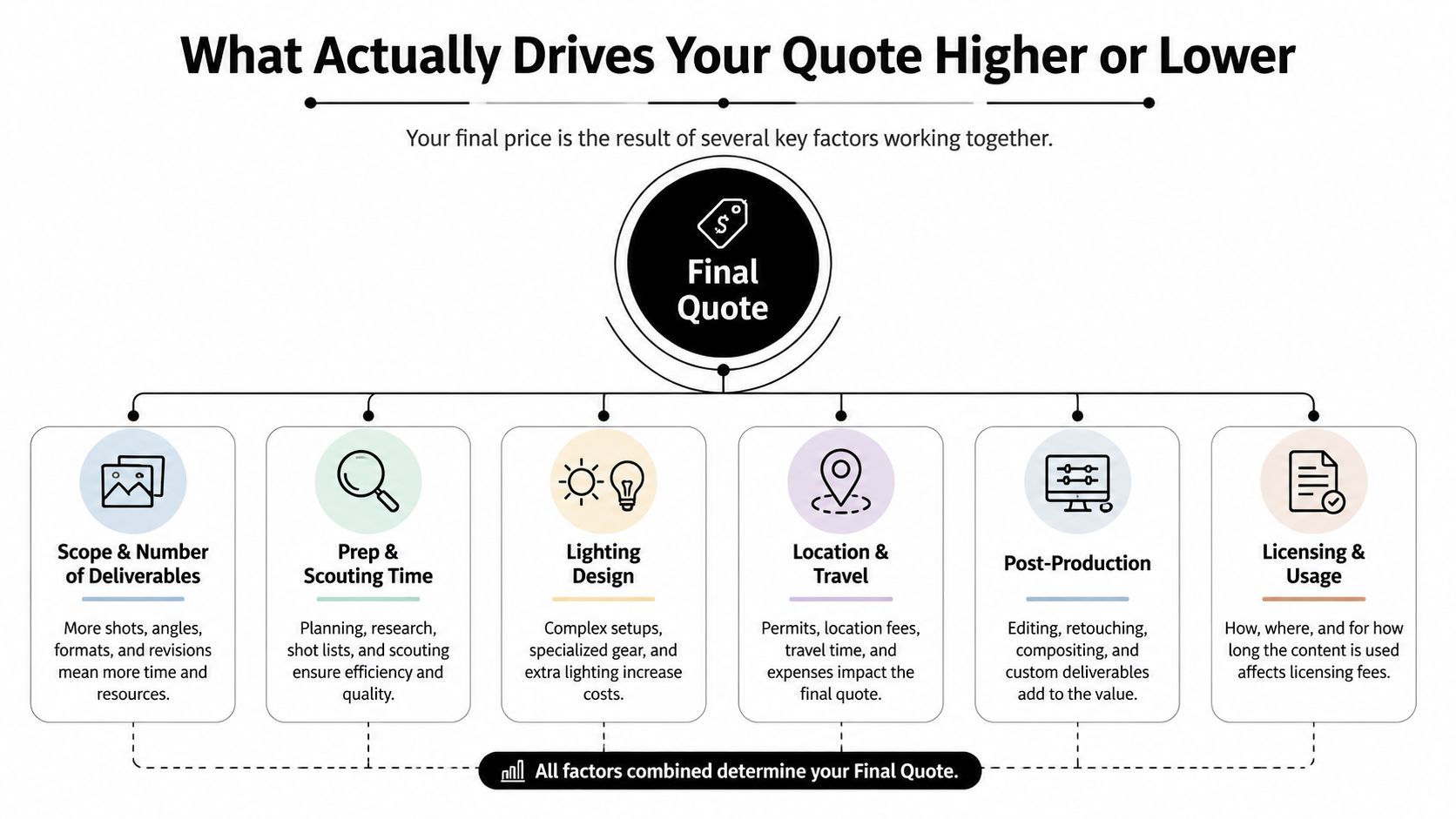
What Actually Drives Your Quote Higher or Lower
The billing model explains how a photographer presents a price. The project variables explain why that price changes.
Scope and deliverables
A small, tightly edited assignment takes less production than a campus, hospitality property, or multi-building development. More rooms, elevations, details, and requested orientations increase capture time, selection work, and retouching. A quote should identify the expected final image count instead of relying on vague language such as “full coverage.”
The difference between ten carefully finished images and a broad library of views affects both the photographer's schedule and the client's review process. Larger deliverable lists generally move the fee upward because they add work after the shoot, not just time during it.
Preparation and lighting
Architectural photographers often plan around sun direction, weather, occupancy, furniture, landscaping, and access. A site visit or detailed remote planning can prevent wasted hours, but that preparation belongs in the scope.
Lighting decisions also matter. Some spaces can be shaped with natural light and careful timing. Others need supplemental lighting, multiple exposures, or more extensive balancing between windows and interiors. Waiting for the right light may extend the production window, while a deliberate lighting setup can add equipment, assistants, and post-production.
Location and market
Travel, parking, access restrictions, permits, equipment transport, and remote sites all affect the quote. Market position matters too. Industry pricing discussions report that 35% of North American architectural photographers charge $1,000 to $2,000 per day, while only 10% charge $4,000 or more, and that major-metro projects often reach $3,000 to $6,000 when licensing, complexity, and deliverable volume add to the base fee. The cited North American rate discussion illustrates why Atlanta, New York, Los Angeles, and smaller markets may produce different quotes for similar work.
Post-production and usage
Basic color correction isn't the same as publication-ready retouching. Perspective control, reflections, distractions, people removal, sky work, and detailed compositing can all change the labor involved.
Usage rights can move the fee even when the image count stays constant. A portfolio, award, editorial, developer marketing, or advertising license serves different commercial purposes. A short deadline can also increase the price because the photographer must rearrange editing and delivery work around your launch.
Rate Benchmarks by Market and Region
Regional comparisons are useful only when treated as benchmarks, not promises. A global 2021 census found meaningful differences in how architectural photographers price assignments, and those differences help explain why an international quote comparison can feel inconsistent.
| Region | Typical Rate Band | Notable Distribution |
|---|---|---|
| North America | $1,000–$2,000 per assignment for a substantial respondent group | About 35% reported this band, while 10% reported $4,000 or more |
| Middle East | $3,000–$4,000 per assignment | 20% of respondents reported this band |
| Australia and New Zealand | $2,000–$3,000 per assignment | More than 75% were concentrated in this range |
| Worldwide | $5,000 or more per day at the premium end | Roughly 2% reported charging this level |
These figures come from the global architectural photography census. They describe reported distributions from the census, not a universal rate card for every city or assignment.
How to use the table
A firm in Atlanta comparing a local quote with one from another major market should first ask whether both photographers are including the same rights, production time, and final deliverables. A regional difference may reflect operating costs, but it may also reflect different expectations around licensing, editorial quality, client service, or retouching.
Australia and New Zealand's concentrated band suggests a more standardized pricing environment in that dataset. The Middle East distribution points toward a stronger presence of higher assignment bands among respondents there. The worldwide premium figure shows that top-end daily rates exist, but they represent a small reported segment rather than the normal expectation.
A quote comparison becomes useful only after every photographer prices the same brief.
Market maturity also shapes how photographers package their work. Some include licensing inside a project fee, while others itemize it. Some quote a tightly edited image set, while others offer broader coverage. Ask each candidate to price an identical scope and state what changes if the images later move from a portfolio to a paid campaign.
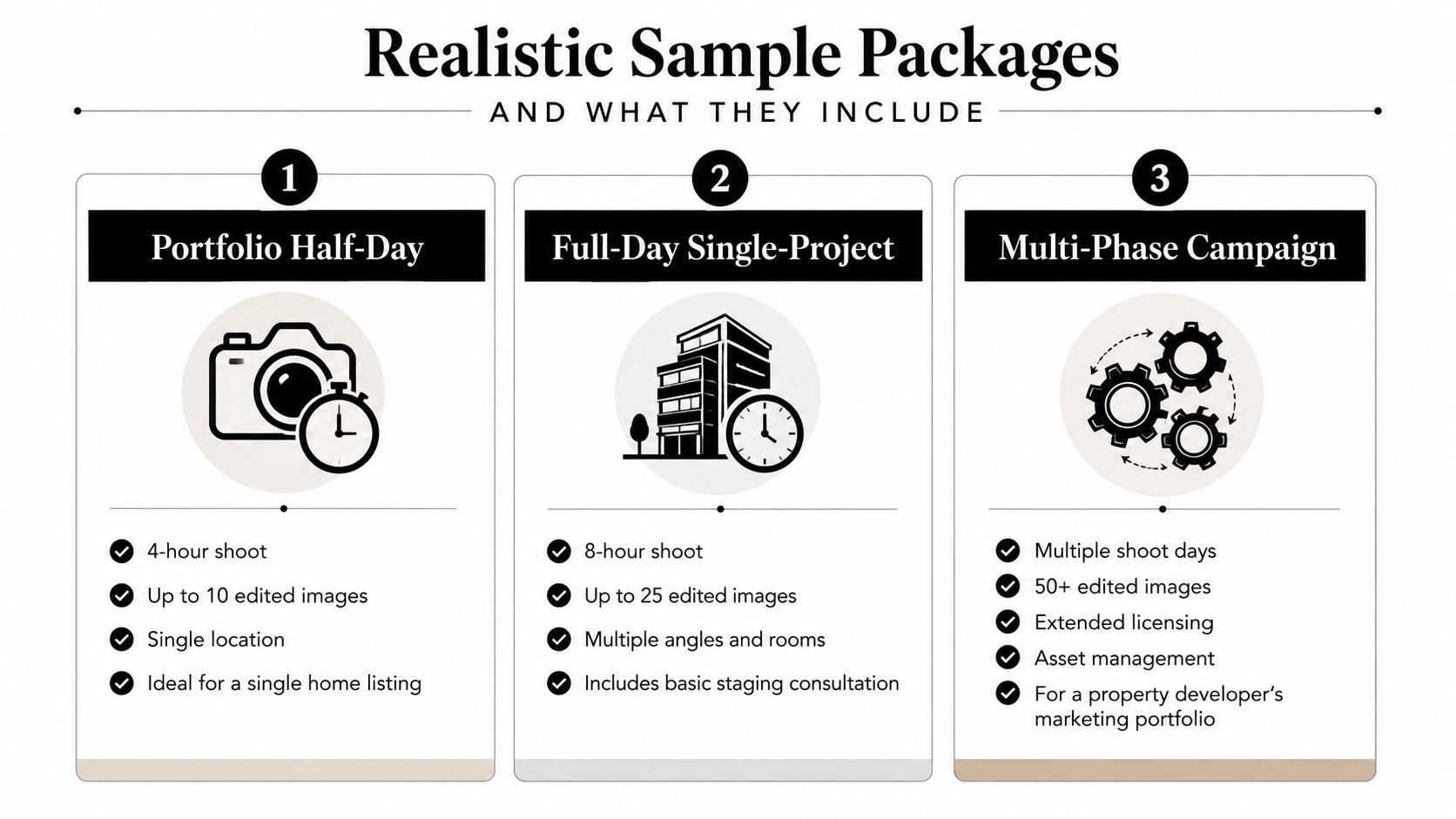
Realistic Sample Packages and What They Include
Packages make architectural photography rates easier to evaluate, provided the inclusions are explicit. The following tiers describe different assignment shapes rather than fixed industry products.
Portfolio half-day
This suits an interior designer updating a focused portfolio page or a firm documenting one compact space. The package might reserve a half-day, cover one location, and deliver a limited, edited selection. It works when the brief prioritizes a few strong hero views and supporting details rather than thorough, end-to-end documentation.
Before approving it, confirm whether the photographer includes staging guidance, perspective correction, standard retouching, and portfolio or website usage. A half-day package isn't automatically a real-estate package. The intended audience and finish still determine the production standard.
Full-day single-project shoot
A general contractor documenting a completed school renovation may need exterior context, circulation areas, classrooms, material details, and images that show the relationship between old and new work. A full-day assignment provides more room for changing conditions and a broader visual narrative.
The quote should identify how many final images are included, whether the photographer provides a proof gallery, and whether basic coordination or staging consultation is part of the service. If the client expects award entries or editorial submission, those rights and any higher retouching standard should appear in the agreement.
Multi-phase campaign
A developer launching a property marketing program may need several sessions across construction milestones, completion, and campaign delivery. A multi-phase package can organize recurring photography, asset management, extended licensing, and a consistent visual style.
Architecture pricing in major markets commonly sits around $1,000 to $4,000 or more for the creative fee, with major-market projects often cited at $3,000 to $6,000. Real-estate photography is usually structured per property and influenced by square footage, room count, and add-ons such as drone or twilight work, as described in this comparison of photography rates by shoot type. The distinction matters because publication, award, and brand imagery serves a longer and more demanding purpose than consumer listing coverage.
Recent 2025 and 2026 pricing references also identify twilight sessions, rush delivery, and recurring multi-phase documentation as clearer line items. Ask whether each is optional, included, or priced separately before the schedule is locked.
How to Get Accurate Quotes and Negotiate With Confidence
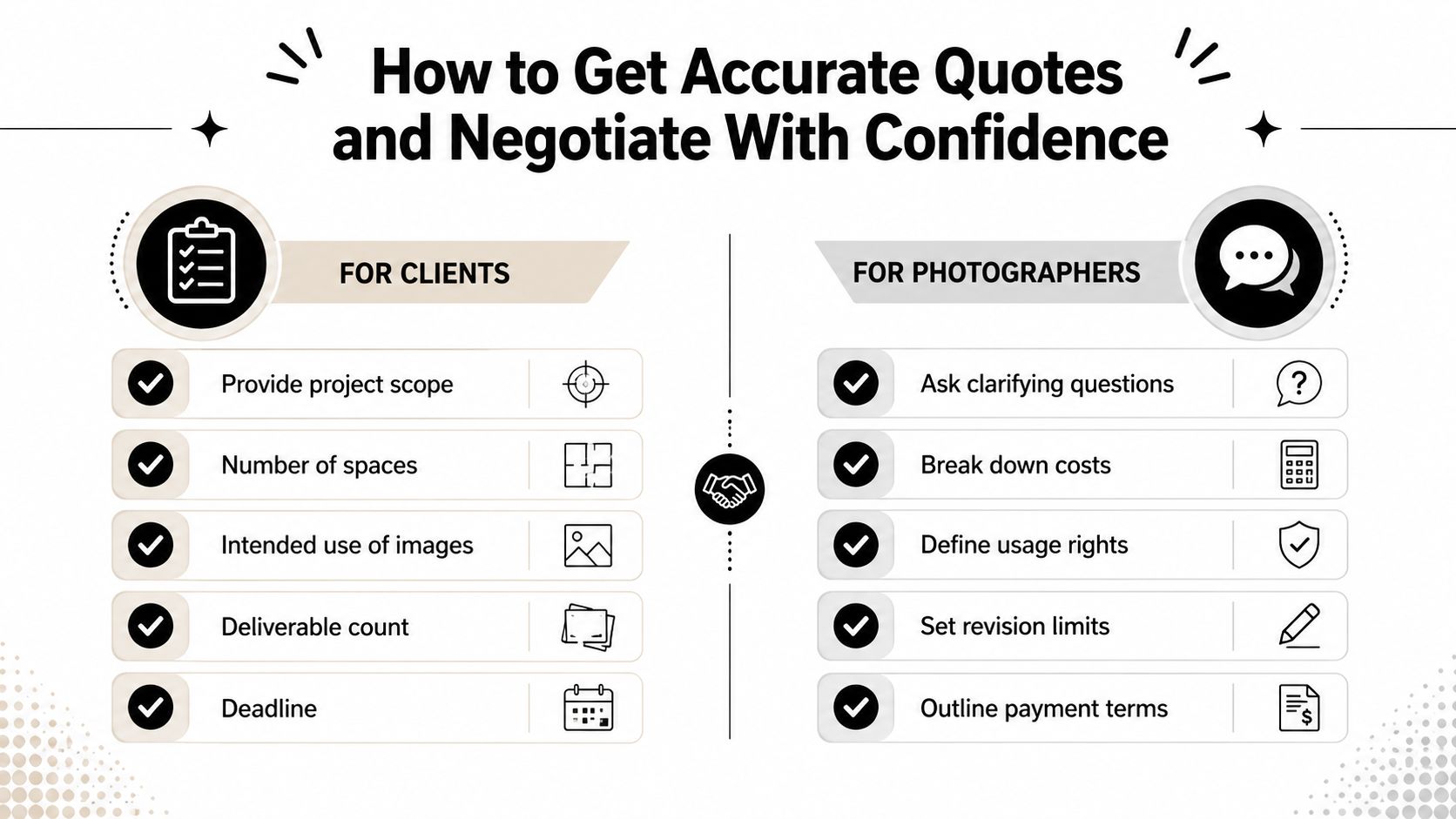
A photographer can't price an undefined assignment accurately. Clients get better quotes when they provide a usable brief, and photographers earn more trust when they explain what changes the fee.
Give the photographer a complete starting brief
Include the project address, access conditions, occupied or unoccupied status, number of spaces, exterior requirements, desired image count, and preferred dates. Add the intended use. “Website and awards” is more informative than “marketing,” because the photographer can define appropriate licensing and finishing expectations.
Also identify who needs access to the images. An architect, developer, general contractor, manufacturer, and interior designer may each require separate permissions. Mention whether you need twilight views, detail photography, people, drone work, or rush delivery.
Negotiate the scope, not just the total
If a quote exceeds the budget, reduce or prioritize deliverables before asking the photographer to cut the creative fee blindly. You might choose fewer final images, limit the first license to portfolio and website use, schedule one lighting approach, or remove rush delivery.
Photographers should present options that preserve quality. A concise portfolio package, a broader marketing package, and a campaign package give the client a meaningful choice. Itemize licensing, retouching, travel, and additional production so the client understands what changes between tiers.
Put these terms in writing
- Image count: State the number of finished photographs and how additional selections are priced.
- Retouching level: Define standard correction versus detailed architectural retouching or compositing.
- Usage rights: Identify the license duration, channels, stakeholders, and advertising permissions.
- Revisions: State whether the client can request changes and what counts as a new retouching request.
- Delivery timeline: Specify when proofs and final files arrive, including any rush option.
- Payment terms: Record the deposit, balance timing, cancellation terms, and expenses.
A clear agreement protects both sides. It also prevents the common situation where a client assumes “all rights” while a photographer assumes limited portfolio use.
Budgeting for Photography That Pays for Itself
Before requesting architectural photography rates, make four decisions.
- Define the image job. Decide whether the photographs support a portfolio, awards, editorial publication, developer marketing, advertising, documentation, or several purposes.
- Set the visual scope. List the spaces, exterior views, details, lighting conditions, and approximate final image count.
- Choose a comparison basis. Ask every photographer to quote the same production window, deliverables, retouching standard, and usage rights.
- Record the agreement. Put licensing duration, channels, stakeholders, revisions, delivery, and expenses in writing.
The cheapest quote isn't necessarily the least expensive outcome. A rushed shoot can leave you without the exterior view, detail frame, or publication-ready finish that the project needed. A clear brief helps the photographer spend time where it affects the final images, while a well-defined license lets those images continue working across the firm's portfolio, award entries, press materials, and campaigns.
That perspective aligns with the return on investment of professional photography. Treat the assignment as a visual asset with production and usage requirements, not as a generic line item. The strongest budget is the one that buys the right images, for the right audience, with no ambiguity about what happens after delivery.
If you're planning an architectural, commercial, or design assignment in Atlanta or beyond, Jimmy Clemmons Photographer can help define the scope, plan the light, and structure deliverables around your intended use. Visit Jimmy Clemmons Photographer to discuss your project and request a quote built around clear licensing and production terms.