
You're probably in one of two situations right now. Either you're building an interior photography kit and trying to avoid an expensive mistake, or you already own a wide lens and you've realized that “wide enough” isn't the same as “professional enough.”
That distinction matters more in interiors than almost any other genre. Clients don't just want to see the whole room. They want believable scale, straight cabinetry, level door frames, and a sense that the space feels as refined in the photograph as it does in person. The best lens for interior design photography isn't the widest lens on the shelf. It's the lens that helps you render design accurately while keeping your workflow efficient across stills, detail images, and increasingly, video deliverables.
A lot of gear advice stops at focal length ranges. That's useful, but incomplete. The real decision is usually this: should you invest in a tilt-shift lens for perspective control, or can a high-quality rectilinear zoom carry the job? And if your client also needs reels, walkthroughs, or web video, can one lens do both without slowing down production?
| Lens type | Best use | Strength | Limitation | Who it suits |
|---|---|---|---|---|
| Tilt-shift prime | Editorial interiors, architecture, luxury hospitality | In-camera perspective control, clean verticals, polished look | Slower to use, more specialized | Photographers delivering premium client work |
| Rectilinear wide zoom | General interior coverage, mixed assignments, hybrid days | Flexible framing, faster operation, practical for stills and motion | Perspective usually needs more correction in post | Designers, marketers, real estate teams, growing studios |
| Standard zoom | Lifestyle vignettes, tighter room views, detail stories | Natural proportions, quick reframing, versatile across deliverables | Not wide enough for every room | Interior designers building a fuller project narrative |
| Moderate prime | Detail shots, editorial moments, materials, styling | Strong rendering, simple composition discipline | Less flexible on location | Shooters who already have a wide option |
The Anatomy of an Ideal Interior Lens
An interior lens earns its keep by doing one job well: it describes space accurately. Width is only part of that. A lens can fit an entire room into frame and still make the result look amateur if the walls bow, the edges smear, or the proportions feel stretched.
The first thing professionals look for is controlled distortion. Interiors are full of reference lines. Window mullions, cabinet runs, tile joints, ceiling transitions, shelving, door casings. If those lines bend or lean in distracting ways, the viewer stops seeing the design and starts noticing the lens.
What matters more than maximum width
A lens for interiors should deliver four things consistently:
- Straight geometry that keeps architectural lines believable.
- Edge-to-edge sharpness so corners of the frame don't collapse when a client zooms in.
- Predictable rendering across focal lengths, especially if you're matching a set of images.
- Usable close focus for detail frames of millwork, textiles, fixtures, and materials.
That last point gets overlooked. A room-wide hero image rarely carries a full project gallery by itself. Designers need supporting frames that show finish transitions, joinery, hardware, upholstery, and light. A lens that can move from a room view to a tighter story frame without falling apart optically saves time on set.
Why aperture matters differently indoors
A wide maximum aperture sounds attractive, but in interior design photography it's not the headline feature many buyers think it is. Most serious interior work happens on a tripod, with deliberate composition and controlled exposure. What matters more is how the lens behaves stopped down. If it sharpens evenly across the frame and keeps contrast clean, it's doing its job.
For video, aperture can matter more for light gathering and focusing behavior. For stills, the bigger issue is consistency. A lens that looks crisp in the center but soft at the margins will show its weaknesses quickly in rooms with layered detail.
Practical rule: In interiors, a lens should preserve structure first and flatter the space second.
The cost question most guides skip
The conversation now becomes practical. Many gear roundups mention specialty lenses, but they don't answer the working photographer's question: when is a tilt-shift worth the money? That gap is called out directly in Emily Hart's piece on choosing gear for interior design photography, which notes that most guides miss the cost-benefit analysis between perspective-control lenses and standard wide zooms.
That omission matters because software can correct some problems, but not without trade-offs. The more aggressively you pull lines back into place later, the more you stretch pixels, crop frame edges, and compromise the natural proportions you were trying to preserve in the first place.
A good interior lens doesn't just capture a room. It protects the integrity of the design.
Tilt-Shift vs Rectilinear Zooms The Professional's Choice
This is the fork in the road for anyone serious about interiors. A tilt-shift lens gives you direct control over perspective in camera. A rectilinear zoom gives you speed and flexibility. Both can produce strong work. They just solve different problems, and they shape your shooting day in different ways.
One of the clearest markers of professional practice comes from architectural photography. In a survey cited by Fstoppers, at least 90% of images were captured with a tilt-shift lens, which shows how central these lenses have become for high-end work in the field. The same discussion also notes that at least 80% of those tilt-shift images used rise or fall movements. You can read that benchmark in Fstoppers' article on architectural photography lenses and tilt-shift use.
What tilt-shift changes on the job
With a tilt-shift lens, you can keep the camera more level and use shift movement to include more ceiling or more foreground without tipping the camera up or down. That's the difference between clean verticals and the familiar “walls falling backward” look.
For premium spaces, that control shows immediately. Hotel suites, architect-designed residences, branded commercial interiors, and editorial assignments all benefit from lines that feel calm and deliberate. You also preserve more of the frame because you're solving perspective at capture, not after heavy digital correction.
A tilt-shift lens tends to reward a slower, more disciplined shooting style:
- Set the tripod precisely and level the camera body.
- Compose for the room's structure, not just the furniture grouping.
- Shift to refine framing while maintaining vertical integrity.
- Make small adjustments to styling and lighting once the geometry is locked.
That workflow is slower than working with a zoom, but the files often arrive in post with less rescue work required.
The cleaner the geometry in camera, the less your edit has to repair.
Where a rectilinear zoom wins
A high-quality rectilinear zoom is still the working lens for many professionals, especially on mixed-use days. If you're moving from lobby to conference room to executive portrait corner to quick social clips, a zoom keeps the production moving.
Its advantages are practical:
- Fast reframing when furniture placement or client requests change.
- Less lens swapping across broad room views and medium compositions.
- Better fit for hybrid capture when stills and motion happen on the same call sheet.
- Lower barrier to entry for photographers building a commercial kit.
The trade-off is perspective management. Even a very good wide zoom can invite vertical convergence if you tilt carelessly. Yes, you can correct that later. If you want a realistic look at what post can and can't fix, Jimmy Clemmons has a useful article on using post-production to fix structural photos. It's a workable safety net, but not a full substitute for optical control.
So which one should you buy first
If your work is primarily editorial, architectural, luxury residential, or hospitality, tilt-shift is the stronger investment because the final image quality depends heavily on perspective discipline.
If your work is primarily general commercial interiors, design portfolios, marketing content, and hybrid stills-plus-video assignments, a top-tier rectilinear zoom is usually the smarter first purchase.
A simple decision guide helps:
| If your priority is... | Choose... |
|---|---|
| Straight verticals with minimal post correction | Tilt-shift |
| Speed across multiple room types | Rectilinear zoom |
| Magazine-style polish | Tilt-shift |
| One-lens flexibility for mixed deliverables | Rectilinear zoom |
| Learning architectural discipline | Tilt-shift |
| Building a practical starter kit | Rectilinear zoom |
The mistake is thinking one lens type makes the other obsolete. In working practice, many shooters need both. The tilt-shift handles the hero frames. The zoom handles the rest of the day.
Matching Focal Length to the Interior Space
The room tells you what focal length to use. The lens doesn't make that decision for you.
That's why broad recommendations can be misleading. A powder room, a double-height lobby, and a styled living room don't ask for the same visual treatment. The right focal length isn't only about coverage. It's about whether the photograph feels truthful when someone who knows the space looks at it.
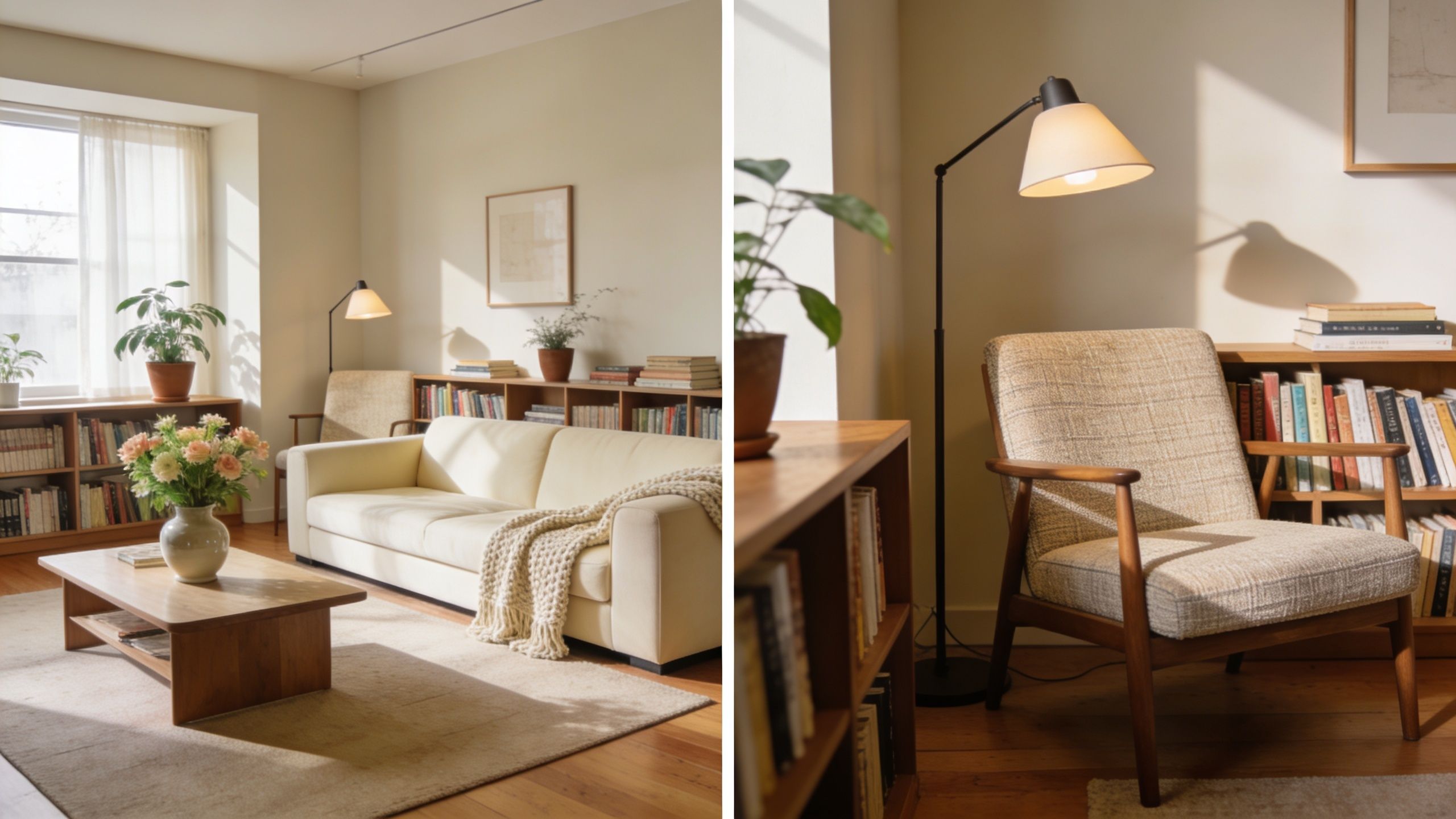
One practical benchmark has held up well over time: the 24 to 70mm range remains a versatile choice for interiors, and one interiors guide specifically recommends not going wider than 24mm for critical work because the ultra-wide end can create unnatural distortion. That guidance appears in Erin Kestenbaum's article on camera gear for interiors photography.
The sweet spot for believable room views
For many full-room images, 24mm to 35mm is where interiors start to look convincing rather than exaggerated. This range gives you enough breadth to describe a room while keeping furniture, wall spacing, and circulation areas from feeling artificially stretched.
A living room is the classic example. At a moderate wide focal length, the seating group stays cohesive, side tables don't drift away from the sofa, and the room keeps its intended intimacy. At an overly wide setting, the same space can suddenly look sparse and oddly distant.
This is also the range where many photographers learn to compose with more discipline. You can't depend on width alone. You have to position the camera better, simplify the frame, and decide what the story of the room is.
If you're working through how wide lenses affect structure, Jimmy Clemmons has a useful breakdown of wide-angle lenses and building proportions.
When wider works and when it starts to fail
There are rooms where going wider is necessary. Tight powder rooms, narrow galley kitchens, compact entry vestibules, and small hotel bathrooms can force your hand. In those spaces, the question isn't “Can I use a wider focal length?” It's “How wide can I go before the image stops feeling credible?”
A practical way to consider this is:
- Small bathrooms and tight service spaces often require a wider view, but they punish sloppy camera angle immediately.
- Open-plan kitchens and living areas usually benefit from restraint. Moderate wide framing keeps scale intact.
- Large lobbies and hospitality spaces can handle broader framing because the architecture has room to breathe.
- Vignettes and detail moments usually look better at longer focal lengths where shapes compress more naturally.
Later in the shoot, motion often enters the brief as well. This walkthrough offers a good visual reference point for how interiors read in moving frames:
Don't forget the longer end
A strong interior set isn't all hero wides. Some of the most useful frames for designers come from 50mm and beyond, where the lens isolates craftsmanship instead of space. That could be a custom banquette edge, the relationship between sconces and plaster texture, or the way daylight lands across stone and wood.
Field note: If every image in a gallery is wide, the project feels documented but not interpreted.
That's why the best lens for interior design photography is rarely a single focal length in theory. It's the focal length that matches the room in front of you and the story the client needs from the finished set.
Full-Frame vs APS-C and Budgeting for Glass
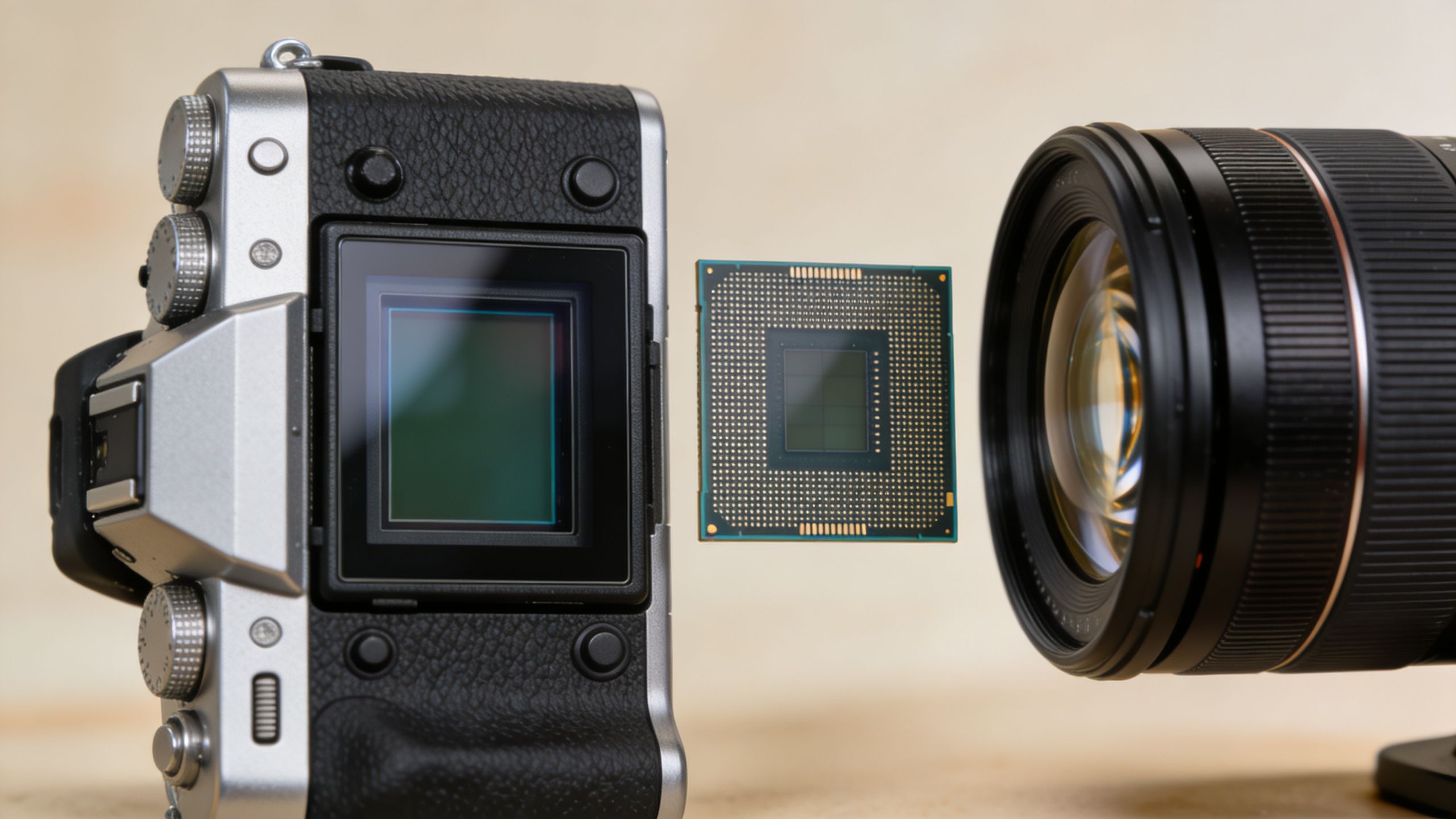
Sensor size changes how your lenses behave in practice, which means it changes how you build an interior kit. The same number printed on the barrel doesn't always produce the same framing once you change camera formats.
For interior work, the key concept is equivalent field of view. A lens on APS-C gives a tighter view than that same lens on full-frame. So if you're trying to reach the look many full-frame shooters get around 24mm, you need to think in equivalents when you shop.
What this means on a real assignment
Say you're photographing a kitchen with an APS-C body and a lens that starts at a focal length often used as moderate wide on that format. You may still find yourself backing into a hallway or doorway to get the same room coverage a full-frame body would deliver more easily. That doesn't mean APS-C can't do the job. It means you need to choose your lenses more carefully.
The practical implications are straightforward:
- Full-frame systems usually make it easier to access true wide-angle coverage for interiors.
- APS-C systems can still work well, but the lens lineup matters more because you need the right equivalent focal lengths.
- Specialty options such as tilt-shift lenses are more commonly associated with full-frame workflows in professional architectural shooting.
- Hybrid kits on APS-C can be very effective when budget matters and the lens choice is disciplined.
Where to spend and where to hold back
If you're building a system for paid interior work, spend on the lens before you chase a newer camera body. Clients notice geometry, sharpness, and consistency long before they notice body refresh cycles.
A practical budget framework looks like this:
| Priority | Spend level | Reason |
|---|---|---|
| Main interior lens | High | This affects every frame you deliver |
| Tripod support | High | Stable composition matters in interiors |
| Camera body | Moderate | Important, but secondary to optics for most room work |
| Specialty lens rental | Targeted | Useful before committing to a tilt-shift purchase |
| Accessories | Controlled | Buy what supports repeatable workflow |
That approach helps keep the kit honest. A mediocre wide lens on an expensive body still creates difficult files. A strong lens on a capable but older body can still produce polished interior work.
Building a kit for client work
For photographers moving from occasional projects into regular assignments, the goal isn't to own everything at once. The goal is to own the tools you'll use repeatedly and rent the tools that only appear on select jobs.
That's also where outside guidance can help. Jimmy Clemmons maintains a set of professional photo resources for Atlanta creatives and brands, which is the kind of practical support material that can help when you're balancing gear choices against actual client needs rather than forum speculation.
If you're deciding between formats, don't make it a purity test. Make it a business decision. Choose the format that gives you access to the focal lengths and lens behavior your assignments require.
Recommended Lenses for Interior Design in 2026
The right recommendation depends on the kind of jobs you shoot. A luxury residential photographer, a hotel content team, and an interior designer building a project archive may all need different tools, even if they're all searching for the best lens for interior design photography.
The cleanest way to think about it is by role.
Professional gold standard
A 24mm tilt-shift lens remains the benchmark choice when geometry has to look precise and premium. This is the lens category for architecture firms, hospitality brands, editorial commissions, and interior designers who want a magazine-quality presentation with minimal compromise in perspective.
Studio notes: this lens earns its place when the room itself is the product. If cabinetry, wall planes, glazing, and vertical lines need to look immaculate, a 24mm tilt-shift gives you control that a standard zoom can't fully replicate in post. It also encourages a more deliberate shooting pace, which usually improves composition.
A second professional option is the ultra-wide premium zoom class, particularly for establishing frames where the room or suite demands broader coverage. These lenses are useful, but they still need restraint. Wide capability doesn't automatically mean better design photography.
Versatile workhorse
A 16 to 35mm rectilinear zoom is the most practical all-around lens class for many working photographers. It handles room views, can stretch into broader establishing frames when needed, and works well on jobs where stills and video happen in the same production block.
Studio notes: this is often the best first serious purchase for someone shooting interiors regularly. It's flexible, relatively fast to operate, and realistic for teams who need a broad deliverable set from one day on site. If you're photographing offices, model units, mixed-use spaces, or branded interiors with a content-heavy brief, this is often the lens that stays mounted most of the day.
A 24 to 70mm zoom belongs in this category too, especially for photographers whose work includes tighter room compositions, furniture stories, and detail-driven images. It's less of a pure architecture lens and more of a design storytelling lens.
The most useful lens isn't always the widest one. It's the one that lets the room keep its proportions.
Smart starter options
If you're not ready for specialty glass, start with a high-quality wide rectilinear zoom before buying multiple mediocre lenses. One good lens teaches better habits than a shelf full of compromised optics.
A manual focus wide prime can also make sense for photographers who work slowly on a tripod and want a disciplined, lower-cost way into interior shooting. Manual focus isn't a major drawback in this genre because room photography is already deliberate.
For teams that don't need to own the entire workflow in-house, Jimmy Clemmons Photographer is another practical option for commissioned architectural and interior imagery, especially when the assignment calls for a complete production approach that includes composition, lighting design, on-set direction, and professional editing.
A simple buying order
If you're building a kit from scratch, this order is usually the most sensible:
- High-quality wide zoom for core interior coverage.
- Standard zoom for details, vignettes, and broader commercial use.
- Tilt-shift lens once your client base and visual standards justify the specialization.
That sequence gives you reach without skipping the lens that most directly improves polished architectural results.
Frequently Asked Questions From the Field
Can't I just fix perspective in Lightroom or Photoshop
You can fix some of it, and sometimes you should. Minor corrections are part of normal workflow. The problem starts when software has to do heavy structural repair.
Aggressive perspective correction stretches parts of the frame, trims edges, and can make furniture and architectural elements feel less natural. If the original capture is badly tilted, the edit becomes a rescue operation instead of a refinement. Software is excellent for finishing. It's less convincing when it has to rebuild the geometry of the room.
What's the best lens if I need both stills and video
For hybrid assignments, a strong rectilinear zoom is usually the most practical choice. That's where lens behavior beyond still image sharpness starts to matter. Jak Spedding's discussion of interior photography lenses for hybrid capture points to key concerns for motion work, including focus breathing, parfocal behavior in zooms, and smooth manual focus.
If your day includes stills, walkthrough clips, and social media footage, choose the lens that keeps transitions efficient. A slightly less specialized lens that handles both tasks well can be more valuable than swapping constantly between separate stills and video setups.
Should I rent a tilt-shift before buying one
Yes, if you're unsure how often you'll use it.
Tilt-shift lenses are different enough in operation that a test assignment tells you more than weeks of reading gear forums. Rent one for a project with strong architectural lines. Kitchens, hotel rooms, offices, and lobby spaces are especially revealing. You'll know quickly whether the cleaner perspective and slower workflow fit the kind of work you want to sell.
Is the widest lens always the best for small rooms
No. Small rooms create pressure to go wider, but the widest option often makes the room look distorted instead of spacious. In practice, careful camera position and disciplined framing matter as much as extra width. If the room feels exaggerated, the image stops serving the designer.
If you need interior and architectural photography that treats lens choice, perspective control, and visual storytelling as part of one professional workflow, Jimmy Clemmons Photographer provides commissioned imagery for design firms, developers, hospitality brands, and commercial teams that need polished stills with editorial discipline.