
A residential shoot may establish a useful reference point, but commercial assignments quickly move beyond a simple per-image quote. The final fee depends on property scale, production complexity, licensing, and the number of deliverables, so an initial estimate can grow from a straightforward job into a five-figure project.
The gap is easy to underestimate. An office, retail space, or exterior may require coordinated access, staging, architectural lighting, aerial coverage, video, advanced retouching, usage rights, and multiple production days. Large mixed-use properties or campus-scale assignments can reach $3,500 to $15,000 or more, according to commercial real estate photography pricing and delivery benchmarks.
The practical question is not, “What does a photographer charge per image?” It is, “What must happen to produce a consistent visual package for leasing, investor presentations, websites, editorial placements, and social channels?” Workflow coordination, geographic market conditions, and hybrid deliverables often determine the final invoice more than the image count alone.
The Commercial Real Estate Photography Pricing Baseline
A standard residential shoot in 2026 has a $230 national baseline, with basic U.S. packages around $150 to $300 and mid-range jobs often between $200 and $350. That package typically delivers 10 to 25 edited images for a 1,500 to 3,000 square foot property. Use a current photographer price list example to compare how a simple package separates from custom commercial production.
Commercial pricing starts above that baseline because the assignment carries more moving parts. A property may involve several rooms, multiple decision-makers, restricted access windows, brand requirements, and a distribution plan covering leasing, investor presentations, websites, editorial placements, and social channels. Before the first exposure, the photographer may coordinate with property managers, tenants, architects, facilities teams, and marketing departments.
Why the residential baseline matters
Residential pricing remains a useful internal reference, but commercial quotes must account for work that standard listing packages rarely include:
- Larger crews: Assistants, lighting technicians, stylists, or production coordinators may be needed.
- Advanced lighting: Large interiors can require controlled flash, multiple light sources, exposure blending, or compositing.
- Retouching: Reflections, window views, signage, people, vehicles, and construction details may require careful treatment.
- Licensing: Commercial clients often need broader usage rights than a single listing placement.
- Travel and access: Parking, security procedures, tenant schedules, and restricted areas can extend the production.
Image count alone can hide the workload. One carefully lit architectural frame may take longer to plan, capture, composite, and retouch than several straightforward listing images. Add drone stills, video, or repeated setups across a large property, and a quote can become a managed production rather than a file-delivery fee.
Practical rule: Treat the residential baseline as the entry point for commercial real estate photography pricing, not as a ceiling or complete package.
Illustrative commercial ranges clarify the difference. A simple exterior-only assignment may run $1,000 to $2,500. Mid-rise office coverage commonly falls around $2,000 to $5,000, while larger mixed-use or multi-day productions can reach $3,500 to $15,000 or more. These figures reflect coordination, production time, post-production, travel, access constraints, and hybrid deliverables, not merely the number of final images.
Common Pricing Models in Commercial Photography
The pricing model should match the assignment's main constraint. A short, clearly defined shoot may suit a project fee. A property with uncertain access, multiple locations, or a changing shot list needs pricing tied to production time and resources.
| Model | Best For | Key Advantage |
|---|---|---|
| Per-hour | Short assignments with predictable access | The client pays directly for time used |
| Per-image | Simple deliverables with consistent image requirements | Easy to compare when every image has similar complexity |
| Per-project | Defined properties with an agreed shot list and delivery package | Creates budget certainty |
| Day rate | Large sites, multi-location work, and productions with changing demands | Aligns the fee with the production day rather than arbitrary image counts |
Per-hour pricing
Hourly billing works for a small number of views, a brief exterior session, or a limited scouting assignment. It gives the client a clear connection between time and cost. The drawback is that it can shift attention toward elapsed hours instead of the quality and usefulness of the final visual record.
A complex lighting setup may require substantial preparation before the camera is used. If the quote excludes planning, travel, editing, or coordination, the hourly rate can appear low while leaving major labor categories undefined. Confirm whether the clock covers those tasks before comparing bids.
Per-image pricing
Per-image pricing is practical when each photograph requires a similar level of production. Architecture rarely meets that condition. A twilight exterior, polished lobby, and simple hallway can each produce one final file while requiring very different planning, lighting, capture, and retouching.
Commercial guides place daytime commercial images around $150 to $350 each, while twilight exteriors can reach $750 to $850 or more, according to commercial photography pricing and delivery guidance. The range shows why a low image count does not necessarily mean a small production.
Per-project fees
A fixed project fee fits a defined property, locations, deliverables, schedule, revision process, and usage plan. It gives the client budget certainty and lets the photographer organize the work efficiently. The agreement should specify the charge for added rooms, another visit, a revised shot list, or expedited delivery.
This model is often the clearest choice for a property marketing package, provided the scope is detailed enough to prevent assumptions on both sides.
Day rates
Day rates fit large commercial productions where time on site is the primary constraint. Commercial-focused guidance places $1,500 to $3,500 or more for full-day stills, with licensing sometimes priced at $50 to $250 per delivered photo, depending on the usage scope, as outlined in commercial real estate photography pricing guidance.
A strong quote can combine models. The day rate can cover the production crew and time on site, a project fee can define the agreed deliverables, and separate line items can cover drone, video, travel, or licensing. That structure reflects the hidden workflow behind a large commercial assignment and prevents image count from becoming a misleading substitute for scope.
Factors That Drive Commercial Photography Costs
Commercial real estate photography pricing rises when the assignment creates more coordination, technical risk, or post-production. The camera system matters, but equipment is only one part of the invoice. Labor, access, preparation, and the number of final formats usually have a greater effect.

Property scale and architectural difficulty
A small exterior can be captured quickly when the property is accessible and the light is favorable. A multi-building commercial site requires a different approach. The photographer may need to cover entrances, tenant areas, circulation paths, amenities, service zones, parking, landscaping, and contextual views while maintaining consistent perspective and exposure.
Architectural difficulty also changes the work. Glass walls, reflective finishes, mixed color temperatures, deep interiors, and bright exterior views often require layered lighting and careful exposure control. The final image may involve multiple captures combined during editing.
Access and scheduling
Access problems are expensive because they affect both the shoot and the people supporting it. Security check-in, elevator restrictions, tenant availability, construction activity, and operating hours can force the photographer to divide work across multiple visits.
A coordinated access plan reduces wasted time. Without one, the crew may arrive before a space is ready, lose the best light, or return to photograph an area that wasn't available during the first visit.
Staging and on-site direction
Commercial spaces often need more than basic tidying. Furniture may need to be rearranged, desks cleared, retail displays aligned, conference rooms reset, or exterior vehicles moved. Someone must decide what belongs in frame and what distracts from the property's purpose.
For a flagship space, on-site direction protects the client from inconsistent images. It also adds production time, particularly when several teams need to approve the visual approach.
Lighting and post-production
Large windows and dark interiors create exposure problems that a single capture may not solve. Photographers may use flash, bracketed exposures, compositing, color correction, perspective correction, and detailed retouching to produce a believable result.
Post-production becomes especially demanding when the client expects precise window views, clean reflections, corrected vertical lines, removed distractions, or a consistent look across multiple buildings. The cost isn't tied to the number of shutter releases. It's tied to the decisions required to make the final images usable.
Geography and crew requirements
Metro markets influence the labor floor, travel time, equipment logistics, and expectations surrounding presentation. A commercial assignment in a major urban market may also require more coordination around parking, loading, security, and access.
A project that needs an assistant, lighting support, aerial operator, stylist, or video specialist becomes a production with multiple labor categories. A low stills quote may no longer represent the lowest total cost if separate vendors later need to recreate the property under different lighting and color conditions.
The following video offers a visual reference for the production and cost considerations that shape commercial photography work.
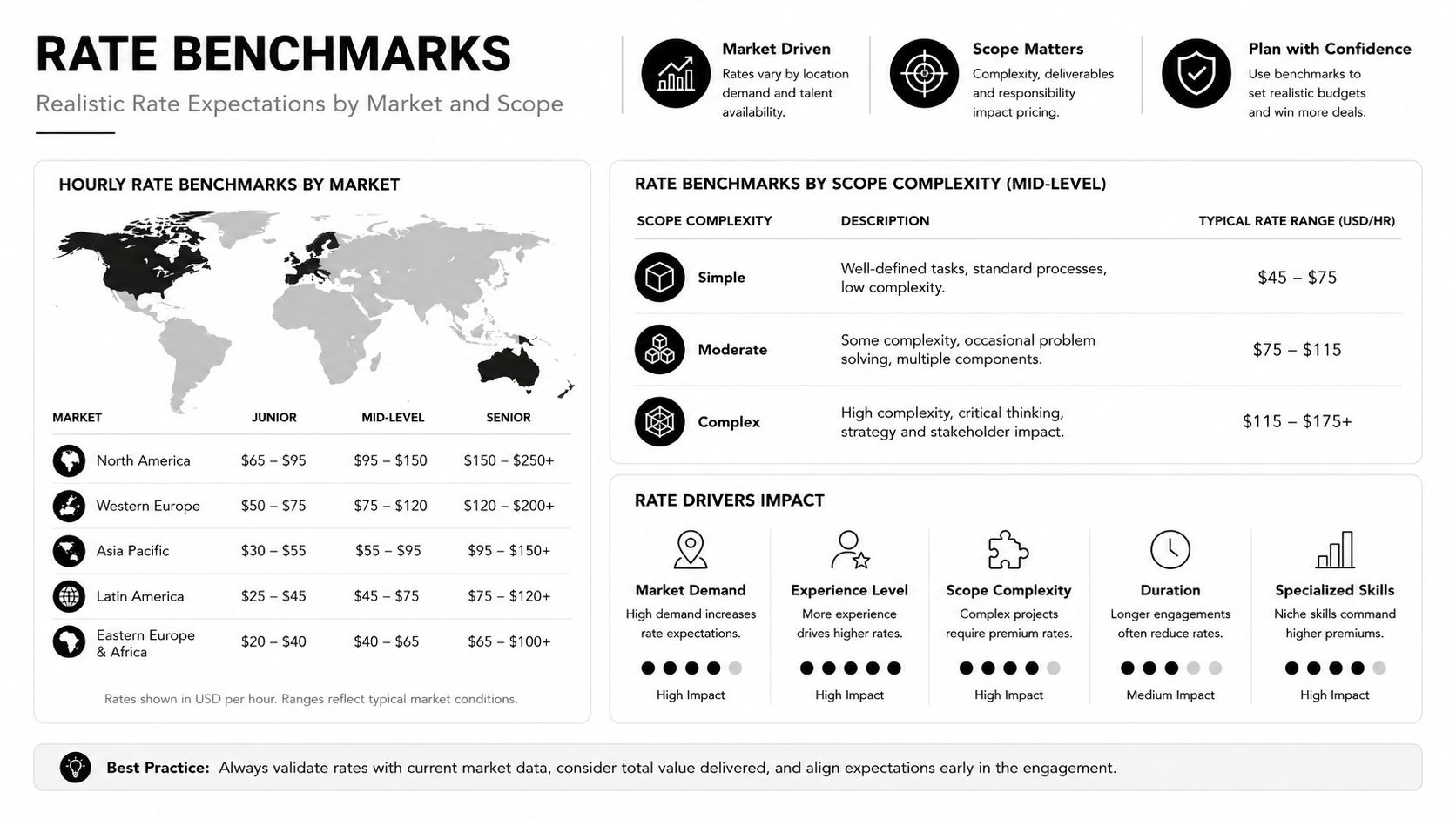
Realistic Rate Expectations by Market and Scope
A commercial real estate photography quote can move from a contained assignment to a $15,000 or more production once the brief includes multiple buildings, aerial coverage, video, complex access, and a long editing pipeline. Market location sets the labor floor, but workflow complexity determines how quickly the invoice grows.
Broad industry ranges place luxury and large-property assignments around $500 to $1,500 or more, while large commercial properties commonly fall between $1,000 and $5,000 or more, according to this real estate photography pricing guide. These figures describe market tiers, not fixed prices. A quote still depends on the property, crew, schedule, deliverables, and intended use.
Atlanta and Southeast expectations
Atlanta and other Southeast markets often offer a lower starting point for smaller assignments. Regional pricing references place small homes at $150 to $275 and larger luxury properties at $400 to $700. Those figures help establish a local labor baseline, but they do not price a commercial production by themselves.
A commercial office, hotel, or mixed-use development enters a higher tier when the brief requires broad coverage, controlled architectural lighting, drone work, video, or marketing deliverables. Travel between sites, building access, and coordination with property staff can add more cost than the initial stills estimate suggests.
Los Angeles, New York City, and Seattle
Major markets generally carry a higher pricing floor because operating costs, access requirements, and client expectations affect the production. Standard service may cost more in Los Angeles, New York City, or Seattle than in a smaller regional market, even before the scope expands.
Luxury work in the West Coast market can reach $600 to $1,200 or more for large homes. Commercial assignments rise further when they require assistants, specialized lighting, restricted access windows, aerial capture, video, or several output formats. The difference reflects production conditions, not just a photographer's preferred rate.
Scope changes the category
Three assignments illustrate the distinction:
- Exterior documentation: Building elevations and site context require careful timing, but the crew and post-production remain relatively contained.
- Office or retail coverage: Interiors, signage, staged rooms, staff movement, and consistent lighting across several spaces require more planning and editing.
- Mixed-use or campus production: Multiple buildings, access windows, aerial context, video, and a unified visual treatment create a multi-day production.
That third scope can reach $15,000 or more when it becomes a campus-scale project. The cost comes from coordinating people, locations, capture methods, approvals, and post-production so every deliverable matches. A lower stills rate may not reduce the final budget if separate vendors later have to recreate the property for drone or video content.
How to Choose the Right Pricing Model for Your Project
Start with the deliverable, not the photographer's preferred billing method. Write down the property areas, required formats, intended uses, deadline, access restrictions, and approval process before requesting quotes. A photographer can price accurately only when the production conditions are visible.
Match the model to the project
Use a per-project fee when one property has a defined shot list and a stable schedule. This approach gives the client a clear ceiling and gives the photographer room to choose the most efficient capture and editing workflow.
Use a day rate when the property is large, access is uncertain, or the client expects the shot list to evolve on site. It's particularly useful for developments with several buildings or spaces that may not be ready at the same time.
Use per-image pricing only when the final images have similar complexity. If the brief includes both straightforward daytime interiors and highly retouched twilight exteriors, separate production categories will produce a more honest estimate.
Build the budget in layers
A practical commercial budget should identify each component:
- Capture: Still photography, exterior coverage, interiors, and any required lighting.
- Production support: Assistants, stylists, location coordination, travel, parking, or special access.
- Post-production: Color work, perspective correction, compositing, retouching, and revisions.
- Additional formats: Drone, video walkthroughs, 3D tours, floor plans, reels, or virtual staging.
- Rights: The locations and channels where the client can use the images.
Hybrid services have become a major pricing variable. Guides cite $150 to $800 for drone add-ons and $50 to $200 per room for virtual staging, according to current real estate photography pricing guidance. Treat these as separate production decisions, not automatic inclusions.
For multi-site work, consistency may justify a single integrated vendor even when an individual stills quote is higher. Guidance on hiring photographers for large developments is useful when the project involves repeated locations, shared standards, or several stakeholders.
Budget test: If the quote doesn't identify access, post-production, usage, and add-on deliverables, it isn't yet a complete commercial estimate.
Understanding Licensing and Usage Rights

Copyright usually remains with the photographer unless the contract states otherwise. The client receives defined permission to use the images, and those terms can affect the final invoice more than a modest change in image count. Clarify rights before the shoot, especially when a project combines stills, drone footage, and video for several marketing channels.
A listing-only license may cover one property campaign. A developer, architect, or property manager may need the same images on a website, in brochures, investor materials, social channels, press coverage, paid advertising, or later campaigns. Each use expands the value and operational scope of the license, so the agreement should name those channels rather than rely on assumptions.
The terms that matter
Non-exclusive licensing lets the client use the images while the photographer may retain the ability to license or display them elsewhere, subject to confidentiality and contract restrictions. Exclusive licensing limits those future permissions and generally carries a higher fee.
Usage scope should answer practical questions:
- Where can the images appear? Website, print, social media, editorial, paid advertising, or internal presentations.
- Who can use them? The commissioning company, property owner, tenants, architects, contractors, or affiliated agencies.
- How long do the rights last? A defined campaign period, the property's marketing lifecycle, or an ongoing term.
- Can the client modify them? Cropping, overlays, color changes, compositing, and derivative marketing materials may require specific permission.
Licensing fees vary with audience, channels, duration, exclusivity, and modification rights. A narrow campaign license can cost less, while broad rights for leasing, branding, press, paid promotion, and future presentations increase the project total. Confirm whether affiliated companies and outside agencies are included before approving the estimate.
Broader rights can cost more upfront, but they may prevent repeated permission requests and a second negotiation months later. Narrow rights can create delays when a property changes hands, a new campaign begins, or another stakeholder needs access.
For a practical explanation of rights and permissions, review this guide to licensing a photo for commercial use. Ask the photographer to list every intended use, authorized user, territory, term, and editing permission in the estimate and contract. That detail protects both sides and makes a high-value, multi-format project easier to budget.
Common Misconceptions About Commercial Photography Pricing
The cheapest quote is rarely the best value by itself. A low stills fee can become expensive when the client later hires separate vendors for video, drone coverage, virtual staging, or additional images. Different vendors may use different color treatments, camera heights, aspect ratios, and editing standards, leaving the marketing team to reconcile an inconsistent library.
The strongest comparison is between complete scopes. Ask whether each quote includes planning, access coordination, capture, editing, revisions, delivery, licensing, travel, and add-on production. If one estimate omits those categories, its lower total may just reflect incomplete information.
Misconception one
More images always mean more value. They don't. Commercial buyers need images that explain the property's design, function, circulation, setting, and identity. A smaller set of carefully composed, consistently edited images can serve the marketing objective better than a large collection of repetitive frames.
Misconception two
Pricing is fixed and impossible to negotiate. Scope is often flexible. A client may reduce the number of spaces, schedule several properties together, simplify retouching, or choose an integrated package instead of separate production. Those decisions can change the estimate without asking the photographer to compromise on the quality of the agreed deliverables.
Misconception three
Stills, video, and aerial work are interchangeable vendors. They can be separate, but a single coordinated production often protects consistency and reduces duplicated planning. The right choice depends on the campaign, property complexity, deadline, and required usage.
Commercial real estate photography pricing makes sense when you evaluate the whole workflow rather than the first line item. Define the property, deliverables, rights, and deadline before comparing bids.
Jimmy Clemmons Photographer provides architectural photography, commercial brand content, location scouting, lighting design, and professional editing for developers, property teams, architects, and design-led brands. If your project needs a cohesive visual package rather than disconnected images, visit Jimmy Clemmons Photographer to discuss the property, scope, and intended use.