
You're standing on Peachtree Road with a tripod, a lens bag, and only a short window before traffic and foot movement start to complicate every frame. Christ the King Church Atlanta gives you that classic architectural tension a photographer wants, a landmark that's historically important, visually commanding, and operationally active all at once. The challenge isn't finding a subject. It's isolating the building's form, catching the right light, and leaving with images that look deliberate instead of improvised.
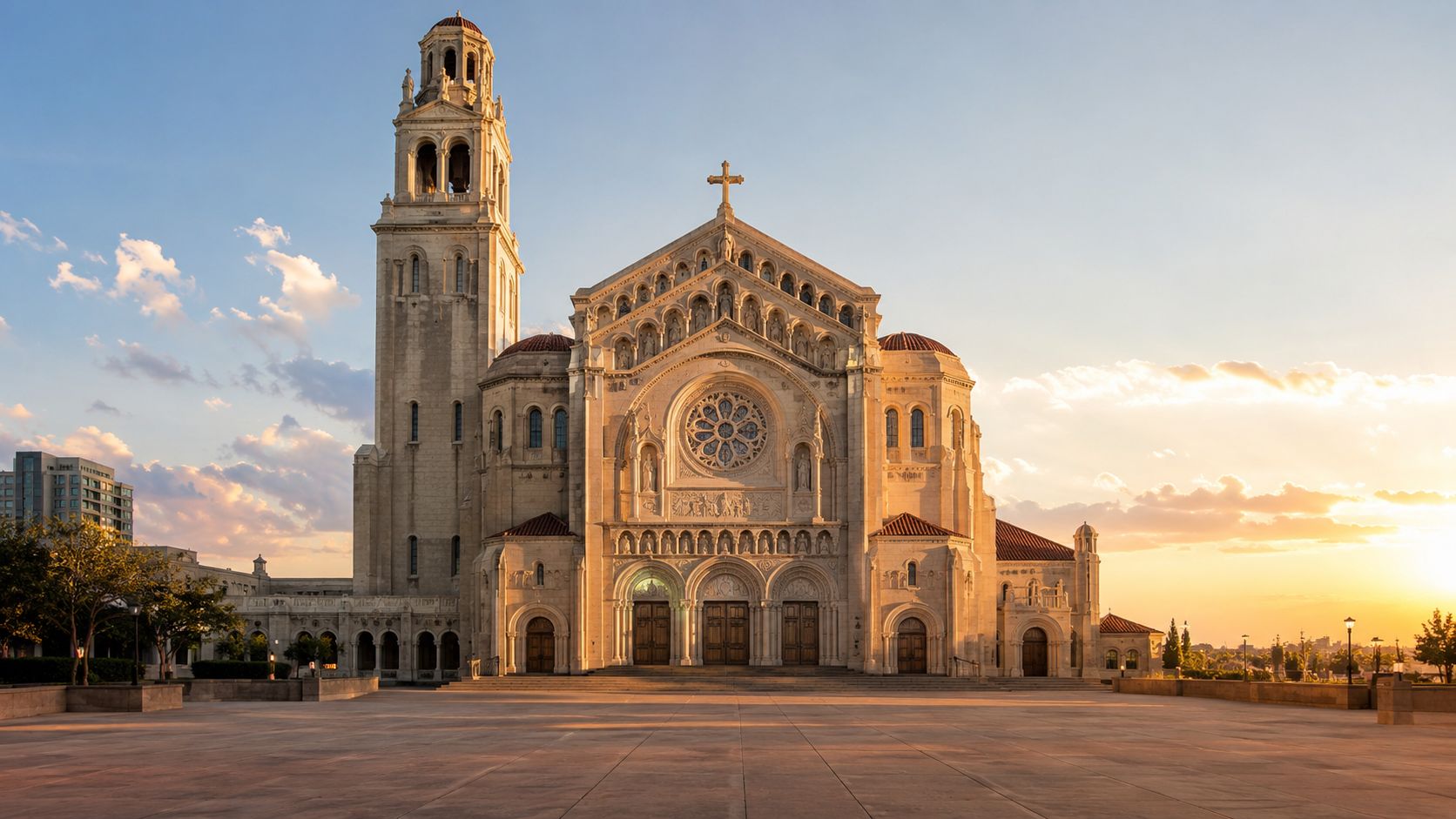
For photographers, architects, and designers, the draw is bigger than a single façade. The cathedral sits in Buckhead, at a metropolitan address that puts it in the middle of Atlanta's urban energy, not apart from it. That context changes how you read the building, and it changes how you shoot it, too. For more broad context on Atlanta's architectural scene, the cathedral belongs in the same conversation as other landmark spaces in the city, including the examples gathered at Jimmy Clemmons's Atlanta architectural landscapes collection.
An Introduction to a Buckhead Landmark
A cathedral can look straightforward from the sidewalk and then become difficult the moment you start planning the frame. Christ the King Church Atlanta has that effect. It presents a strong street presence in Buckhead, and that means every shot has to account for approach, scale, traffic, and the limited room you may have to work with.
From a photographer's point of view, the site rewards careful scouting. The building sits in a busy part of Atlanta, so the surrounding context is not a background to ignore. It changes how the façade reads, how much foreground you can include, and whether the image feels balanced or cramped. For a wider look at how landmark buildings sit within the city, the cathedral fits into the same conversation as other notable Atlanta architectural subjects, including the examples collected in Jimmy Clemmons's Atlanta architectural landscapes collection.
The main challenge is compositional, not conceptual. You are working with a landmark that needs room to breathe, yet the urban setting can make that room hard to find. I look first for angles that let the building hold its shape without letting parked cars, signage, or passing movement dominate the frame. That usually means choosing a viewpoint that respects the cathedral's massing while still acknowledging the street around it.
Light matters just as much. Stone surfaces can flatten under harsh midday sun, while angled light can bring out texture, depth, and edge detail without forcing the file into heavy correction later. If you are shooting for editorial, commercial, or institutional use, the goal is to show the building as a real part of Buckhead rather than as a detached object. That is what gives the image authority.
For working photographers, the site also calls for practical planning. Traffic patterns, pedestrian movement, and the pace of activity around the property all affect how long you can hold a clean frame. A disciplined shoot here is less about chasing a dramatic reveal and more about making steady, deliberate choices that let the architecture carry the image.
The Cathedral's History and Architectural Significance
A building like Christ the King Church Atlanta carries history in a way that changes how you frame it. The cathedral's long institutional life gives it visual weight, not because of ornament alone, but because the structure has had time to accumulate public meaning. For an architectural photographer, that kind of continuity matters. It affects whether the building reads as a one-off composition or as a landmark that still shapes Atlanta's civic and religious identity.
Institutional scale shapes how you photograph it
The cathedral's role as the mother church of the Archdiocese of Atlanta gives it a broader function than a single parish building. Its regional importance comes through in the way the site operates as both a worship space and an administrative center, serving a large and active Catholic community. That scale shows up on camera as layered use, heavier foot traffic, and a building that has to perform under more conditions than a smaller church.
Photography becomes part documentation and part editing choice for this subject. A cathedral with this much institutional presence needs images that establish context first, then move toward details that confirm the building's status. Wide frames help explain the site's place in Buckhead, while tighter views can show how the architecture supports procession, gathering, and everyday parish life. If you are planning a commercial or editorial shoot, that balance should guide lens choice, timing, and the amount of foreground you allow into the frame.
Historical weight changes compositional choices
I approach a cathedral like this differently from a neighborhood church because the visual job is different. A smaller church may only need a clean hero view. A cathedral with diocesan importance needs a broader argument, one that shows the building as a place of authority, continuity, and active use.
That changes how I build the sequence of shots.
- Founding date. A clear origin point gives the building historical grounding.
- Cathedral status. This identifies the site as a diocesan center, not just a local parish.
- Active congregation. Ongoing use keeps the architecture from feeling static or purely ceremonial.
- Atlanta setting. The urban context places the cathedral inside the city's larger story.
A practical photography plan has to respect that hierarchy. The building should not be treated as a decorative object cut off from its role. Instead, the framing should let viewers read authority in the massing, restraint in the composition, and permanence in the way the structure holds space. For a useful overhead perspective on a site like this, an aerial approach to Atlanta architecture can also help define how the cathedral sits within its surroundings.
The strongest images do more than flatter the exterior. They show why the cathedral matters, and they do it without forcing the architecture to say more than it already does.
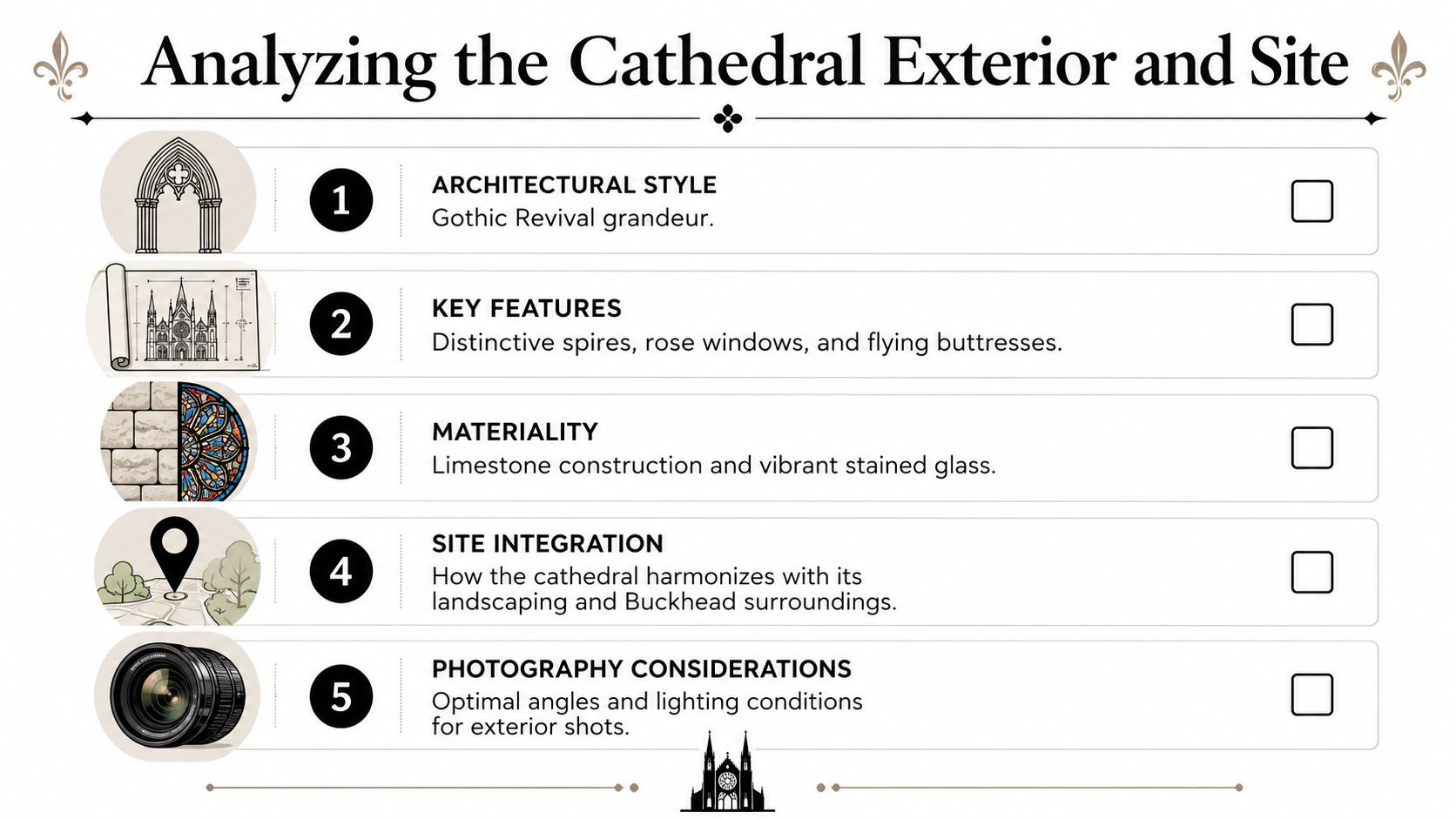
Analyzing the Cathedral Exterior and Site
The exterior of Christ the King Church Atlanta is best understood as a relationship between architecture and corridor. The cathedral sits at 2699 Peachtree Road NE in Buckhead, on a high-visibility corridor where roadway geometry and the urban street wall shape the available view Buckhead site context). That means the site doesn't give you a neutral setback. It gives you a lived urban edge, and that changes what counts as a clean frame.
Reading the façade in context
The strongest exterior photographs here usually respect the fact that the cathedral is embedded in Buckhead rather than isolated from it. The site's urban massing can either box in the architecture or help anchor it, depending on where you stand. If you work too close, the building can feel compressed. If you work too far, the street context can take over the composition.
That trade-off is the primary challenge. In a less urban setting, you might have room to center the elevation and let the grounds do the rest. Here, you often have to choose between architectural completeness and environmental clarity. When the foreground is constrained, angle becomes your main tool. A subtle offset can show more of the façade and still keep the street pressure from flattening the image.
What to prioritize on a site like this
For a practical exterior read, I break the site into a few visual priorities:
- Roofline and vertical emphasis. Look for how the building rises against surrounding massing.
- Street edge relationship. Note how Peachtree Road influences the first read of the façade.
- Foreground discipline. Keep cars, signs, and stray pedestrian clutter from hijacking the frame.
- Edge compression. Watch for tight perspective lines when shooting from the sidewalk.
- Higher vantage point. A slightly higher vantage can help restore separation between building and street, which is why aerial or elevated scouting can be valuable before a final ground-level shoot.
Practical rule: On a corridor like this, the best exterior frame is usually the one that simplifies the urban noise without pretending it isn't there.
Material texture, architectural detail, and the relationship between the church and the surrounding Buckhead fabric all matter. The cathedral reads as a landmark partly because it occupies a prominent place in the city, and partly because its form has enough presence to hold that position. Your photographs should make both truths visible.
Exploring the Cathedral's Interior Spaces
Inside a cathedral, the work changes from managing context to managing volume. The exterior asks you to separate the building from the street. The interior asks you to understand how the room itself organizes attention. At Christ the King Church Atlanta, that means treating the nave, sanctuary, and circulation paths as a single spatial experience rather than isolated viewpoints.
Light, volume, and visual pacing
Interior photography here depends on how light moves across the space. Natural light from stained glass and the ambient house lighting won't behave the same way at every point in the building, so exposure decisions need to respect contrast rather than fight it. Strong interiors usually fail when the photographer tries to force uniform brightness across every surface. A cathedral benefits more from controlled falloff, where the eye can move from brighter focal points into softer surrounding areas.
That approach works especially well in sacred architecture because reverence depends on visual pacing. You want the viewer to feel the scale of the room before they inspect the details. Let vertical lines read first. Then let ornament, material, and lit surfaces reveal themselves in sequence.
What interior detail rewards careful framing
The most successful interior frames usually focus on three things:
- Spatial hierarchy, where the sanctuary clearly anchors the room.
- Material continuity, where finishes and crafted surfaces support the sense of permanence.
- Light behavior, where stained glass and interior fixtures shape mood rather than compete with each other.
Photographers often overcomplicate the job when capturing these spaces. They chase every decorative element and lose the room's larger rhythm. A better frame often shows restraint. It gives the viewer enough of the interior to understand the architecture, then isolates a detail with the right combination of texture and light.
The interior should feel inhabited by light, not overexposed into neutrality.
The cathedral's scale also affects how the human figure reads inside the frame. People can anchor the space, but too many figures collapse the sense of stillness. If you're shooting for editorial or architectural use, keep people purposeful and sparse. If you're documenting a liturgical moment, the balance shifts, but the same principle holds. The room should remain the lead subject.
For photographers who care about sacred interiors, the best image often comes from patience. Wait for the room to settle visually, then make the frame when the geometry, light, and ornament align.
A Professional Photographer's Guide to the Cathedral
A working cathedral gives you very little margin for improvisation. Christ the King Church Atlanta sits on an active campus, and the pace of parish and school life affects everything from sidewalk traffic to parking flow. For clean architectural work, the camera plan has to account for movement, access, and the times of day when the site settles down. The campus supports campus functions and activity, so a quick walk-through rarely tells the full story.
Gear that actually earns its place
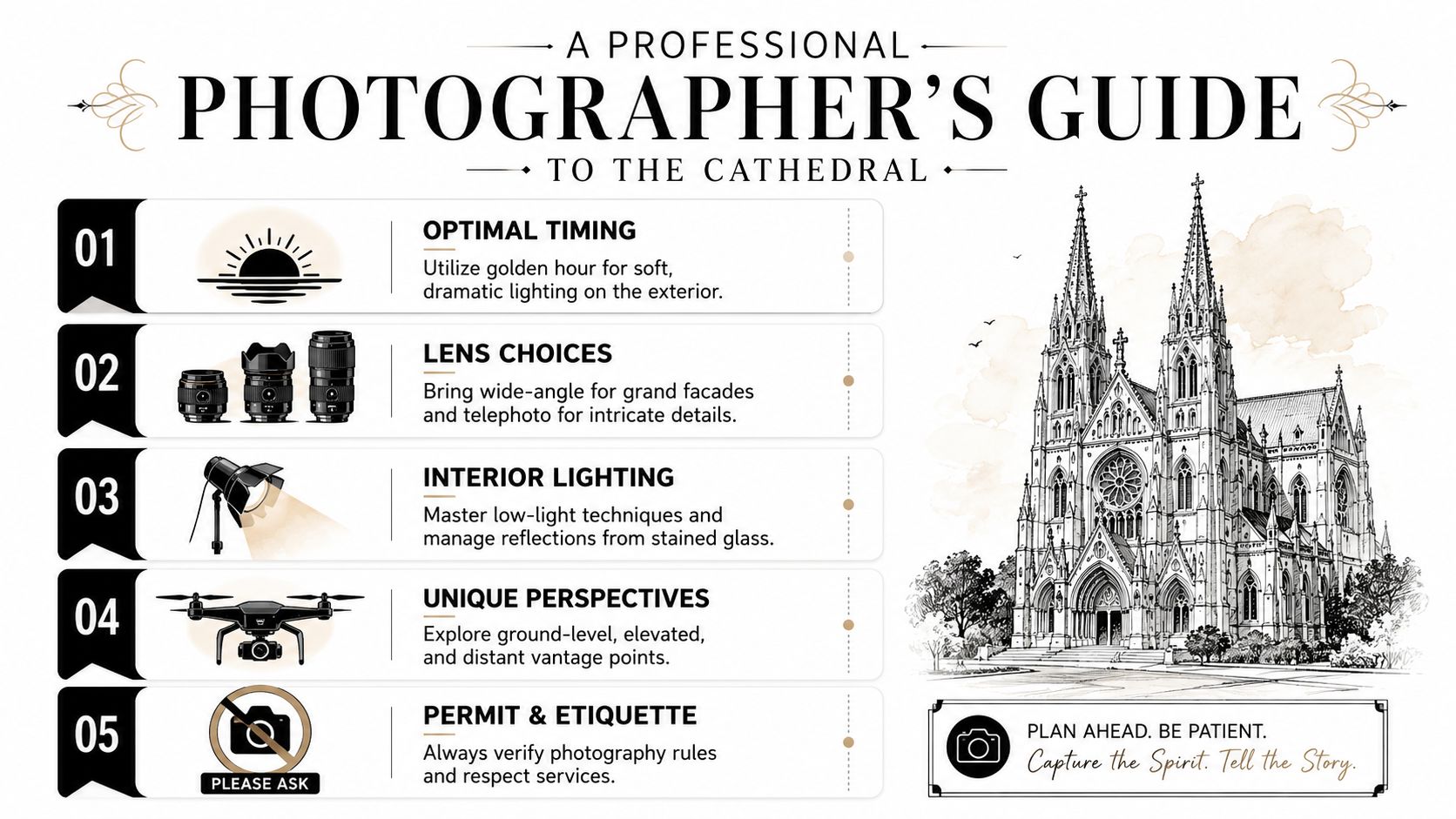
For the exterior, a wide-angle lens gives you the full façade and the surrounding context, while a telephoto helps isolate details and compress the street edge into a tighter composition. A tilt-shift lens is useful if you need to hold verticals straight on a site where backing up is limited. Indoors, a fast standard zoom and a stabilized body help when the light shifts between stained glass, fixture light, and deeper shadow.
Timing beats improvisation
Light that shapes the building usually works better than light that flattens it. Early and late sun can bring out masonry texture and keep reflections on glass under control. If the goal is a dramatic exterior frame, lower sun angles give the structure more relief and clearer shadow definition. If the goal is a straightforward architectural record, softer light often reads better because the massing stays legible without harsh contrast.
A few decisions that save the shoot
- Scout first, shoot second. The street edge on Peachtree Road can change your usable angle from one minute to the next.
- Expect movement. Cars, pedestrians, and arrivals can break a clean frame.
- Watch the interior balance. Stained glass, artificial lighting, and exposure settings need to be checked with care.
- Respect active use. This is an operating parish campus, not an empty shell.
- Confirm rules before you set up. For special access, verify photography expectations with the office instead of assuming open entry.
Treat the cathedral as a working institution first and a photographic subject second. That order keeps the shoot practical and prevents you from forcing compositions that ignore how the place is used. It also makes the final set feel calmer, because the logistics were handled before the first frame.
A separate parish and school structure changes circulation patterns, which is another reason to plan around low-traffic windows campus structure. That matters most if you want entrance views without people crossing through the frame or if you need time to adjust equipment without pressure from foot traffic.
If you need a clean architectural sequence, arrive with a shot list, a route, and a backup angle for every major view.
For a broader editorial approach, the cathedral works well as a subject that mixes monumentality with daily use, and that tension is worth keeping in the frame. If you want to compare how scale changes photographic strategy in a more intimate setting, this chapel study offers a useful contrast in approach.
Planning Your Visit Practical Logistics and Access
A productive visit to Christ the King Church Atlanta starts with logistics, not the camera bag. The cathedral's public information confirms the main address at 2699 Peachtree Road NE and lists an administrative office line at 404-233-2145. For a worship visit, a scouting trip, or a photographed commission, that is the first detail to verify before you plan the rest of the day.
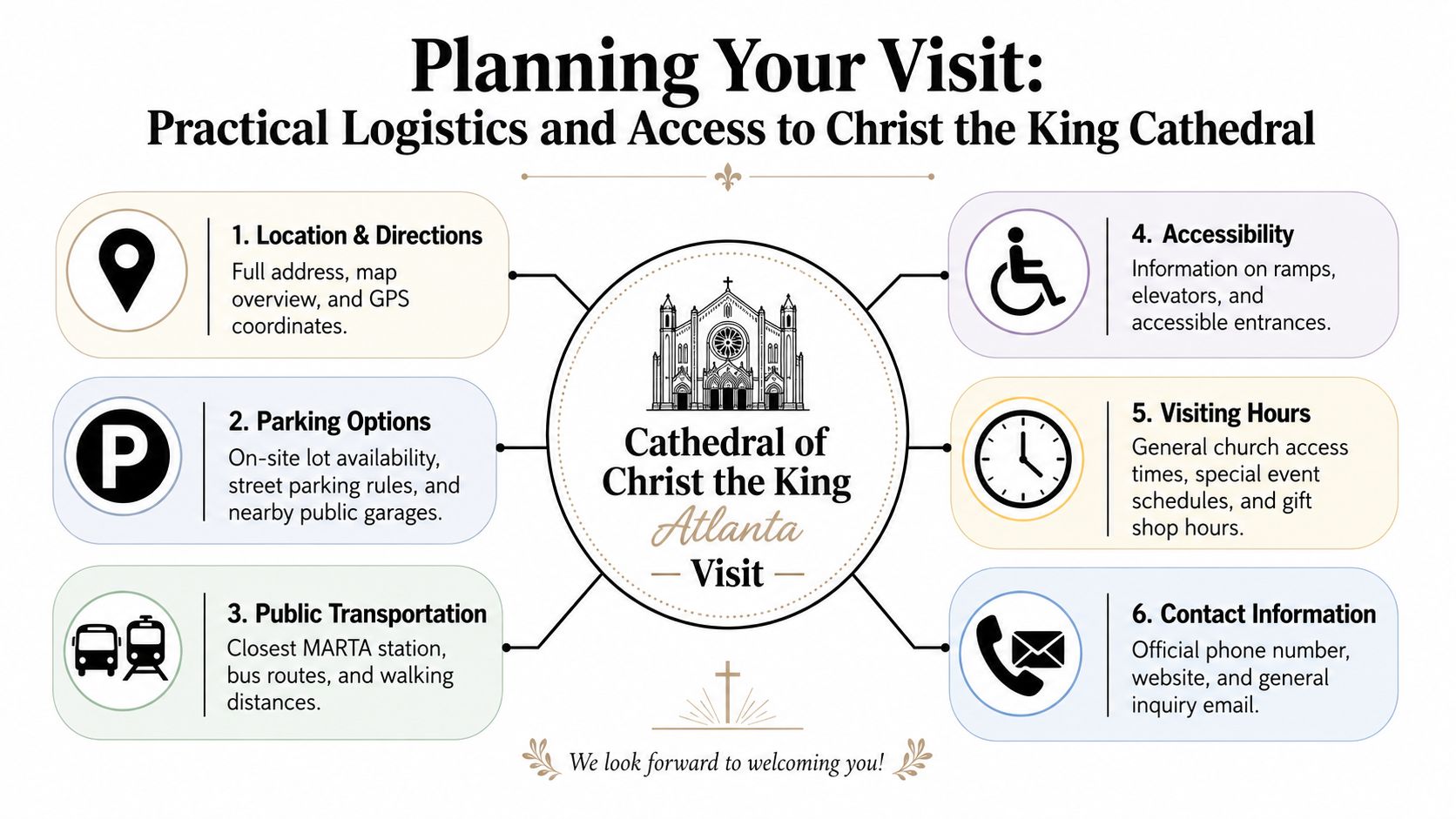
What to confirm before you arrive
A local visitor guide points visitors back to the office for accessibility details, which tells you the online information can be incomplete visitor logistics gap. Treat that as a planning cue. Do not assume entrance access, parking flow, or special accommodations will be obvious on arrival.
For a first visit, I would handle the logistics in this order:
- Call ahead. Use the office number to confirm your reason for visiting and ask about any access limits.
- Map the approach. Buckhead traffic can affect arrival timing, especially if you are carrying gear.
- Check service times and campus activity. A multi-use campus can change quickly, and a quiet exterior can become busy fast.
- Ask where to park. Curb access, lot use, and overflow options can shift with events.
- Identify your entrance before unloading. That keeps you from hauling equipment across the wrong side of the campus.
A separate parish and school structure changes circulation patterns, so timing matters. Low-traffic windows are the safest choice if you want clean entrance views, room to move a tripod, or time to test exposure without interrupting people passing through. The building may read as still in a frame, yet the campus itself stays active.
Why this matters for photographers and visitors
The common mistake is treating a cathedral visit like a quick sightseeing stop. This is an active church campus with multiple functions, so arrival logistics shape the experience as much as the building itself. For photography, a clear schedule keeps you from fighting people, cars, and confusion. For worship or a special event, it helps you move with the flow instead of against it.
A practical visitor mindset also means staying realistic about busy days. The cathedral serves a large parish community, and that naturally creates more foot traffic and more scheduling complexity than a small neighborhood church. The best way to avoid disappointment is to verify, not assume.
Best practice: Call before you go, especially if you need accessibility support, group access, or time with a camera in hand.
If you are arriving to photograph the exterior, build in extra time for parking turnover and for walking the site before you set up. If you are arriving for an interior visit, keep your kit compact until you know what the space allows, then expand only if conditions and permissions support it. That protects your schedule and respects the institution's rhythm.
Capturing the Spirit of an Atlanta Icon
At Christ the King Church Atlanta, the strongest frames come from treating the building as both a landmark and a working place of worship. Its Buckhead setting gives you a clean architectural subject with urban context, while its parish life keeps the site active and unpredictable in ways that matter to a photographer. That mix creates real trade-offs. You get a more layered story, but you also have to work around movement, timing, and the limits of what the campus will comfortably allow.
The exterior rewards restraint and careful positioning. Facades, walkways, and approach views are easiest to photograph when you read the street first, then choose angles that hold the structure steady against passing traffic and the surrounding scale. Inside, the challenge shifts to light and distance. High volumes can look elegant in a wide frame, but only if you control perspective, wait for usable light, and avoid flattening the space with a rushed setup.
Logistics matter as much as composition. This is a functioning cathedral with campus activity and parish functions, so the day's rhythm affects parking, access, and how freely you can move a tripod or open up a wider kit. If I were planning a professional shoot here, I would arrive early, keep the first setup compact, and build a fallback angle in case the preferred viewpoint is occupied or the light changes faster than expected. That approach protects the schedule and keeps you from forcing a shot that the site itself is not ready to give.
For a photographer, the goal is to let the cathedral's identity stay intact. Use the city context to sharpen the composition, respect the building's role as a diocesan center, and choose timing that lets the architecture carry the image rather than the crowd or the equipment. When the planning is solid, the photographs feel disciplined, specific, and alive.