
You publish a finished project. The photography is strong, the design deserves attention, and the post still goes quiet.
That pattern shows up across architecture and design firms that treat social media like a portfolio shelf. Strong visuals help, but engagement comes from a clearer editorial decision. Each post needs a job. It might build trust with a prospective client, show decision-making to a contractor partner, strengthen recall with a developer, or keep your firm visible between project launches.
Social media works best for architecture firms when it supports business development instead of sitting apart from it. A project reveal can signal taste and capability. Process documentation can show how your team solves constraints. Team commentary can position the firm as thoughtful and reliable, not just visually polished. If you already document site progress, the same discipline that makes construction progress photos valuable for client communication and marketing also gives you material that performs well across social channels.
The trade-off is time and focus. Posting finished images is faster. Building a content system around process, proof, and point of view takes more planning. It also gives you more ways to reach the right audience on the right platform. Instagram rewards visual narrative. LinkedIn favors expertise, perspective, and business relevance. Stories and short-form video create frequency without requiring a full project launch every time.
The firms that get consistent traction usually connect aesthetics to context. They show what was solved, who it was built for, how decisions were made, and why the outcome matters. That is what turns attention into inquiries, referrals, and brand authority.
The tactics below are built for that job. They go beyond posting attractive work and explain how architecture and design professionals can create engagement that supports real business goals.
1. Behind-the-Scenes Content and Process Documentation
A developer is reviewing firms for a hospitality project. Three Instagram feeds show polished finals. One firm also shows the site walk, the camera test that failed, the material issue that changed the shot plan, and the reason the final image works. That fourth feed gives a clearer picture of how the team thinks.
That is the value of process content. It builds confidence before the finished project has to do all the selling.

Behind-the-scenes material works best when it documents judgment. Show the scout that changed the shoot time. Show the framing test that handled glare on glass. Show the staging adjustment that gave the room scale. For architecture firms, designers, and photographers, that kind of documentation does more than fill a content calendar. It helps potential clients understand how the team handles constraints, which is often what wins serious work.
Focus on explaining decisions
A useful BTS post gives the audience a reason behind the action. “On site at 6 a.m.” gives very little context. “We photographed this lobby at first light because midday reflections flattened the stone texture” gives people a concrete lesson and shows technical control.
The trade-off is effort. Process content takes more discipline than posting a finished frame. It also creates more assets from one shoot and gives your audience more entry points into the work.
A practical rotation looks like this:
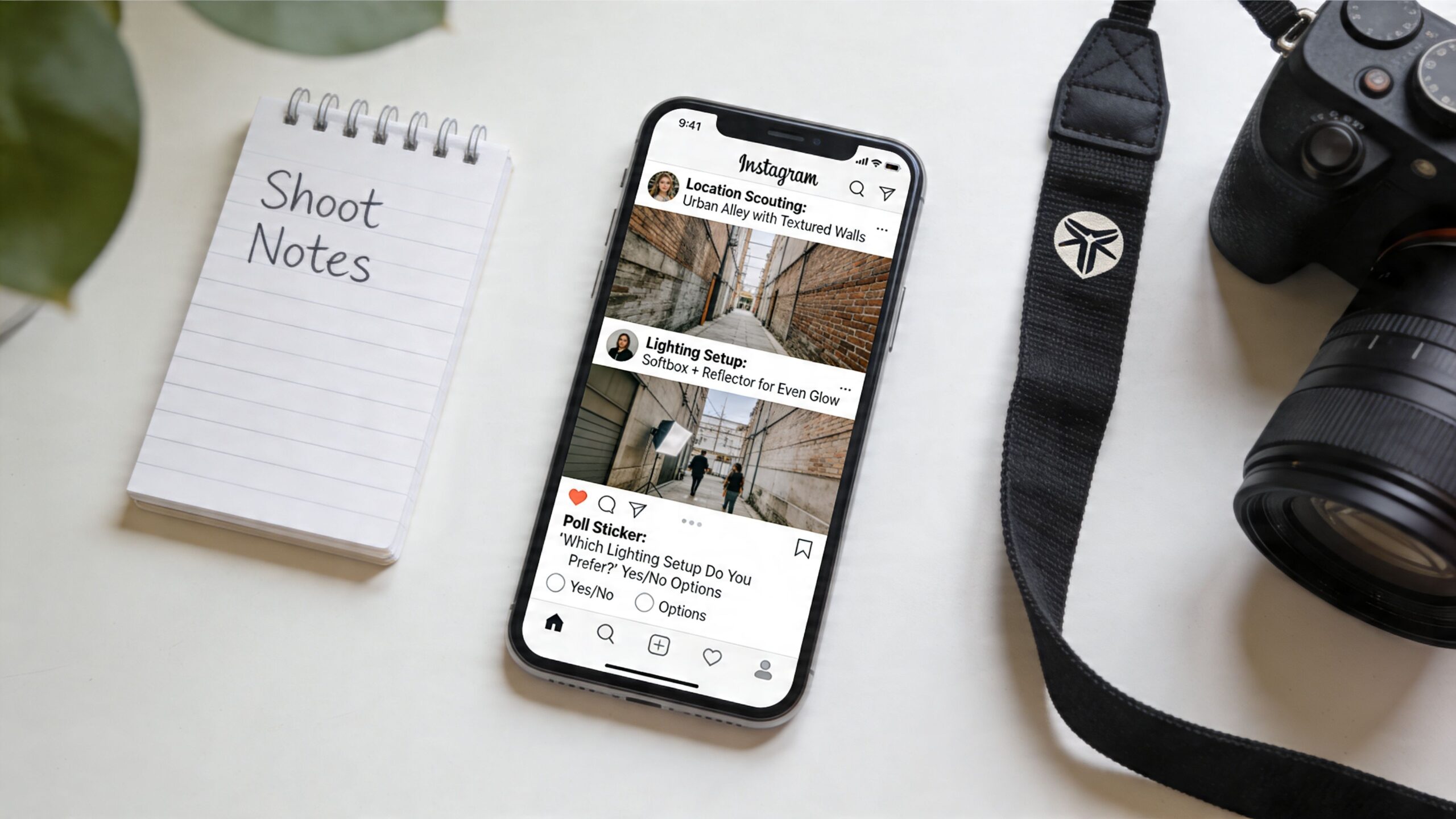
- Stories for live context: Share setup, weather changes, crew coordination, and quick notes from the site while the work is happening.
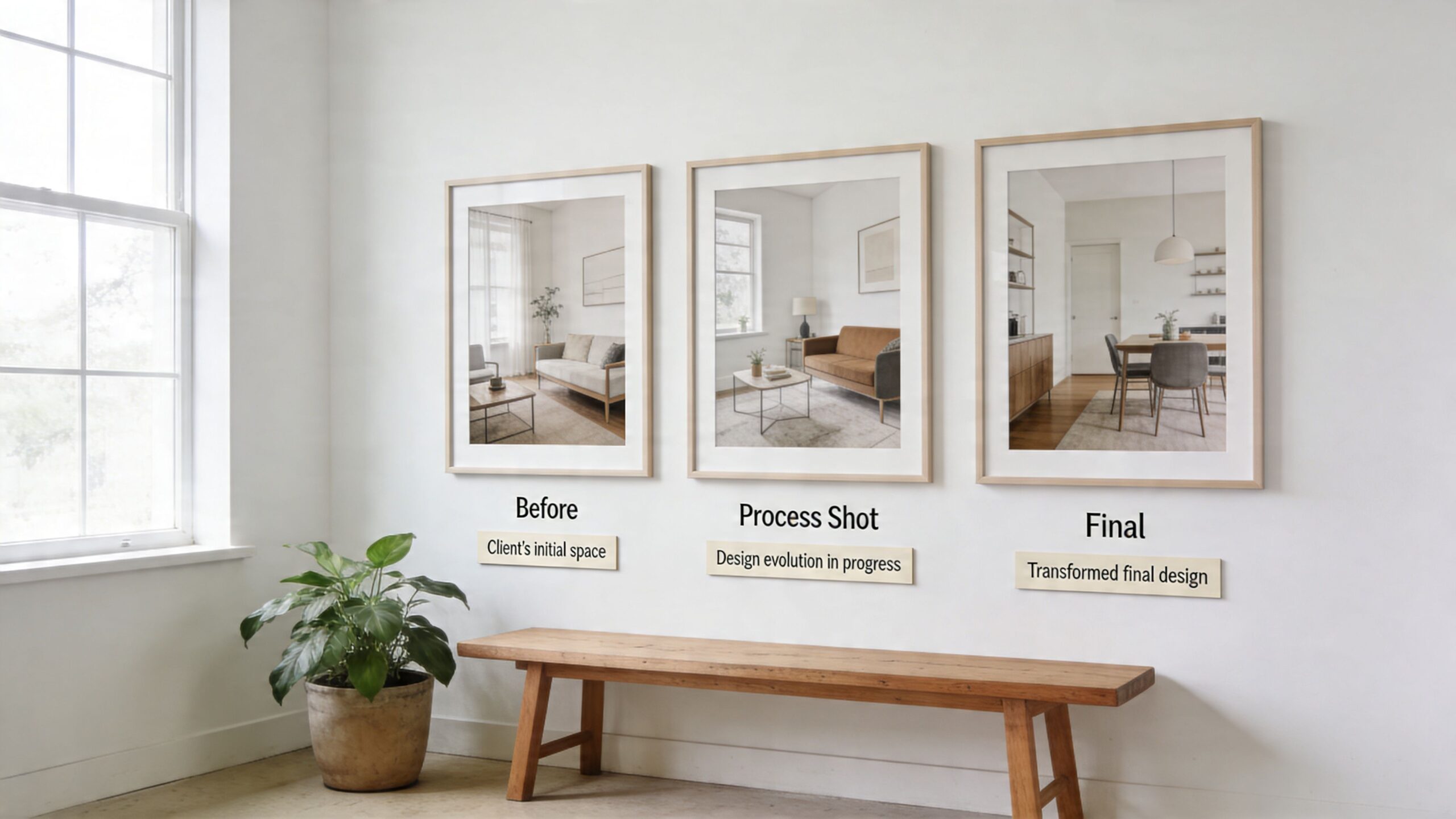
- Carousels for decision-making: Start with the final image, then add scout frames, exposure tests, rejected angles, and a short note on what changed.
- Reels for problem-solving: Cut together the constraint, the adjustment, and the final result in under 30 seconds.
If your projects involve renovations or phased work, this approach also supports the kind of renovation storytelling that helps projects earn magazine features.
I usually advise firms to build one repeatable series instead of improvising every week. “Scout to Final,” “Material Challenge,” and “Why We Chose This Angle” all work because they set a clear expectation for the audience and make production easier for your team.
One rule keeps this category strong. Publish behind-the-scenes content that teaches, clarifies, or proves expertise. Activity alone rarely earns meaningful engagement. Explanation does.
Here’s a good format to steal for video storytelling:
2. User-Generated Content and Client Case Studies
If you’re the only one talking about your work, your feed can start to feel self-contained. Social proof changes that.
Architecture firms, interior designers, developers, and brand teams already use project imagery in their own launches and announcements. When they repost your work, tag you, or talk about how the imagery supported their rollout, they lend context that your own account can’t create alone. That outside validation often drives more meaningful engagement than another portfolio post.
Make it easy for clients to share
Most clients won’t create a great post from scratch unless you help. Give them a simple package after delivery: approved images, a short caption option, collaborator tags, and a note on what story the project tells.
That’s especially useful for renovation work and reveal campaigns. The strongest posts usually connect the images to a business moment, a reopening, a repositioning, a leasing push, an editorial feature, or a brand refresh. Firms trying to earn press coverage can also learn from how renovation photography supports magazine-worthy storytelling.
A case-study carousel tends to outperform a loose image dump because it gives the audience a sequence to follow:
- Project brief: What kind of space was it, and who was it for?
- Constraint: What made it difficult to communicate visually?
- Approach: What did the team emphasize in the imagery?
- Outcome: How did the visuals support launch, promotion, or positioning?
Good case studies don’t just say a project was beautiful. They show why the visual treatment matched the client’s business objective.
There’s a trade-off here. UGC can feel more authentic, but it’s often less polished. That’s fine. Let the client’s repost or phone-shot launch moment add proof, then anchor it with your professionally produced version. The mix feels human without lowering the standard of the brand.
One more point. Not every testimonial deserves a post. Skip vague praise. Use client comments that explain the value of the images in plain business language.
3. Educational Content and Industry Thought Leadership
A developer lands on your Instagram after seeing one finished project. If the feed shows only polished images, they may admire the work and keep scrolling. If the next few posts explain why the images work, how the space was documented, and what decisions shaped the final presentation, you start to earn trust.
That is the job of educational content. It turns attention into credibility.
This distinction is important for attracting architects, developers, marketing teams, contractors, and editors who need a reliable partner with a clear point of view. In practice, saved posts and thoughtful comments often matter more than passive likes, because they signal that your content is helping someone make a decision.

The strongest educational posts teach what clients and prospects usually cannot see on their own. For architecture and design firms, that often means explaining the choices behind the image, not just presenting the finished frame.
Useful topics include:
- Material-specific shooting challenges: Glass, polished stone, reflective metals, and mixed light all require different handling.
- Composition decisions: Camera height, lens choice, and angle control how spacious, compressed, or formal a room feels.
- Editorial readiness: Publication-worthy project coverage needs a sequence, supporting details, and a clear story, not only hero shots.
- Pre-shoot preparation: Styling, site readiness, weather timing, and shot priorities all affect the final result.
For firms building a stronger educational series, this explanation of what architectural photography includes is a useful starting point for content themes and client FAQs.
Platform fit matters here. Instagram favors concise teaching with strong visuals, such as carousels that break down one decision across five to seven slides. LinkedIn is better for a sharper professional angle, like explaining how photography supports leasing, fundraising, recruitment, or publication strategy. A topic can live on both platforms, but the packaging should change.
Generic authority posts usually underperform because they say nothing specific. A post about “good design” gives the audience no reason to save it. A post explaining why north-facing interiors need a different image plan than hospitality spaces with mixed artificial light gives them a usable idea and shows that your team understands the work at a higher level.
I usually recommend building recurring series around questions clients already ask during planning, production, or launch. For example:
- Lighting breakdowns
- Before-and-after edit analysis
- How to prepare a project for a shoot
- What makes a design story pitchable to editors
The most effective educational posts answer a question the audience is already wrestling with, even if they would not phrase it in technical terms.
There is a trade-off. Detailed teaching can attract peers, students, and design enthusiasts who may never become clients. That is not wasted effort if the content also sharpens your market position. The key is to connect the lesson to a business outcome. Show how better documentation supports a launch, strengthens a press pitch, improves a firm's presentation to developers, or helps a brand present built work with more authority.
That is how thought leadership stops being decorative and starts supporting client acquisition.
4. Strategic Collaborations and Cross-Promotion
Reach grows faster when more than one credible voice is involved.
Architecture is collaborative by nature. The built work usually includes an architect, interior designer, contractor, developer, lighting consultant, fabricator, and often a marketing team. Yet many social feeds present projects as if one company did everything. That approach leaves engagement on the table and can make your content feel narrower than the work really is.
Build collaborations around a specific deliverable
Don’t send vague messages about “partnering.” Propose a post, a live conversation, a project recap, or a joint article.
The strongest collaborations usually have one of these angles:
- Project launch: Architect, photographer, and designer all post the same completed space with different commentary.
- Educational breakdown: A lighting brand and photographer explain how fixture placement influenced mood and image quality.
- Construction narrative: Contractor and architect share phased visuals and discuss site decisions.
- Publication push: Everyone involved amplifies the same editorial or award feature.
The trade-off is coordination. Joint posts can stall if nobody owns approvals, captions, or timing. Solve that by assigning one lead and one deadline.
Choose partners with audience overlap, not just prestige
A massive account isn’t always the best fit. A respected local architect, hospitality group, developer, or contractor with an engaged niche audience may deliver better conversations than a bigger account with broad but passive followers.
This is especially true in architecture, where high-quality inquiries often come from smaller, more relevant networks. Even when Instagram drives visibility, many firms find more serious lead quality on professional platforms and niche communities. That’s why collaboration should support business goals, not just vanity reach.
A collaboration is successful when both audiences understand why the partnership makes sense.
If the connection feels forced, people scroll past. If it feels like a natural extension of how projects get made, engagement tends to follow.
5. Vertical Video Content and Short-Form Storytelling
A developer scrolls past your polished project photos, then stops on a 12-second walkthrough that shows the compressed entry, the light shift in the corridor, and the reveal into the main space. That is the advantage of vertical video. It communicates sequence, scale, and mood faster than static images alone.
For architecture and design firms, short-form video works best when it supports a business goal. Use it to make a new audience aware of the firm, to show design thinking in a format people will watch, or to help a prospect understand what makes a space memorable in person. Pretty clips are not enough. The video needs a point.
One architecture social media report noted that Instagram Reels often get more reach than static posts. Treat that as distribution potential, not proof of quality. The platform may give the post an initial push, but retention decides whether it keeps traveling.
Build each Reel around one idea
The strongest architecture videos are easy to follow with the sound off. Viewers should understand the premise within the first second or two.
Formats that consistently work include:
- Arrival to reveal: Exterior approach, threshold moment, then the primary interior view.
- Material progression: Tight texture shots followed by the full application in context.
- Before-and-after sequence: Useful for renovation, repositioning, and adaptive reuse work.
- Constraint and resolution: Show the design problem first, then the spatial or technical response.
- Light study: Morning, midday, and evening shifts in the same space.
Many firms miss this point: They try to summarize an entire project in one Reel, and the result feels vague. One video should carry one message.
Pace matters more than polish alone
I have seen expensive project footage underperform because the opening was too slow. I have also seen simple phone footage perform well because it got to the point immediately and used clear on-screen framing.
That does not mean production quality is optional. In architecture, poor stabilization, blown highlights, muddy color, or trend-chasing audio can cheapen the work. The trade-off is straightforward. Short-form video rewards speed and clarity, but your brand still has to look considered.
A practical posting rhythm for many firms is a few feed posts per week with video included regularly, not constantly. If your team can only produce one strong Reel every week or two, start there. Consistency helps, but weak output trains your audience to ignore you.
Short-form video should reflect the standard of the work itself.
Get more value from one shoot
A single site visit can produce several distinct video assets if you plan for it upfront. Capture the wide reveal, the circulation path, two or three detail moments, and a brief designer explanation. Then cut those into separate pieces for different uses.
For example, the same project can become:
- a fast Instagram Reel focused on first impressions
- a quieter project-story clip for Pinterest or TikTok
- a process-focused edit for Stories
- a client-facing recap that supports proposals, PR, or launch communications
That is how video becomes a business tool instead of a content chore. It strengthens visibility, gives prospects a faster read on your design sensibility, and helps the firm show authority in a format platforms currently favor.
6. LinkedIn Thought Leadership and B2B Positioning
Instagram gets attention. LinkedIn often gets intent.
If your audience includes firm principals, developers, property groups, corporate marketers, school administrators, or construction leaders, LinkedIn deserves more attention than it usually gets. People there are already in a professional mindset. They’re evaluating peers, scanning for expertise, and paying attention to how teams talk about outcomes.
Post like a practitioner, not a brand bot
LinkedIn performs best when the writing sounds like a real person with actual judgment. On this platform, architecture and photography firms can explain why imagery matters in business terms: brand perception, proposal quality, leasing support, recruitment, editorial placement, stakeholder communication.
Good post angles include:
- A project lesson: What made a space difficult to communicate and how the team solved it.
- A client-facing insight: How strong visuals support launches, press outreach, or investor materials.
- An industry opinion: What firms get wrong when they outsource visuals too late.
- A process reflection: Why pre-production, scouting, and shot planning affect the final business value of a campaign.
LinkedIn also suits longer case-study framing better than Instagram. You can discuss the assignment, the challenge, the collaboration, and the use case without sounding overcrowded.
Position the service as a business tool
Frequently, many firms undersell themselves. They post finished images with no explanation of what those visuals helped accomplish.
On B2B platforms, context matters more than polish alone. Mention who needed the images and how they were used, whether for a project announcement, recruitment page, press kit, development deck, or portfolio refresh.
There’s also a quality trade-off across platforms worth remembering. Architecture marketers often note that Houzz and LinkedIn can outperform Instagram on inquiry quality even when follower counts are lower. That’s a useful reminder to judge channels by lead relevance, not applause.
One strong LinkedIn habit is simple: comment meaningfully on peer and client posts. Not “great project.” Add a point about sequencing, materiality, daylight, collaboration, or documentation. That’s how expertise becomes visible without turning every post into a self-promotion exercise.
7. Community Building and Direct Engagement
A principal posts a strong project update on Tuesday morning. By Wednesday, there are a dozen comments from consultants, a message from a developer, and two thoughtful questions from younger architects. No one from the firm replies. The post still gets impressions, but it misses the part that builds trust.
Architecture firms often treat social media as a publishing channel. The stronger firms treat it as relationship maintenance at scale. That difference shows up in inquiry quality, referral strength, and how often your name comes up in the right rooms.
Reply fast, but reply with substance
Early response helps. More important, it changes the tone of the account. People can tell when a firm is present versus scheduled.
A flat reply closes the loop too quickly. A useful reply gives the conversation somewhere to go.
Instead of writing “Thanks,” add context:
- Why a material choice mattered
- What constraint shaped the detail
- Which consultant helped solve a coordination issue
- What changed between concept and built outcome
That kind of answer does two jobs at once. It acknowledges the commenter, and it lets everyone else reading the thread see how your team thinks.
Direct messages deserve the same care. If someone asks about scope, process, timing, or a recent project, answer as you would in an early business conversation. Short is fine. Dismissive is expensive.
Use engagement to qualify relationships
Not every comment needs the same energy. A peer architect asking about façade sequencing deserves a different response than a generic compliment. I usually advise firms to separate engagement into three buckets: peers, collaborators, and prospects.
Each group signals something different:
- Peers help strengthen authority. Good discussions with respected practitioners raise your standing.
- Collaborators such as contractors, fabricators, stylists, and consultants reinforce that you work well with others.
- Prospects reveal commercial intent. Questions about location, availability, timeline, or project type should move toward a private conversation.
Platform nuance matters. On Instagram, the goal is often to keep the public thread active, then continue serious inquiries in DMs. On LinkedIn, a detailed public reply can do more work because future clients, consultants, and hiring leads often read the exchange before they ever contact you.
Build community around the people behind the project
Community does not come from posting more finished shots. It comes from making other participants visible.
Tag the site designer. Repost the contractor’s installation update. Thank the client when a project launches. If a planning consultant helped get a difficult scheme over the line, say so plainly. That public generosity is remembered, and it usually gets reciprocated.
It also makes your feed more credible. Architecture is collaborative by nature. A social presence that only centers the studio can feel polished but thin.
There is a business trade-off here. Giving collaborators visibility means surrendering a bit of spotlight. In return, you get stronger professional ties, more reposts from aligned audiences, and a brand that feels grounded in actual practice rather than self-promotion.
Ask better questions
Weak engagement prompts attract weak engagement. “Thoughts?” rarely leads anywhere useful.
Ask questions that match how architects, clients, and project partners think:
- Which detail would you want documented more closely?
- Would you have kept the original material palette here?
- What matters more in this kind of space, daylight control or flexibility?
- For firms who have handled retrofit work, what constraint shows up first?
Specific questions produce specific responses. Specific responses give you insight into what your audience cares about, which is much more useful than a pile of low-effort reactions.
One more point matters for architecture practices in public-facing or community-led work. If your projects involve consultation, co-design, neighborhood input, or stakeholder review, show that process with care. Not as a token slide. As evidence that the firm can listen, synthesize, and communicate with real people, not just design for them.
That is how social engagement starts supporting business development. You are not only proving that the work looks good. You are proving that people can work with you.
8. Instagram Stories and Ephemeral Content Strategy
A principal leaves a site visit with 20 useful phone clips, a few material shots, and one good takeaway about why a detail changed in the field. None of that belongs in the portfolio grid yet. Stories are the right place for it.
For architecture firms, Stories do a different job than the feed. The feed builds a public record of finished work and brand standards. Stories show that the practice is active, responsive, and paying attention in real time. That matters because clients often judge a firm on how it thinks between milestones, not only on the final photographs.
Use Stories as an operating rhythm, not as leftover content. A good sequence usually has three parts: where the team is, what is being assessed, and why it matters. A site arrival clip, one annotated photo, and a short video explanation often outperform a batch of disconnected fragments because the viewer can follow the decision-making.
A practical structure looks like this:
- Open with context: project stage, site condition, meeting purpose, or travel destination.
- Show one decision point: a material substitution, a lighting issue, a circulation adjustment, or a coordination constraint.
- Invite a response: use polls, question stickers, or a simple choice tied to the topic.
- Archive selectively: save only the strongest sequences to Highlights such as Projects, Process, Site Visits, Team, or Press.
The trade-off is speed versus clarity. Stories can be informal, but they still need editorial control. If captions are hard to read, clips jump around, or every frame assumes insider knowledge, viewers drop off before they understand why the update matters.
That is where Stories become useful for business development. They let you test what your audience responds to before you spend time producing a carousel, Reel, or article. If a walkthrough clip gets replies from developers, a recurring question about materials keeps coming up, or a poll reveals interest in adaptive reuse constraints, you have direction for stronger permanent content.
Stories also help different audiences in different ways. Prospective clients may respond to clarity, responsiveness, and professionalism. Peers and collaborators often care more about detailing, coordination, and site judgment. Recruiters and future hires notice team culture and how the office communicates under real project conditions. One format can serve all three if each sequence has a clear point.
Keep the tone relaxed. Keep the thinking sharp.
8-Point Comparison: Architecture Social Media Engagement Strategies
| Strategy | 🔄 Implementation Complexity | ⚡ Resource Requirements | ⭐ Expected Outcomes | 📊 Ideal Use Cases | 💡 Key Advantages & Tips |
|---|---|---|---|---|---|
| Behind-the-Scenes Content & Process Documentation | Medium–High: ongoing documentation and editing | Moderate: extra shoot time, short clips, editing | High: builds trust, showcases technical expertise | Educating clients, showcasing methodology, portfolio depth | Use Stories/Reels and carousels; film short tutorials; tag partners |
| User-Generated Content & Client Case Studies | Medium: client coordination and permissions required | Low–Moderate: collect UGC, curate and format case studies | High: authentic social proof and extended reach | Project launches, demonstrating ROI, leveraging client networks | Provide share briefs, request short testimonials, clarify usage rights |
| Educational Content & Industry Thought Leadership | High: requires deep knowledge and consistent publishing | Moderate: research, long-form writing, evergreen assets | High (credibility): long-term authority and press opportunities | B2B positioning, attracting firms, thought leadership opportunities | Run recurring series (e.g., "Lighting Theory"); cite sources; publish on LinkedIn |
| Strategic Collaborations & Cross-Promotion | Medium: outreach, alignment and clear agreements needed | Low–Moderate: partner coordination and shared assets | High: expanded reach and referral opportunities | Co-created portfolios, workshops, partner-led campaigns | Pitch specific co-branded posts, schedule joint Lives, agree ownership |
| Vertical Video Content & Short-Form Storytelling (Reels & TikTok) | Medium: trend awareness and frequent cadence required | Moderate: short-form editing, sound design, repurposing tools | Very High (reach): algorithm-favored, viral potential | Discoverability, quick reveals, engaging younger decision-makers | Post 2–4 Reels/week, use trending audio early, include on-screen text |
| LinkedIn Thought Leadership & B2B Positioning | Medium: needs business framing and consistent articles | Moderate: writing, case-study metrics, networking time | High (B2B conversion): reaches decision-makers with higher intent | B2B pitches, ROI case studies, enterprise relationship building | Publish monthly long-form articles, share metrics, engage daily |
| Community Building & Direct Engagement (Comments, DMs) | Low–Medium: simple actions but time-intensive daily | Low: regular time for replies and meaningful DMs | High (loyalty): strengthens referrals and conversion likelihood | Client retention, local networking, relationship-driven growth | Spend 15–20 min daily after posting; ask questions; highlight followers |
| Instagram Stories & Ephemeral Content Strategy | Low–Medium: requires daily posting discipline | Low: mobile-first content and interactive stickers | Moderate–High: boosts authenticity and frequent touchpoints | Daily updates, project progression, time-sensitive announcements | Post 3–5 Stories/day, use polls/countdowns, save Highlights as portfolio |
Constructing Your Digital Legacy
Boosting Architecture Social Media Engagement isn’t about chasing every feature on every platform. It’s about building a system that reflects how your firm works and why your work matters.
That means showing more than final images. It means documenting process, shaping case studies, publishing ideas, collaborating with peers, and treating engagement like relationship-building instead of distribution. When firms do that well, social media stops being a gallery and starts becoming part of business development.
There are real trade-offs in every tactic. Behind-the-scenes content can feel less polished, but it builds trust. Reels can expand reach, but weak execution can cheapen premium work. LinkedIn can generate stronger B2B conversations, but only if you write with substance. Stories can keep you present daily, but only if they stay coherent and useful. Good strategy comes from choosing those trade-offs on purpose.
The strongest architecture and design brands usually do a few things consistently. They match content format to platform. They explain decisions, not just outcomes. They give collaborators visibility. They answer comments. They create posts that help a client, peer, or prospect understand the thinking behind the work.
There’s also a bigger brand issue underneath all of this. Social engagement is not the end goal. The end goal is reputation. You want people to recognize your standards, your point of view, and your ability to communicate built work with clarity. Likes can be nice. Saves, replies, referrals, press interest, and qualified inquiries matter more.
If you’re trying to improve results, don’t overhaul everything at once. Pick one or two moves you can sustain for the next quarter. Maybe that’s a weekly process Reel and a monthly LinkedIn case study. Maybe it’s daily Stories and a better client repost system. Maybe it’s a commitment to reply thoughtfully to every comment while turning one finished project into five different post formats.
Do that well before adding more.
Digital presence works a lot like design itself. Strong outcomes usually come from consistent decisions, clear priorities, and attention to how people experience what you put in front of them. Social media is no different. Build it with the same intent you bring to a space, and the response gets stronger over time.
If your firm needs imagery that strengthens both your portfolio and your social presence, Jimmy Clemmons Photographer brings an editorial eye to architecture, interiors, commercial brand content, and professional portraits. For teams that want visuals with clarity, polish, and real marketing value, it’s a strong partner for turning finished spaces and ongoing projects into content people remember.