

A campaign shoot can be technically polished and still leave the marketing team with a wall of interchangeable images. The product is sharp, the light is clean, and every frame is usable, yet none gives a viewer a reason to pause. The shift often comes when the team builds a photograph around a human moment, a decisive composition, and a clear visual tension: a hand arranging a display, a quiet reflection in glass, or a strong line leading the eye toward the subject.
A commercial picture hook, in this context, is that visual reason to stop, look again, and understand the story. It isn't an exaggerated gesture or a gimmick. It's a repeatable concept that gives the campaign a point of view, then makes that point of view practical to photograph across a hero image, supporting details, and documentation.
Commercial picture hooks are physical hardware too, and the right system helps teams hang, adjust, and protect images in busy interiors. The seven options below pair a visual concept with an implementation note, so the display hardware and the campaign idea can work together.
1. STAS Zipper and Security Hooks with Cliprail Pro
A strong starting concept is the living corridor: a sequence of framed images that feels consistent at a glance but rewards a closer look. For a hypothetical corporate campaign, the hero photograph might show a staff member moving through a light-filled interior, with supporting frames tracing details of materials, work, and place. Photograph the corridor from a low, oblique camera position to emphasize the frame rhythm, then make a second, straight-on image that documents the finished sequence.
STAS Cliprail Pro pairs a heavy-duty rail with Perlon or steel cables and Zipper or Zipper Pro hooks. Those hooks allow tool-free height adjustment, useful when a curator or facilities team needs to align a frame without rebuilding the installation. Security hooks and J-Rail Max rod-based options address displays where casual removal is a concern.
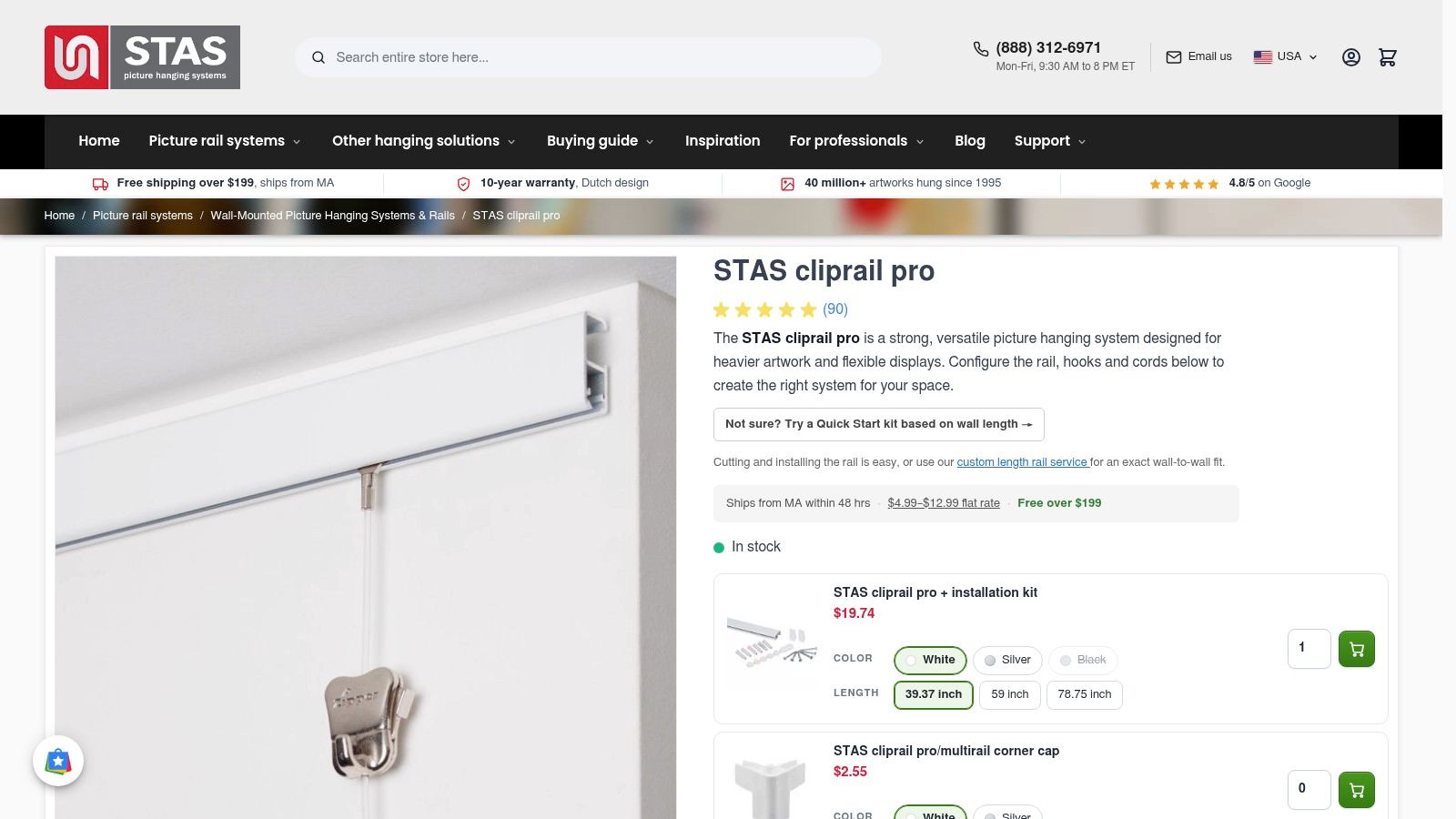
Implementation note: Plan rail placement and confirm the wall substrate before specifying the system. The full load path matters, not just the hook rating. For heavier work, verify the rail, fasteners, cable, hook, and frame attachment together.
The modular setup suits multi-room corporate, healthcare, and education projects, where repeatable rehanging is more valuable than a one-off installation. Its balance of price and performance can make it practical at scale, while published ratings and project support help teams prepare specifications. For a portfolio of interiors, a designer-focused image sequence can also guide the campaign: lead with the complete corridor, then use close details to show how the images sit within the architecture.
The trade-off is upfront planning. If artwork is exceptionally valuable or the space is especially public, rod-based security may suit the brief better than cable. Choose the visual concept first, then select the hardware that supports its maintenance and security needs.
2. AS Hanging Display Systems Secure Gripper Hook and Anti-Theft Secure Rod
The protected focal point works when one image needs to carry the story without making the security hardware the story. Consider a hypothetical institutional lobby campaign: a framed photograph sits at the end of a sightline, while a person crossing the foreground gives the composition scale and movement. Keep the camera just off-axis so the subject's approach leads toward the frame, and use soft directional light to hold detail in the image without turning the glass into a mirror.
AS Hanging Display Systems cable hooks include a self-gripping Secure Gripper Hook with a latch and an Anti-Theft Secure Rod. The rod requires rotation for insertion or removal, creating a more deliberate barrier against casual lift-off. Track options accommodate ceiling, wall, and reveal installations, and cable choices include nylon and stainless steel.
The implementation choice is partly visual. Clear cable keeps the hardware unobtrusive, while a rod is more visible but can suit a setting where security takes priority. Use the rod when a frame's position is fixed and controlled access matters; use a cable-based arrangement when staff need to rotate or fine-tune a display regularly.
Specification sheets and catalogs support project submittals, a practical advantage for architectural and institutional work. Pricing can require a quote, so clarify the full system cost before the display schedule is finalized. In the campaign, pair the focal image with a tight detail of the frame edge and its setting, then reserve a clean, straight-on image for facilities documentation. That creates a usable brand story without sacrificing a record of what was installed.
3. Gallery System Pushbutton Security Hooks
A display can tell a story through a sequence that shifts in emphasis. For a hypothetical children's learning space, a campaign might begin with a broad photograph of a welcoming room, then move closer to a student-height detail, and finish on a framed image connected to the room's purpose. Shoot the hero from the doorway to show context, then lower the camera for the supporting frame so the viewer meets the artwork from a more personal perspective.
Gallery System pushbutton security hooks work with steel cable hangers across the Original, GalleryOne, and Picture Rail lines. Their pushbutton mechanism lets installers adjust height with one hand, while a locking arm helps prevent artwork from being lifted off. Published capacity guidance and compatibility details help teams plan the installation rather than relying on appearance alone.
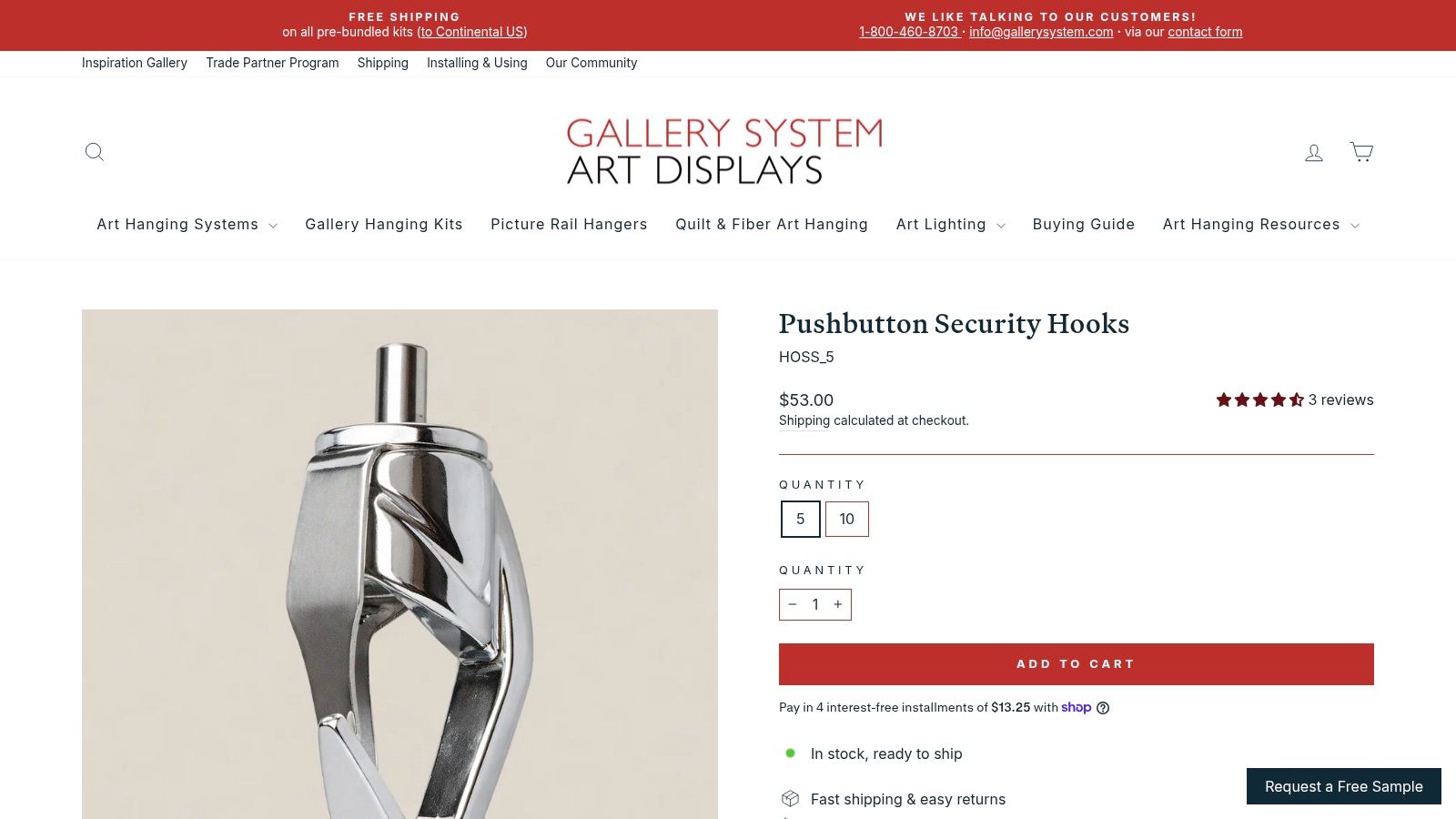
The fast adjustment is useful for leveling a run of frames or refining sightlines after furniture and lighting are in place. Still, security adds a step when staff hang or remove a work. That extra action makes sense for public-facing displays where lift-off prevention matters, but it may slow frequent rotations.
On set: Compose the room so the framing, not the hardware, carries the story. Then photograph a separate detail that shows how the display relates to people moving through the space.
The hooks are optimized for Gallery System products, so broad mix-and-match use isn't their strength. Check compatibility before specifying components from different systems. For a campaign connected to a museum and learning environment, the visual payoff comes from showing both the artwork and the experience around it, not from treating the frame as an isolated object.
4. Systematic Art Self-Gripping Hooks and Museum Rod Hooks
The material contrast gives a commercial image a quiet visual tension: a substantial framed work against a restrained wall, or a thin line of suspension set against a strong architectural surface. In a hypothetical gallery corridor, photograph the artwork straight-on for color and form, then make a second frame from the side to reveal the relationship between the display and the wall. A supporting image of a visitor passing through can add scale without competing with the art.
Systematic Art's commercial hanging solutions include self-gripping cable hooks with optional safety locks or guards, along with Museum Rod Hooks that use self-locking cam action. Anti-theft rod-hook options provide another level of restraint for high-traffic settings. The system works across Click Track, Slim-Line, and Gallery Rail, with compatibility and load information available for specification.
Choose cable when a quieter visual line helps the photography, and rod hardware when the installation calls for a more visible, substantial connection. Either way, confirm that the complete load path suits the artwork and wall. A hook's label alone doesn't establish the safe capacity of the rail, fixing, cable, and frame hardware.
The broad range is useful when one building needs different treatments in its public corridors, gallery spaces, and corporate areas. It can also make part selection harder. Product names and compatibility should be recorded in the installation schedule, especially when a later team will need to replace or reposition a component.
For campaign use, the material contrast can carry through a series: one hero frame emphasizing the work against architecture, a close detail showing texture and edge, and a clean record image for reference. The hardware should support that repeatable presentation without becoming the visual subject.
5. Arakawa Hanging Systems Hook and Gripper Assemblies
A quiet line through the architecture can unify a campaign without distracting from the subject. Think of a hypothetical hospitality interior where framed photography, a wayfinding panel, and a small display element share a clean visual language. Photograph the room with the cable line aligned to a strong vertical or ceiling detail, then make a closer image in which the gripper and frame edge appear only as part of the design.
Arakawa Hanging Systems offers stainless cable and precision gripper assemblies for art, signage, and panels. Midway and hook grippers provide self-locking, tool-free height adjustment, and wall or ceiling rail options include MH3 and CRJ. The broad gripper range helps teams handle different display objects within a coordinated system.
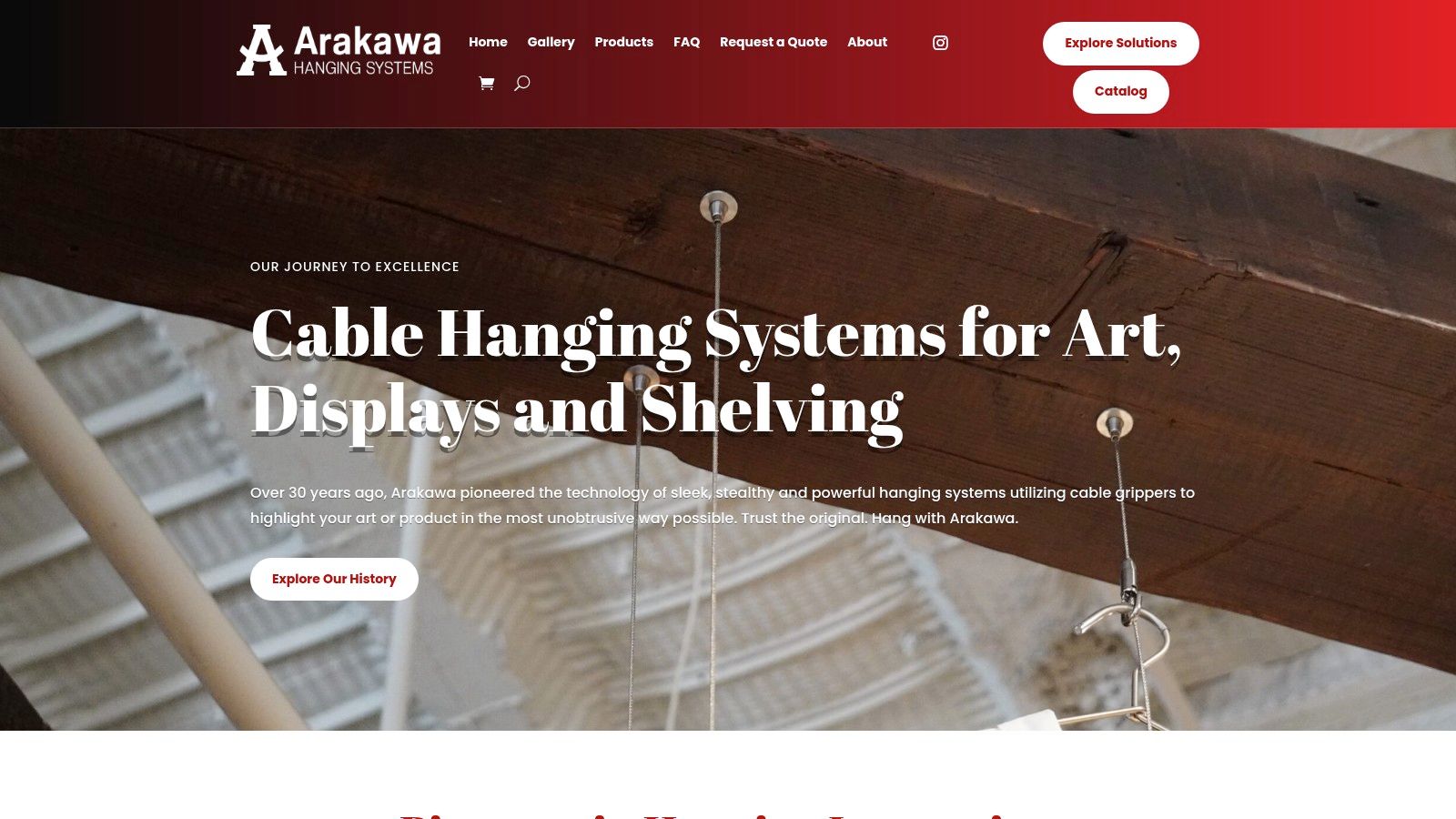
The visual advantage is restraint. Stainless components can sit comfortably in a contemporary interior where exposed hardware would interrupt the image, while adjustable grippers let staff refine the arrangement without repeatedly drilling the wall. That makes the system useful for commercial spaces that display different combinations of framed work, signage, or panels over time.
The trade-off is procurement. Pricing is often handled through dealers or quotes, and the catalog can take time to work through. Set the intended use, rail type, cable, and gripper requirements before requesting a specification, rather than selecting parts by appearance alone.
For the campaign, let the architecture provide the composition and use the display as the human-scale detail. A wide image establishes the room; a closer frame shows the relationship between the artwork and its surroundings. That keeps the visual hook coherent across a brand story while leaving the hardware to do its job.
6. Griplock Systems Hook and Frame Hanger Grippers
The hybrid display is a useful campaign concept when a space combines framed images with signs or panels. In a hypothetical workplace campaign, the hero image could follow a visual path from a framed photograph to a branded panel, showing how the interior communicates without turning the wall into a catalog. Place the camera at a shallow angle to reveal depth, then use a frontal supporting frame to keep the artwork legible.
Griplock Systems art grippers include self-gripping, height-adjustable cable hardware, hook-style grippers, and frame hanger or picture-wire grippers. The products suit gallery walls, corporate exhibits, and retail displays, including installations that combine framed work with signage. Some components have published prices, which can simplify early sourcing.
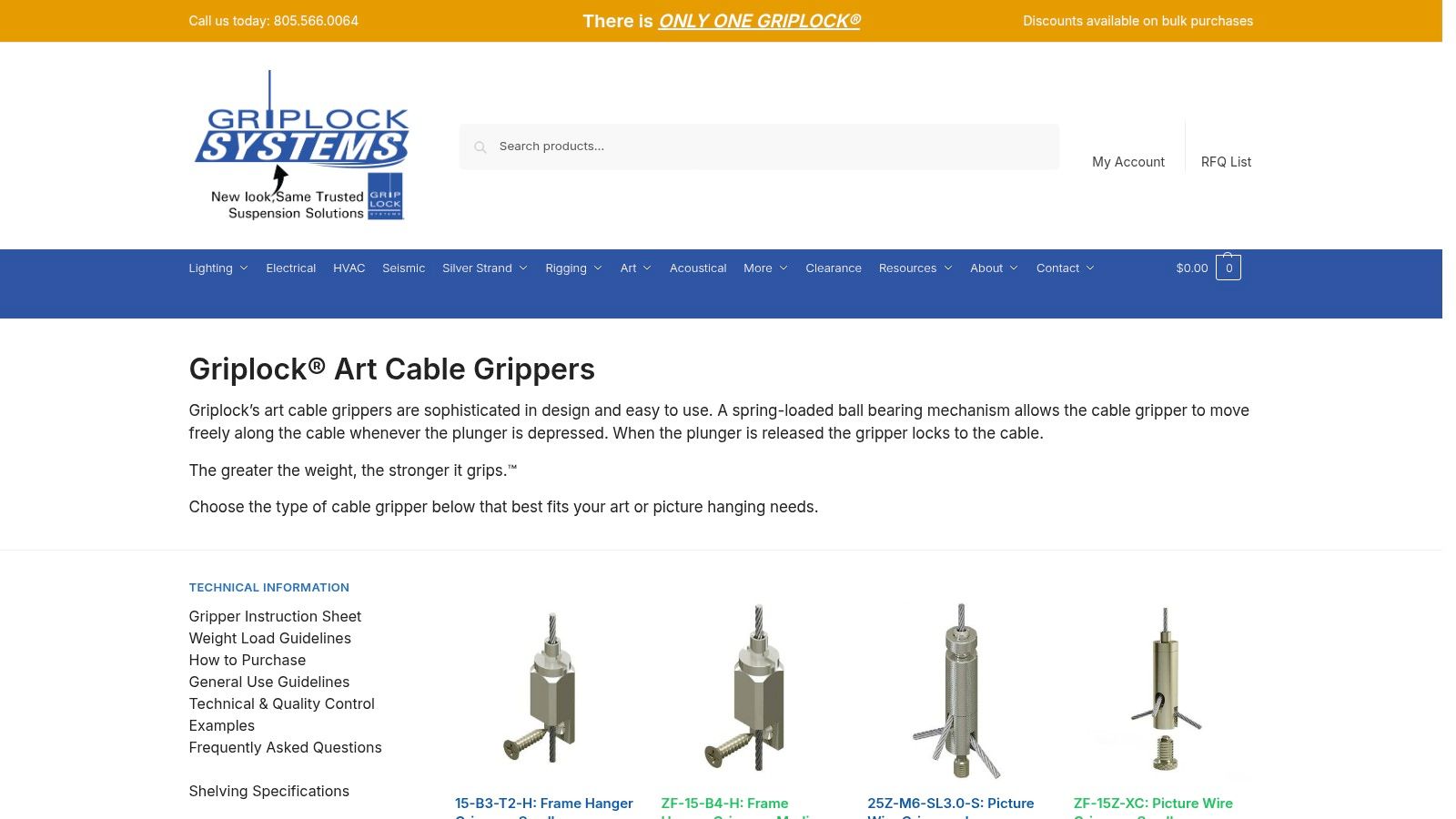
The system's strength is its usefulness across different display types. A team can keep a consistent suspension approach while changing the object below it, which supports campaign updates and interior refreshes. For a design-led institutional setting, the story can move from an architectural wide shot to a close view of the image, then to a supporting sign or panel that gives the viewer context.
Compatibility matters. Grippers work best with suitable rails and cables, and the hardware may be more visible than clear Perlon in some interiors. Decide whether the campaign benefits from a visible structural line or whether the frame should appear almost to float. Then test the chosen camera angle for reflections and distracting cable lines before photographing the final sequence.
7. Walker Display Hi-Hook with Security Slides
The repeatable public display is the right visual idea when local staff need to maintain a changing wall without calling an installation crew for every adjustment. Consider a hypothetical school or library corridor: a broad image shows a sequence of student or community work, while a closer photograph isolates one frame and the people engaging with it. Shoot the wide view from the corridor entrance, then step closer for a detail that makes the display feel active rather than institutional.
Walker Display's Hi-Hook works with Walker rods and rails and accommodates wire, D-rings, or sawtooth frame hardware. Optional Security Slides fit over the hook to help prevent lift-off. Accessories support molding, track, and retrofit installations, making the system relevant to civic and education environments.
The straightforward hardware can suit multi-room rollouts where staff need a manageable way to hang and adjust frames. Its appearance is less sleek than a recessed or cable-only system, and the Hi-Hook alone may provide less stability than Walker holders. Select components for the frame and setting rather than assuming one hook is right for every display.
Practical rule: Treat the hook, rod, frame attachment, wall fixing, and wall substrate as one installation. The weakest part governs, not the most impressive product rating.
For the campaign, use consistent frame spacing and a clear alignment line so the gallery reads as intentional in the wide image. A supporting detail can show the human scale of the display, while a straight-on documentation photograph gives staff a reference for future changes. The result is a visual story that can be refreshed without losing its rhythm.
Top 7 Commercial Picture Hook Comparison
| System | Security and Adjustment | 🔄 Implementation and Resource Needs | 📊 Expected Outcomes | 💡 Ideal Use Cases and Key Advantages |
|---|---|---|---|---|
| STAS Cliprail Pro with Zipper/Security Hooks | Tool-free height adjustment; security hooks and optional rod-based security | Rail layout and substrate planning; modular accessories support scaling | ⭐ Quick, repeatable rehanging with theft deterrence | Corporate, healthcare, and education; balances price and performance |
| AS Hanging Secure Gripper Hook and Anti-Theft Secure Rod | Locking-latch cable hook; rod requires rotation for removal | Select compatible track, cables, and hook ratings; some pricing requires a quote | ⭐ Flexible display changes with casual-removal deterrence | Institutional and corporate venues; multiple track and cable options |
| Gallery System Pushbutton Security Hooks | One-handed height adjustment; locking arm helps prevent lift-off | Best suited to Gallery System rails and steel cables; published capacity guidance | ⚡ Fast positioning and leveling with added lift-off protection | Commercial displays using Gallery System; clear load guidance and warranty coverage |
| Systematic Art Self-Gripping and Museum Rod Hooks | Optional cable-hook safety locks; self-locking cam-action rod hooks | Match components across compatible rails; broad SKU range may require selection effort | ⭐ Offers discreet cable hanging and stronger rod-based security | Museums, galleries, and high-traffic corridors; modular security options |
| Arakawa Hook and Gripper Assemblies | Self-locking grippers provide tool-free adjustment | Choose cable, grippers, and wall or ceiling rails; dealer quotes and catalog review may be needed | ⭐ Professional suspension with minimal visual hardware | Modern commercial interiors; unobtrusive design for art, signage, and panels |
| Griplock Hook and Frame Hanger Grippers | Self-gripping, height-adjustable cable hardware | Requires compatible rails and cables; some products have published prices | 📊 Supports heavier frames, signage, and panels | Galleries, corporate exhibits, and retail; useful for mixed displays |
| Walker Display Hi-Hook with Security Slides | Optional slides help prevent lift-off; accommodates wire, D-rings, or sawtooth hardware | Works with Walker rods and rails; select components carefully for stability | ⚡ Simple handling for staff; budget-friendly multi-room deployment | Libraries, schools, and smaller museums; practical for civic and education spaces |
Build a Cohesive Visual Campaign
Treat these seven commercial picture hooks as a flexible campaign system, not as isolated photographic effects. Choose one primary hook that expresses the brand promise: a living corridor for continuity, a protected focal point for care, or a quiet architectural line for restraint. Then build the supporting images around that idea instead of asking every frame to deliver the same message.
A practical shoot sequence can stay simple. Make one hero image that establishes the space and the story, add one supporting detail that reveals a material, human gesture, or display relationship, and retain a clean documentation image for credibility. That last frame may never lead the campaign, but it helps internal teams understand what was installed and gives them a visual reference when the display changes.
Test each concept at thumbnail size before committing the final shot list. If the visual tension disappears when the image is small, simplify the composition or strengthen the relationship between subject and setting. Check that the product, person, or architectural detail still reads clearly, and that reflections, cables, and frame edges support rather than interrupt the story.
Hardware selection belongs in the same planning conversation. Confirm the wall substrate and the ratings of the rail, fixing, cable or rod, hook, and frame attachment. Consider who will adjust the display, how often it may change, and whether security or a quieter appearance matters more in that location. A flexible system can make campaign updates easier, but only when the installation is specified for its real use.
For teams planning image-led interiors or marketing ideas for Vancouver luxury homes, the strongest result comes from pairing a deliberate visual concept with a display that can support it over time. The photograph should make the story immediate. The hardware should make the story maintainable.
Jimmy Clemmons Photographer creates architectural imagery, commercial brand content, and professional portraits, with location scouting, lighting design, on-set direction, and editing adapted to each project. For campaign photography that connects framed work to the character of a commercial space, visit Jimmy Clemmons Photographer.