
When you're selling a property in Atlanta, the right images aren't just a nice-to-have; they're the deciding factor between a listing that languishes and one that gets snapped up in days. Investing in professional real estate photography in Atlanta has become a fundamental part of any serious sales strategy. It’s how you compete.
Why Pro Photography Is Your Secret Weapon in Atlanta's Market
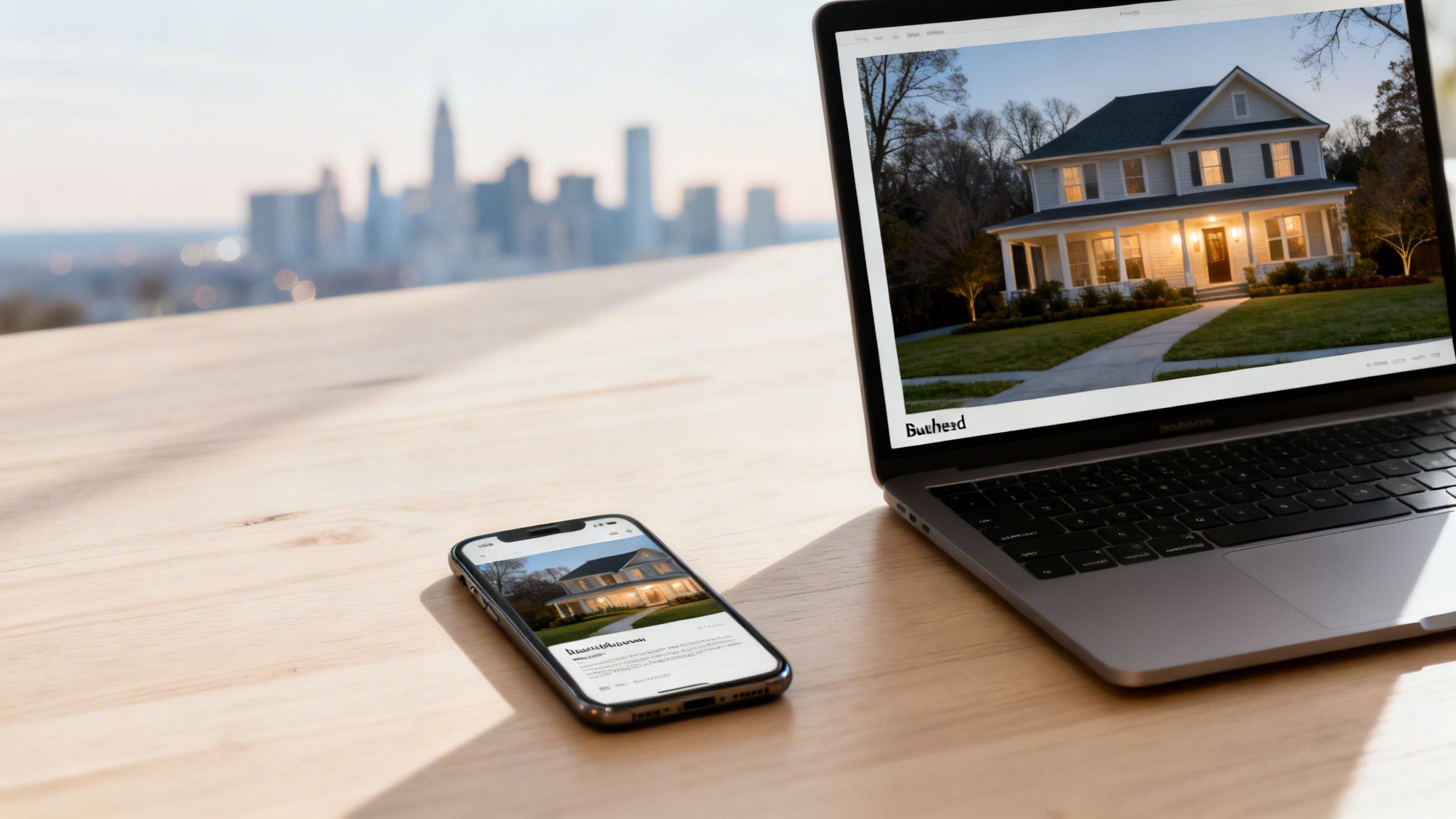
Long before a buyer schedules a tour, they're making their first visit online. They’re scrolling through endless listings on Zillow and Redfin, and your property has just a few seconds to make them stop. Nothing grabs that attention faster or more effectively than a gallery of stunning, professional photographs.
A dark, blurry smartphone photo doesn't just look bad; it actively devalues a property in a buyer's mind. It screams neglect. In contrast, editorial-quality images communicate value, care, and professionalism. They don’t just document a space—they sell a lifestyle. They help a potential buyer see themselves brewing coffee in the kitchen or relaxing on the porch, forging an emotional connection that is absolutely crucial for getting them through the door.
The Impact in a Competitive Market
As the Atlanta real estate market ebbs and flows, buyers become more selective when inventory rises. They have more choices. The homes that are presented immaculately online are the ones that command immediate interest and move quickly. It’s that simple.
This visual edge is what separates the top listings, especially in neighborhoods where the competition is fierce.
- Buckhead: For a luxury condo or sprawling estate, my job is to capture the high-end finishes and incredible views that justify a premium price.
- Virginia-Highland: A smartphone can't do justice to a historic bungalow. My lens seeks out the unique character and charm that make these homes so desirable.
- Midtown: Photographing sleek high-rises is all about managing reflections and balancing city lights to create crisp, inviting images that truly pop off the screen.
In this market, your online gallery is your first open house. Professional photography is what makes sure it's a packed event.
Ultimately, hiring a professional for real estate photography in Atlanta is one of the smartest business decisions you can make. It’s about positioning your property to attract the most qualified buyers, drive more showings, and secure a faster sale at the best possible price. The goal is to elevate your listing from just another pin on the map to a must-see destination. This same philosophy—capturing the soul and intent of a structure—is at the heart of all high-end architectural photography.
How to Vet and Hire the Right Atlanta Photographer
Finding the right photographer in Atlanta is about much more than just a quick Google search. You aren’t just hiring a button-pusher; you’re bringing on a creative partner whose eye will shape the first impression of your property. The right photographer makes a home feel aspirational, while the wrong one can make even the most stunning space fall flat.
Start by digging deep into their portfolio. Don't get distracted by a single amazing "hero shot." Instead, look through an entire gallery for one property. Is the quality just as high in the last photo as it is in the first?
A truly professional portfolio shows more than just pretty pictures. It shows consistency—clean compositions, straight vertical lines, and beautifully balanced light, even in the trickiest spaces like a tight bathroom or a dark basement.
Analyzing Portfolios for a Storytelling Style
As you’re clicking through their work, ask yourself: do these photos tell a story? Do they walk you through the home in a way that makes sense, showing off its best features and unique flow? A skilled architectural photographer doesn't just document rooms; they build a visual narrative that helps a potential buyer connect with the home on an emotional level.
This is especially critical for Atlanta’s diverse architecture. Their portfolio should show you they know how to capture the soul of different properties, whether it's a historic Grant Park bungalow or a sleek, modern high-rise in Midtown.
Don't just look for pretty pictures. Look for a visual storyteller who consistently produces high-quality, well-lit, and thoughtfully composed images across every single project in their portfolio.
Once you’ve found a few photographers whose style resonates with you, it's time to have a real conversation. This is your chance to get a feel for their professionalism, their process, and their experience on the ground.
Critical Questions for Your Consultation
Come prepared with a few pointed questions. You're looking for clear, confident answers—vagueness is a major red flag.
- Experience with Similar Properties: "Have you shot homes like mine in [Your Neighborhood] before?" Someone who knows their way around Buckhead estates will have a different lens and approach than a photographer who specializes in edgy Inman Park lofts.
- Lighting Techniques: "How do you deal with tough lighting, like a room with dark wood finishes and big, bright windows?" Their answer will tell you everything about their technical skill. Do they use advanced multi-flash techniques (often called "flambient") or just rely on basic HDR software?
- Editing and Delivery: "What does your post-production look like, and what’s your typical turnaround time?" This sets clear expectations for when you'll get your photos and what level of retouching is included.
- Image Licensing: "What are the usage rights for the photos?" This is a big one. You need to be crystal clear that you have the proper license to use the images across the MLS, social media, print, and all your marketing channels.
Ultimately, hiring the right professional for real estate photography in Atlanta is a direct investment in your listing’s success. When you do your homework, you find more than just a vendor—you find a partner who delivers images that grab attention and help you sell faster. For more examples of what that looks like, feel free to browse through some of my recent photography projects.
Staging Your Property for a Picture-Perfect Shoot
The best real estate photography in Atlanta starts long before I ever unpack my camera. The truth is, a well-prepared home is the secret weapon for creating images that feel bright, spacious, and irresistibly inviting. We're aiming for a clean canvas that lets a buyer’s imagination run wild.
This goes way beyond just tidying up. It's about strategically depersonalizing and decluttering every single space. The goal is to clear the way so I can capture what matters most—the home’s natural light, its easy flow, and all the unique features that make it special, without any visual static.
Finding the right photographer is just as crucial. You need someone whose style aligns with your vision for the property.
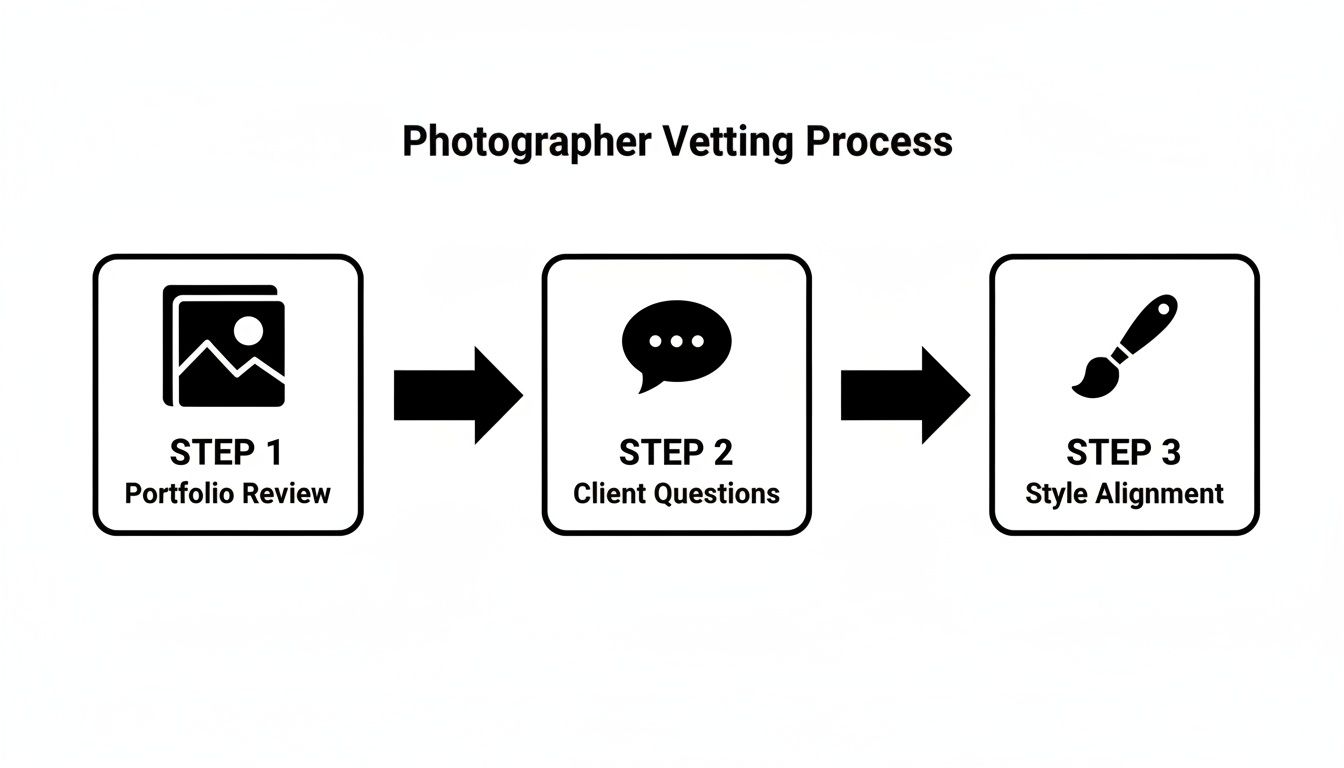
Once you've found your creative partner, it’s time to get the property ready for its close-up.
Mastering Interior Decluttering
For a day, you have to think like a minimalist. A room that feels cozy and lived-in on a daily basis can look chaotic and cramped through a camera lens. Your first job is to remove anything that doesn’t help define the architecture and purpose of the space.
This means kitchen and bathroom countertops should be completely clear. Pack away the toaster, knife block, soap, and toothbrushes. On bookshelves and fireplace mantels, remove personal photos, stacks of mail, and collections of knick-knacks. Trust me, less is always more.
A good rule of thumb for a coffee table is no more than three intentional items—maybe a beautiful design book, a small plant, and one sculptural object. This creates a curated, high-end feel. It’s exactly this kind of thoughtful preparation that allows a project like this stunning Belle Isle property to look its absolute best.
Deep Cleaning for Maximum Impact
After you’ve decluttered, every surface needs to be spotless. This isn’t just about looking clean; it’s about how the space interacts with light. Clean, reflective surfaces bounce light around a room, making it feel bigger and brighter in the final photos.
The camera sees everything, so focus on these high-impact areas:
- Windows and Mirrors: Make sure they are perfectly streak-free, inside and out. Clean glass is my best friend—it lets all that gorgeous natural light pour in.
- Floors: Mop hardwoods until they gleam and get fresh vacuum lines in the carpets. It’s a small detail that signals a well-cared-for home.
- Fixtures: Polish every metal and chrome surface in the kitchens and bathrooms. Shiny faucets and cabinet pulls add a subtle sparkle that really elevates an image.
The camera lens is brutally honest. Dust on ceiling fan blades, fingerprints on stainless steel, and scuffs on the baseboards will all be visible in the final high-resolution images. A deep clean is the one thing you can’t skip.
To help you get started, I’ve put together a checklist of the most important tasks. Run through this list the day before the shoot to ensure every room is ready.
Essential Property Prep Checklist
| Area | Task | Pro Tip |
|---|---|---|
| All Interiors | Remove personal photos, mail, and clutter | You want buyers to picture their life here, not yours. |
| Dust all surfaces, including fans & light fixtures | Dust particles show up in photos, especially with flash. | |
| Clean all windows and mirrors until streak-free | This maximizes natural light and makes spaces feel bigger. | |
| Replace any burned-out light bulbs | Ensure all lights match in color temperature (warm or cool). | |
| Kitchen | Clear countertops of everything but 1-2 decorative items | Store small appliances like toasters and coffee makers. |
| Remove all magnets and papers from the refrigerator | A clean, bare fridge looks sleek and modern. | |
| Hide trash cans, sponges, and soap dispensers | These items create visual noise and distract the eye. | |
| Living Room | Hide remote controls, magazines, and excess pillows | Aim for a clean, curated look on sofas and tables. |
| Arrange furniture to create open walking paths | Pull pieces slightly away from the walls to create depth. | |
| Bedrooms | Make beds perfectly with neutral, clean bedding | A hotel-style tuck looks crisp and inviting. |
| Clear all surfaces on nightstands and dressers | A lamp and a single book are more than enough. | |
| Hide all personal items and clothing from view | Ensure closet doors are fully closed. | |
| Bathrooms | Clear countertops of all toiletries | This includes toothbrushes, soap, and makeup. |
| Remove floor mats, scales, and trash cans | A clear floor makes the bathroom feel more spacious. | |
| Hang fresh, clean, matching towels | White or neutral towels always look best. | |
| Exteriors | Mow the lawn and trim landscaping | A manicured exterior creates powerful curb appeal. |
| Hide garbage cans, hoses, and garden tools | Move cars out of the driveway and away from the front of the house. | |
| Sweep walkways, patios, and decks | Arrange outdoor furniture neatly. |
This checklist might seem like a lot, but tackling it systematically ensures we can spend our time on the shoot capturing incredible photos instead of moving clutter.
Arranging Furniture to Showcase Flow
Furniture placement for photography is a different art than arranging it for everyday life. The main objective is to create clear, open pathways that make each room feel as expansive as possible. Sometimes, this means completely removing a chair or an end table that closes off the space.
Try pulling furniture a few inches away from the walls. It’s a simple but effective trick that creates an illusion of airiness and depth. In the living room, group the sofa and chairs to form an inviting conversation area, making sure you have an unobstructed line of sight from the entrance to the room’s best feature, whether that’s a fireplace or a great view.
Building Our Game Plan: The Shot List
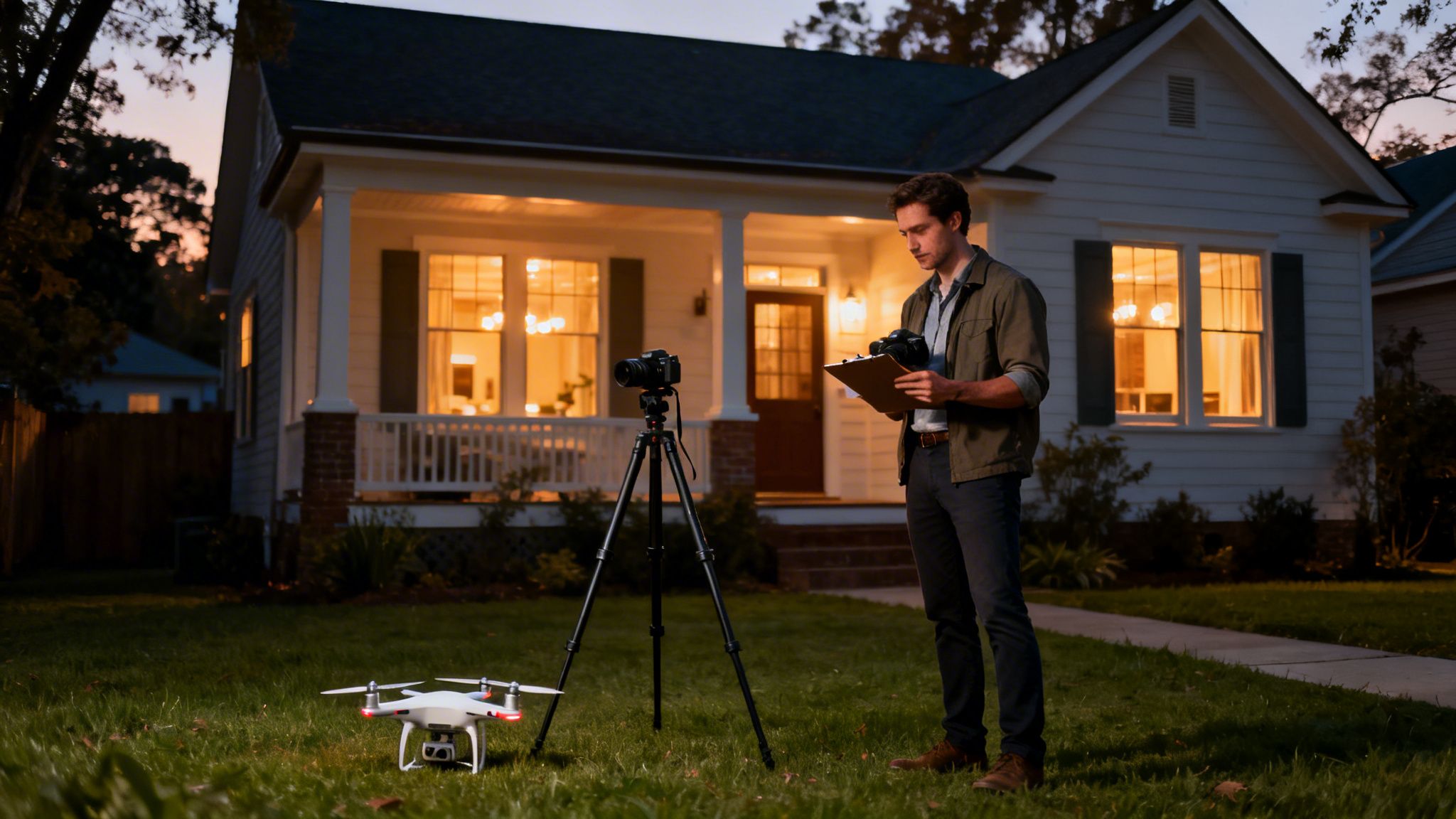
The best photoshoots I’ve been a part of start long before my camera comes out of the bag. They begin with a conversation—a collaboration to map out the visual story we want to tell. A strategic shot list is our roadmap for the day, ensuring we capture not just the space, but the feeling of a home.
Without this plan, you get generic photos. With it, we get images that sell.
This isn’t just a simple “kitchen, living room, three bedrooms” checklist. My approach is to distinguish between the essential MLS workhorses and the detailed, editorial-style shots that make a property unforgettable. The standard shots are your bright, wide views that show the scale and flow of the home for broad appeal.
But the editorial shots are where the magic happens. These are the close-ups that tell a story—the texture of the custom tile in the primary bath, the way light hits the high-end Sub-Zero appliances, or the craftsmanship of built-in shelving. These are the images that communicate quality and justify a higher price point.
Tailoring Shots for Atlanta Properties
Every Atlanta neighborhood has its own character, and every property has a unique story. What I focus on for a sprawling Roswell estate is completely different from what’s needed for a sleek Midtown high-rise.
- For a historic Cabbagetown bungalow, my lens would be drawn to the original hardwood floors, the charming front porch swing, and that cozy, light-filled breakfast nook.
- In a modern Buckhead high-rise, the story is all about the skyline views from floor-to-ceiling windows, the five-star building amenities, and the clean lines of the open-concept living space.
- With an Alpharetta family home, we’d want to highlight the huge, fenced-in backyard, the open-plan kitchen built for entertaining, and the versatile bonus room over the garage.
A shot list isn't about micromanaging. It's about you sharing your insider knowledge of the property’s best features so I can translate them into powerful, compelling photographs.
Elevating Your Listing with Advanced Shots
To really cut through the noise, we should talk about adding specialized shots to our list. Twilight photography, for instance, gives a property a dramatic, luxurious feel that literally stops people from scrolling. There's just something about that warm interior glow set against a deep blue evening sky that screams "wow."
Drone photography is another absolute game-changer for real estate photography in Atlanta. It's not just a cool add-on anymore; it provides critical context. Aerial shots can showcase an incredible lot size, proximity to a park, or the beauty of the surrounding neighborhood in a way ground-level photos never could.
It's been shown to help properties sell up to 68% faster by giving buyers a perspective they can't get anywhere else. As buyer expectations evolve, aerials are becoming essential for highlighting key features and telling the full story of a property, as outlined in these recent real estate photography trends.
Decoding Photography Pricing and Timelines in Atlanta
Let's talk about the investment. When you hire a professional photographer, you're not just paying for someone to click a button; you're investing in a critical marketing tool. In Atlanta, pricing reflects the photographer's experience, the scale of your project, and the specific assets you need to make your property stand out.
As you reach out to photographers, you’ll notice a couple of common ways we structure our pricing. Some of us charge based on the number of final images delivered, while others have packages built around the property's square footage. This approach means you’re only paying for the coverage you actually need, whether it’s for a chic Inman Park condo or a sprawling Sandy Springs estate.
What Shapes the Final Cost
The total investment really comes down to a few key variables. The biggest driver, of course, is the size of the home. It simply takes more time on-site and more finished images to do justice to a larger property.
- Property Size: A 1,500 sq. ft. bungalow in Virginia-Highland requires a different scope than a 5,000 sq. ft. luxury home in Buckhead.
- Add-On Services: This is where you can really elevate your listing. Services like drone photography for those stunning aerial perspectives, a cinematic video tour, or an immersive Matterport virtual tour will add to the package price. Drone photos alone can be an additional $100-$250.
- Photographer Experience: An established architectural photographer with a portfolio of high-end work will naturally command a higher rate. With that comes a more refined eye, better equipment, and ultimately, more impactful images that stop the scroll.
For a standard, professional photoshoot in the Atlanta market, a good budget to start with is somewhere between $220 and $425. This range typically covers a package of high-resolution still photos for an average-sized home and accounts for different levels of photographer experience.
From Shoot Day to Final Delivery
Knowing the timeline from start to finish is crucial for keeping your marketing plan on track and stress-free.
A standard on-site photoshoot for an average-sized home usually takes me one to two hours. After the shoot, the post-production work begins. This is where the editing magic happens, and you can expect a 24 to 48-hour turnaround for still photos.
Once the editing is perfected, I deliver the final images through a secure online gallery. From there, you can easily download the high-resolution files.
Finally, it’s important to touch on licensing. The standard agreement grants you the rights to use the photos for the sole purpose of marketing that specific property for sale. The photographer, however, almost always retains the copyright. This just means the images can't be sold or given away to another agent, a stager, a builder, or the new homeowner without a separate agreement.
A Few Common Questions I Get About Atlanta Photography
Even with the best plan, you’re bound to have a few questions. I’ve been shooting properties in and around Atlanta for years, and I’ve found the same handful of great questions come up time and again. Here are my straight-to-the-point answers to help clear things up.
How Far in Advance Should I Book You?
In a market like Atlanta, my schedule fills up fast, especially during the spring and fall rush. I always recommend reaching out one to two weeks in advance for a standard real-tours listing.
That buffer gives us time to talk through the shot list, lets you prep the property without feeling frantic, and gives us flexibility to schedule around a classic surprise Georgia thunderstorm. While I can sometimes fit in a last-minute shoot, planning ahead ensures you get the time slot you want and avoids any rush fees.
For larger architectural or commercial projects that involve more scouting and coordination, it’s best to get on my calendar at least three to four weeks out.
What’s the Real Difference Between Architectural and Real Estate Photography?
This is a great question, and the answer gets to the heart of what we’re trying to accomplish. While both use a camera, the intent is completely different.
Real Estate Photography is a pure marketing tool. The mission is simple: sell the home. We create bright, wide, and welcoming images that show off the space and flow for platforms like Zillow and the MLS. It’s all about speed and attracting buyers.
Architectural Photography is about telling a design story. It's a more measured, artistic process. My focus shifts to capturing the architect’s vision—the intentional lines, the interplay of light and shadow, and the texture of the materials. These are the images destined for portfolios, design awards, and magazine features.
I tell my clients to think of it this way: real estate photography is built to move a property off the market. Architectural photography is meant to celebrate it as a piece of design.
Should I Be There for the Photoshoot?
I always encourage you or your agent to be there right at the start. We can do a quick walkthrough together, and you can point out any "must-have" shots or special features you want to be sure I capture. It’s the best way to make sure we’re on the same page from the get-go.
Once we’ve got the game plan locked in, you’re free to go. I'll have your number if anything comes up. The exception is for more involved architectural or interior design shoots, where the client or designer often stays to collaborate on styling and composition for each shot.
How Can I Use the Photos You Deliver?
Image licensing is a crucial part of working with any professional photographer. When you hire me for a real estate shoot, you’re not buying the photos themselves; you’re purchasing a license to use them for a specific purpose.
Typically, that license gives you the right to use the images to market that one property for sale. This includes:
- The MLS (Multiple Listing Service)
- Your personal and brokerage websites
- Social media posts promoting the listing
- Print materials like flyers and brochures
As is standard in the industry, I retain the copyright to the images. This means your license isn't transferable. You can’t sell the photos or give them to the new homeowner, another agent, the stager, or the builder. If anyone else wants to use the images, they just need to reach out to me to secure their own license. For architectural work, the licensing is usually customized for broader use, like in portfolios or advertising. We'll always clarify the usage rights in our agreement.
Ready to capture your Atlanta property with images that tell its unique story and drive results? At Jimmy Clemmons Photographer, we combine editorial vision with technical precision to create architectural and real estate photography that stands out. Let's collaborate to make your listing unforgettable. Visit us online at https://jimmyclemmons.com to see our work and book your next shoot.